środa, 5 czerwca 2024

Sławek Gortych, Schronisko, które spowijał mrok


Kryminał z przeniesionym punktem ciężkości

Długo wyczekiwany trzeci tom karkonoskiej serii kryminałów Sławka Gortycha w końcu trafił w moje ręce. Schronisko, które spowijał mrok koncentruje się wokół Strzechy Akademickiej, górskiego ponurego giganta, wokół którego rozgrywają się różnego rodzaju dramaty. Jednak co ciekawe, to nie kryminalna zagadka wysuwa się na najistotniejszy temat powieści i jest to bardzo ważne i potrzebne przesunięcie tematyczne. Ale po kolei.

Miejsce akcji - Strzecha Akademicka

Jak zawsze, Gortych pracowicie snuje kilka wątków z różnych okresów czasowych. Mamy więc wydarzenia z września 1947 roku, kiedy to uczeń miejscowego liceum obrzuca węglem pociąg wiozący radzieckich oficjeli na komunistyczną konferencję, nie zdając sobie sprawy z możliwych konsekwencji. Mamy perspektywę grudnia 1991 roku, kiedy to Andrzej Czerwiński dociera do Strzechy, usiłując dowiedzieć się czegoś o zaginięciu jego ojca Stefana, ówczesnego dyrektora schroniska, i swojego wuja Zbigniewa. Mężczyzna jest blisko odkrycia prawdy, a jednak – mimo skręconej kostki – ginie w sylwestrową noc w jednej z najtragiczniejszych lawin, które zeszły kiedykolwiek Białym Jarem. Wreszcie obie te nitki łączy Tomasz Wilczur, przyjaciel Maksa Rajczakowskiego, znanego nam z pierwszego tomu. Młody pisarz nie może pozbierać się po tragicznej śmierci swojej dziewczyny, która zginęła niespodziewanie w wypadku komunikacyjnym. Przyjaciele wynajdują mu więc ciekawą historię z przeszłości, by wyciągnąć go z marazmu i dać mu zajęcie.

Tym, którzy z narażeniem życia idą w góry nieść ratunek innym

To, co różni tom trzeci od dwóch poprzednich, jest przeniesienie ciężaru z historii kryminalnej, której rozwiązanie poznajemy na około 80 stron przed końcem książki, na inny aspekt gór – bezpieczeństwo turystyki górskiej i pracę GOPRu. Gortych buduje wstrząsające zakończenie, starając się pokazać trud i poświęcenie ratowników, często pomagających turystom nieprzygotowanym na nagłe zmiany pogody, lekceważącym ostrzeżenia, wchodzącym na zamknięte szlaki. Pisarz sporo trudu włożył w opisanie panujących zimą warunków, różnic pomiędzy sytuacją u stóp gór a na ich szczytach, zagrożenia lawinowego. Skoro podróżnym często brakuje wyobraźni, autor zastępuje ją dokładnym opisem warunków i niebezpieczeństw czyhających w pozornie niegroźnych Karkonoszach. Mimo swoich 1600 metrów wysokości sytuacja meteorologiczna może zmieniać się z minuty na minutę i swojskie, niektórym dobrze znane góry mogą stać się śmiertelnie niebezpieczne. Gortych przypomina więc, że wtedy nie tylko życie turysty, który popadł w tarapaty, znajduje się na szali, ale również pracownika górskiego pogotowia ratunkowego. Historia nie zawsze będzie miała szczęśliwe zakończenie.

Dolnośląskie sekrety wyciągnięte na światło dzienne

Jest jednak jeden element, który w książkach młodego dolnośląskiego pisarza pozostaje niezmienny – miłość do gór i chęć przybliżenia różnych aspektów ich historii. Gortych opisuje lawinę z 1968 roku, która zeszła w Białym Jarze i pochłonęła życie 19 osób (więcej szczegółów: https://pl.wikipedia.org/wiki/Lawina_w_Bia%C5%82ym_Jarze), utonięcie studenta Józefa Odrowąż-Pieniążka w torfowisku na Równi pod Śnieżką w 1828 roku czy też tragiczny finał wyścigu z 24 marca 1913 roku, kiedy to narciarz biegowy Bohumil Hanč, nie mając świadomości, że wyścig został przerwany ze względu na szybko pogarszające się warunki pogodowe, zasłabł w trakcie biegu. Nieco wcześniej jego przyjaciel Václaw Vrbata oddał mu swoją kurtkę i czapkę, ale sam zabłądził w gęstej mgle i śniegu i zamarzł. Żadnego nie udało się uratować. Ile jeszcze takich sekretów czeka na odkrycie? Zapewne kolejne tomy karkonoskiej sagi przyniosą odpowiedź. Znów nie będzie się można doczekać, zwłaszcza, że tom czwarty jest już w przygotowaniu!

Moja ocena: 8/10.


Sławek Gortych, Schronisko, które spowijał mrok
Wydawnictwo Dolnośląskie, Wrocław 2024
Liczba stron: 400
ISBN: 978-83- 271-6609-8

*******************************************************************************


A crime story with a shifted focus

The long-awaited third volume of the Karkonosze (Giant Monuntains, Riesengebirge) crime series by Sławek Gortych has finally landed in my hands. The Shelter That Shrouded in Darkness centers around mountain shelter Strzecha Akademicka, a gloomy mountain giant around where all sorts of dramas take place. Interestingly, however, it is not the crime mystery that becomes the most relevant topic of the novel and it is a very important and necessary thematic shift. But first things first.

Place of action - Strzecha Akademicka

As always, Gortych busily weaves several threads from different time periods. So we have the events of September 1947, when a student of a local high school throws coal at a train carrying Soviet officials to a communist conference, not realizing the possible consequences. We have the perspective of December 1991, when Andrzej Czerwiński reaches Strzecha, trying to find out something about the disappearance of his father, Stefan, the then director of the shelter, and his uncle Zbigniew. The man is close to discovering the truth, and yet - despite a sprained ankle - he dies on New Year's Eve in one of the most tragic avalanches that ever occurred along Biały Jar. Finally, both of these threads are connected by Tomasz Wilczur, a friend of Maks Rajczakowski, known to us from the first volume. A young writer cannot recover from the tragic death of his girlfriend, who was killed in a traffic accident. So his friends come up with an interesting story from the past to get him out of his stagnation and give him something to do.

To those who risk their lives and go to the mountains to save others

What makes the third volume different from the previous two is the shift of the focus from the crime story, the solution of which we discover about 80 pages before the end of the book, to another aspect of the mountains - the safety of mountain tourism and the work of GOPR (Górskie Ochotnicze Pogotowie Ratunkowe – Mountain Volunteer Search and Rescue). Gortych creates a shocking ending, trying to show the hardship and dedication of rescuers, who often help tourists who are unprepared for sudden weather changes, disregard warnings, and enter closed trails. The writer put a lot of effort into describing the winter conditions, the differences between the situation at the foot of the mountains and on their peaks, and the avalanche risk. Since travelers often lack imagination, the author replaces it with a detailed description of the conditions and dangers lurking in the seemingly harmless Karkonosze Mountains. Despite their 1,600 meters of height, the meteorological situation can change from minute to minute and the familiar, well-known mountains can become deadly dangerous. Gortych reminds us that not only the life of the tourist who gets into trouble is at stake, but also the life of the mountain rescue worker. The story will not always have a happy ending.

Lower Silesian secrets brought to light

However, there is one element that remains unchanged in the books of the young Lower Silesian writer - love for the mountains and the desire to present various aspects of their history. Gortych describes the 1968 avalanche that occurred in Biały Jar and claimed the lives of 19 people (more details: https://pl.wikipedia.org/wiki/Lawina_w_Bia%C5%82ym_Jarze), the drowning of student Józef Odrowąż-Pieniążek in a peat bog on Równia pod Śnieżką in 1828 or the tragic ending of the race on March 24, 1913, when the cross-country skier Bohumil Hanč, unaware that the race was interrupted due to rapidly deteriorating weather conditions, fainted during the run. A little earlier his friend Václaw Vrbata gave him his jacket and hat, but he got lost in the thick fog and snow and froze to death. None of them could be saved. How many more such secrets are waiting to be discovered? The next volumes of the Karkonosze saga will probably provide the answer. One can't wait, especially that the fourth volume is already in preparation!

My rating: 8/10.


Author: Sławek Gortych
Title: A Shelter That Shrouded in Darkness
Publishing House: Wydawnictwo Dolnośląskie, Wrocław 2024
Number of pages: 400
ISBN: 978-83-271-6609-8

poniedziałek, 3 czerwca 2024

Joyce Carol Oates, Mama odeszła (Missing Mom)

Nie sądź książki po okładce

Zarówno sentymentalna okładka, jak i wstrząsający tytuł zapowiadały dla mnie historię o traumie i radzeniu sobie z odchodzeniem jednej z najważniejszych osób w życiu – matki. Poniekąd tak jest, chociaż powieść amerykańskiej pisarki Joyce Carol Oates skupia się głównie na radzeniu sobie z byciem córką zamordowanej rodzicielki, znoszeniu wścibskich spojrzeń sąsiadów i ich chęci pomocy czy też poczucia winy. Słowem – zupełnie nie tego się spodziewałam i dość mocno się rozczarowałam.

Sensacyjna fabuła

Skoro zdradziłam clue powieści już w pierwszym akapicie, nie ma co owijać w bawełnę – matka dwóch córek, niemal 60-letnia Gwen, dusza społeczności, zostaje brutalnie zamordowana we własnym garażu, a znajduje ją młodsza z córek, Nikki Eaton, dziennikarka lokalnej gazety. Nikki prowadzi dość chaotyczny, nieuporządkowany żywot, wynajmuje mieszkanie i ma romans z żonatym mężczyzną, czekając, aż ten zostawi dla niej swoją żonę. Jej starsza siostra Clare to z kolei wcielenie rozsądku i opanowania, przykładna matka i gospodyni domowa, mająca wysokie wymagania, zawsze perfekcyjna. Niespodziewana śmierć ich matki wywróci ich światy do góry nogami i każda poradzi sobie z zaistniałą sytuacją zupełnie inaczej.

Kryminał, romans i obyczajówka w jednym

Dodatkowo do tej z lekka sensacyjnej fabuły dochodzi wątek romansowy i kryminalny (w jednym!). Mordercą okazuje się Ward Lynch, były więzień, któremu Gloria pomagała stanąć na nogi, znaleziony w zasadzie bez trudu przez policję. Do końca toczą się losy procesu, a detektyw zaangażowany w sprawę, Ross Strabane, wyjątkowo się stara dla atrakcyjnej Nikki. Warto zaznaczyć, że powieść Oates nie ma w sobie nic z kryminału, a morderca, oprócz puszczenia fabuły w ruch, nie odgrywa większej roli.

Sentymentalna papka

Muszę przyznać, że jestem na nie, i to zdecydowanie. Począwszy od zaskakującej fabuły, poprzez ckliwe zakończenie i złote myśli w stylu Paulo Coelho. Spodziewałam się czegoś znacznie cięższego, mądrzejszego, głębszego, a dostałam słabe romansidło z wątkiem kryminalnym. Jakim cudem ta książka w 2005 roku znalazła się na liście stu najważniejszych książek roku według magazynu New York Times? Rzadko mi się zdarza pozbywać przeczytanych książek, ale w tym przypadku tak właśnie będzie. Wcześniej czytałam Gwałt jej samej autorki i nie zrobił na mnie najlepszego wrażenia, ale nie znam z kolei Blondynki, która narobiła sporo hałasu w literackim świecie. Powieści z 2005 roku nie warto czytać.

Moja ocena: 5/10.


Joyce Carol Oates, Mama odeszła
Dom Wydawniczy Rebis, Poznań 2016
Tłumaczenie: Katarzyna Karłowska
Liczba stron: 416
ISBN: 978-83-8062-108-4

****************************************************************************

Don't judge a book by its cover

Both the sentimental cover and the moving title made me expect a story about trauma and coping with the passing of one of the most important people in life – the mother. To some extent, this is true, although the novel by the American writer Joyce Carol Oates focuses mainly on coping with being the daughter of a murdered parent, enduring the prying eyes of neighbors and their willingness to help, or the feeling of guilt. In short, it wasn’t what I expected at all and I was quite disappointed.

Sensational plot

Since I revealed the clue of the novel in the first paragraph, there is no point beating around the bush – the mother of two daughters, almost 60-year-old Gwen, the soul of the community, is brutally murdered in her own garage, and is found by the younger of the daughters, Nikki Eaton, a journalist of the local newspaper. Nikki leads a rather chaotic, disordered life, she rents an apartment and has an affair with a married man, waiting for him to leave his wife for her. Her older sister Clare, in turn, is the embodiment of reason and self-control, an exemplary mother and housewife, with high expectations and always perfect. The unexpected death of their mother will turn their worlds upside down and each of them will deal with the situation in a completely different way.

Crime, romance and social drama in one

On top of that slightly sensational plot there is a romance and a crime (in one!). The murderer turns out to be Ward Lynch, an ex-convict whom Gloria had helped to get back on his feet, found basically easily by the police. The fate of the trial seems uncertain until the end of the book, and the detective involved in the case, Ross Strabane, tries exceptionally hard for the attractive Nikki. It is worth noting that Oates's novel has nothing in it of a proper crime story (so Focus on the murderer, solving a riddle, plot revolving around the crime), and the murderer, apart from setting the plot in motion, does not play any role.

Sentimental mush

I must admit that I disliked the book strongly. Starting with the surprising plot, through the sentimental ending and golden thoughts in the style of Paulo Coelho. I expected something much heavier, smarter and deeper, but what I got was a mediocre romance novel with a murder. How did this book make it to the New York Times list of the 100 most important books of the year in 2005? I rarely get rid of books I have read, but in this case I have no intentions of keeping it. I had previously read Rape. A Love Story by the same author and it didn't make the best impression on me, but I don't know Blonde, which made a lot of noise in the literary world. The 2005 novel is not worth reading.

My rating: 5/10.

Author: Joyce Carol Oates
Title: Missing Mom
Rebis, Poznań 2016
Translation: Katarzyna Karłowska
Number of pages: 416
ISBN: 978-83-8062-108-4

Banana Yoshimoto, Tsugumi


Melancholijny czar krainy dzieciństwa

Tuż po powrocie z Japonii, w ramach walki z jet lagiem, sięgnęłam po książkę, której nie dałam rady przeczytać na wyjeździe, a więc Tsugumi Banany Yoshimoto. Nie jest to pozycja nowa, bo popularna japońska autorka napisała ją już w 1989 roku, ale na polskie wydanie musieliśmy czekać do 2005 roku. Mój egzemplarz zaś prawie kolejnych 20 lat, by ktoś po niego sięgnął i się zachwycił.


O chorobie bez patosu

Banana Yoshimoto to popularna japońska pisarka, której międzynarodowa kariera zaczęła się od błyskotliwego debiutu Kuchnia. Wydaj się jednak, że od 2015 roku autorka nie wydała nic nowego. Tsugumi opowiada historię przyjaźni dwóch dziewcząt, narratorki Marii Shirakawa, oraz jej chorej sąsiadki, tytułowej Tsugumi Yamamoto. Lekarze od wczesnego dzieciństwa nie dają dziewczynce większych szans na przeżycie, ale ona uparcie trzyma się życia dzięki swojej niezłomnej woli i sile ducha. Stara się nie zgrywać męczennicy, ale płata najbliższym różne złośliwe figle i stara się żyć pełnią życia, odsuwając swoją chorobę do granic wytrzymałości fizycznej. Dzięki temu buduje wartościowe przyjaźnie i przeżywa swoje pierwsze większe i mniejsze miłości.

Moment przejściowy

Jednak największą wartością książki jest umiejętność Yoshimoto do łapania chwili i kreślenia nastrojów. Maria właśnie dostała się na studia w Tokio, a jej sytuacja życiowa mocno się poprawia. Jej ojciec uzyskał właśnie rozwód ze swoją poprzednią żoną i może w końcu sprowadzić do siebie swoją wieloletnią partnerkę z dzieckiem. Obie kobiety wyprowadzają się więc z małej, nadmorskiej miejscowości, gdzie matka dziewczynki pracowała w zajeździe u swojej siostry, do Tokio. Obie też bardzo tęsknią za senną atmosferą miasteczka, szumem morza, spokojem i najbliższymi. Kiedy okazuje się, że w miasteczku ma powstać wielki i nowoczesny hotel, mieszkańcy obawiają się, że ich małe biznesy nie przetrwają konkurencji, więc ojciec Tsugumi podejmuje decyzję o przeprowadzce w góry i otworzeniu tam pensjonatu. Po pierwszym roku studiów Maria wraca w rodzinne strony na ostatnie takie wakacje, jest to swoisty powrót do dzieciństwa, do bezpiecznej strefy. Więcej takiej szansy nie będzie, więc te wakacje są szczególne, melancholijne, ale stanowią również moment przełomowy – zwłaszcza dla Marii. To zamknięcie pewnego etapu i przygotowanie do dorosłego życia.

Subtelna i delikatna proza

Powieść Yoshimoto bardzo mi się podobała. Jej sposób opowiadania jest bardzo lekki, a wydarzenia w powieści, choć często dramatyczne, przedstawione są niemal w pastelowych barwach. Pisarce udało się uchwycić pewną efemeryczność, delikatność nastolatek, powlec ich opowieść nieodpartym czarem i urokiem dzieciństwa, przemycić czytelnikowi kolory, smaki i zapachy małego japońskiego miasteczka. To bezpieczny świat, który odchodzi do przeszłości, a jednocześnie zawsze będzie stanowił integralną część życia dziewczynek, podstawę ich dorosłości, nawet jeśli nie będzie do niego więcej dostępu. To lektura skłaniająca do myślenia, ale jednocześnie zapewniająca rozrywkę i przyjemny odpoczynek. Jak widać, czasami książka musi poczekać 20 lat na swojego czytelnika.

Moja ocena: 9/10


Banana Yoshimoto, Tsugumi
Tłumaczenie: Gabriela Rzepecka
Państwowy Instytut Wydawniczy, Warszawa 2005
Liczba stron: 152
ISBN: 978-83-06-02947-X

****************************************************************************

The melancholic charm of the land of childhood

Shortly after returning from Japan, as part of the fight against jet lag, I reached for a book that I didn't manage to read during my trip, Tsugumi by Banana Yoshimoto. This is not a new title, because the popular Japanese author wrote it in 1989, but we had to wait until 2005 for the Polish edition. My copy had to wait for almost 20 years for me to reach for it and admire it.


About the disease without pathos

Banana Yoshimoto international career began with her brilliant debut Kitchen. However, it seems that the author has not published anything new since 2015. Tsugumi tells the story of the friendship of two girls, the narrator Maria Shirakawa, and her sick neighbor, the titular Tsugumi Yamamoto. Doctors from early childhood do not give the girl much chance of survival, but she stubbornly clings to life thanks to her indomitable will and strength of spirit. She tries not to play a martyr, playing various malicious tricks on her loved ones instead, and tries to live her life to the fullest, pushing her illness to the limits of her physical endurance. Thanks to this, she builds valuable friendships and experiences her first, teenage infatuations.

A moment of transition

However, the greatest value of the book is Yoshimoto's ability to capture the moment and create moods. Maria has just gotten into college in Tokyo, and her living situation is improving significantly. Her father has just obtained a divorce from his previous wife and he can finally bring his long-term partner and their child back to live with him. So both women move from the small seaside town, where the girl's mother worked at her sister's inn, to Tokyo. They both miss the sleepy atmosphere of the town, the sound of the sea, peace and their loved ones. When it turns out that a large and modern hotel is to be built in the town, the residents are afraid that their small businesses will not survive the competition, so Tsugumi's father decides to move to the mountains and open a guesthouse there. After the first year of studies, Maria returns to her hometown for the last such vacation, it is a kind of return to childhood, to a safe zone. There will be no such chance again, so this holiday is special, melancholic, but it is also a breakthrough moment - especially for Maria. It is the closing of a certain stage and preparation for adult life.

Subtle and delicate prose

I really liked Yoshimoto's novel. Her way of telling is very light, and the events in the novel, although often dramatic, are presented in almost pastel colors. The writer managed to capture a certain ephemerality and delicacy of teenagers, cover their story with the irresistible charm of childhood, and convey to the reader the colors, tastes and smells of a small Japanese town. It is a safe world that is becoming a thing of the past, but at the same time it will always be an integral part of girls' lives, the basis of their adulthood, even if they no longer have access to it. It is a thought-provoking read, but at the same time providing entertainment and pleasant relaxation. As you can see, sometimes a book has to wait 20 years for its reader.

My rating: 9/10

Author: Banana Yoshimoto
Title: Tsugumi
Translation: Gabriela Rzepecka
Publishing House: Państwowy Instytut Wydawniczy, Warsaw 2005
Number of pages: 152
ISBN: 978-83-06-02947-X

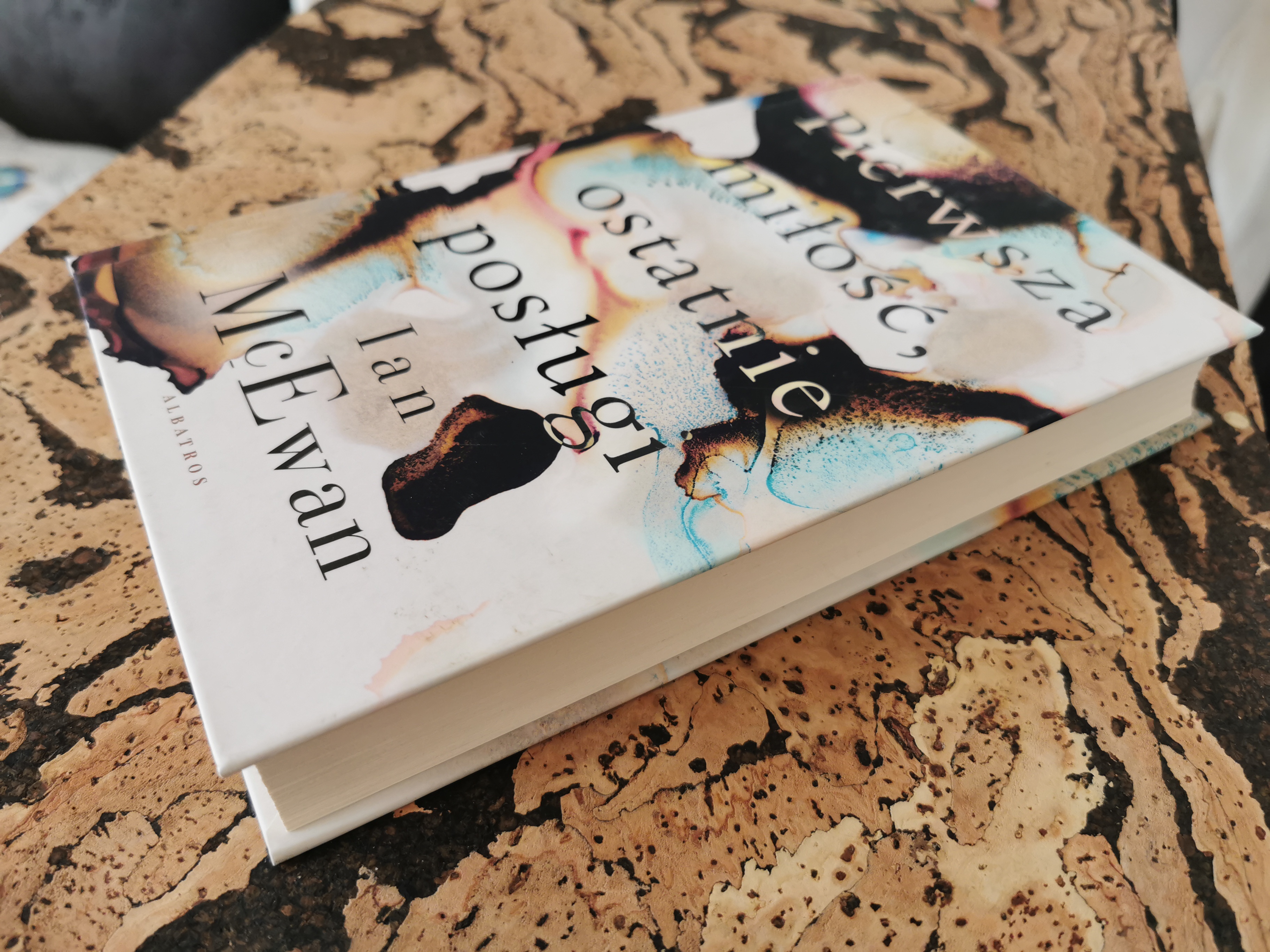
Ian McEwan, Pierwsza miłość, ostatnie posługi (First Love, Last Rites)

Nie sądź książki po okładce

Powieść Pierwsza miłość, ostatnie posługi stała sobie u mnie na półce od roku, trafiła do mnie jako prezent urodzinowy. Skusiło mnie w końcu jej piękne wydanie, choć przyznam, że odrzucał nieco opis z tylnej okładki. Kazirodztwo, pedofilia, znęcanie nad zwierzętami, morderstwo, podłość, samotność – niekoniecznie są to tematy, po które sięga się w pierwszej kolejności. Dwa, że inne dwie książki brytyjskiego pisarza Iana McEwana, które czytałam wcześniej (Pokuta, Ukojenie, Marzyciel), jakoś mnie nie zachwyciły. Ale po co są kolejne szanse?

Osiem niepowiązanych opowiadań

Na początku trzeba zaznaczyć, że ten zbiór opowiadań to literacki debiut Brytyjczyka z 1975 roku. Mimo pół wieku od publikacji tom się nie zestarzał, a obrazy kreowane przez pisarza są żywe, barwne, choć często zaskakująco okrutne albo dziwne. Jakby McEwan sprawdzał, gdzie leży granica, której nie powinno się przekraczać, i z każdym nowym opowiadaniem jednak robił ten krok dalej. Osiem zamieszczonych w tomiku opowiadań mocno się od siebie różni, a bohaterowie się nie powtarzają i nie mają ze sobą nic wspólnego. W pierwszym opowiadaniu Stereometria mąż, czytając pamiętniki swojego dziadka, odkrywa sekret geometrii i przekłada żonę na drugą stronę rzeczywistości, powodując, że znika. Domowym sposobem to historia brata, który bardzo chciał poznać, czym jest seks, więc bawi się – dość skutecznie – ze swoją siostrą w dom. Ostatni dzień lata opowiada o rodzinie mieszkającej na przedmieściach Londynu, a jej narratorem jest 12-letni chłopiec, który mieszka z siostrą Kate, jej malutką córeczką Alice i bratem Peterem na farmie. Dołącza do nich gruba czarnoskóra dziewczyna, Jenny, która wkrótce zaczyna opiekować się dziewczynką lepiej niż jej rodzona matka. Niestety, ostatni dzień lata przyniesie rodzinie wielką tragedię. Kusiak w teatrze to obrazek, w którym para wychodzi poza swoje role na scenie i niepomna patrzących na nich oczu uprawia seks w całkowitym zapamiętaniu. Motyle to dłuższe i w moich oczach najbardziej wstrząsające i brudne opowiadanie, gdzie nie cieszący się popularnością wśród rówieśników chłopiec wykorzystuje dziewczynkę z podwórka, a potem wpycha ją do kanału, gdzie mała tonie. Rozmowa z człowiekiem z szafy opowiada historię dorosłego już mężczyzny, który był całkowicie zawłaszczony w dzieciństwie przez matkę, która opóźniała jego dorastanie i opuszczenie domu, dopóki nie znalazła sobie mężczyzny i dorosły już, niedorozwinięty syn nie stał się dla niej przeszkodą. Tytułowe opowiadania, Pierwsza miłość, ostatnie posługi to widok na życie młodej pary, wynajmującej pokój, w którego ścianach gnieździ się szczur. Zabicie gryzonia sprawia, że para nagle dorośleje i postanawia uporządkować swoje życie. Duże, choć znów przygnębiające wrażenie, zrobiła na mnie ostatnia historia, Przebrania, gdzie ciotka opiekująca się osieroconym chłopcem, zmusza go do udziału w różnorakich przebierankach, nakłaniając do zakładania dziewczęcego stroju i makijażu, gdzie ona sama udaje dorosłego mężczyznę. Nawet pięknie zapowiadająca się przyjaźń z koleżanką z klasy może zostać skalana podczas balu przebierańców u ciotki.

Nie do wszystkich pisarzy można się przekonać

Opowiadania McEwana są brudne. W pewien sposób czytelnik staje się podglądaczem, ciekawskim sąsiadem, zaskoczonym świadkiem wydarzeń, których nie chciałby widzieć czy uczestniczyć. Mam wrażenie, że książka McEwana była zakrojona jako swoistego rodzaju sprawnie napisana prowokacja, popis sprawnego pióra użytego na rzecz sensacji czy przekraczania granic. Czyta się ją szybko, opowiadania są krótkie, ale zostałam z mało ciekawą refleksją – co mi dała ta lektura? Bez zachwytu. Czyli konsekwentnie z twórczością tego autora.

Moja ocena: 5/10.

Ian McEwan, Pierwsza miłość, ostatnie posługi
Tłumaczenie: Zofia Uhrynowska-Hanasz
Wydawnictwo: Albatros, Warszawa 2019
Liczba stron: 256
ISBN: 978-83-7985-908-5

******************************************************************************

Don’t judge the book by its cover

The novel First Love, Last Rites has been on my shelf for a year, it came to me as a birthday gift. I was finally tempted by its beautiful cover, although I must admit that I was a bit put off by the description on the back. Incest, pedophilia, animal abuse, murder, meanness, loneliness - these are not necessarily the topics that people reach for in the first place. Secondly, the other three books by the British writer Ian McEwan that I had read earlier (Atonement, The Comfort of Strangers, The Daydreamer) did not impress me. But what are second chances for?

Eight unrelated short stories

At the beginning, it should be noted that this collection of stories is the British writer's literary debut from 1975. Despite half a century since its publication, the volume has not aged, and the images created by the writer are vivid, colorful, although often surprisingly cruel or strange. As if McEwan was checking where the line that shouldn't be crossed is surpassed, and with each new story he takes a step further. The eight stories included in the volume are very different from each other, and the characters are not repeated and have nothing in common. In the first story Solid Geometry, the husband, reading his grandfather's diaries, discovers the secret of geometry and translates his wife to the other side of reality, causing her to disappear. Homemade is the story of a brother who really wanted to know what sex is, so he plays house - quite successfully - with his sister. Last Day of Summer is about a family living in the suburbs of London, and its narrator is a 12-year-old boy who lives with his sister Kate, her little daughter Alice and his brother Peter on a farm. They are joined by a fat black girl, Jenny, who soon begins to take better care of the girl than her birth mother. Unfortunately, the last day of summer will bring a great tragedy to the family. Cocker at the Theater is a picture in which a couple goes beyond their roles on stage and, oblivious to the eyes looking at them, has sex in full view. Butterflies is a longer and, in my opinion, the most shocking and dirty story, where a boy who is not popular among his peers exploits a girl from the yard and then pushes her into a canal, where the little girl drowns. Conversation with the Cupboard Man tells the story of an adult man who was completely taken over as a child by his mother, who delayed his growing up and leaving home until she found a man and her adult, underdeveloped son became an obstacle for her. The title stories, First Love, Last Rites, are a view of the life of a young couple renting a room with a rat nesting in the walls. Killing the rodent makes the couple suddenly grow up and decide to put their lives in order. The last story, Disguises, made a great, although again depressing, impression on me, where an aunt who takes care of an orphaned boy forces him to participate in various disguises, forcing him to put on girls' clothes and make-up, while she herself pretends to be an adult man. Even a budding friendship with a classmate can be sullied during a fancy dress party at your aunt's house.

Sometimes a second chance is a mistake

McEwan's stories are dirty. In a way, the reader becomes a voyeur, a curious neighbor, a surprised witness of events he would not like to see or participate in. I have the impression that McEwan's book was intended as a kind of well-written provocation, drawing out a certain darkness from the readers. It's a quick read, the stories are short, but I was left with an uninteresting reflection - what did this reading give me? Cetrailny no delight. So consistent with the rest of the author's work.

My rating: 5/10.


Author: Ian McEwan
Title: First Love, Last Rites
Translation: Zofia Uhrynowska-Hanasz
Publishing House: Albatros, Warsaw 2019
Number of pages: 256
ISBN: 978-83-7985-908-5


niedziela, 14 kwietnia 2024

Joanna Bator, Japoński wachlarz

Kolejna lektura obowiązkowa przed wyjazdem do Japonii

Mój egzemplarz książki  Joanny Bator Japoński wachlarz. Powroty został opublikowany w 2011 roku w serii Terra incognita wydawnictwa WAB. W moje ręce trafił w 2014 roku z okazji urodzin i mam takie podłe wrażenie, że czytałam go już wcześniej we fragmentach. Niemniej jednak przed zbliżającym się wyjazdem do Japonii przypomnienie sobie tej lektury wydawało mi się obowiązkowe i w sumie żałuję, że moich przygotowań do wyjazdu właśnie od niej nie zaczęłam.

Szeroki wachlarz tematów

Bator w X sekcjach opisuje swoje doświadczenia związane z krajem Kwitnącej Wiśni  - począwszy od brzydoty Tokio i chaotycznej zabudowy, poprzez najbliższe sąsiedztwo i funkcję stacji metra, stanowiące minicentrum okolicy pulsujące życiem, konieczność rysowania mapek i dokładnego tłumaczenia jak dojść w konkretnie miejsce, dalej poprzez specyfikę japońskiej kuchni, w której struktury podawanego pożywienie liczą się bardziej niż jego smak, poprzez kulturę kawaii i bananomanię (od pisarki Banany Yoshimoto i jej bestsellerowej Kuchni), kulturę teatru Takarazuka, gejsze, wodne dzieci, aż po zawiłości japońskich alfabetów i trudność w porozumiewaniu się w języku angielskim. Bator, która w Japonii spędziła dwa lata na różnych stypendiach, i która dalej lubi wracać do kraju Wschodzącego Słońca, filtruje swoje odczucia i doświadczenia przez szereg tekstów naukowych i badawczych, choć na końcu książki brakuje bibliografii. Japoński wachlarz wydaje się więc przygotowany z naukowym zacięciem, a obserwacje autorki podparte są innymi publikacjami i dyskusjami ze znawcami tematu.

Książka napisana z kobiecej perspektywy

Bator skupia się na roli kobiety w japońskim społeczeństwie, rozdzielności obu światów, a nawet używanego języka. Jej obserwacje są zgodne z tym, co pisał Will Ferguson w książce W drodze na Hokkaido – że kobiety, zanim zostaną żonami i matkami, cieszą się większą swobodą i spoczywa na nich mniejsza presja społeczna, natomiast kiedy wyjdą za mąż i urodzą dziecko, to one zarządzają domem i wspierają swoje pociechy w nauce. Chociaż klasyczna kariera, zwłaszcza w korporacji, należy do mężczyzn, kobiety budują swoje, całkiem potężne, światy, na które przykładem jest teatr Takarazuka albo kultura kawaii.

Proza podróżnicza szybko się starzeje

Niestety, mam wrażenie, że książka mocno się zestarzała, o czym świadczą dopiski (Powroty) samej autorki. Na próżno wypatrywać fanek Cosplayu na mostku Jingu, znikają gejsze z Kioto, Banany Yoshimoto nikt już nie pamięta. Sama Bator musiała zdawać sobie sprawę z zagrożenia, obserwując, jak różne mody przetaczają się przez Tokio z prędkością huraganu. Niemniej jednak, choć częściowo przedstawionego świata już nie ma, warto się z tą pozycją zapoznać przed wyjazdem. W końcu „Japonia to obcy kraj” i próba przygotowania na spotkanie z Innym, zrozumienia jego kultury i podejścia, pomoże wnikliwiej przyglądać się światu dookoła, może mniej się mu dziwić i nie popełniać kulturowych gaf. Wkrótce się przekonamy!

Moja ocena: 7/10.


Joanna Bator, Japoński wachlarz. Powroty
Wydawnictwo WAB, Warszawa 2011
Liczba stron: 376
ISBN: 978-83-7747-923-0

*******************************************************************************

Another must-read before going to Japan

My copy of Joanna Bator's book A Japanese Hand Fan. Returns was published in 2011 in the Terra incognita series by WAB Publishing House. It came into my hands in 2014 for my birthday and I have such a bad feeling that I had already read it in fragments. Nevertheless, before my upcoming trip to Japan, it seemed obligatory to recall this book, and I actually regret that I did not start my preparations for the trip with it.

A wide range of topics

In ten sections Bator describes her experiences related to the land of the Rising Sun - starting from the ugliness of Tokyo and chaotic buildings, through the immediate neighborhood and the function of the metro station, constituting a mini-center of the area pulsating with life, the need to draw maps and explain precisely how to get to a specific place, and further through the specificity Japanese cuisine, in which the structure of the food served is more important than its taste, through the culture of kawaii and banana-mania (from the writer Banana Yoshimoto and her best-selling Kitchen), the culture of the Takarazuka theater, geishas, water children, to the intricacies of Japanese alphabets and the difficulty of communicating in English language. Bator, who spent two years in Japan on separate scholarships and who still likes to return to the country of the Rising Sun, filters her feelings and experiences through a number of scientific and research texts, although there is no bibliography at the end of the book. A Japanese Hand Fan seems to have been prepared with a scientific flair, and the author's observations are supported by other publications and discussions with experts on the subject.

A book written from a female perspective

Bator focuses on the role of women in Japanese society, the separation of both worlds and even the language used. Her observations are consistent with what Will Ferguson wrote in Hokkaido Highway Blues - that before they become wives and mothers, women enjoy more freedom and have less social pressure, but once they get married and have a child, they manage home and support their children in learning. Although the classic career, especially in a corporation, belongs to men, women build their own, quite powerful worlds, examples of which are the Takarazuka theater or kawaii culture.

Travel prose ages quickly

Unfortunately, I have the impression that the book has aged significantly, as evidenced by the notes (Returns) by the author herself. There is no point in looking for cosplay fans on the Jingu bridge, geishas from Kyoto are disappearing, and no one remembers the books of Banana Yoshimoto. Bator herself must have been aware of the threat as she watched various fashions roll through Tokyo at hurricane speed. Nevertheless, although some of the world presented no longer exists, it is worth reading this item before leaving. After all, "Japan is a foreign country" and trying to prepare for the meeting with the Other, understanding its culture and approach, will help you look more closely at the world around you, maybe be less surprised by it and not make cultural blunders. We'll find out soon!


My rating: 7/10.


Author: Joanna Bator
Title: A Japanese Hand Fan. Returns
Publishing House: Wydawnictwo WAB, Warsaw 2011
Number of pages: 376
ISBN: 978-83-7747-923-0

Alex Kerr, Japonia utracona (Lost Japan. Last Glimpse of Beautiful Japan)

Tradycyjna Japonia oczami obcokrajowca

Książką Japonia utracona Alexa Kerra kończę moje literackie przygotowania do wyjazdu do Japonii. Sądzę, że to znakomita pozycja na sam koniec, bo bardzo dokładnie przybliża klasyczne sztuki japońskie, od teatru kabuki, poprzez sztukę kaligrafii, ikebanę, ceremonię parzenia herbaty, po klasyczne japońskie domy na prowincji. Autor, Amerykanin, który od dzieciństwa podróżował z rodzicami po świecie, stał się znawcą i smakoszem tradycyjnej, przemijającej kultury japońskiej, której znikanie opisuje.

Kultura japońska poziom zaawansowany

Uważam, że książki Kerra nie należy czytać na początku fascynacji kulturą japońską. O ile japońskie powieści Joanny Bator opisują współczesne nurty w kulturze, a autorka stara się chwycić i przedstawić tygiel bieżących wydarzeń, Kerr w dużej mierze skupia się na klasycznych elementach kultury z wnikliwością i znawstwem. Fascynacja dawną Japonią, wykształcenie, odpowiednie znajomości, płynne posługiwanie się językiem, a czasami również łut szczęścia dały autorowi status insidera, któremu dane było zobaczyć więcej japońskiej tradycji w najlepszym wydaniu, niż niejednemu Japończykowi. Z drugiej jednak strony trzeba pamiętać, że mamy tu wgląd w Cepelię, sztuki dawne, a dodatkowo książka powstała w 1993 roku w języku japońskim, więc ma już ponad 30 lat. Może być więc i tak, jak w przypadku Japońskiego wachlarza – z tego świata zostało jeszcze mniej.

Biografia autora

Alex Kerr potrafi pisać o tym świecie w sposób ciekawy i głęboko osobisty. Jednocześnie więc poznawanie dawnych tradycji i kultury staje się biografią autora, z której dowiadujemy się, w jaki sposób udało mu się tak zgłębić interesujące go tematy, zbudować unikalną kolekcję rękodzieła, wejść w posiadanie zabytkowej architektury (której utrzymanie i doprowadzenie do odpowiedniego stanu technicznego kosztowało go dużo pracy i pieniędzy). Poznajemy świat pasjonata o ogromnej wrażliwości, który jest w wielu miejscach lepiej zaznajomiony i oczytany z tradycji japońskiej niż niejeden lokals, a z drugiej strony nie jest Japończykiem i na zawsze będzie częściowo obcym, który z odrębnej perspektywy opisuje poznawany świat – jednocześnie od środka i od zewnątrz.

Nowoczesność vs. tradycja

Kerr jest mocno krytyczny wobec zmian zachodzących w Japonii na wielu płaszczyznach – począwszy od niszczenia środowiska naturalnego na niespotykaną skalę (betonowanie koryt rzek, wycinanie lasów i obsadzanie wycinek równymi rzędami cedrów, zamienianie ogrodów na wysypane piaskiem pustynie), poprzez niszczenie tradycyjnej zabudowy i budowanie na jej miejscu wieżowców, aż po kurczące się trupy teatrów kabuki czy brak zrozumienia dla sztuki ikebany. Jednak – przynajmniej w moim rozumieniu – mówimy to o folklorze, o zachowywaniu tradycji i dbaniu o nią, a nie o codziennym życiu i zmianach w nim zachodzących. W książce Kerra można wiec faktycznie przyjrzeć się Japonii utraconej, elementom kultury, które już przeminęły, poznać dokładne nazewnictwo niektórych elementów, ale nie poznamy Japonii obecnej. Zajrzymy trochę pod kołderkę kultury i tradycji, poznamy losy autora i jego postrzeganie Kraju Kwitnącej Wiśni, ale raczej trudno będzie dostrzec współczesny portret kraju. Niemniej jednak warto!

Moja ocena: 7/10.


Alex Kerr, Japonia utracona
Wydawnictwo Karakter, Kraków 2019
Tłumaczenie z angielskiego: Maria Kwiecińska-Decker
Liczba stron: 288
ISBN: 978-83-66147-03-4

*******************************************************************************

Traditional Japan through the eyes of a foreigner

With the book Lost Japan by Alex Kerr, I am finishing my literary preparations for my trip to Japan. I think this is an excellent book at the very end, because it presents classic Japanese arts in great detail, from kabuki theatre, through the art of calligraphy, ikebana, tea ceremony, to classic Japanese provincial houses. The author, an American who has traveled around the world with his parents since childhood, has become an expert and gourmet of the traditional, ephemeral Japanese culture, the disappearance of which he describes.

Japanese culture – advanced level

I believe that Kerr's book should not be read at the beginning of your fascination with Japanese culture. While Joanna Bator's The Japanese Hand Fan describes contemporary trends in culture, and the author tries to capture and present the melting pot of current events, Kerr largely focuses on classic cultural elements with insight and expertise. Fascination with ancient Japan, his own education, appropriate connections, fluent use of the language, and sometimes a stroke of luck gave the author the status of an insider who had the opportunity to see more of the Japanese tradition at its best than many Japanese people. On the other hand, we must remember that we have an insight into Cepelia, old ways, and the book was written in Japanese in 1993, so it is over 30 years old. So it may be the same as in the case of The Japanese Hand Fan - there is even less left of this world.

A biography of the author

Alex Kerr can write about this world in an interesting and deeply personal way. At the same time, learning about old traditions and culture becomes the biography of the author, from which we learn how he managed to delve into the topics that interested him so much, build a unique collection of handicrafts, and come into possession of historic architecture (the maintenance of which and bringing it to an appropriate technical condition cost him a lot of work and money). We get to know the world of an enthusiast with great sensitivity, who is, in many places, better acquainted and well-read with the Japanese tradition than many locals, but on the other hand, he is not Japanese and will forever be partly a foreigner, who describes the world he is exploring from a specific perspective -  inside and outside at the same time.

The modern versus the traditional

Kerr is highly critical of the changes taking place in Japan on many levels - from the destruction of the natural environment on an unprecedented scale (concreting of riverbeds, cutting down forests and planting clear rows of cedars, turning gardens into sand-strewn deserts), through the destruction of traditional architecture to build skyscrapers, to the shrinking troupes of kabuki theaters and the lack of understanding of the art of ikebana. However - at least in my understanding - we are talking about folklore, about preserving traditions and taking care of them, and not about everyday life and the changes that take place in it. In Kerr's book, you can actually look at the lost Japan, the elements of culture that have already passed away, and learn the exact names of some parts of it, but you will not get to know the present Japan. We will look a little under the blanket of culture and tradition, learn about the author's fate and his perception of the Land of the Rising Sun, but it will be rather difficult to see a contemporary portrait of the country. Nevertheless, it's worth it!

My rating: 7/10.


Author: Alex Kerr
Title: Lost Japan. Last Glimpse of Beautiful Japan
Publishing House: Karakter, Kraków 2019
Translation from English: Maria Kwiecińska-Decker
Number of pages: 288
ISBN: 978-83-66147-03-4


poniedziałek, 1 kwietnia 2024

Will Ferguson, W drodze na Hokkaido (Hokkaido Highway Blues)

Jeśli spotkacie Buddę na drodze, nie zabijajcie go. Unieście kciuk. Kto wie. Może was podwiezie?

Przygotowania do wyjazdu do Japonii idą pełną parą, dlatego kiedy podczas akcji Kup Pani Książkę Wrocławskiego Hospicjum dla Dzieci trafiłam na książkę Willa Fergusona W drodze na Hokkaido. Autostopem przez kraj kwitnącej wiśni, nie wahałam się długo. Nie odstraszyła mnie nawet jej długość (526 stron), a dzięki stosunkowo krótkim rozdziałom i zamieszczonym w relacji mapkom, udało mi się całkiem szybko uporać z tą dość sporą pozycją.

Po co się czyta relacje z podróży?

Jak przed każdą podróżą, kiedy maksymalizuję swoje wysiłki, by jak najlepiej przygotować się na wyjazd, zastanawiam się, czego tak naprawdę szukam w tego typu książkach? Czy oczekuję zbeletryzowanego przewodnika, który z trochę innej perspektywy opisuje miejsca, które będę zwiedzać, czy zapisu przygód i wrażeń autora przefiltrowanych przez jego wrażliwość? Na pewno liczę na pewien portret miejsca, które zamierzam odwiedzić, by choć trochę przygotować się na nieznane i w pewien sposób nastawić na to, co może mnie czekać. Myślę, że książka spełniła moje oczekiwania – przynajmniej po trochu.

Podążając za sakurą

Will Ferguson, Kanadyjczyk, który spędził w Japonii kilka lat jako nauczyciel języka angielskiego, zobowiązał się przed swoimi kolegami z pracy, że wyruszy wzdłuż Japonii wraz z falą kwitnienia wiśni, a jego pomysł spotkał się ze znacznie większym entuzjazmem, niż autor się spodziewał. Wyjazd okazał się więc społeczną koniecznością. Mimo, że sakura jest motywem całej podróży, nie znajdziemy zbyt wielu jej opisów. Fergusona zajmuje bowiem bardziej co innego – ludzie wiozący go z miejsca na miejsce, jako że odważny podróżnik postanowił odbyć swoją podróż autostopem. Spotyka go w zasadzie sama życzliwość, gościnność, otwartość, ale również poczucie odpowiedzialności za chwilowego gościa w samochodzie i potrzeba zapewnienia mu bezpieczeństwa. Żałowałam, że nie znam języka i dla mnie podróż w taki sposób nie byłaby możliwa.

Ferguson ma sporo trafnych i ciekawych spostrzeżeń, dotyczących zarówno natury Japończyków, ich kraju, jak i wybranego środka podróży. Chociaż często decyduje się na specyficzne poczucie humoru i patrzy na otaczający go świat z pewnym poczuciem wyższości (trudnym zresztą do zrozumienia), to często pokazuje również swoją wrażliwość na otaczający go świat i ludzi. Pokazuje Japonię i jej mieszkańców wnikliwie, przytaczając mity, wierzenia, starając się uchwycić ważne terminy kulturowe i społeczne. Warto przejść przez całą książkę, by parę takich perełek (chociażby o ginko czy układzie senpai-kohai – mistrz-uczeń) wyłowić.

Sakura

A co pisze Ferguson o samej sakurze? Oddajmy mu głos:

W Japonii rośnie ponad sto różnych odmian wiśni. Jeśli dodać do tego powstałe w wyniku starannego krzyżowania pododmiany, liczba ta wzrośnie do trzystu. Bywają sakura zebrane w koszyczki, jak chryzantemy (zae-zakura), inne rosną na cieniutkich gałązkach, zbite w ciasne grupki (edohigan-zakura). Niektóre opadają jak witki wierzb płaczących (shidare-zakura). Jedne są maleńkie i delikatne (chyoji-zakura), inne krzykliwie czerwone (kanhi-zakura). Niektóre wypuszczają kwiatki wprost z pni, inne poruszają się na wietrze jak firany. Niektóre pienią się niczym szampan, inne rosną niby w sieci wąsów. Niektóre są wysmukłe i strzeliste, inne niskie i przysadziste. Ich pnie bywają wąskie jak palec, ale niektóre sękacze przekraczają jedenaście metrów w obwodzie. Są wiśnie, które rosnąc, przekraczają granice własnej wytrzymałości i trzeba je podpierać z drewnianymi palikami, żeby nie łamały się ich gałęzie. Setkom z nich nadano status bogów: otoczono je powrozami shimenawa i oddaje im się cześć chramach. Innym nadano status państwowych pomników przyrody. Wszystkie one są sakura. (s. 90)

I dodaje:

Metaforyka otaczająca sakura jest skomplikowana. Zjawisko to od dawien dawna łączy się z narodzinami i śmiercią, pięknem i przemocą. Kwiaty wiśni zajmując centralne miejsce w japońskim kulcie przyrody, są podstawą kompozycji haiku, ornamentów zdobiących wazony i kimona, a - z drugiej strony - gardy samurajskich mieczy nosiły wizerunki sakura, będące ostatnim, nieco sarkastycznym przypomnieniem przemijalności życia, dostrzegalnym tuż przed rozpłataniem sobie brzucha. (s. 305)

Ruszamy więc zobaczyć fenomen sakura, chociaż z Polsce drzewa owocowe właśnie kwitną w najlepsze. Zobaczymy, jakie będą nasze spostrzeżenia i wrażenia z Kraju Kwitnącej Wiśni.

Moja ocena: 7/10.


Will Ferguson, W drodze na Hokkaido
Wydawnictwo Dolnośląskie, Wrocław 2012
Tłumaczenie: Jarosław Włodarczyk
Liczba stron: 528
ISBN: 978-83-245-9038-4

*******************************************************************************

Will Ferguson, On the way to Hokkaido

If you meet a Buddha on the road, do not kill him. Give him a thumbs up. Who knows. Maybe he'll give you a ride?

Preparations for the trip to Japan are in full swing, so during the Kup Pani Książkę campaign of the Wrocław’s Hospice for Children, I came across Will Ferguson's book Hokkaido Highway Blues. Hitchhiking Japan, I didn't hesitate for a minute. Even its length (526 pages) did not deter me, and thanks to the relatively short chapters and maps included in the report, I managed to deal with this rather large book quite quickly.

Why read travel reports?

Like before every trip, when I maximize my efforts to prepare for it as best as possible, I wonder what I am really looking for in this type of books? Do I expect a more elaborate guide that describes the places I will visit from a slightly different perspective, or a record of the author's adventures and impressions filtered through his sensitivity? I'm definitely counting on a certain portrait of the place I'm going to visit, to prepare at least a little for the unknown and, in some way, to embrace what may await me. I think the book met my expectations - at least to some point.

Following sakura

Will Ferguson, a Canadian who spent several years in Japan as an English teacher, made a commitment to his colleagues that he would travel along Japan with the cherry blossom wave, and his idea was met with much more enthusiasm than the author expected. The trip turned out to be a social necessity. Even though sakura is the motif of the entire trip, there are not many descriptions of it. Ferguson is more interested in something else - the people taking him from place to place, as the brave traveler decided to hitchhike. He is basically met with kindness, hospitality, openness, but also a sense of responsibility for a temporary guest in the car and the need to ensure his safety. I regretted that I didn't know the language and traveling in this way would not be possible for me.

Ferguson has a lot of accurate and interesting observations regarding both the nature of the Japanese, their country, and the means of travel chosen. Although he often goes for a specific sense of humor and looks at the world around him with a certain sense of superiority (which is difficult to understand), he also often shows his sensitivity to the world and people around him. It shows Japan and its inhabitants in detail, citing myths and beliefs, trying to capture important cultural and social terms. It is worth going through the entire book to find a few such gems (for example about ginko or the senpai-kohai - master-disciple system).

Sakura

And what does Ferguson write about sakura itself? Let's give him a voice:

Over a hundred different varieties of cherries grow in Japan. If we add the subvarieties created as a result of careful crossbreeding, this number increases to three hundred. There are sakura gathered in baskets, like chrysanthemums (zae-zakura), others grow on thin twigs, clustered in tight groups (edohigan-zakura). Some fall like the tendrils of weeping willows (shidare-zakura). Some are tiny and delicate (chyoji-zakura), others are bright red (kanhi-zakura). Some sprout flowers straight from the trunks, others move in the wind like curtains. Some foam like champagne, others grow like a network of tendrils. Some are slender and towering, others short and stocky. Their trunks can be as narrow as a finger, but some knot trees exceed eleven meters in circumference. There are cherry trees that, as they grow, exceed the limits of their own strength and need to be supported with wooden stakes so that their branches do not break. Hundreds of them were given the status of gods: they were surrounded by shimenawa ropes and worshiped in shrines. Others were given the status of state natural monuments. They are all sakura. (p. 90)

Later in the book he adds:

The metaphor surrounding sakura is complicated. This phenomenon has long been associated with birth and death, beauty and violence. Cherry blossoms occupy a central place in the Japanese cult of nature, are the basis of haiku compositions, ornaments decorating vases and kimonos, and - on the other hand - the guards of samurai swords carried images of sakura, which are the last, slightly sarcastic reminder of the transience of life, visible just before cutting one's belly open. (p. 305)

So we set out to see the sakura phenomenon, although fruit trees in Poland are in full bloom right now. We will see what our observations and impressions from the Land of the Rising Sun will be.

My rating: 7/10.


Author: Will Ferguson
Title: Hokkaido Highway Blues. Hitchhiking Japan
Publishing House: Wydawnictwo Dolnośląskie, Wrocław 2012
Translation: Jarosław Włodarczyk
Number of pages: 528
ISBN: 978-83-245-9038-4