Pokazywanie postów oznaczonych etykietą choroba. Pokaż wszystkie posty

środa, 17 czerwca 2026

Aleksandra Zbroja, Muszę ci coś powiedzieć

Między chcieć a musieć jest ogromna różnica

Powieść Agaty Zbroi Muszę ci coś powiedzieć zobaczyłam, klasycznie, na półce nowości w lokalnej bibliotece. Ponieważ czytałam wcześniej inną książkę Autorki, Mireczek, z ochotą i chęcią sięgnęłam po najnowszą pozycję. Uczucia miałam początkowo mieszane.

Mam HIV

Bohaterka powieści, Joanna Mszałek, pochodzi z niewielkiej miejscowości, rozpoczęła studia, które ciągnie na czwórkach, ale ma też poprawkę, jest przy kości i bardzo chciałaby przeżyć z kimś swój pierwszy raz. Więc go przeżywa, pijana, po weselu, z ojcem swojej koleżanki. Wydaje się, że los uśmiecha się do niej, kiedy na wakacjach poznaje chłopaka od siebie z wioski, Daniela, i para po krótkiej znajomości postanawia wyjechać razem na Tajwan, gdzie Daniel studiował i obecnie ma pracę. Asia podejmuje decyzję, żeby wyjechać z Danielem. Ponieważ chłopak pracuje niemal non stop i związek im się nie układa, dziewczyna znajduje sobie przyjaciół, a dzięki nim dalej pracę jako nauczycielka angielskiego na zastępstwo. Kiedy dostaje propozycję pracy na stałe, dostaje również skierowanie na test na obecność wirusa HIV i okazuje się, że jest on pozytywny. Udaje jej się zafałszować wyniki drugiego testu i w ten sposób unika deportacji z Tajwanu. I tak w zasadzie zaczyna się najważniejsza część książki – życie z HIV.

Mechanizm zakażenia

Wiemy, że bohaterka jest zakażona niemal od pierwszego akapitu i Zbroja cały koncept książki opiera na tym motywie. Mniej więcej do połowy książki wiodła mną ciekawość, jak to się stało, że Asia zaraziła się wirusem, to jednak było to dla mnie trochę za mało. Sens książki dostrzegłam dopiero, kiedy Autorka opisała mechanizm działania choroby (wirus HIV zakaża komórki posiadające receptor CD4 znajdujący się na powierzchni limfocytów pomocniczych Th, ale także powierzchni dendrytów, makrofagów, monocytów, eozynofilów; podczas replikacji wirus powoduje spadek limfocytów CD4+ i upośledza działanie układu odpornościowego; nieleczony może prowadzić do AIDS). Autorka konfrontuje nas ze wszystkimi obawami zdrowych ludzi (jak można się zarazić), ale też uspokaja, co nie zaraża. Pokazuje w przystępny i społeczny sposób mechanizm działania choroby. Normalizuje to pojęcie pokazując, że nosiciele wirusa, dzięki nowoczesnym lekom, mogą żyć jak zwyczajni członkowie społeczeństwa, zakładać rodziny, mieć dzieci.

Życie z chorobą

Autorce udaje się poruszyć jeszcze jeden ważny temat – życie z chorobą w ogóle, na różnych przykładach. Z jednej strony mamy Joasię, która zaraża się budzącym przerażenie wirusem i uczy się żyć po tym, jak „spotkało ją najgorsze”. Ale też pisze o matce Joanny, która choruje na raka piersi, i jej choroba staje się najważniejszym elementem codzienności rodziny. Matka mówi:

-- Wygodnie bywa w chorobie, przytulnie. Mówią ci, co robić i o jakim czasie. Nie musisz myśleć, co za pięć lat osiągniesz, co za dekadę, bo liczy się tylko, że teraz masz badanie krwi, a potem rezonans. Po wyzdrowieniu człowiek nie wie, jak te wszystkie nagle odzyskane lata planować. Bo co to jest rok bez rezonansu? Co to są dwa lata? Strach się przyzwyczaić, że to wszystko może tak trwać i trwać. [...] Ale jak choroba wraca, kiedy zdrowiejesz drugi raz, czujesz, że trzeciej szansy nie będzie. Na wszelki wypadek jedną nogą stoisz w świecie chorych, żeby nie wypaść z obiegu. (s. 308)

Myślę, że mało kto potrafi spojrzeć na chorobę z takiej perspektywy, i właśnie po to się czyta książki – żeby ją dostrzec.

Lektura potrzebna

Podsumowując, mimo początkowego nieprzekonania uważam, że książka jest dobra i ważna, z kilku powodów. Demityzuje nosicieli wirusa HIV, pokazuje ich jako normalnych ludzi, często zakażonych przypadkiem, można powiedzieć – niesprawiedliwie. Po drugie, pokazuje okrutny, krzywdzący, przepełniony lękiem odbiór społeczny, przytacza raniące komentarze, pełne lęku albo agresji spojrzenia, ogrom hejtu. Po trzecie, pokazuje układanie sobie życia z wirusem, budowanie relacji, normalizację „najstraszniejszego”. Myślę, że dla osób chorych to może być leczenie z traumy. A dla osób zdrowych – pokazanie innej perspektywy, nauczenie wrażliwości, ale też zrozumienia natury choroby i na ile jest ona dla nas groźna. Moim zdaniem trzeba, i dziękuję Autorce za jej wielką wrażliwość na przeżycia i cierpienia innych.

Moja ocena: 7/10.


Aleksandra Zbroja, Muszę ci coś powiedzieć
Wydawnictwo Agora, Warszawa 2025
Liczba stron: 376
ISBN: 978-83-838-0253-4

**********************************************************************************

There's a Huge Difference Between Wanting and Having to

I saw Agata Zbroja's novel, I Have to Tell You Something, on the book shelf with new publications at the local library, as usual. Having previously read another book by the author, Mireczek, I eagerly and somewhat greedily picked up the latest title. My feelings were initially mixed, but read till the end to see the final judgement.

I Have HIV

The novel's protagonist, Joanna Mszałek, comes from a small town, started college and is getting B grades, but she also has to retake one exam in September. Physically insecure,  chubby, and desperately wants to experience her first time with someone. So she experiences it, drunk, after a wedding, with her friend's father. It seems fate smiles on her when, while on vacation, she meets a boy from her village, Daniel, and after a short acquaintance, the couple decides to go together to Taiwan, where Daniel studied and currently works. Joanna decides to go with Daniel. Because he works almost constantly and their relationship isn't working out, she finds friends, and thanks to them, she continues her job as a substitute English teacher. When she's offered a permanent job, she's also referred for an HIV test, which turns out to be positive. That comes as a complete shock. She manages to falsify the results of the second test, thus avoiding deportation from Taiwan. And that's essentially where the most important part of the book begins – living with HIV.

Mechanism of Infection

We know the protagonist is infected almost from the first paragraph, and Zbroja bases the entire concept of the book on this motif. About halfway through the book, I was curious about how she contracted the virus, but that wasn't enough for me. I only really grasped the book's meaning when the author described the mechanism of the disease (HIV infects cells with the CD4 receptor, found on the surface of helper T lymphocytes, but also on the surfaces of dendrites, macrophages, monocytes, and eosinophils; during replication, the virus causes a decrease in CD4+ lymphocytes and impairs immune function; if left untreated, it can lead to AIDS). The author confronts us with all the fears of healthy people (how one can become infected), but also reassures us about what isn't dangerous or does not pose a threat. She presents the mechanism of the disease in an accessible and socially relevant way. She normalizes this concept by showing that, thanks to modern medications, virus carriers can live like ordinary members of society, start families, and have children.

Living with the disease

The author manages to touch on another important topic – living with the disease in general, through various examples. On the one hand, we have Joasia, who contracts the terrifying virus and learns to live after "the worst has happened to her." But Zbroja also writes about Joanna's mother, who has breast cancer, and her illness becomes the most important element of the family's daily life. The mother says:

-- It's comfortable, cozy, being sick. They tell you what to do and when. You don't have to think about what you'll achieve in five years, what you'll achieve in a decade, because all that matters is that you have a blood test now and then an MRI. After recovery, you don't know how to plan all those suddenly regained years. Because what's a year without an MRI? What's two years? It's scary to get used to the fact that it can all go on and on. [...] But when the disease returns, when you recover for the second time, you feel there won't be a third chance. Just in case, you keep one foot in the world of the sick, so as not to fall out of the loop. P. 308

I think few people can look at the disease from this perspective, and that's precisely why we read books – to have a chance to see it.

A must-read

In summary, despite my initial hesitation, I think the book is good and important for several reasons. It demystifies HIV-positive people, portraying them as normal people, often infected accidentally, one might say – unfairly. Secondly, it shows the cruel, unfair, fear-filled social perception, citing hurtful comments, fearful or aggressive glances, and a huge amount of hate. Thirdly, it shows how to manage life with the virus, building relationships, and normalizing the "most terrible thing." I think that for people with HIV, reading it can become a start of a healing process from trauma. And for healthy people – it's about showing a different perspective, teaching sensitivity, but also understanding the nature of illness and its mechanisms. In my opinion, it is a must-read, and I thank the author for her great attention and sensitivity to the experiences and suffering of others.

My rating: 7/10.


Author: Aleksandra Zbroja
Title: I Have to Tell You Something (book not translated to English as of June 2026)
Agora Publishing House, Warsaw 2025
Number of pages: 376
ISBN: 978-83-838-0253-4

czwartek, 26 marca 2026

Kazuo Ishiguro, Klara i słońce (Klara and the Sun)

Czy androidy wierzą w boga?

Powieść Kazuo Ishiguro z 2017 roku przypomina Nie opuszczaj mnie. Autor po raz kolejny sięga do tematów science-fiction, pokazując je niepokojąco blisko naszej rzeczywistości i w całkiem prawdopodobnym scenariuszu. Klara i słońce bardzo pozytywnie mnie zaskoczyła.

Empatyczne androidy wspierają ludzi

Tytułowa Klara jest robotem, Sztuczną Przyjaciółką drugiej generacji, która z wystawy sklepowej obserwuje toczące się na ulicy życie. Ona i jej podobni zostali zaprojektowani jako wsparcie dla dzieci w czasie ich dorastania, z umiejętnością obserwacji, wyciągania wniosków i rozbudowanej analizy sytuacji. Klara dość długo musi czekać na swoją właścicielkę - zostaje nią Josie z rozbitej rodziny, gdzie dwoje rodziców pracuje w administracji na dość wysokich stanowiskach. Dziewczynka została poddana modyfikacji genetycznej, zwanej korekcją, która dzieciom z dobrze usytuowanych rodzin ma zapewnić sukces na studiach i lepsze życie. Starsza siostra Josie, Sal, zmarła w wyniku tego zabiegu. Stan dziewczynki się pogarsza i rodzina obawia się powtórki scenariusza. Zwłaszcza matka ma wyrzuty sumienia, ponieważ to ona podjęła decyzję o zabiegu.

Świat z przyszłości

W ten sposób zaczynamy poznawać świat z przyszłości. Roboty pomagają dzieciom w nauce i zapewniają im towarzystwo, by nie czuły się samotne. Rodzice czują się zmuszeni, by poddawać swoje pociechy ryzykowny procedurom, bez których z kolei droga na większość uniwersytetów jest zamknięta. Matka Josie, w obawie przed utratą drugiej córki, prosi Klarę, by jak najlepiej "nauczyła się" Josie, by ewentualnie, w przypadku jej śmierci, mogła ją zastąpić. Powstaje nawet specjalna powłoka o dokładnym wyglądzie córki, dla której wymówką jest pozowanie do portretu. Z jednej strony pokazuje to pewną niedojrzałość dorosłych i brak gotowości do ponoszenia konsekwencji własnych decyzji, z drugiej - ich totalne zagubienie w świecie technologii i wartości oraz zagrożeń z niej płynących.

Odwrócenie ról

Ofiarą w walce o zdrowie Josie będzie Klara, oddana przyjaciółka całkowicie poświęcona misji ratowania swojego człowieka. Klara, rozumiejąca świat poprzez swoją mechanikę i zasady działania, uznaje, że to samo, co jest dobre dla niej, będzie dobre dla człowieka. Co ciekawe, robot uznaje życiodajne słońce (Klara ma baterie słoneczne) za Boga i składając do niego modły podczas zachodu słońca uważa, że wyprasza zdrowie dla swojej ludzkiej przyjaciółki. Ludzie wierzą ślepo w naukę i niesione przez nią możliwości, szafując własnym życiem i zdrowiem. Roboty przejmują ludzką empatię i okazują więcej ciepłych emocji i zaangażowania niż ludzie, ale też szukają w swoim życiu absolutu, którego ludzie zdają się nie potrzebować. To niepokojące odwrócenie ról.

Klara i słońce wpisuje się w literacką tradycję

Powieść Ishiguro jest naprawdę bardzo dobra, długo trzyma w napięciu, co stronę cierpliwie pokazując coraz bardziej przerażający obraz nowej rzeczywistości. Oprócz wcześniejszej książki Klara i słońce nasuwa mi na myśl Wiedźmina - tam też pogromca potworów uważał je czasem za bardziej ludzkie od zleceniodawców. To na naszym podwórku, na światowym oczywiście Philip K. Dick i jego powieść Czy androidy śnią o elektrycznych owcach. Ishiguro wpisuje się w bogatą tradycję literacką, opowiadając historię, która łapie za serce, porusza i skłania do myślenia. Fascynująca książka.

Moja ocena: 9/10.


Kazuo Ishiguro, Klara i słońce
Wydawnictwo Albatros, Warszawa 2021
Tłumaczenie: Andrzej Szulc
Liczba stron:320
ISBN: 978-83-8251-365-1

**********************************************************************************

Do Androids Believe in God?

Kazuo Ishiguro's 2017 novel is reminiscent of Never Let Me Go. The author once again draws on science fiction themes, presenting them disturbingly close to our reality and in a quite plausible scenario. Klara and the Sun was a great read.

Empathetic Androids Support People

The titular Klara is a robot, a second-generation Artificial Friend who observes life on the street from a shop window. She and others like her were designed to support children as they grow up, with the ability to observe, draw conclusions, and analyze situations in detail. Klara has to wait quite a while for her owner – Josie. The girl comes from a broken home, where both parents, divorced, work in relatively high-ranking government positions. The girl has undergone genetic modification, known as correction, which is intended to ensure success in college and a better life for children from well-off families. Josie's older sister, Sal, died as a result of this procedure. The girl's condition worsens, and the family fears a repeat of the same scenario. The mother in particular feels guilty, as she was the one who made the decision for her daughter to undergo the procedure.

A World of the Future

This is how we begin to explore the world of the future. Robots help children learn and provide them with companionship so they don't feel lonely. Parents feel compelled to subject their children to risky procedures, without which, in turn, entry to most universities is closed. Josie's mother, fearing the loss of her second daughter, asks Klara to "learn" Josie as best she can so that, if she dies, she can replace her. A special shell is even created, precisely resembling her daughter, while the girl poses for a portrait. On the one hand, this demonstrates a certain immaturity of the adults and their lack of readiness to face the consequences of their own decisions, and on the other, their complete loss in the world of technology, values, and the dangers it brings.

Role Reversal

The victim in the fight for Josie's health will be Klara, a devoted friend completely dedicated to the mission of saving her human. Clara, understanding the world through her own mechanics and operating principles, recognizes that what is good for her will also be good for humans. Interestingly, the robot recognizes the life-giving sun (Clara has solar panels) as God, and by praying to it at sunset, she believes she is praying for the health of her human friend. People blindly believe in science and the possibilities it offers, squandering their own lives and health. Robots adopt human empathy and display more warm emotions and commitment than humans, but they also seek an absolute in their lives that humans seem to reject. This is a disturbing role reversal.

Clara and the Sun continues a literary tradition

Ishiguro's novel is truly excellent, sustaining suspense for a long time, patiently presenting an increasingly terrifying picture of the new reality with each page. Besides his earlier book, Klara and the Sun reminds me of The Witcher – in which the monster slayer sometimes considered them more human than their employers. It's in our own backyard, and in the world, of course, that’s Philip K. Dick and his novel Do Androids Dream of Electric Sheep are at the forefront. Ishiguro joins a rich literary tradition, telling a story that touches the heart, moves, and provokes thought. A fascinating book.

My rating: 9/10.


Author: Kazuo Ishiguro
Title: Klara and the Sun
Publishing House: Albatros, Warsaw 2021
Translation: Andrzej Szulc
Number of pages: 320
ISBN: 978-83-8251-365-1

poniedziałek, 15 września 2025

Stanley Tucci, Co zjadłem przez rok (i o czym wtedy myślałem) (What I Ate in One Year and related thoughts)

Zupa to życie w garnku

Z książką Stanleya Tucci zetknęłam się podczas Europejskiej Nocy Literatury, gdzie we fragmentach czytał ją Jarosław Boberek. Startowałam z pułapu osoby całkowicie niezainteresowanej literaturą aktora, skończyłam jako zachwycony czytelnik, kupujący książkę w prezencie na prawo i lewo.

Wielostronnie utalentowany autor

Stanley Tucci to urodzony w 1960 roku amerykański aktor, producent, scenarzysta i jak widać – również pisarz. Jakim cudem tak zabiegany człowiek, jeżdżący po całym świecie i starający się znaleźć w codziennej bieganinie czas dla swojej drugiej żony Felicity, i ich dwójki dzieci, znalazł czas na napisanie kulinarnych wspomnień, pozostaje dla mnie zagadką. Jest to jednak widoczne w długości (a raczej krótkości) niektórych rozdziałów. Z tego też względu spożywcze rozważania aktora czyta się naprawdę szybko, jest to też literatura lekka, pełna ciepła, choć może trochę kiczowata.

Miłość do żarcia i życia

Głównym tematem książki jest jedzenie i miłość do niego. Ale też niezgoda na bylejakość tego jedzenia, nastawienie na domowe, jakościowe posiłki, na dobre restauracje z prawdziwą, znakomitą kuchnią. To jeden z plusów książki – można wynotować sobie polecane przez aktora miejsca, i liczyć, że a) uda się kiedyś do nic dotrzeć (miejscówki ciągną się od Wielkiej Brytanii, przez Włochy, Stany Zjednoczone, po… Mołdawię) i b) będzie nas na nie stać. Jednak Tucci pisze też o swoich smakach z dzieciństwa i załącza garść przepisów na proste, smaczne potrawy. Osobiście nie przepadam za gotowaniem (to mało powiedziane), ale dzięki tej książce popełniłam kilka posiłków, i nawet dwa ciasta. Autor pokazuje, że życie może być smaczne na każdym kroku, i uczy – by nie marnować okazji do zjedzenia czegoś wartościowego. Posiłki w rodzinie Tuccich wydają się celebracją bliskości, bycia razem, a przy okazji smacznej kuchni.

Comfort book

Drugą zaletą książki jest płynące z niej ciepło i pewna niefrasobliwość. Wszystko jest ładne, przytulne, w większości smaczne, a życie – po prostu piękne. Tak jak jest kategoria comfort food, jedzenia, które daje nam poczucie bezpieczeństwa i ukojenie, tak ta książka należy do kategorii comfort book. Dzięki niej rzeczywistość wydaje się lżejsza, smaczniejsza, bardziej kolorowa. Dzięki tej książce chce się człowiekowi postarać, nawet w kuchni. Zresztą trudno, żeby było inaczej – książka oddziałuje na różne zmysły, może służyć jako zabawna książka kucharska, ale jest też w niej garść porad dotyczących życia.

Łyżka dziegciu

Chociaż przez tłumaczenie przebija amerykańskość tego tekstu („Wszystko było pyszne, zwłaszcza opiekane ostrygi Aureliena. Jezu Chryste. WTF?! Quelle révélation!” s. 89), która momentami jest irytująca i płytka, to jednak Tucci przemyca też w tekście głębsze wnioski. Pisze o utracie swojej pierwszej żony, która zmarła na raka („Czas stoi w miejscu tylko wtedy, kiedy cierpisz” s. 378), o trudach swojej walki z chorobą – nowotworem języka („Wygląda na to, że czasem trzeba przeżyć słabość absolutną, żeby odkryć w sobie siłę, o której nie miało się pojęcia” s. 94), o dojrzałości i odchodzeniu. To sprawia, że całość książki jest mniej lukrowata i słodka.

Książka z potencjałem

Dlatego uważam, że Tucci napisał potencjalny bestseller – lekka tematyka, niosąca pocieszenie i ciepło, inspirująca do doceniania codzienności i małych, pięknych chwil, do wnoszenia piękna do codzienności. Nie ma tu co szukać wielkiej literatury, to raczej budyń waniliowy, który sprawia, że życie od razu staje się po prostu lepsze.


Moja ocena: 8/10


Stanley Tucci, Co zjadłem przez rok (i o czym wtedy myślałem)
Wydawnictwo Marginesy, Warszawa 2025
Tłumaczenie: Piotr Królak
Liczba stron: 416
ISBN: 978-83-68367-32-4

********************************************************************************

Soup is Life in a Pot

I encountered Stanley Tucci's book during the European Literature Night, where Jarosław Boberek read excerpts. I started out completely uninterested in the actor's writing, but ended up a delighted reader, buying the book as a gift left and right.

A Multi-Talented Author

Stanley Tucci, born in 1960, is an American actor, producer, screenwriter, and, as you can see, also a writer. How such a busy man, traveling all over the world and trying to find time for his second wife, Felicity, and their two children, found time to write a culinary memoir remains a mystery to me. However, this is evident in the length (or rather, shortness) of some of the chapters. This also makes the actor's food reflections a very quick read; it's light, warm, if perhaps a bit kitschy.

A Love for Food and Life

The book's main theme is food and the love for it. But there's also a rejection of the mediocrity of the food, a focus on home-cooked, high-quality meals, and good restaurants with authentic, exquisite cuisine. This is one of the book's strengths – you can jot down the places the actor recommends and hope that a) you'll be able to get there someday (the spots stretch from Great Britain, through Italy, the United States, to... Moldova) and b) you'll be able to afford them. However, Tucci also writes about the tastes of his childhood and includes a handful of recipes for simple, delicious dishes. Personally, I'm not a fan of cooking (that's an understatement), but thanks to this book, I made several meals, and even two cakes. The author shows that life can be delicious at every turn and teaches us not to waste opportunities to eat something nutritious. Meals in the Tucci family seem to be a celebration of closeness, togetherness, and, incidentally, delicious food.

Comfort book

The book's second strength is the warmth and a certain lightheartedness that flows from it. Everything is beautiful, cozy, mostly delicious, and life – simply beautiful. Just as there's a category for comfort food, food that gives us a sense of security and solace, this book belongs to the comfort book category. It makes reality seem lighter, tastier, more colorful. This book makes you want to put in the effort, even in the kitchen. It couldn't be otherwise – the book appeals to various senses, can serve as a humorous cookbook, but it also offers a handful of life advice.

A Fly in the Tar

Although the Americanism of this text shines through the translation ("Everything was delicious, especially Aurelien's broiled oysters. Jesus Christ. WTF?! Quelle révélation!" p. 89), which is at times irritating and shallow, Tucci also manages to convey deeper insights. He writes about the loss of his first wife, who died of cancer ("Time only stands still when you're suffering," p. 378), about the hardships of his battle with tongue cancer ("It seems that sometimes you have to experience absolute weakness to discover strength you never knew you had," p. 94), and about maturity and letting go. This makes the entire book less sugary and shallow.

A Book with Potential

That's why I believe Tucci has written a potential bestseller – a lighthearted story, bringing comfort and warmth, inspiring appreciation for everyday life and small, beautiful moments, and bringing beauty to everyday life. There's no need to look for great literature here; it's more of a vanilla pudding that instantly makes life simply better.

My rating: 8/10


Author: Stanley Tucci
Title: What I Ate in One Year (and related thoughts)
Publishing House: Marginesy, Warsaw 2025
Translation: Piotr Królak
Number of pages: 416
ISBN: 978-83-68367-32-4
niedziela, 3 sierpnia 2025

Hilary Mantel, Duchy zostają (Giving Up the Ghost)

Jeśli się ocknę jako warzywo, wrzućcie mnie do gulaszu

Po powieść Hilary Mantel sięgnęłam, bo stała na półce nowości w Miejskiej Bibliotece Publicznej, a autorka jest mi znana z powieści Wolf Hall. Poza tym ostatnio książki mniejszych rozmiarów po prostu mnie kuszą. Pamiętnik Duchy zostają to osobista historia autorki, od najwcześniejszych wspomnień z dziecństwa, przez trudną sytuację rodzinną, po podwójne małżeństwo i doświadczenie choroby. Początkowo ciężko mi się czytało te wspomnienia, jednak rozdział o endometriozie rozłożył mnie na łopatki.

Na tym polega życie dziecka. Nie masz żadnych praw

Idźmy jednak po kolei. Początkowe rozdziały, pokazujące ulotność i zmienność pamięci, były dość standardowe, i w sumie wspomnienia z dzieciństwa nie były dla mnie pasjnujące ani nowatorskie. Takie historie każdy z nas ma w zanadrzu. Sytuacja rodziny była za to wyjątkowa i trudna, gdyż matka przyszłej pisarki rozstała się z mężem i zamieszkała z kochankiem i swoimi dziećmi, co było lokalnym skandalem, a Mantel dosięgły szkolne plotki i docinki. „W tamtych czasach na angielskiej prowincji, aby uniknąć kłopotów, należało udawać, że niczym nie różnisz się od innych,” pisze autorka niec ironicznie (s. 116). Również to, jak młodo pisarka wyszła za mąż w związku z oczekiwaniami społecznymi pokazuje, jak inna była to epoka.

Bóle menstruacyjne? Miną, droga pani, miną zaraz po pierwszym dziecku

Mantel dużo pisze o swoim kiepskim samopoczuciu, potwornych migrenowych bólach głowy, które wywołują halucynacje, bólach nóg i brzucha. Przyczyną okazuje się być endometrioza, choroba polegająca na obecności błony śluzowej macicy poza jej jamą. Błona krwawi wraz z comiesięcznym cyklem powodując silną bolesność w zależności od jej rozmieszczenia. Mantel miała wyjątkowo złośliwą endometriozę, rozmieszczoną również w głowie czy jelitach, ale związaną również z ogromnym guzem, który urósł jej w brzuchu. Operacja okazała się konieczna, a pisarka w wieku dwudziestu siedmiu lat straciła macicę, a co za tym idzie – możliwość posiadania dzieci. To okazało się dla niej szczególnie bolesne, chociaż w momencie operacji nie pragnęła mieć jeszcze dzieci. Gdy ich zapragnęła, było już za późno: „Trzeba było zostać nastoletnią matką, myślałam, tą zakałą społeczenstwa. Możliwe, że kiedy miałam czternaście lat, byam płodna. I kiedy miałam siedemnaście. Za to później – muszę czytać swój ból wstecz, żeby wiedzieć, co się we mnie dzieje – później szanse już pewnie malały,” pisze gorzko (s. 169). Myślę, że wiele kobiet na całym świecie, walczących z bezpłodnością o różnych przyczynach (a czasami i bez żadnych), dochodzi do podobnych wniosków.

Łysa, nieforemna, głucha, a mimo to wciąż niepokonana

Oprócz doświadczenia szalenie wrednej choroby, jaką jest endometrioza, a potem skutków związanych z hormonalną terapią zastępczą – otyłością, Mantel sporo pisze o swojej bezdzietności i marzeniach, które pojawiły się, kiedy były już niewykonalne. To przypomina eseje Emilie Pine, której sytuacja była o tyle inna, że szanse jeszcze jakieś były. Bez macicy trudno urodzić dziecko. Mantel pisze o swojej żałobie po ciele, które nawet nie zaistniało, o swojej wymarzonej o dokładnie wyobrażonej nigdy nienarodzonej córce Catrionie. Bezdzietność w końcu zyskuje swój obraz w literaturze, obraz bolesny, chropowaty, na wskroś uczciwy. O ile inne rozdziały w książce Duchy zostają były dobrze napisane, ale nie wiekopomne, to Część piąta. Pokaż jak do tego doszłaś naprawdę rozkłada czytelnika na łopatki. To autentyczny kobiecy głos, analizujący swoje emocje po latach, popełnione błędy, utracone szanse. Ale to również głos świadczący o kobiecej sile i wytrwałości w użeraniu się z chorobami, w układaniu sobie peiorytetów. Z pewnością zostanie ze mną ten fragment – niech wybrzmi na zakończenie i przekona Was, ze po tą publikację warto sięgnąć: „Wróciłam do domu, do naszej ciemnej, osłoniętej enklawy w środku ogromnego miasta. Łysa, nieforemna, głucha, a mimo to wciąż niepokonana, usiadłam i napisałam drugą książkę” (s. 164).

Moja ocena: 8/10.


Hilary Mantel, Duchy zostają
Wydawnictwo Czarne, Wołowiec 2025
Tłumaczenie: Martyna Tomczak
Liczba stron: 192
ISBN: 978-83-8369-026-5

***********************************************************************************

If I wake up a vegetable, put me in a stew

I picked up Hilary Mantel's novel because it was on the new release shelf at the Municipal Public Library, and I'm familiar with the author from her novel Wolf Hall. Besides, lately, smaller books have a luring charm for me. The memoir Giving Up the Ghost is the author's memoir, from her earliest childhood, through a difficult family situation, to a double marriage and the experience of illness. Initially, I found these memories difficult to read, but the chapter on endometriosis blew me away.

This is a child's life; you have no rights

Let's go step by step, though. The opening chapters, showing the fleeting nature and fickleness of memory, were fairly standard, and overall, I didn't find childhood memories compelling or groundbreaking. We all have stories like these. The family situation, however, was unique and difficult, as the future writer's mother separated from her husband and moved in with her lover and her children, which caused a local scandal, and Mantel was subjected to school gossip and ridicule. "In those days, in the English countryside, to avoid trouble, you had to pretend you were no different from everyone else," the author writes ironically (p. 116). The writer's marriage at a young age, due to social expectations, also demonstrates how different the era was.

Period pains? That'll clear up, my dear, after you have your first baby

Mantel writes extensively about her poor well-being, terrible migraine headaches that cause hallucinations, and leg and abdominal pain. The cause turns out to be endometriosis, a disease characterized by the presence of the uterine lining outside the uterus. The lining bleeds with each monthly cycle, causing severe pain depending on its location. Mantel had extremely malignant endometriosis, also affecting her head and intestines, but also linked to a huge tumor that had grown in her abdomen. Surgery proved necessary, and at the age of twenty-seven, the writer lost her uterus, and consequently, the ability to have children. This proved particularly painful for her, even though at the time of the surgery she didn't yet desire children. By the time she did desire them, it was too late: " I should have been a ‘schoolgirl mother’, I thought: that social scourge. At 14 I might have been fertile. At 17. But after that – I have to read my pain backwards, to know what was happening inside me – I guess my chances were decreasing," she writes bitterly (p. 169). I think many women around the world, struggling with infertility for various reasons (and sometimes without any), reach similar conclusions.

Bald, odd-shaped, deaf but not defeated

Besides experiencing the incredibly nasty form of endometriosis, and then the effects of hormone replacement therapy—obesity—Mantel writes extensively about her childlessness and the dreams that emerged when they were already unattainable. This is reminiscent of the essays of Emilie Pine, whose situation was different as there were still chances. Without a uterus, it's difficult to give birth to a child. Mantel writes about her mourning for a body that never even existed, about her dream daughter, Catriona, who was never born. Childlessness is finally gaining its own image in literature, a painful, rough, and thoroughly honest image. While other chapters in Giving Up the Ghost were well-written but not memorable, Part Five: Show How You Got There truly blows the reader away. It's an authentic female voice, analyzing her emotions years later, mistakes made, and lost opportunities. But it's also a voice that testifies to a woman's strength and perseverance in coping with illness and in arranging her priorities. This passage will certainly stay with me – let it resonate at the end and convince you that this publication is worth reading: "I returned home, to our dark, sheltered enclave in the middle of a vast city. Bald, odd-shaped, deaf but not defeated, I sat down and wrote another book" (p. 164).

My rating: 8/10.

Author: Hilary Mantel
Title: Giving Up the Ghost
Publishing House: Czarne, Wołowiec 2025
Translation: Martyna Tomczak
Number of pages: 192
ISBN: 978-83-8369-026-5

sobota, 26 kwietnia 2025

Paul Harding, Majsterka (Tinkers)

Ojciec i syn wobec upływającego czasu

Niewielkich rozmiarów powieść Majsterka Paula Hardinga dostałam na urodziny i musiała chwilę poczekać, zanim po nią sięgnęłam. Mimo swojej zimowej, zimnej w tonacji okładki książka z chłodną porą roku nie ma nic wspólnego. Wręcz przeciwnie – urzeka pewnym ciepłem, jak również kameralnością opowiedzianej historii.

Paul Harding

Urodzony w 1967 rok w okolicach Bostonu Paul Harding nie jest bardzo płodnym pisarzem. Do tej pory opublikował 3 powieści, z czego pierwsza – Majsterka – została wyróżniona nagrodą Pulitzera w 2010 roku. Niezły debiut. Amerykanin uczy obecnie kreatywnego pisania na uniwersytecie Emersona w Bostonie, a jego wielką pasją jest muzyka.

Różne portrety choroby

Majsterka jest powieścią niewielką, niewiele ponad 200-stronicową. Jej głównym bohaterem jest George Washington Crosby, leżący na łożu śmierci. Otacza go rodzina, kochająca żona i dzieci. Życie przemyka mężczyźnie przed oczami, a szczególnie wiele refleksji poświęca swojemu ojcu, Howardowi, który był obwoźnym sprzedawcą, cierpiącym na ciężkie napady epilepsji. Z kolei jego ojciec był pastorem, który coraz bardziej oddalał się od rzeczywistości podczas swoich kazań, jakby obsuwał się w pewien rodzaj szaleństwa albo demencji. W końcu w towarzystwie swojej żony wyjechał rozmawiać o swojej pracy i już z tej wyprawy nie powrócił.

Męski punkt widzenia

Majsterka jest utworem wielopoziomowym – opowiada o nieśmiałej miłości pomiędzy ojcami a synami, wzajemnej tęsknocie, szacunku, ale też zaniepokojeniu chorobą. Generalnie jest to powieść w dużej mierze poświęcona mężczyznom, ich punktowi widzenia, ich obowiązkom i relacjom. Kobiety pokazane są jako swoistego rodzaju zagrożenie – matka wywozi schorowanego pastora, ale wraca sama, pierwsza żona Howarda szykuje go na oddanie do szpitala dla osób psychicznie chorych, ukrywa chorobę ojca przed dziećmi. Bardzo dużo czasu i uwagi poświęca Harding epilepsji i podejściu do niej – dawnym sposobom reagowania i leczenia, ale też wpływowi choroby na pacjenta. Drugim ważnym tematem są zegary – George jest zegarmistrzem, naprawia stare i skomplikowane czasomierze, na czym zbija prawdziwy majątek. W jego własnoręcznie wybudowanym domu pełno jest nieustannie tykających zegarów. Tym samym w powieści dużo miejsca poświęca się nieuchronnemu, nieubłaganemu upływowi czasu, odmierzaniu go.

Lektura wymagająca ciszy i skupienia

Mimo swoich niewielkich rozmiarów Majsterka ma nakreślone wyraziste postacie bohaterów, a niespiesznie płynąca akcja potrafiła mnie momentami całkowicie pochłonąć. Jest w niej uważność dla bohaterów, dla ich emocji, cierpienia, ale też dla otaczającego świata. Jest ciche zrozumienie pomiędzy Howardem a żyjącym a lesie pustelnikiem Gilbertem, chociaż pada między nimi bardzo niewiele słów. Większość akcji to wspomnienia, które przebiegają przez głowę leżącego na łożu śmierci George’a, stąd być może spokojne tempo akcji i bardziej kontemplacyjny charakter fabuły. Na pewno jest to książka, do której w spokojniejszym momencie chciałabym wrócić i jeszcze raz do niej usiąść, bez pośpiechu, z należytym skupieniem.

Moja ocena: 7/10.


Paul Harding, Majsterka
Wydawnictwo WAB, Warszawa 2015
Tłumaczenie: Maciej Nowak-Kreyer
Liczba stron: 208
ISBN: 978-83-280-1584-5

**********************************************************************************

Father and Son and the Passage of Time

I received Paul Harding's small novel Tinkers for my birthday and it had to wait a while before I reached for it. Despite its wintery, cold-toned cover, the book has nothing to do with the cold season. Quite the opposite - it captivates with a certain warmth, as well as the intimacy of the story told.

Paul Harding

Born in 1967 near Boston, Paul Harding is not a very prolific writer. He has published 3 novels to date, the first of which - Tinkers- was awarded with the Pulitzer Prize in 2010. Not a bad debut. The American currently teaches creative writing at Emerson University in Boston, and his great passion is music.

Different portraits of illness

Tinkers is a small novel, just over 200 pages long. Its main character is George Washington Crosby, lying on his deathbed. He is surrounded by his family, his loving wife and children. Life flashes before the man's eyes, and he devotes a lot of reflection to his father, Howard, who was a traveling salesman suffering from severe epileptic seizures. Howard’s father, in turn, was a pastor who increasingly distanced himself from reality during his sermons, as if he was slipping into a kind of madness or dementia. Finally, he left in the company of his wife to talk about his work and never returned from that trip. Involuntarily, he has left his family. Howard has done so on purpose, when he realised his wife wants to place him  in a mental institution due to his illness. He has left his wife and kids and started a new life under a new surname.

Male point of view

Tinkers is a multi-level work - it tells the story of the shy love between fathers and sons, mutual longing, respect, but also concern about illness. In general, it is a novel largely devoted to men, their point of view, their duties and relationships. Women are shown as a kind of threat - the mother takes the sick pastor away, but returns alone, Howard's first wife prepares him to be admitted to a hospital for the mentally ill, and hides the father's illness from the children. Harding devotes a lot of time and attention to epilepsy and the approach to it – the old ways of reacting and treating it, but also the impact of the disease on the patient. The second important topic is clocks – George is a watchmaker, he repairs old and complicated timepieces, which is where he makes a real fortune. His home, which he built himself, is full of constantly ticking clocks. Thus, the novel devotes a lot of space to the inevitable, inexorable passage of time, to measuring it.

Reading that requires silence and concentration

Despite its small size, Tinkers has distinct characters outlined, and the unhurriedly flowing action was able to completely absorb me at times. There is attentiveness to the characters, to their emotions, suffering, but also to the world around them. There is a quiet understanding between Howard and the hermit Gilbert, who lives in the forest, although very few words are spoken between them. Most of the action is memories that run through the head of George lying on his deathbed, hence perhaps the calm pace of the action and the more contemplative nature of the plot. This is definitely a book that I would like to return to in a quieter moment and sit down to it again, without rushing, with proper concentration.

My rating: 7/10.


Author: Paul Harding
Title: Tinkers
Publishing House: WAB, Warsaw 2015
Translation: Maciej Nowak-Kreyer
Number of pages: 208
ISBN: 978-83-280-1584-5

poniedziałek, 3 czerwca 2024

Banana Yoshimoto, Tsugumi


Melancholijny czar krainy dzieciństwa

Tuż po powrocie z Japonii, w ramach walki z jet lagiem, sięgnęłam po książkę, której nie dałam rady przeczytać na wyjeździe, a więc Tsugumi Banany Yoshimoto. Nie jest to pozycja nowa, bo popularna japońska autorka napisała ją już w 1989 roku, ale na polskie wydanie musieliśmy czekać do 2005 roku. Mój egzemplarz zaś prawie kolejnych 20 lat, by ktoś po niego sięgnął i się zachwycił.


O chorobie bez patosu

Banana Yoshimoto to popularna japońska pisarka, której międzynarodowa kariera zaczęła się od błyskotliwego debiutu Kuchnia. Wydaj się jednak, że od 2015 roku autorka nie wydała nic nowego. Tsugumi opowiada historię przyjaźni dwóch dziewcząt, narratorki Marii Shirakawa, oraz jej chorej sąsiadki, tytułowej Tsugumi Yamamoto. Lekarze od wczesnego dzieciństwa nie dają dziewczynce większych szans na przeżycie, ale ona uparcie trzyma się życia dzięki swojej niezłomnej woli i sile ducha. Stara się nie zgrywać męczennicy, ale płata najbliższym różne złośliwe figle i stara się żyć pełnią życia, odsuwając swoją chorobę do granic wytrzymałości fizycznej. Dzięki temu buduje wartościowe przyjaźnie i przeżywa swoje pierwsze większe i mniejsze miłości.

Moment przejściowy

Jednak największą wartością książki jest umiejętność Yoshimoto do łapania chwili i kreślenia nastrojów. Maria właśnie dostała się na studia w Tokio, a jej sytuacja życiowa mocno się poprawia. Jej ojciec uzyskał właśnie rozwód ze swoją poprzednią żoną i może w końcu sprowadzić do siebie swoją wieloletnią partnerkę z dzieckiem. Obie kobiety wyprowadzają się więc z małej, nadmorskiej miejscowości, gdzie matka dziewczynki pracowała w zajeździe u swojej siostry, do Tokio. Obie też bardzo tęsknią za senną atmosferą miasteczka, szumem morza, spokojem i najbliższymi. Kiedy okazuje się, że w miasteczku ma powstać wielki i nowoczesny hotel, mieszkańcy obawiają się, że ich małe biznesy nie przetrwają konkurencji, więc ojciec Tsugumi podejmuje decyzję o przeprowadzce w góry i otworzeniu tam pensjonatu. Po pierwszym roku studiów Maria wraca w rodzinne strony na ostatnie takie wakacje, jest to swoisty powrót do dzieciństwa, do bezpiecznej strefy. Więcej takiej szansy nie będzie, więc te wakacje są szczególne, melancholijne, ale stanowią również moment przełomowy – zwłaszcza dla Marii. To zamknięcie pewnego etapu i przygotowanie do dorosłego życia.

Subtelna i delikatna proza

Powieść Yoshimoto bardzo mi się podobała. Jej sposób opowiadania jest bardzo lekki, a wydarzenia w powieści, choć często dramatyczne, przedstawione są niemal w pastelowych barwach. Pisarce udało się uchwycić pewną efemeryczność, delikatność nastolatek, powlec ich opowieść nieodpartym czarem i urokiem dzieciństwa, przemycić czytelnikowi kolory, smaki i zapachy małego japońskiego miasteczka. To bezpieczny świat, który odchodzi do przeszłości, a jednocześnie zawsze będzie stanowił integralną część życia dziewczynek, podstawę ich dorosłości, nawet jeśli nie będzie do niego więcej dostępu. To lektura skłaniająca do myślenia, ale jednocześnie zapewniająca rozrywkę i przyjemny odpoczynek. Jak widać, czasami książka musi poczekać 20 lat na swojego czytelnika.

Moja ocena: 9/10


Banana Yoshimoto, Tsugumi
Tłumaczenie: Gabriela Rzepecka
Państwowy Instytut Wydawniczy, Warszawa 2005
Liczba stron: 152
ISBN: 978-83-06-02947-X

****************************************************************************

The melancholic charm of the land of childhood

Shortly after returning from Japan, as part of the fight against jet lag, I reached for a book that I didn't manage to read during my trip, Tsugumi by Banana Yoshimoto. This is not a new title, because the popular Japanese author wrote it in 1989, but we had to wait until 2005 for the Polish edition. My copy had to wait for almost 20 years for me to reach for it and admire it.


About the disease without pathos

Banana Yoshimoto international career began with her brilliant debut Kitchen. However, it seems that the author has not published anything new since 2015. Tsugumi tells the story of the friendship of two girls, the narrator Maria Shirakawa, and her sick neighbor, the titular Tsugumi Yamamoto. Doctors from early childhood do not give the girl much chance of survival, but she stubbornly clings to life thanks to her indomitable will and strength of spirit. She tries not to play a martyr, playing various malicious tricks on her loved ones instead, and tries to live her life to the fullest, pushing her illness to the limits of her physical endurance. Thanks to this, she builds valuable friendships and experiences her first, teenage infatuations.

A moment of transition

However, the greatest value of the book is Yoshimoto's ability to capture the moment and create moods. Maria has just gotten into college in Tokyo, and her living situation is improving significantly. Her father has just obtained a divorce from his previous wife and he can finally bring his long-term partner and their child back to live with him. So both women move from the small seaside town, where the girl's mother worked at her sister's inn, to Tokyo. They both miss the sleepy atmosphere of the town, the sound of the sea, peace and their loved ones. When it turns out that a large and modern hotel is to be built in the town, the residents are afraid that their small businesses will not survive the competition, so Tsugumi's father decides to move to the mountains and open a guesthouse there. After the first year of studies, Maria returns to her hometown for the last such vacation, it is a kind of return to childhood, to a safe zone. There will be no such chance again, so this holiday is special, melancholic, but it is also a breakthrough moment - especially for Maria. It is the closing of a certain stage and preparation for adult life.

Subtle and delicate prose

I really liked Yoshimoto's novel. Her way of telling is very light, and the events in the novel, although often dramatic, are presented in almost pastel colors. The writer managed to capture a certain ephemerality and delicacy of teenagers, cover their story with the irresistible charm of childhood, and convey to the reader the colors, tastes and smells of a small Japanese town. It is a safe world that is becoming a thing of the past, but at the same time it will always be an integral part of girls' lives, the basis of their adulthood, even if they no longer have access to it. It is a thought-provoking read, but at the same time providing entertainment and pleasant relaxation. As you can see, sometimes a book has to wait 20 years for its reader.

My rating: 9/10

Author: Banana Yoshimoto
Title: Tsugumi
Translation: Gabriela Rzepecka
Publishing House: Państwowy Instytut Wydawniczy, Warsaw 2005
Number of pages: 152
ISBN: 978-83-06-02947-X

sobota, 13 listopada 2021

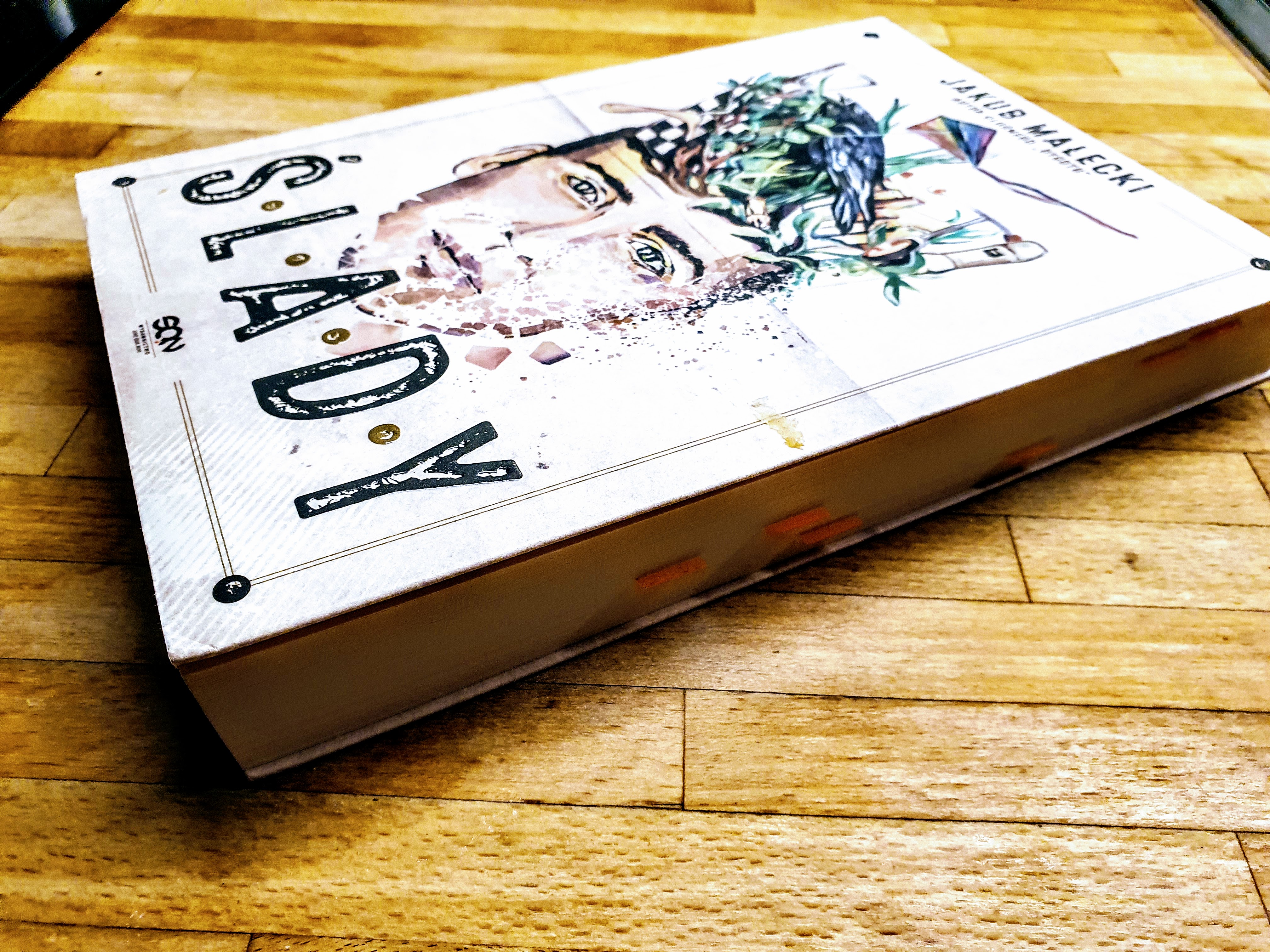
Jakub Małecki, Ślady (Traces)

Boże, gdybyś istniał, to byś nas w jednej chwili wymordował

Książki Małeckiego mają taką niezwykłą właściwość, że w zasadzie czytają się same, i to w błyskawicznym tempie. Zaczęłam od Dygotu, a po tygodniu kończyłam już Ślady. Bardzo zgrabnie napisane, choć może z nieco zbyt dużą dawką melancholii jak dla mnie.

Życie z przypowieścią nie ma nic wspólnego

Zbiór opowiadań początkowo nie zdradza powiązań między bohaterami. Zaczyna się od Tadeusza Markiewicza, który ginie od postrzału w głowę na wojnie. Narratorem jest śmierć, która go obserwuje. Następny jest Chwaścior, wioskowy wariat, i jego szalona partnerka Bogna. Jest Ludwik, którego żona Sabinka zgonęła przygnieciona walącą się kamienicą. Jest Eustachy, umierający na raka płuc jak jego ojciec. Potem Eugenia, po śmierci rodziny w wypadku drogowym zbierająca truchła potrąconych na drodze zwierząt i grzebiąca je w swoim ogródku. Następnie bezsenny Franek, który jako dziecko był świadkiem śmierci pięciu mężczyzn w gospodarstwie u Tałajów, którzy zatruli się metanolem. Jest Bartłomiej Kos, syn Eustachego i Jagwigi, który „załatwia sprawy” za pieniądze. Jest Andrzej, który zgwałcił z kolegami młodą dziewczynę, która się potem powiesiła, a wyrzuty sumienia nie dają mu żyć. Jest Oskar Czerski, który w wyniku pomyłkowego oblania kwasem traci pół twarzy. Chyba wystaczy, by udowodnić, że Małecki lubuje się w śmierci, ludzkich dramatach, melancholii i okrucieństwie. A jednocześnie, że pisze o tym poruszająco, empatycznie, poetycko.

U starych ludzi śmierć powoli zastępuje życie

Warto wspomnieć o formie graficznej książki. Każdy rozdział zaczyna się mapą okolic, gdzie dzieje się akcja, a dociekliwy czytelnik ma trochę frajdy ze znajdowania opowiesci na mapie, łączenia punktów. Bohaterowie są ze sobą powiązani, wracają w opowiadanych przez siebie historiach, wspomnieniach, pokrewieństwach. Można narysować całą nić powiązań pomiędzy nimi, szukać śladów w poszczególnych opowiadaniach. Opowiadania są krótkie, choć przejmująco smutne, i jest w całej lekturze jakieś lubowanie się w okrucieństwie. To w zasadzie mój jedyny zarzut do książki Małeckiego – takie trochę pójście na łatwiznę, choć w pięknym stylu. Śmierć sama w sobie zawsze jest dramatem, niezależnie od okoliczności. Autor ma niesamowicie lekkie pióro i fantastyczny styl, ale wybrana tematyka pomaga wzbudzić dodatkowe emocje i złapać czytelnika za serce. Losy bohaterów, choć przejmujące, są trochę na jedno kopyto i może szkoda, że choć jedno z opowiadań nie łamie śmiercio-chorobowego schematu.

Jak się z kimś tak długo żyło, to już się samemu ani nie umie, ani nie chce

Autor potrafi pisać lekko o rzeczach ciężkich, a jego książki czyta się w mgnieniu oka. Z pewnością, w przypływie jesiennej melancholii, sięgnę po kolejne utwory autora. Może któryś mnie przyjemnie zaskoczy!


Moja ocena: 6/10

Jakub Małecki, Ślady

Wydawnictwo Sine Qua Non

Kraków 2016

Liczba stron: 306

ISBN: 978-83-7924-701-1

Gatunek: opowiadania


God, if you existed, he would have murdered us in an instant

Małecki's books have such a remarkable feature that they are extremely quick to read. I started with The Shiver, and after a week I was finishing Traces. Very neatly written, but maybe with a bit too much melancholy for me.

Life has nothing to do with a parable

The collection of short stories initially does not reveal any connections between the characters, they seem unrelated. It begins with Tadeusz Markiewicz, who is shot in the head during the war. The narrator is death watching him. Next is Chwaścior, a village madman, and his crazy partner Bogna. There is Ludwik, whose wife Sabinka was crushed by a collapsing tenement house. There is Eustachy, dying of lung cancer just like his father. Then Eugenia, after the death of her family in a car accident, collecting the carcasses of animals hit by the passing vehicles and burying them in her garden. Then the sleepless Franek, who as a child witnessed the death of five men on the Tałaj’s farm who had poisoned themselves with methanol. There is Bartłomiej Kos, son of Eustachy and Jagwiga, who "gets things done" for money. There is Andrzej, who raped a young girl with his friends and she later hanged herself, and remorse does not let him live. There is Oskar Czerski, who loses half of his face as a result of being flushed with acid by mistake. I think it will be enough to prove that Małecki likes death, human drama, melancholy and cruelty. At the same time, he writes about it movingly, empathetically and poetically.

For old people, death is slowly replacing life

The graphic form of the book is worth mentioning. Each chapter begins with a map of the area where the action takes place, and the inquisitive reader has a bit of fun finding locations on the map, connecting points. The heroes are related to each other, they come back in the stories they tell, memories, they can be relatives of each other. One can draw a whole thread of connections between them, look for traces in individual stories. The stories are short, though hauntingly sad, and there is a fondness for cruelty throughout the reading. This is basically my only objection to Małecki's book - choosing an easy way, albeit in a beautiful style. Death itself is always a drama, no matter what the circumstances. The author has an incredibly light pen and a fantastic style, but the chosen topic helps to arouse additional emotions and grab the reader's heart. The fate of the characters, although poignant, is somehow repetetive and it may be a pity that at least one of the stories does not break the death-disease pattern.

If you lived with someone for so long, you neither know nor want to be alone

The author can write lightly about heavy things, and his books read in the blink of an eye. Certainly, in the fit of the autumn melancholy, I will reach for more of the author's works. Maybe one of them will surprise me pleasantly!


My rating: 6/10


Author: Jakub Małecki

Title: Traces

Publishing House: Sine Qua Non

Krakow 2016

Number of pages: 306

ISBN: 978-83-7924-701-1

Genre: short stories