Pokazywanie postów oznaczonych etykietą opowiadania. Pokaż wszystkie posty

sobota, 2 maja 2026

Małgorzata Rejmer, Ciężar skóry

Ciężar opowiadania

Ciężar skóry to absolutnie przepięknie wydane przez Wydawnictwo Literackie dziesięć opowiadań Małgorzaty Rejmer, lektura na jeden wieczór. Niecałe 180 stron czyta się błyskawicznie dzięki stosunkowo dużej czcionce, krótkiej formie, absolutnie ogromnym tytułom rozdziałów, a dodatkowo każdy rozdział zaczyna się na nieparzystej stronie, co też dodaje objętości. To sprawnie napisana literatura, akcja częściowo dzieje się w Albanii, chociaż miejsce nie ma aż takiego znaczenia. Historie – co do jednej – są mroczne, smutne, przytłaczające, ponure. Jednak mimo dużej literackiej wprawy mam poczucie, że nic mi z tej książki w głowie nie zostanie za chwilę.

Ciężki kaliber

Tematyka poruszana w opowiadaniach Rejmer jest bardzo różna – są i trudne relacje z rodzicami (zarówno na polu ojciec-syn, jak w pierwszym opowiadaniu „Syreny”, jak i na linii matka-córka, jak w opowiadaniu „Zaburzenie”), są zaburzone, tnące się nastolatki („Mój księżyc ma zielone oczy”), jest małżeństwo, które jedzie usunąć płód na Słowację („Lisica”), są obrazy wojny („Ciało Meduzy”), jest śmierć rodzica („Czarcie bydlę”), jest nieszczęśliwa lesbijska miłość („Zła baletnica”), doświadczenie choroby i depresji („Techniki wegetatywne”), jest odnaleziona homoseksualna męska miłość (tytułowy „Ciężar skóry”), jest w końcu poronienie (ostatnia w tomiku „Krawędź”). Przy majówkowym szaleństwie grillowym za oknem trochę ciężko się w takie klimaty wgryźć i się w nich odnaleźć, więc zbiorek Rejmer to lektura lepsza na listopad niż na słoneczny początek maja.

Jak porusza, skoro nie porusza?

Być może widać to już w moim zdawkowym opisie tematyki, ale Rejmer celowo wybiera tematy bardzo ciężkie, traumatyczne, które mają poruszyć czytelnika. Takiego zabiegu nie lubię, bo serwowany wtedy zestaw jest nadmiernie ciężkostrawny. Nie odbieram Autorce talentu i umiejętności pięknego, poetyckiego pisania, ale zabieg fabularny wydaje mi się trochę poniżej pasa. Taplanie się w traumie, dramatach, emocjach, odrzuceniu i smutku. Dla mnie było tego jednocześnie za dużo i za mało – przeczytałam książkę w jedno słoneczne popołudnie, ale też nie czułam potrzeby odłożenia jej i przemyślenia sobie jakiegoś tematu. Dla mnie nie była to lektura do przemyśleń, ale książka pisana z założeniem „ma poruszać”. A mnie nie poruszyła. Nie uwierzyłam Autorce, może przez nadmiar nieszczęścia i zagęszczenie traumy w przeliczeniu na znaki. Im dalej szłam, tym bardziej zastanawiałam się „I co jeszcze?”. Zdecydowanie wolę Małgorzatę Rejmer w wersji reportażowej.

Moja ocena: 5/10.


Małgorzata Rejmer, Ciężar skóry
Wydawnictwo Literackie, Kraków 2023
Liczba stron: 190
ISBN: 978-83-08-08326-0

**********************************************************************************

The Weight of a Story

"The Weight of Skin" is an absolutely beautiful publication by Wydawnictwo Literackie, featuring ten short stories by Małgorzata Rejmer. At just under 180 pages, it's a quick read thanks to the relatively large font, short format, and absolutely enormous chapter titles. Furthermore, each chapter begins on an odd page, which adds to the volume. It's a skillfully written work of literature, with some of the action taking place in Albania, although the location isn't particularly significant. The stories—every single one—are dark, sad, oppressive, and gloomy. However, despite the Author’s considerable literary skill, I have the feeling that nothing from this book will stick with me for long.

Heavy weight

The themes explored in Rejmer's stories are very diverse – there are difficult relationships with parents (both father-son, as in the first story, "Syrenae," and mother-daughter, as in "Disturbance"), disturbed, self-harming teenagers ("My Moon Has Green Eyes"), a married couple traveling to Slovakia to have an abortion ("Vixen"), images of war ("Medusa’s Body"), the death of a parent ("Devil’s Beast"), unhappy lesbian love ("Bad Ballerina"), experiences of illness and depression ("Vegetative Techniques"), a rediscovered homosexual male love (the titular "Ciężar tajemnica"), and finally, a miscarriage (the last in the collection, "The Edge"). With the May barbecue frenzy outside, it's a bit hard to get into the spirit of things and gloomy atmosphere of stories, so Rejmer's collection is a better read for November than for a sunny start to May.

How can it be moving if it's not?

Perhaps this is already evident in my brief description of the subject matter, but Rejmer deliberately chooses very heavy, traumatic topics intended to move the reader. I don't like this approach, because the resulting array of poetic pieces is too difficult to digest. I don't deny the author's talent and skill for beautiful, poetic writing, but the plot device seems like a blow below the belt. It wallows in trauma, drama, emotions, rejection, and sadness. For me, it was both too much and too little – I read the book in one sunny afternoon, but I didn't feel the need to put it down and reflect on any of the topics. It wasn't a thought-provoking read, but a book written with the intention of "moving." And it didn't move me. I didn't believe the author, perhaps because of the sheer amount of misfortune and the density of trauma in the characters. The further I went, the more I wondered, "What else?" I definitely prefer Małgorzata Rejmer's reportage.

My rating: 5/10.


Author: Małgorzata Rejmer
Title: The Weight of Skin (not translated to English as of May 2026)
Publishing House: Wydawnictwo Literackie, Kraków 2023
Number of pages: 190
ISBN: 978-83-08-08326-0


niedziela, 12 kwietnia 2026

Osamu Dazai, Kwiaty wiśni (Ōtō)

Japońskie akwarele

Zbiór szesnastu opowiadań raczej mało znanego w Polsce japońskiego pisarza Osamu Dazai wydało Wydawnictwo Czytelnik. Chociaż tomik jest stosunkowo niedługi (250 stron), stanowił dla mnie niemałe wyzwanie, mimo, że czytałam go w kraju autora. Jednak Japonia z utworów pisarza już nie istnieje, więc nawet otoczenie nie mogło mnie wspomóc w lekturze.

Trudna biografia Autora

Sądzę, że męczyłam opowiadania Autora, gdyż są one wiernym odzwierciedleniem jego biografii. Dazai kilkukrotnie usiłował popełnić samobójstwo, przeszedł zapalenie wyrostka robaczkowego i zapalenie trzewnej, po którym przez długi czas był uzależniony od morfiny, wyłudzał od swojego brata pieniądze na życie i oszukiwał rodzinę, jeśli chodzi o postępy na studiach i pracę zarobkową. Jako narrator nie wzbudza więc sympatii, a jego rozważania i podejście stawiają go na równi z bohaterem Głodu Knuta Hamsuna.

Japonia sprzed kilkudziesięciu lat

W opowiadaniach Dazaia zobaczyć można Japonię z czasów tuż po II wojnie światowej, z kłopotami z zaopatrzeniem, wojennym zniszczeniem, koniecznością budowania i rozpoczynania życia na nowo. Japonię jeszcze nie tak rozwiniętą jak ta obecna, nie tak zadeptaną, kameralną, ale burzliwie rozwijającą się i modernizowaną. Jednak czytając te opowiadania właśnie w Japonii, opisywanego kraju już nie widziałam, on już chyba nie istnieje.

Wąskie ramy osobistej historii

Opowiadania Dazaia są krótkie i zasadzone w jego doświadczeniu, co zresztą sam pisarz podsumowuje najlepiej:

Jestem pisarzem miasta. To, o czym opowiadam, zamyka się zawsze w wąskich ramach mojej osobistej historii. […] Jednak kto wie, przyszłość może pokaże, że te nasze osobiste, fragmentaryczne opisy codzienności okażą się bardziej wiarygodne niż dzieła tak zwanych „historyków”. Nie należy ich trywializować. (Roczniki cierpienia, s. 167)

Z tego też wynika fragmentaryczność, ułamkowość całej książki. To bardziej obrazki, małe akwarele, niż wielkie płótno opisujące jakąś spójną historię. Z perspektywy mojej kultury, literackiego doświadczenia, nawet trzykrotnej wizyty w kraju Autora i lekkiej fascynacji kulturą Japonii, pozostają mi obce, nudne, martwe. Nie podzielam zachwytów nad twórczością „kultowego pisarza”, nie potrafiłam wzbudzić w sobie ani sympatii, ani zrozumienia dla narratora. Nie dla mnie.

Moja ocena: 5/10.


Osamu Dazai, Owoce wiśni
Wydawnictwo Czytelnik, Warszawa 2020
Tłumaczenie: Katarzyna Sonnenberg-Musiał
Liczba stron: 252
ISBN: 978-83-07-03489-8

*******************************************************************************

Japanese Watercolors

A collection of sixteen short stories by the Japanese writer Osamu Dazai, who is relatively unknown in Poland, was published by Polish Publishing House Czytelnik. Although the volume is relatively short (250 pages), it posed quite a challenge for me, even though I read it in the author's country. However, the Japan in which the author's works were written no longer exists, so even my surroundings couldn't help me read.

A Difficult Biography of the Author

I believe I barely survived through the author's stories is because they faithfully reflect his biography. Dazai attempted suicide several times (sometimes accompanied by his lovers), suffered from appendicitis and celiac disease, after which he was addicted to morphine for a long time, extorted money from his brother for his living, and deceived his family about his academic progress and employment. As a narrator, he doesn't evoke sympathy, and his reflections and approach place him on par with the protagonist of Knut Hamsun's Hunger.

Japan of Decades Ago

Dazai's stories depict Japan just after World War II, with its supply shortages, wartime destruction, and the need to rebuild and start anew. A Japan not yet as developed as today, not as downtrodden, intimate, but rapidly developing and modernizing. However, even reading these stories in Japan, I no longer saw the country described; it seems it no longer exists.

The Narrow Frames of Personal History

Dazai's stories are short and rooted in his experience, a fact best summarized by the writer himself:

I am a writer of the marketplace. What I speak about remains within  the purview of the history of the one little individual called “me”. [...] but in later ages, when the time comes to investigate our currents of thought , it may be that these personal fragmentary descriptions of our lives that we are always writing will be more reliable than the writings of so-called historians. They are not to be something to be belittled. (An Almanac of Pain, p. 167)

This also explains the fragmented nature of the entire book. It's more like pictures, small watercolors, than a large canvas describing a coherent story. From the perspective of my culture, literary experience, even having visited the author's country three times and having a slight fascination with Japanese culture, it remains alien, boring, and lifeless to me. I don't share the admiration for the work of this "cult writer"; I couldn't gain any sympathy or understanding for the narrator. This book is simply for me.

My rating: 5/10.

Author: Osamu Dazai
Title: Cherries
Publishing House: Wydawnictwo Czytelnik, Warsaw 2020
Translation: Katarzyna Sonnenberg-Musiał
Number of pages: 252
ISBN: 978-83-07-03489-8

sobota, 18 listopada 2023

Henry James, Historie drobnoziarniste (The Finer Grain)

Pięć opowiadań o kobietach

W tym roku po nadmiarze kryminałów miałam ochotę na ambitniejszą lekturę, dlatego skusiła mnie piękna ascetyczna okładka Wydawnictwa Literackiego i sięgnęłam po Historie drobnoziarniste Henry’ego Jamesa. Słabo znam twórczość amerykańsko-brytyjskiego pisarza, nie czytałam nawet Portretu damy, więc zaczęłam od pięciu opowiadań. Faktycznie, to ambitniejsza literatura.

Obrót śruby (The Turn of a Screw)

Na tomik składa się pięć opowiadań: Obrót śruby, W klatce, Jakaś historia, Julia Bride oraz Mora Montravers, zakończonych posłowiem tłumaczki Barbary Kopeć-Umiastowskiej. Może ze względu na bliskość Święta Zmarłych i Halloween najbardziej w pamięć zapadło mi pierwsze opowiadanie, a więc Obrót śruby, odwołujące się zarówno do Dekameronu, jak i Zamczyska w Udolpho Ann Radcliffe. Młoda, nieznana z imienia nauczycielka jedzie do Bly w hrabstwie Essex, by zajmować się rodzeństwem – starszym chłopcem Milesem, oraz jego młodszą siostrzyczką, Florą. Dziewczynka mieszka w domu swojego wuja, który pełni formalną opiekę nad dziećmi, a jej brat został właśnie wydalony ze szkoły za swoje przewiny. Wkrótce młoda opiekunka zaczyna widywać dwa duchy – swojej poprzedniczki panny Jessel, jak i służącego Petera Quinta. Para miała romans, jednak oboje zmarli. Nauczycielka dochodzi do przekonania, że dzieci widzą oba widma i są z nimi w zmowie. Udaje jej się przekonać gospodynię, panią Grose, do swojej historii, i zdesperowane kobiety podejmują walkę ze złymi mocami. Gospodyni wywozi Florę do Londynu, a opiekunka zostaje z Milesem w domu. Duch Quinta pojawia się podczas jej rozmowy z chłopcem, i chociaż kobieta jest przekonana, że udało jej się obronić dziecko przed złą zjawą, Miles umiera w jej ramionach. Chociaż opowiadanie można czytać jako znakomity przykład literatury gotyckiej, mającej na celu przestraszenie czytelnika i konsekwentnie budującemu grozę, późniejsze interpretacje wskazują na pomieszanie zmysłów u młodej opiekunki, jak pisze tłumaczka w posłowiu, albo nawet zgubny wpływ gospodyni, pani Grose. Do tej pory Obrót śruby trzyma w napięciu i jest znakomitą rozrywką na chłodne, ponure listopadowe wieczory.

W klatce (In the Cage)

Drugie opowiadanie, W klatce, miało zaskakujące i mocne zakończenie. Pracująca na poczcie panna, zaręczona z początkującym sklepikarzem panem Mudgem, uważnie obserwuje swojego zamożnego klienta, pana Everarda. Wysyłane przez niego telegramy dają jej wgląd w jego życie, które pracownica poczty uważa za awanturnicze i romantyczne. Odważna dziewczyna spaceruje pod domem wybranka, a nawet udaje jej się pójść z nim na spacer do parku, gdzie wyznaje mu, że zrobiłaby dla niego wszystko. Uważna panna uznaje, że obiekt jej platonicznego uczucia jest w niebezpieczeństwie, i postanawia opóźnić planowaną przez narzeczonego zmianę urzędu, by móc chronić przystojnego klienta. Jednak gdy okazuje się, że kapitan Everard będzie się żenił, młoda telegrafistka natychmiast idzie po rozum do głowy, przyspiesza swój ślub i nie marnuje czasu na mężczyznę nie ze swojej sfery. Młoda pracownica pozwala więc sobie na pewnego rodzaju eksces, nigdy jednak nie traci głowy na tyle, by stracić kontakt z rzeczywistością.

Jakaś historia (The Story in It)

Dwie kobiety rozmawiają w saloniku o literaturze, czekając jednocześnie na przybycie kochanka jednej z nich, pułkownika Voyta. Wywiązuje się między nimi dyskusja o powieściach, które warto czytać (romanse francuskie). Dla mnie najmniej zajmujące z całego tomiku.

Julia Bride (Julia Bride)

Młoda Julia Bride jest narzeczoną zamożnego i szanowanego Basila Frencha. Jednak młoda dziewczyna obawia się, że niechętne jej kobiety z towarzystwa doniosą jej wybrankowi o jej burzliwej przeszłości. Jej matka rozwodziła się dwa razy i za chwilę będzie się rozwodzić po raz trzeci, co nie stawia młodej dziewczyny w dobrym świetle. Ona sama była już narzeczoną i miała kochanków, co stara się ukryć przed swoim obecnym wybrankiem. Dlatego spotyka się z byłym mężem swojej matki, prosząc go o wstawiennictwo, a kiedy na tym polu jej się nie powodzi, prosi o pomoc swojego byłego narzeczonego, Murraya Buscha. Okazuje się jednak, że każda przysługa ma swoją cenę, więc musi ściągnąć pana Frencha do kręgów jej dawnych znajomych i zdaje sobie sprawę ze swojej porażki.

Mora Montravers (Mora Montravers)

Bohaterką ostatniego opowiadania jest młoda dziewczyna Mora Montravers, pozostająca pod opieką swoich opiekunów, Sidneya Traffle’a i jego żony Jane. Mora odchodzi do malarza Puddicka, a zgorszeni opiekunowie chcą doprowadzić do ich ślubu. Kiedy im się udaje (w zamian za obietnicę sowitego wynagrodzenia), okazuje się, że była to jedynie sztuczka Mory, która po zawarciu z artystą ślubu cywilnego, planuje go porzucić na rzecz zamożnego starszego baroneta, i prosi swojego wuja o opiekę nad jej obecnym mężem. Mora nie ogląda się na społeczne konwenanse i prowadzi życie na własnych zasadach, zawstydzając swoich pruderyjnych opiekunów.

Wydaje się, jakby historie zostały ułożone w nieprzypadkowej kolejności – od najmniej wyemancypowanych, albo też mających najmniejsze możliwości działania w społeczeństwie kobiet do historii tych, które mają odwagę i możliwości życia po swojemu, na własnych warunkach. Na mnie wrażenie zrobiły dwa pierwsze opowiadania – gotycki thriller Obrót śruby, trzymający w napięciu do ostatniej chwili, oraz W klatce, ze względu na błyskawiczną racjonalną decyzję młodej telegrafistki, gdy tylko zorientowała się, że jej poświęcenie i romantyczne mrzonki niczemu nie służą. Bohaterka pozytywnie mnie zaskoczyła swoim trzeźwym osądem sytuacji i umiejętnością racjonalnego wyciągania wniosków. Obawiałam się, że to opowiadanie może się skończyć inaczej. Pozostałe opowiadania gubią się w gąszczu Jamesowskiej narracji, często trudno jest podążać za akcją, czy też wyłuskać sens z ironicznych wypowiedzi bohaterów. Mocno pomaga posłowie tłumaczki, naświetlające wiele aspektów utworów, jednak raczej nie sięgnęłabym po tomik ponownie, i wkrótce sens i pamięć ostatnich trzech opowiadań mi się zatrze.

Moja ocena: 6/10.


Henry James, Historie drobnoziarniste
Wydawnictwo Literackie, Kraków 2023
Tłumaczenie: Barbara Kopeć-Umiastowska
Liczba stron: 496
ISBN: 978-83-66272-05-7

**********************************************************************************

Five stories about women

This year, after an abundance of crime novels, I felt like reading something more ambitious, so I was tempted by the beautiful ascetic cover of The Finer Grain by Henry James, publised by Wydawnictwo Literackie. I don't know the work of the American-British writer very well, I haven't even read The Portrait of a Lady, so I started with five short stories. In fact, it is more ambitious literature.

The Turn of a Screw

The volume consists of five short stories: The Turn of the Screw, In the Cage, Some Story, Julia Bride and Mora Montravers, ending with an afterword by the translator Barbara Kopeć-Umiastowska. Perhaps due to the proximity of All Souls' Day and Halloween, the first story I remember the most was The Turn of the Screw, which refers to both The Decameron and The Castle in Udolpho by Ann Radcliffe. A young, unnamed teacher goes to Bly in Essex to look after siblings - an older boy, Miles, and his little sister, Flora. The girl lives in the house of her uncle, who has formal custody of the children, and her brother has just been expelled from school for his transgressions. Soon, the young caregiver begins to see two ghosts - her predecessor, Miss Jessel, and house servant, Peter Quint. The couple had an affair, but both died. The teacher comes to the conclusion that the children see both specters and are in cahoots with them. She manages to convince the housekeeper, Mrs. Grose, of her story, and the desperate women start fighting the evil forces. The housekeeper takes Flora to London, and the babysitter stays at home with Miles. Quint's ghost appears during her conversation with the boy, and although the woman is convinced that she has managed to protect the child from an evil apparition, Miles dies in her arms. Although the story can be read as a brilliant example of Gothic literature intended to scare the reader and consistently building terror, later interpretations point to a confusion of senses on the part of the young teacher, as the translator writes in the afterword, or even the pernicious influence of the housekeeper, Mrs. Grose. Regardless of which interpretation is correct, The Turn of the Screw keeps you in suspense and is great entertainment for cold, gloomy November evenings.

In the Cage

The second story, In the Cage, had a surprising and powerful ending. A postal worker engaged to an aspiring shopkeeper, Mr. Mudge, closely observes her wealthy client, Mr. Everard. The telegrams he sends give her insight into his life, which the girl finds adventurous and romantic. She walks in front of her beloved's house and even manages to go for a walk with him to the park, where she confesses to him that she would do anything for him. An attentive young lady recognizes that the object of her platonic affection is in danger and decides to delay her fiancé's planned change of office in order to protect her handsome client. However, when it turns out that Captain Everard is going to get married, the young telegraph operator immediately comes to her senses, hastens her wedding and does not waste time on a man not from her class. The young employee allows herself some excess, but never loses her mind enough to lose contact with reality.

The Story in It

Two women talk about literature in the living room while waiting for the arrival of one of them's lover, Colonel Voyt. A discussion ensues between them about novels that are worth reading (French romances). For me, it is the least interesting of the entire volume.

Julia Bride

Young Julia Bride is the fiancée of the wealthy and respected Basil French. However, the young girl is afraid that reluctant socialites will tell her boyfriend about her turbulent past. Her mother has been divorced twice and is about to get divorced for the third time, which does not make the young girl look good. She herself was already a fiancée and had lovers, which she tries to hide from her current boyfriend. Therefore, she meets with her mother's ex-husband, asking for his intercession, and when she fails in this field, she asks her ex-fiance, Murray Busch, for help. However, it turns out that every favor has its price, so she has to bring Mr. French back into the circle of her old friends and realizes her failure.

Mora Montravers

The heroine of the last story is a young girl, Mora Montravers, under the care of her guardians, Sidney Traffle and his wife Jane. Mora goes to live with the painter Puddick, and the scandalized guardians want to arrange for them to marry. When they succeed (in exchange for the promise of a generous remuneration), it turns out that it was just a trick by Mora who, after concluding a civil wedding with the artist, plans to abandon him in favor of a wealthy older baronet, and asks her uncle to take care of her current husband . Mora ignores social conventions and leads life on her own terms, embarrassing her prudish guardians.

It seems as if the stories were arranged in a non-random order - from the least emancipated women, or those with the least opportunities to act in society, to the stories of those who have the courage and opportunity to live their own lives, on their own terms. I was impressed by the first two stories - the gothic thriller The Turn of the Screw, which kept me in suspense until the last moment, and In the Cage, due to the quick rational decision of the young telegraph operator as soon as she realized that her sacrifice and romantic dreams were not serving any purpose. The heroine positively surprised me with her sober judgment of the situation and the ability to draw rational conclusions. I was afraid that this story might end differently. The remaining stories get lost in the thicket of James's narrative, and it is often difficult to follow the action or derive meaning from the characters' ironic statements. The translator's afterword, which highlights many aspects of the works, is very helpful, but I would probably not read the volume again, and soon the meaning and memory of the last three stories will fade.

My rating: 6/10.


Author: Henry James
Title: The Finer Grain
Publishing House: Wydawnictwo Literackie, Kraków 2023
Translation: Barbara Kopeć-Umiastowska
Number of pages: 496
ISBN: 978-83-66272-05-7


niedziela, 26 lutego 2023

Katherine Mansfield, Opowiadania

Specjalistka w sadowieniu się w życiu innych ludzi na chwilę

To chyba w którejś z książek Ali Smith zetknęłam się z frapująco przedstawioną postacią XX-wiecznej brytyjskiej pisarki i kobiety nietuzinkowej, Katherine Mansfield. W związku z tym sięgnięcie po przepiękne wydane przez wydawnictwo Officyna Opowiadania Mansfield było tylko kwestią czasu. Na tomik składają się 23 opowiadania w wyborze i przekładzie Magdy Heydel.

Burzliwe i krótkie życie

Katherine Mansfield prowadziła jak na początek XX wieku naprawdę odważne życie. Urodzona w Nowej Zelandii, na peryferiach Wielkiej Brytanii, w 1908 roku przeprowadziła się na stałe do Europy. Utrzymywała intymne stosunki z kobietami, dwukrotnie wychodziła za mąż, choć pierwszego męża porzuciła już w dniu ślubu wieczorem. Zaszła w ciążę ze swoim kochankiem, ale straciła dziecko. Koniec swojego życia spędziła w różnych sanatoriach we , Szwajcarii i Francji, ale w wieku 34 lat zmarła na gruźlicę. Zostawiła po sobie opowiadania, listy i dzienniki.

W krótkiej formie bogata treść

Właśnie po te opowiadania w nowym tłumaczeniu sięgnęłam i jestem urzeczona. Nie znałam wcześniej twórczości Mansfield, może zetknęłam się wcześniej z jakimś opowiadaniem, ale nie zapamiętałam go. Opowiadania w wyborze Haydel są prawdziwą książkową ucztą. Zacznę od tego, że są to literackie perełki. Ich długość waha się od zaledwie sześciu do ponad pięćdziesięciu stron, ale nawet w tych bardzo krótkich Mansfield potrafi tak nakreślić sytuację, żeby czytelnik wiedział o co chodzi, a jednocześnie nie podaje mu nachalnych interpretacji od siebie. To nam pozostaje ocenić sytuację, ale wcześniej – wczuć się w nią. Autorka potrafi zbudować nastrój, oddać sytuację, uchwycić emocje.

Doskonałość formy

W posłowiu tłumaczka szkicuje zarówno życie pisarki, recepcję jej dzieł, jej koneksje z innymi kręgami literackimi, choćby znajomość z Virginią Woolf i marginalną przynależność do grupy Bloomsbury. Zwraca także uwagę na możliwe tropy interpretacyjne jej utworów, powiązania z biografią, z przekonaniami epoki. Mnie jednak urzekło jeszcze coś innego – bogactw tych opowiadań. Chociaż w niektórych przewijają się Ci sami bohaterowie (np. trójka dzieci Isabel, Lottie i Kezia), podobne motywy (np. melancholia w opowiadaniach Kanarek i Mucha), to jednak każde z nich stanowi inny, z detalami uchwycony obrazek. Mansfield bardzo mocno osadza swoje opowiadania w doznaniach zmysłowych, sceneria jest dokładnie opisana, czytelnik niemal czuje słodki i duszny zapach letniego ogrodu z kwitnącymi w nim kwiatami, słony powiew wiatru od morza, aromat herbaty, czy chłód panujący w kabinie statku pasażerskiego. Choć otwarte na różne tropy interpretacyjne, w świecie przedstawionym małe formy prozatorskie Mansfield są doskonałe i zamknięte.

Niepowtarzalność treści

Tematykę tych opowiadań da się podzielić na sanatoryjną (Niemcy przy stole, Baron, Mężczyzna bez temperamentu), wspomnienia z domu rodzinnego (Garden party, Domek dla lalek, Podróż, Nad Zatoką), scenki społeczne (Filmy, Mała guwernantka, Mężczyzna bez temperamentu, Życie starej Parker, Panna Brill) czy też scenki intymne (Filiżanka herbaty, Rozkosz, Kiszone ogórki). Zazwyczaj bohaterkami są kobiety w bardzo różnej sytuacji życiowej – w Małej guwernantce naiwna służąca daje się nabrać starszemu panu i przez to traci pracę, w Pannie Brill starsza kobieta ciesząca się spokojnym popołudniem w sanatorium słyszy okrutne słowa młodych zakochanych o sobie, w Córkach świętej pamięci pułkownika Constantia i Josephine nie potrafią uwolnić się od tyranii ojca nawet po jego śmierci, a w Je ne parle pas français Anglik Dick porzuca swoją ukochaną Myszkę we Francji, dokąd razem uciekli, i wraca do matki. Jednak nie wszędzie kobiety są wykorzystane czy stłamszone przez mężczyzn – w kilku opowiadaniach są szczęśliwe, owijają sobie partnerów wokół palca, umieją wyczuć zagrożenie i sobie z nim szybko poradzić (choćby Rosmary Fell z Filiżanki herbaty, która natychmiast pozbywa się z domu pięknej żebraczki, gdy tylko zauważa, że ta spodobała się jej mężowi).

Opowiadania Mansfield są tak mizernie utkane, tak subtelne, a jednocześnie niosą w sobie tak duży dramatyzm w codziennych sytuacjach, że z pewnością będę chciała jeszcze do nich wrócić.

Moja ocena: 8/10.


Katherine Mansfield, Opowiadania
Wydawnictwo Officyna, Łódź 2020
Tłumaczenie: Magda Heydel
Liczba stron: 424
ISBN: 978-83-66511-18-7

************************************************************************

A specialist in settling into other people's lives for a while

It was probably in one of Ali Smith's books that I came across the strikingly presented character of the 20th-century British writer and extraordinary woman, Katherine Mansfield. Therefore, reaching for the beautifully published by the Officyna publishing house Short Stories was only a matter of time. The volume consists of 23 short stories selected and translated by Magda Heydel.

Turbulent and short life

Katherine Mansfield led a truly adventurous life for the early 20th century. Born in New Zealand, on the outskirts of Great Britain, she moved to Europe permanently in 1908. Famous for maintaining intimate relations with women, Mansfield got married twice, although abandoned her first husband on the wedding day in the evening. She became pregnant by her lover, but lost the child. The end of her life was spent in various sanatoriums in Switzerland and France trying to cure tuberculosis, but the attempts ended dramatically with a hemorrhoage  that ended her life when she was just 34. Her legacy are short stories, letters and diaries.

Rich content in a short form

It is these stories in the new translation, recently publised, that I reached for and I am captivated. I didn't know Mansfield's work before, maybe I had come across a story before, but I didn't remember it. The stories in Haydel's selection are a real reading feast. Let me start by saying that these are literary gems. Their length ranges from just six to over fifty pages, but even in these very short ones Mansfield is able to outline the situation in such a way that the reader knows what's going on, and at the same time the author does not give us intrusive interpretations from himself. It remains for us to assess the situation, but first - to feel it. The writer knows how to set the mood, convey the situation, capture the emotions.

Perfection of form

In the afterword, the translator outlines the life of the writer, the reception of her works, her connections with other literary circles, such as her acquaintance with Virginia Woolf and her marginal membership in the Bloomsbury group. She also draws attention to possible interpretative clues in her works, links with her biography and the beliefs of the era. However, I was captivated by something else - the richness of these stories. Although some of them feature the same characters (e.g. the three children: Isabel, Lottie and Kezia), similar motifs (e.g. melancholy in the stories The Canary and The Fly), each of them is a different, detailed picture. Mansfield strongly embeds her stories in sensual experiences, the scenery is accurately described, the reader can almost feel the sweet and stuffy smell of a summer garden with flowers blooming in it, the salty breeze from the sea, the aroma of tea, or the chill in the cabin of a passenger ship. Although open to various interpretive tropes, Mansfield's small prose forms in the presented world are perfect and finite.

Content uniqueness

The themes of these stories can be divided into sanatorium (Germans at Meat, The Baron, The Man without a Temperament), memories from the family home (The Garden Party, The Doll's house, The Voyage, At the Bay), social scenes (Pictures, The Little Governess, The Man without a Temperament, Life of Ma Parker, Miss Brill) or intimate scenes (A Cup of Tea, Bliss, A Dill Pickle). Typically, the protagonists are women in very different life situations - in The Little Governess, a naive maid is taken in by an elderly gentleman and thus loses her job, in Miss Brill, an elderly woman enjoying a quiet afternoon at a sanatorium hears the cruel words of young lovers about herselves, in The Daughters of the late Colonel Constantia and Josephine cannot free themselves from their father's tyranny even after his death, and in Je ne parle pas français, the Englishman Dick abandons his beloved Mouse in France, where they have fled together, and returns to his mother. However, not everywhere women are abused or smothered by men - in several stories they are happy, they wrap their partners around their finger, they can sense the threat and deal with it quickly (for example, Rosmary Fell in A Cup of Tea, who immediately gets rid of a beautiful beggar woman from the house when she learned that her husband finds her pretty).

Mansfield's stories are so richly woven, so subtle, and at the same time they carry so much drama in everyday situations that I will certainly want to return to them again.


My rating: 8/10.


Author: Katherine Mansfield
Title: Short Stories
Publishing House: Officyna, Lodz 2020
Translation: Magda Heydel
Number of pages: 424
ISBN: 978-83-66511-18-7

sobota, 13 listopada 2021

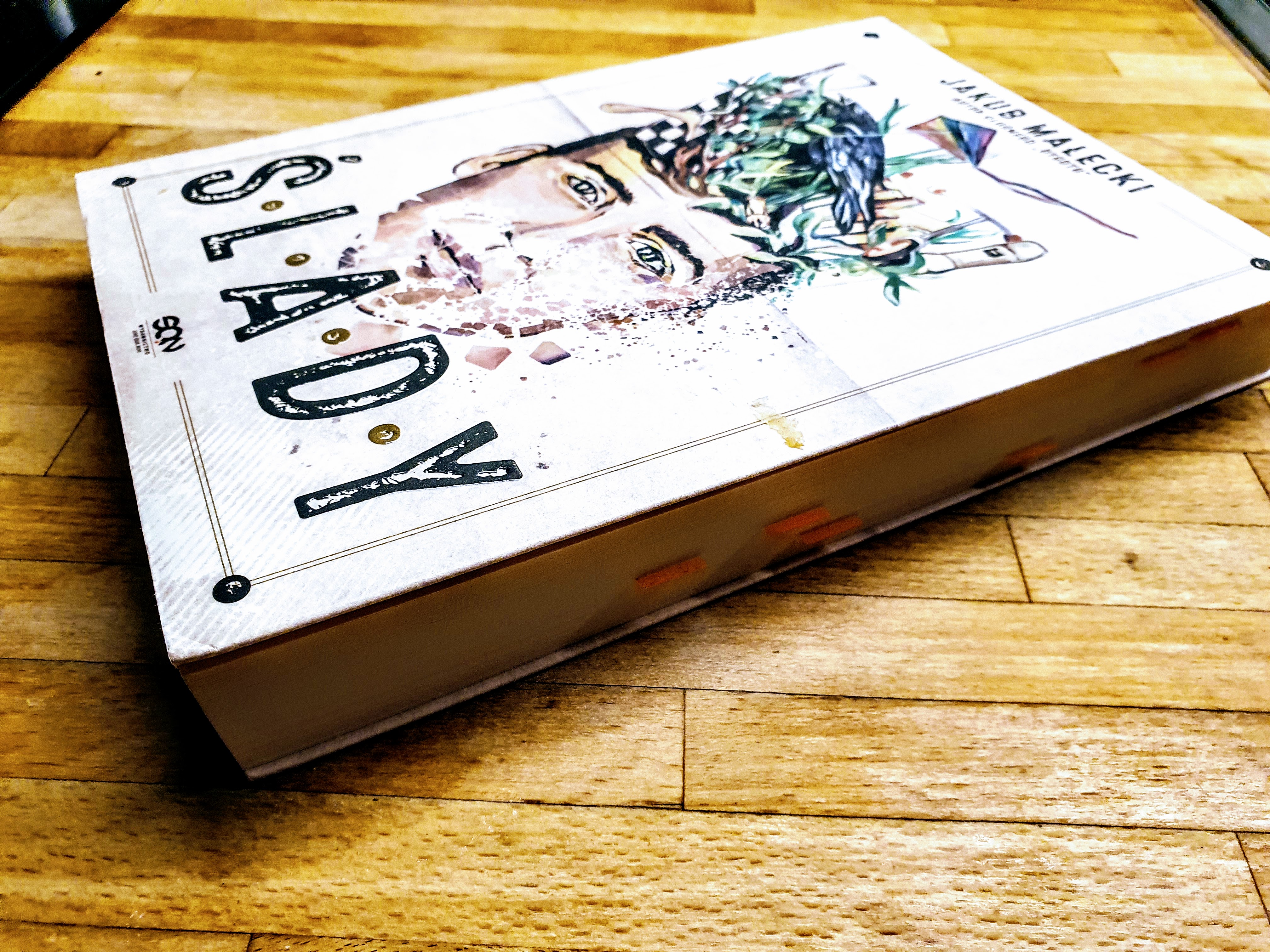
Jakub Małecki, Ślady (Traces)

Boże, gdybyś istniał, to byś nas w jednej chwili wymordował

Książki Małeckiego mają taką niezwykłą właściwość, że w zasadzie czytają się same, i to w błyskawicznym tempie. Zaczęłam od Dygotu, a po tygodniu kończyłam już Ślady. Bardzo zgrabnie napisane, choć może z nieco zbyt dużą dawką melancholii jak dla mnie.

Życie z przypowieścią nie ma nic wspólnego

Zbiór opowiadań początkowo nie zdradza powiązań między bohaterami. Zaczyna się od Tadeusza Markiewicza, który ginie od postrzału w głowę na wojnie. Narratorem jest śmierć, która go obserwuje. Następny jest Chwaścior, wioskowy wariat, i jego szalona partnerka Bogna. Jest Ludwik, którego żona Sabinka zgonęła przygnieciona walącą się kamienicą. Jest Eustachy, umierający na raka płuc jak jego ojciec. Potem Eugenia, po śmierci rodziny w wypadku drogowym zbierająca truchła potrąconych na drodze zwierząt i grzebiąca je w swoim ogródku. Następnie bezsenny Franek, który jako dziecko był świadkiem śmierci pięciu mężczyzn w gospodarstwie u Tałajów, którzy zatruli się metanolem. Jest Bartłomiej Kos, syn Eustachego i Jagwigi, który „załatwia sprawy” za pieniądze. Jest Andrzej, który zgwałcił z kolegami młodą dziewczynę, która się potem powiesiła, a wyrzuty sumienia nie dają mu żyć. Jest Oskar Czerski, który w wyniku pomyłkowego oblania kwasem traci pół twarzy. Chyba wystaczy, by udowodnić, że Małecki lubuje się w śmierci, ludzkich dramatach, melancholii i okrucieństwie. A jednocześnie, że pisze o tym poruszająco, empatycznie, poetycko.

U starych ludzi śmierć powoli zastępuje życie

Warto wspomnieć o formie graficznej książki. Każdy rozdział zaczyna się mapą okolic, gdzie dzieje się akcja, a dociekliwy czytelnik ma trochę frajdy ze znajdowania opowiesci na mapie, łączenia punktów. Bohaterowie są ze sobą powiązani, wracają w opowiadanych przez siebie historiach, wspomnieniach, pokrewieństwach. Można narysować całą nić powiązań pomiędzy nimi, szukać śladów w poszczególnych opowiadaniach. Opowiadania są krótkie, choć przejmująco smutne, i jest w całej lekturze jakieś lubowanie się w okrucieństwie. To w zasadzie mój jedyny zarzut do książki Małeckiego – takie trochę pójście na łatwiznę, choć w pięknym stylu. Śmierć sama w sobie zawsze jest dramatem, niezależnie od okoliczności. Autor ma niesamowicie lekkie pióro i fantastyczny styl, ale wybrana tematyka pomaga wzbudzić dodatkowe emocje i złapać czytelnika za serce. Losy bohaterów, choć przejmujące, są trochę na jedno kopyto i może szkoda, że choć jedno z opowiadań nie łamie śmiercio-chorobowego schematu.

Jak się z kimś tak długo żyło, to już się samemu ani nie umie, ani nie chce

Autor potrafi pisać lekko o rzeczach ciężkich, a jego książki czyta się w mgnieniu oka. Z pewnością, w przypływie jesiennej melancholii, sięgnę po kolejne utwory autora. Może któryś mnie przyjemnie zaskoczy!


Moja ocena: 6/10

Jakub Małecki, Ślady

Wydawnictwo Sine Qua Non

Kraków 2016

Liczba stron: 306

ISBN: 978-83-7924-701-1

Gatunek: opowiadania


God, if you existed, he would have murdered us in an instant

Małecki's books have such a remarkable feature that they are extremely quick to read. I started with The Shiver, and after a week I was finishing Traces. Very neatly written, but maybe with a bit too much melancholy for me.

Life has nothing to do with a parable

The collection of short stories initially does not reveal any connections between the characters, they seem unrelated. It begins with Tadeusz Markiewicz, who is shot in the head during the war. The narrator is death watching him. Next is Chwaścior, a village madman, and his crazy partner Bogna. There is Ludwik, whose wife Sabinka was crushed by a collapsing tenement house. There is Eustachy, dying of lung cancer just like his father. Then Eugenia, after the death of her family in a car accident, collecting the carcasses of animals hit by the passing vehicles and burying them in her garden. Then the sleepless Franek, who as a child witnessed the death of five men on the Tałaj’s farm who had poisoned themselves with methanol. There is Bartłomiej Kos, son of Eustachy and Jagwiga, who "gets things done" for money. There is Andrzej, who raped a young girl with his friends and she later hanged herself, and remorse does not let him live. There is Oskar Czerski, who loses half of his face as a result of being flushed with acid by mistake. I think it will be enough to prove that Małecki likes death, human drama, melancholy and cruelty. At the same time, he writes about it movingly, empathetically and poetically.

For old people, death is slowly replacing life

The graphic form of the book is worth mentioning. Each chapter begins with a map of the area where the action takes place, and the inquisitive reader has a bit of fun finding locations on the map, connecting points. The heroes are related to each other, they come back in the stories they tell, memories, they can be relatives of each other. One can draw a whole thread of connections between them, look for traces in individual stories. The stories are short, though hauntingly sad, and there is a fondness for cruelty throughout the reading. This is basically my only objection to Małecki's book - choosing an easy way, albeit in a beautiful style. Death itself is always a drama, no matter what the circumstances. The author has an incredibly light pen and a fantastic style, but the chosen topic helps to arouse additional emotions and grab the reader's heart. The fate of the characters, although poignant, is somehow repetetive and it may be a pity that at least one of the stories does not break the death-disease pattern.

If you lived with someone for so long, you neither know nor want to be alone

The author can write lightly about heavy things, and his books read in the blink of an eye. Certainly, in the fit of the autumn melancholy, I will reach for more of the author's works. Maybe one of them will surprise me pleasantly!


My rating: 6/10


Author: Jakub Małecki

Title: Traces

Publishing House: Sine Qua Non

Krakow 2016

Number of pages: 306

ISBN: 978-83-7924-701-1

Genre: short stories

piątek, 12 listopada 2021

Truman Capote, Miriam (A Tree of Night and Other Stories)

Ponure opowiadania na ciemny listopad

Często jedna książka danego autora prowadzi w naturalny sposób do następnej. Tak też było w tym przypadku. Po połknięciu Z zimną krwią sięgnęłam po zbiór 4 opowiadań Trumana Capote Miriam. Ta niewielka pozycja zawiera następujące tytuły: Pan Bida (Master Misery), Dzieci w dniu urodzin (Children on Their Birthdays), tytułową Miriam oraz Drzewo nocy (A Tree of Night). Wracam do tego tomiku po krótkiej przerwie, więc z przyjemnością sprawdzę, co mi z niego zostało w pamięci.

Pan Bida

Młodza dziewczyna, Sylwia, przeprowadza się do miasta i zaczyna życie na własną rękę. Któregoś dnia w pracy słyszy, że jest w Nowym Jorku mężczyzna, niejaki pan Revercomb, który płaci za sny. Zdumiona kobieta idzie do niego i sprzedaje mu swój pierwszy sen, by potem wracać i sprzedawać kolejne. Tam też poznaje alkoholika Oreilly’ego, z którym nawiązuje relację. Z czasem porzuca pracę, przenosi się do maleńkiego pokoju, zaczyna chorować i przestaje śnić, wraca więc do tytułowego pana Bidy, by oddał jej sny. Niestety, jest to niemożliwe, mężczyzna twierdzi, że wszystkie zużył.

Sny mogą prezentować wgląd w głąb duszy i Sylwia, sprzedając panu Bidzie swoje sny, sprzedaje mu po kawałku samą siebie. Co ciekawe, o panu Revercomb wiemy stosunkowo niewiele, początkowo wydaje się ekscentrycznym bogaczem z piątej alei, ale z czasem coraz bardziej zmienia się w postać z dziecięcych koszmarów, w potwora, jakąś siłę nieczystą. Nigdy jednak uwaga czytalnika nie jest skupiona na nim, a na postaciach, którym czyni krzywdę – Sylwii i Oreillym. Mężczyzna był w swoim upadku pierwszy, kobieta idzie w jego ślady. Dodatkowo sceneria jest duszna (zaniedbany pokoik dziewczyny, speluny, w których przesiaduje uzależniony Oreilly), a Nowy Jork jest zaśnieżony, ciemny, groźny.

Dzieci w dniu urodzin

Panna Lily Jane Bobbit sprowadza się ze swoją matką do małego miasteczka w Alabamie. Zwraca uwagę okolicznych chłopców z uwagi na swoją urodę oraz przyciąga związaną z tym niechęć dziewcząt. Gdy do miasta przyjeżdża przedsiębiorca, i jak się później okazuje, oszust Manny Fox, panna Babbit wygrywa zorganizowany przez niego konkurs, zachwycając całą widownię swoimi umiejętnościami tanecznymi. Gdy mężczyzna znika z pieniędzmi, dziewczynce udaje się zmusić go do realizacji obietnic. W dniu, kiedy sama ma wreszcie udać się do Hollywood na wygrane w konkursie zdjęcia, ginie potrącona przez autobus.

To opowiadanie różni się od pozostałych – mniej duszną atmosferą i przedsiębiorczą bohaterką. Natomiast panna Bobbit wydaje mi się podobna do panny Holly Golightly ze Śniadania u Tiffany’ego – oderwana od rzeczywistości, goniąca za marzeniem, odporna na zaloty, w pewien sposób nieprzywiązana do lokalnej społeczności, obojętna.

Miriam

Najkrótsze opowiadanie w tomiku wydawało mi się jednocześnie najlepszym. Starszą kobietę zaczyna odwiedzać dziewczynka, Miriam, która z czasem ma coraz kosztowniejsze zachcianki, a jej towarzystwo robi się coraz bardziej uciążliwe. Kiedy dziecko postanawia się sprowadzić do pani Miller, zdesperowana kobieta odwiedza swoich sąsiadów piętro niżej i zwraca się do nich o wyproszenie niechcianego gość. Mąż wraca lekko skonsternowany z wiadomością, że w mieszkaniu nie ma nikogo. Zdziwiona kobieta wraca na górę, a czytelnik zaczyna rozumieć, że Miram to wytwór wyobraźni staruszki.

Znów, jak w pozostałych opowiadaniach, główna bohaterka zaprzestaje walki i jakichkolwiek starań, poddaje się, oddaje siebie na pastwę kapryśnego (i zapewne wewnętrznego) dziecka.

Drzewo nocy

Młoda studentka, Kay, wraca do college’u po pogrzebie wujka. Trafia do przedziału z bardzo gadatliwą kobietą i jej niedorozwiniętym, milczącym towarzyszem. Towarzystwo nie jest dziewczynue miłe, ale nie potrafi się przed nim bronić i w końcu ulega ich licznym żądaniom. Zakończenie jest bardzo niepokojące – Kay zostaje okradziona, a być może i uduszona.

Znów pojawia się motyw „złego”, choć może subtelniejszy niż w pozostałych opowiadaniach. Tak jak Sylwia z Pana Bidy, tak i Kay ulega przemożnemu wpływowi i daje mu się ponieść na swoją zgubę. Atmosfera przedziału jest tak samo duszna, jak ciasny pokoik w Nowym Jorku. Ponieważ to ostatnie opowiadanie w tomiku, czytelnik zostaje z tym niepokojem.

Niedostępny i nieprzyjazny świat opowiadań Trumana Capote

Krytycy często zwracają uwagę na elegancję prozy pisarza, staranny dobór słów, wycyzelowany styl. Dla mnie jednak dominującą cechą była pewna nieprzystępność, obcość i wrogość przedstawionego świata. W trzech opowiadaniach to zacieśniająca się pułapka, która wiedzie do zguby swoje ofiary. Co ciekawe, bohaterkami wszystkich opowiadań są kobiety, przedstawione jako uległe, spolegliwe ofiary, nie mające wpływu na swój los, godzące się na niego. Jest to o tyle zaskakujące, że przecież wcześniej samodzielnie podejmowały trudne decyzje (wyjazd Sylwii do nowego Jorku i podjęcie pracy, college Kay, podróże po kraju rodziny Bobbit).

To trzecia książka autorstwa Capote’a, którą przeczytałam. Ta niestety nie zapadnie mi w pamięci jak Z zimną krwią, jego opus magnum. Za chwilę zapomnę o tych opowiadaniach, a tez ich fatalizm i smutek nie przejęły mnie na tyle, żeby zrobić na mnie trwałe wrażenie. Może fanatykom twórczości Capote’a się spodobają, ale dla osób lekko sceptycznych – chyba szkoda czasu.

Moja ocena: 4/10.


Truman Capote, Miriam

Książka i wiedza

Warszawa 1979

Tłumaczenie: Krzysztof Zarzecki

Liczba stron: 136

ISBN: brak

Gatunek: opowiadanie


 _____________________________________________________________________


Gloomy stories for dark November

Often one book by one author will lead naturally to the next. This was also the case here. After devouring In Cold Blood, I reached for a collection of four short stories by Truman Capote A Tree of Night and Other Stories. This small item contains the following titles: Master Misery, Children on Their Birthdays, Miriam and A Tree of Night. I am coming back to this volume after a short break, so I will be happy to check what I remember from it.

Master Misery

A young girl, Sylvia, moves to the city and starts a life on her own. One day at work she hears that there is a man in New York, Mr. Revercomb, who is paying for people’s dreams. The amazed woman goes to him and sells him her first dream, then returns and sells more. There she meets the alcoholic Oreilly, with whom she develops a relationship. With time, she quits her job, moves to a tiny room, begins to fall ill and stops dreaming, so she returns to Master Misery to give her her dreams back. Unfortunately, it is impossible, the man claims he had used them all.

Dreams can offer an insight into the soul and Sylvia, selling her dreams to Master Mosery, sells herself piece by piece to this stranger. Interestingly, we know relatively little about Mr. Revercomb. At first he seems to be an eccentric Fifth Avenue rich man, but with time he turns more and more into a character from childhood nightmares, into a monster, some impure force. However, the reader's attention is never focused on him, but on the characters he is hurting - Sylvia and Oreilly. The man was the first to fall, the woman follows in his footsteps. In addition, the scenery is stuffy (the girl's neglected room, the dingy bars where the addicted Oreilly hangs out), and New York is snowy, dark and dangerous.

Children on Their Birthdays

Miss Lily Jane Bobbit moves with her mother to a small town in Alabama. It attracts the attention of the local boys because of its beauty and attracts the related reluctance of girls. When an entrepreneur comes to town and, as it later turns out, the fraudster Manny Fox, Miss Babbit wins a contest he organized, delighting the entire audience with her dancing skills. When the man disappears with the money, the girl manages to force him to fulfill his promises. On the day when she is finally about to go to Hollywood to receive her prize, she is hit by a bus.

This story differs from the others - with a less stuffy atmosphere and an entrepreneurial heroine. Miss Bobbit, however, seems to me to be similar to Miss Holly Golightly from Breakfast at Tiffany's - detached from reality, chasing dreams, resistant to advances, somewhat distanced to the local community, indifferent.

Miriam

The shortest story in the volume seemed to me to be the best at the same time. An older woman starts to be visited by a girl, Miriam, who with time has more and more expensive cravings, and her company becomes increasingly burdensome. When the child decides to move in with Mrs. Miller, a desperate woman visits her neighbors downstairs and asks them to make the unwanted guest leave. The husband comes back slightly confused with the news that there is no one in the apartment. The surprised woman returns upstairs, and the reader begins to understand that Miram is a part of the old woman's imagination.

Again, as in the other stories, the main character stops fighting and making any efforts, surrenders, gives herself over to a capricious (and probably inner) child.

The Tree of Night

Young college student Kay returns to school by train after her uncle's funeral. She ends up in a compartment with a very talkative woman and her underdeveloped, silent companion. The company is unpleasant, but the girl cannot defend herself against it and eventually succumbs to her companions’ numerous demands. The ending is very disturbing - Kay is robbed and possibly strangled.

The subject of evil appears again, though perhaps more subtle than in the other stories. Just like Sylvia from Master Misery, Kay is overwhelmingly influenced and allows for her own fall. The atmosphere in the compartment is as stuffy as in the cramped room in New York. Since this is the last story in the volume, the reader is left with the feeling of anxiety.

The inaccessible and hostile world of Truman Capote's stories

Critics often pay attention to the elegance of the writer's prose, careful choice of words, and a chiseled style. For me, however, the dominant feature was a certain inaccessibility, strangeness and hostility of the presented world. In three stories, it is a tightening trap that leads its victims to death. Interestingly, the protagonists of all the stories are women, presented as submissive, compliant victims, having no influence on their fate, agreeing to it. This is all the more surprising as they previously made difficult decisions on their own (Sylvia’s departure to New York and taking up a job, Kay's college, the Bobbit family's travels around the country). What has propelled the change?

This is the third book by Capote I have read. Unfortunately, this one will not be remembered by me like In Cold Blood, his opus magnum. In a moment I will forget about these stories, and their fatalism and sadness did not overwhelm me enough to make a lasting impression. Maybe fans of Capote's work will like them, but for those who are slightly skeptical - it's probably a waste of time.

My rating: 4/10.


Author: Truman Capote

Title: A Tree of Night and Other Stories

Publishing House: Książka i Wiedza

Warsaw 1979

Translation: Krzysztof Zarzecki

Number of pages: 136

ISBN: none

Genre: short story