piątek, 1 stycznia 2021

Andrzej Stasiuk, Fado

Fado czytałam na raty. Od początku mnie urzekło, a potem jeden z moich autorytetów literackich powiedział, że Stasiuk to grafoman. I odłożyłam na bok. Teraz, przy końcu roku, żeby było uczciwie, doczytałam do końca i zawdzięczam pisarzowi jednego z najpiękniejszych Sylwestrów w życiu. Spokojnego, refleksyjnego, pełnego zachwytów.

Czas się zatrzymał

Fado (z portugalskiego los, przeznaczenie) to niewielki zbiór krótkich esejów, niepowiązanych ze sobą fabularnie, stanowiących odłamki pamięci, przemyślenia, wspomnienia autora. W dużej mierze to zapiski z jego podróży na wschód – głównie południowy. Albania, Rumunia, Macedonia, Słowacja, Węgry, Bałkany, Karpaty, Galicja i oczywiście Polska.  Stasiuk pisze bowiem, że „Podróżować znaczy żyć. A w każdym razie żyć podwójnie, potrójnie, wielokrotnie” (s. 39). Sami odtworzyliśmy kawałek jego wędrówek nawiązujący do wcześniejszej książki Jadąc do Babadag. Paradoksalnie, o taki podróżach autor pisze w Fado tak: „Czy jest szlachetniejszy rodzaj podróży niż podróż śladami pisarza, którego książki się podziwia? Tak, to pielgrzymka. Przecież pielgrzymki to nic innego jak starsze siostry podróży jako takich” (s. 39).

Stasiuk jest wrażliwy na piękno odwiedzanych krajów w spokojny, refleksyjny sposób. Zachwycił mnie zwłaszcza opis jesieni z eseju Połowa października, powrót, gdzie pisarz zauważa, że „nie ma piekniejszego światła niż światło jesieni” (s. 108), a cały utwór jest opisem październikowego dnia. „Powoli robilo się popołudnie i światło gęstniało, zamieniało się w płynny miód, w blask, jaki można zobaczyć na starych ikonach” (s. 110). To zdecydowanie mój ulubiony fragment całego zbioru.

Pisarz pięknie i przejmująco pisze zarówno o szczególnych momentach w przeciągu roku (Zaduszki), jak i ważnych momentach w historii (pontyfikat i śmierć Jana Pawła II). Właśnie w Zaduszkach Stasiuk pisze, że udając się co roku na groby „Odwiedzamy własną przeszłość zakopaną półtora metra pod ziemią” (s. 113). Widok zaś morza światła o zmierzchu „To jeden z najbardziej przejmujących widoków, jakie mozna zobaczyć w Polsce. Ten obraz mówi o nas więcej, niż sami jesteśmy w stanie wypowiedzieć i pojąć” (s. 114). Pontyfikat papieża-Polaka opisuje mądrze i zwięźle. Przy pierwszej wizycie tłum zamienia się w społeczeństwo, i jest to efekt trwały. Natomiast śmierć papieża to zdarzenie łączące ludzi ponad narodowościami. Papież miał bowiem „odwagę pokazać całemu światu, jak umiera człowiek” (s. 150). Co więcej, niósł swój krzyż do samego końca.

Bardzo podobał mi się również esej Nasza gra w Bildung, gdzie Stasiuk pisze o swojej dorastającej córce. Zauważa podobieństwa, ale równiez proces dorastania i dojrzewania swojej latorośli. „Lubię w nocy przechadzać się po domu i obserwować, jak powiększa się jej życie” (s. 136). „W jakimś sensie jej zysk jest moja straytą,” pisze (137).

Przypadek? Nie sądzę

A skąd tytuł? Od portugalskiego gatunku muzycznego fado, śpiewanego przez wokalistę lub wokalistę z akompaniamentem dwóch gitar. Podróżując przez Albanię, pisarz usłyszał utwór fado w taksówce. „Z radia dobiegał kobiecy głos. Gdy wjeżdżaliśmy do miasta, raptem pojąłem, że ten śpiew to portugalskie fado. Są takie zbiegi okoliczności, które przypominają wyrafinowany plan,” pisze Stasiuk (s.49). Podobnego zbiegu okoliczności dopatruję się w mojej lekturze tej prozy w ostatnim dniu 2020 roku. Piękny, wyciszony, refleksyjny Sylwester. Piękne dzięki, Panie Andrzeju!


Moja ocena: 7/10.


Andrzej Stasiuk, Fado

Wydawnictwo Czarne

Wołowiec 2006

Liczba stron: 174

ISBN: 078-83-89755-75-0


___________________________________________________________________________________

I read Fado in installments. I was captivated by it from the beginning, and then one of my literary authorities said that Stasiuk is a scribbler. And I put it aside. Now, at the end of the year, I have read to the end and I owe the writer one of the most beautiful New Years Eve in my life. Calm, reflective, full of admiration.

The time has stopped

Fado (from Portuguese, meaning fate, destiny) is a concise collection of short essays, unrelated to each other in their storylines, being fragments of memory, reflections, memories of the author. These are largely records from his travels to the east - mainly south-eats. Albania, Romania, Macedonia, Slovakia, Hungary, the Balkans, the Carpathians, Galicia and of course Poland. Stasiuk writes that ‘To travel means to live. And at least to live twice, three times, numerous times’ (p. 39). We recreated a piece of his travels by ourselves, referring to the earlier book Going to Babadag. Paradoxically, the author writes about such journeys in Fado: ‘Is there a nobler kind of journey than a journey in the footsteps of a writer whose books are admired? Yes, it's a pilgrimage. After all, pilgrimages are nothing more than the older sisters of the journey as such’(p. 39).

Stasiuk is sensitive to the beauty of the visited countries in a calm, reflective way. I was especially delighted with the description of autumn in the essay Mid-October, Return, where the writer notes that ‘there is no more beautiful light than the light of autumn’ (p. 108), and the entire work is a description of an October day. ‘The afternoon was slowly approaching and the light thickened, it turned into liquid honey, into a glow that can be seen on old icons’ (p. 110). This is definitely my favorite part of the entire collection.

The writer writes beautifully and poignantly about both special moments during the year (All Souls’ Day) and important moments in history (the pontificate and death of John Paul II). It is in All Souls’ Day that Stasiuk writes that when we go to the graves every year, ‘We visit our own past, buried a meter and a half underground’ (p. 113). And the view of the sea of ​​light at dusk ‘[…] is one of the most poignant views that can be seen in Poland. This image says more about us than we are able to express and comprehend’ (p. 114). He describes the pontificate of the Polish Pope wisely and succinctly. On the first visit, the ‘crowd turns into society’, and this is a lasting effect. On the other hand, the death of the Pope is an event that unites people beyond nationalities. The Pope had ‘the courage to show the whole world how a man dies’ (p. 150). Moreover, the Pope also carried his cross to the very end.

I also really liked the essay Our game in Bildung, where Stasiuk writes about his adolescent daughter. She notices the similarities, but also the process of growing up and maturing of his offspring. ‘I like to wander around the house at night and watch her life expand’ (p. 136). ‘In a sense, her profit is my loss,’ he writes (137).

Coincidence? I don’t think so

Where does the title come from? From the Portuguese musical genre fado, sung by a singer with the accompaniment of two guitars. While traveling through Albania, the writer heard a fado song in a taxi. ‘A woman's voice came from the radio. As we drove into town, I suddenly realized the singing was Portuguese fado. There are coincidences that resemble a sophisticated plan,’ writes Stasiuk (p. 49). I see a similar coincidence in my reading of this prose on the last day of 2020. Beautiful, quiet, reflective New Year's Eve. Thanks a lot, Mr. Stasiuk!


My rating: 7/10.


Author: Andrzej Stasiuk

Title: Fado

Publishing House: Wydawnictwo Czarne

Wołowiec 2006

Number of pages: 174

ISBN: 078-83-89755-75-0


czwartek, 31 grudnia 2020

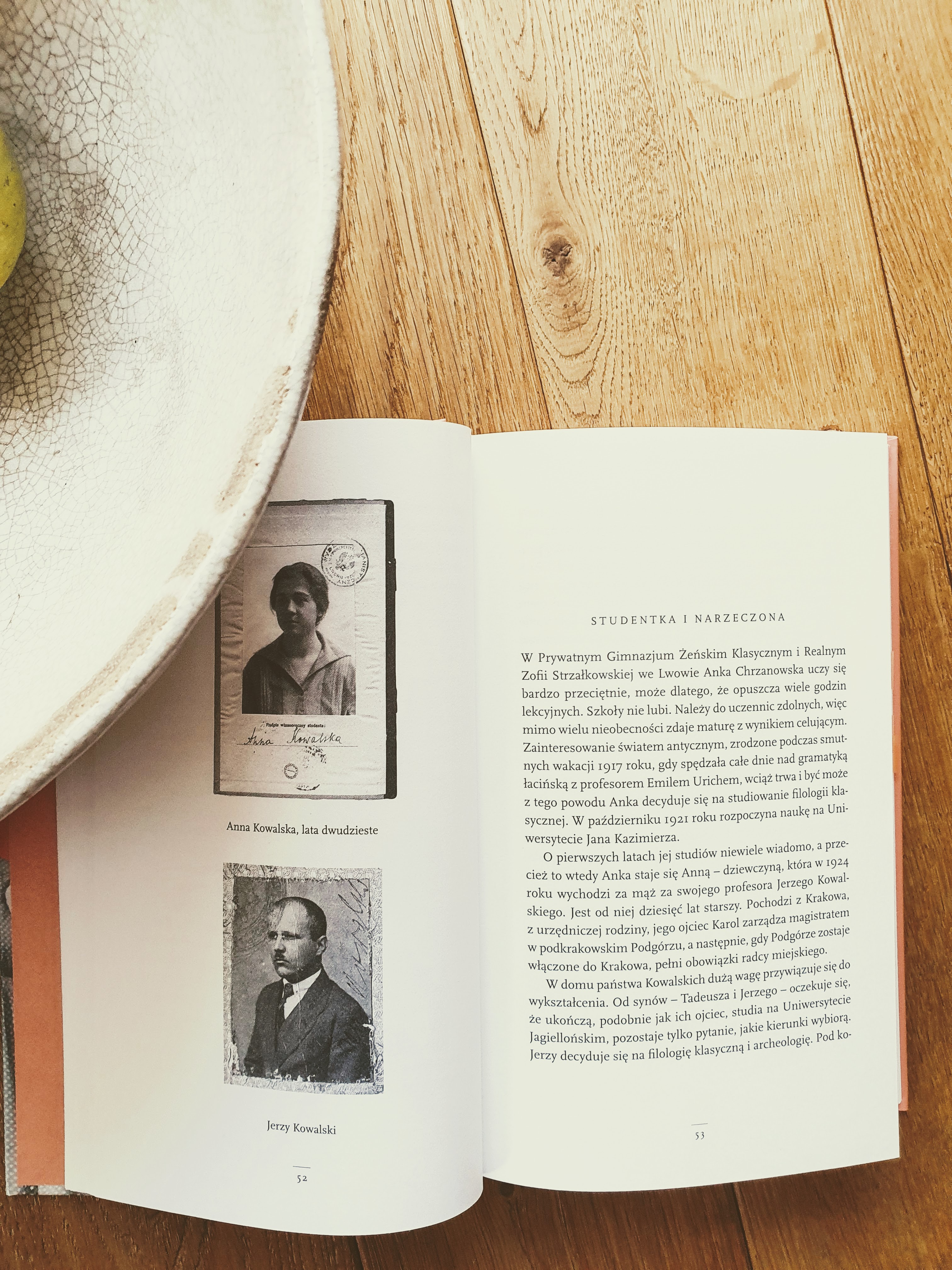
Sylwia Chwedorczuk, Kowalska. Ta od Dąbrowskiej

Ucieszyłam się, kiedy książka Sylwii Chwedorczuk Kowalska. Ta od Dąbrowskiej, trafiła do mnie jako świąteczny prezent. Wcześniej czytałam o publikacji w Wysokich obcasach, więc spodziewałam się czegoś wybitnego. Bardzo szybko jednak cieszyć się przestałam, a zaczęłam walczyć z materią książki – manierą autorki i stosunkowo mało ciekawą główną bohaterką.

Biografia Anny Kowalskiej

Znowu czytam obok. Obok głównego tematu tej książki, a więc lesbijskiego związku Anny Kowalskiej i Marii Dąbrowskiej. Chociaż książka zaczyna się krótkim wstępem zapowiadającym burzliwy związek dwóch pisarek, jakoś nie czekałam na ten moment, ani nie był on dla mnie bulwersujący. Książka zaczyna się nudno – od nastoletnich lat wtedy jeszcze Anny Chrzanowskiej, urodzonej w 1903 roku we Lwowie. Chwedorczuk zagłębia się w relacje rodzinne, trudną sytuację materialną rodziny, poszukiwanie tożsamości u przodków przybyłych z Francji. Anna nie pasuje do francuskojęzycznej części familii – nie spełnia ich oczekiwań, od przyciężkiego physis do braku manier i wyrafinowania. A jednak mieszka z babką i ciotkami w centrum Lwowa. Jako 13-latka beznadziejnie zakochuje się w swojej nauczycielce, Marii Jarosiewicz, która jednak nie odwzajemnia tego uczucia (i czy do końca zdaje sobie z nego sprawę, trudno powiedzieć). Kiedy jednak dziewczynka zostaje przyłapana w dwuznacznej (na owe czasy) sytuacji ze swoją wykładowczynią (kobieta przykłada dłonie do rozgorączkowanej głowy dziewczynki, a ona zarzuca jej ręce na szyję, w tym momencie wchodzi pani dyrektor), wraz z końcem semestru zostaje wyrzucona ze szkoły. Zauroczenie Chrzanowskiej mija.

W tej części, dotyczącej lat młodzieńczych, uderzyły mnie dwie rzeczy – rozgrzebywanie dzienników Kowalskiej i wiwisekcja jej zapisków oraz podejście autorki do przedstawianych wydarzeń. Któż z nas nie pisał chmurnych i durnych pamiętników, których pewnie byśmy się teraz wstydzili. Przegląd niedojrzałych, rozemocjonowanych zapisków dostajemy tu w pełnej krasie. Kończ Waść, wstydu oszczędź. W podsumowaniu „romansu” Chwedorczuk pisze natomiast tak:

„Zamiast jednak wesprzeć zagubioną dziewczynkę, dorośli dali sobie prawo do przekroczenia granic intymności dziecka i bezpardonowo wkroczyli w świat jego uczuć, tłumacząc sposób, w jaki to zrobili, troską o jego dobro.” (s. 38)

Wesprzeć w miłości do nauczycielki? W 1916 roku? O czym my rozmawiamy?

Potem przychodzi czas studiów, gdzie Kowalska poznaje swojego przyszłego męża, wybitnego filologa klasycznego i swojego wykładowcę, profesora Jerzego Kowalskiego. Ślub ma miejsce w 1924 roku. Małżonkowe rozpoczynają wspólne podróże oraz wspólną twórczość literacką. Jednocześnie w Europie rozpoczyna się zawierucha wojenna, która znacząco wpłynie na życie bohaterów. W wyniku działań wojennych Polska traci Lwów, a co za tym idzie, Kowalscy tracą swoje mieszkanie. Pisarki poznały się w 1940 roku, kiedy Dąbrowska gościła we Lwowie ze swoim partnerem Stanisławem Stempowskim. Wtedy też Dąbrowska przeżywa zauroczenie Marią Blumenfeldową, i pisarki nawiązują korespondencję. Rok później Kowalska jest już zaangażowana uczuciowo.

Po wojnie i mieszkaniu w Warszawie dla Kowalskich nadchodzą lata wrocławskie, a więc epizod mi najbliższy, jako że związany z moim rodzinnym miastem. Tu zaczęło się robić naprawdę ciekawie. Jerzy przeprowadza się do stolicy Dolnego Śląska z początkiem października 1945 roku, Anna miesiąc później. Kowalski jest zaangażowany w uruchomienie działalności Uniwersytetu Wrocławskiego. Padają takie nazwiska jak Władysław Floryan, Stanisław Rospond, Juliusz Krzyżanowski, Stanisław Mikulski czy Stanisław Kolbuszewski. Kowalscy mieszkają na ulicy Lindego 10 na Karłowicach.

Kowalska angażuje się w organizowanie literackich czwartków, a w latach 1947-1952 współredaguje „Zeszyty Wrocławskie”. Pod koniec lat 40-tych mają miejsce dwa ważne wydarzenia w życiu Kowalskiej – w 1946 roku rodzi córkę Marię, zwaną Tulą, a dwa lata później po ciężkiej chorobie umiera jej mąż Jerzy. Anna zostaje więc sama z malutkim dzieckiem, w dużym domu, w bardzo trudnej sytuacji materialnej. O swoim macierzyństwie pisze sucho i szczerze:  „Nie ma chyba na świecie rzeczy nudniejszej niż (własne) niemowlę. Co za bujda sakramencka z tym macierzyństwem. To dobre dla baranów. Dziewięćdziesiąt procent lęku i nudy, reszta szczęście.” (s. 240) W dodatku Maria Dąbrowska szaleje z zazdrości – pisarka bardzo źle przyjęła wiadomość o ciąży Kowalskiej i nie przepada za jej córką. Mimo to w 1954 roku Kowalskie przenoszą się do Warszawy, do nowego, większego mieszkania Dąbrowskiej i rzeczywistoć jeszcze bardziej się komplikuje. Żadna z pisarek nie czuje się dobrze w nowym układzie i wkrótce Dąbrowska kupuje dom w Komorowie, gdzie się przenosi. Umiera w 1965 roku. Sama Kowalska umiera niewiele później, po ciężkiej walce z nowotworem w marcu 1969 roku. Właśnie ostatnie jej przemyślenia i zapiski są najbardziej wstrząsające i zostają z czytelnikem na długo. „Cierpienie i śmierć. Zwykły ludzki los”, pisze bez zbędnego dramatyzmu, sucho i rzeczowo (s. 355). Dlatego cieszę się, że pierwsze 200 stron mnie nie zniechęciło i dotrwałam do końca.

Konieczność pisania

Zdecydowanie nie była to najlepsza książka z tych przeczytanych w tym roku. Potwierdza to moje upodobania – czytanie biografii mnie nudzi i męczy, a przedstawieni ludzie okazują się być... za nadto ludzcy, niedoskonali, irytujący. Szukam wielkości, a znajduję człowieczeństwo. To pewnie jest również wielką siłą tej książki. Znalazłam jednak przesłanie dla siebie, idealne na koniec tego roku, jak i jako ostrzeżenie i poradę na rok kolejny: „Jak się ciągle nie pisze, to się przestaje umieć pisać, nawet źle [...]”, zauważa w swoich notatkach Kowalska (s. 244). Więc postanowienie na 2021 – recenzować na bieżąco, a nie gorączkowo nagdaniać, jak w tym roku.


Moja ocena: 5/10.


Sylwia Chwedorczuk, Kowalska. Ta od Dąbrowskiej

Wydawnictwo Marginesy

Warszawa 2020

Liczba stron: 368

ISBN: 978-83-66500-14-3


I was glad when Sylwia Chwedorczuk’s book titled Kowalska. The one from Dąbrowska came to me as a Christmas gift. Earlier I’ve read about the publication in Wysokie obcasy (a weekly added to Gazeta Wyborcza newspaper), so I was expecting something outstanding. However, I stopped rejoicing very quickly, and started to fight the matter of the book - the manner of the author and the relatively uninteresting main character. 

Anna Kowalska's biography

I'm reading next to the main topic again. Apart from the main subject of this book, i.e. the lesbian relationship of Anna Kowalska and Maria Dąbrowska. Although the book begins with a short introduction that foreshadows the turbulent relationship between the two writers, somehow I did not wait for this moment, nor was it outrageous for me. The book starts boring - from the teenage years of then Anna Chrzanowska, born in 1903 in Lviv. Chwedorczuk delves into family relations, the difficult financial situation of the family, and the search for identity among ancestors who came from France. Anna does not fit into the French-speaking part of the family - she falls short of their expectations, from heavy physis to lack of manners and refinement. And yet she lives with her grandmother and aunts in the center of Lviv. As a 13-year-old, she hopelessly falls in love with her teacher, Maria Jarosiewicz, who, however, does not reciprocate this feeling (and whether she is fully aware of it, it is difficult to say). However, when the girl is caught in an ambiguous (for those times) situation with her lecturer (the woman puts her hands to the girl's feverish head and she throws her arms around her neck, at this point the principal enters), at the end of the semester she is expelled from school. The love of Chrzanowska dies out.

In this part of the teenage years, I was struck by two things - digging up Kowalska's journals and vivisecting her writings, and the author's approach to the events presented. Who among us did not write gloomy and silly diaries, which we would probably be ashamed of now. We get an overview of immature, emotional notes here in all its glory. We could have been spared, as well as Kowalska. In the summary of the ‘romance’, Chwedorczuk writes as follows:

"But instead of supporting the lost girl, adults gave themselves the right to exceed the limits of the child's intimacy and ruthlessly entered the world of her feelings, explaining the way they did it with concern for her welfare." (p. 38)

Support in love for the teacher? In 1916? What are we talking about?

Then comes the time of studies, where Kowalska meets her future husband, an outstanding classical philologist and her lecturer, professor Jerzy Kowalski. The wedding takes place in 1924. The married couple begins joint journeys and joint literary work. At the same time, a turmoil of war begins in Europe, which will significantly affect the lives of the heroes. As a result of the hostilities, Poland loses Lviv, and thus the marriage loses their apartment. Anna met acclaimed writer Maria Dąbrowska in 1940, when the second visited Lviv with her partner Stanisław Stempowski. It was then that Dąbrowska was infatuated with Maria Blumenfeld, and the writers started their long-lasting correspondence. A year later, Kowalska is already emotionally involved.

After the war and living in Warsaw, the Wroclaw years are coming for the Kowalskis, so the episode is the closest to me, as it is related to my hometown. Here it started to get really interesting. Jerzy moves to the capital of Lower Silesia at the beginning of October 1945, Anna a month later. Kowalski is involved in launching the activities of the University of Wrocław. There are such names as Władysław Floryan, Stanisław Rospond, Juliusz Krzyżanowski, Stanisław Mikulski and Stanisław Kolbuszewski. The Kowalskis live at 10 Lindego Street in Karłowice. Kowalska is involved in organizing literary Thursdays, and in the years 1947-1952 she co-edits "Zeszyty Wrocławskie". At the end of the 1940s, two important events took place in Anna’s life - in 1946 she gave birth to a daughter Maria, affectionately called Tula, and two years later, after a serious illness, her husband Jerzy dies. So Anna is left alone with a small child, in a big house, in a very difficult financial situation. She writes dryly and honestly about her motherhood: ‘There is probably nothing more boring in the world than a (own) baby. What a sacramental nonsense with this motherhood. It's good for dummies. Ninety percent of fear and boredom, the rest is happiness’ (p. 240). In addition, Maria Dąbrowska is mad with jealousy - the writer took the news of Kowalska's pregnancy very badly and does not like Anna’s daughter very much. Despite this, in 1954, mother and daughter moved to Warsaw, to a new, larger apartment of Dąbrowska, and the reality became even more complicated. None of the writers felt comfortable in the new arrangement and soon Dąbrowska buys a house in Komorów, where she moves. She dies in 1965. Kowalska herself dies not much later, after a hard struggle with cancer in March 1969. It is her last thoughts and notes that are the most shocking and stay with the reader for a long time. “Suffering and death. Ordinary human fate’, she writes without unnecessary drama, dryly and to the point (p. 355). That's why I'm glad that the first 200 pages did not discourage me and I made it to the end.

The necessity of writing

It was by no means the best book read this year. This confirms my preferences - reading biographies bores me and tires me, and the people presented turn out to be... too human, imperfect, irritating. I am looking for greatness and I am finding humanity. This is probably also the great strength of this book. However, I found a message for myself, perfect for the end of this year, as well as a warning and advice for the next year: ‘If you don't write all the time, you stop being able to write, even badly [...]’, writes Kowalska in her notes (p. 244). So, the resolution for 2021 - review on a regular basis, not frantically urge it, as this year.


My grade: 5/10.


Author: Sylwia Chwedorczuk

Title: Kowalska. The one from Dąbrowska

Publishing House: Marginesy

Warsaw 2020

Number of pages: 368

ISBN: 978-83-66500-14-3

środa, 30 grudnia 2020

Philip Pullman, The Firework-Maker’s Daughter

Czasami tęsknię za jakąś książką – przypominam sobie jej fragment i zastanawiam się, co się dokładnie wydarzyło, przypominam sobie klimat, wyobrażam poszczególne sceny. Tak właśnie zatęskniłam za trylogią Philipa Pullmana Mroczne materie, którą czytałam podczas studiów (fajne studia, swoją drogą!). Niestety, nie mam kopii w domu, ale kołatalo mi się w głowie, że widziałam jeszcze jedną książkę brytyjskiego autora gdzieś u siebie na półce. I proszę, oto jest! Nietłumaczona na język polski Córka mistrza fajerwerków. Książka – petarda!

Perełka

Książka jest niewielka, ale za to niesamowicie pięknie wydana. Krótkiej i prostej fabule towarzyszą ilustracje Nicka Harrisa. Mistrz fajerwerków, Lalchand, samotnie wychowuje swoją córkę Lilę, a dziewczynka okazuje się pojętną i utalenotwaną uczennicą. Ojciec jednak nie widzi jej w zawodzie i pragnie, by znalazła sobie męża i wiosła życie jak reszta dziewcząt z jej wioski. Lila się na to nie zgadza. Dzięki swojemu przyjacielowi, Chulakowi, dowiaduje się, że by zostać mistrzem w swoim fachu musi się udać na górę Merapi, gdzie mieszka duch ognia Razvani, by zdobyć od niego Królewską Siarkę. Dziewczyna wymyka się więc z domu i rusza na górę. Nie wie jednak, że jest do tej drogi nieprzygotowana – duchowi trzeba złożyć trzy dary, a dla własnego bezpieczeństwa zabrać ze sobą wodę z jeziora Szmaragdowej Bogini. Chulak szybko odkrywa, że Lalchand nie powiedział mu wszystkiego, i rusza zdobyć dar pani jeziora. Na szczęście nie jest sam – towarzyszy mu jego niezwykły przyjaciel, gadający biały słoń Hamlet. Chłopiec i jego towarzysz zdążają w ostatniej chwili i dzięki nim dziewczynka nie płonie, ale też nie zdobywa magicznego przedmiotu.

Hamlet nie jest zwykłym słoniem – jest słoniem cesarza. Władca używa go, gdy chce kogoś ukarać. Nieszczęśnik musi wtedy utrzymywać dorodne zwierzę, zapewniać mu jedwabną pościel i frykasy do jedzenia (a przy okazji bankrutuje i nie stanowi już dla cesarza zagrożenia). Zniknięcie zwierzęcia wywołuje zrozumiałygniew władcy, a wszystkie ślady prowadzą do wytwórcy fajerwerków, który zostaje aresztowany. Na szczęście Chulak, Lila i Hamlet zdążą wrócić, nim mężczyzna zostanie ścięty. Władca zgadza się oszczędzić jego życie do czasu pojedynku mistrzów sztucznych ogni, i pod warunkiem, że straszy mężczyzna i jego ambitna córka wygrają ten konkurs. Zdesperowana dwójka musi walczyć z Niemcem, Włochem i Amerykaninem, gdzie każde jest mistrzem swojej sztuki. Decyduje natężenie oklasków. Mimo że przedstawiciele tych trzech nacji zostali pokazani w sposób do bólu stereotypowy i zamierzony, Pullmanowi udało się oddać orientalnego ducha – gdy Lalchand i jego córka urządzają swój pokaz, który jest niezwykle subtelny i ulotny w porównaniu z zaprezentowaną wcześniej kanonadą, publiczność reaguje pełną kontemplacji i zachwytu ciszą. To właśnie przybysze z zachodniego świata ratują życie ojca, zaczynając entuzjastycznie bić brawo, i tłum zaczyna wiwatować.

Kiedy impreza dobiega końca, ojciec i córka mają okazję spokojnie porozmawiać. Okazuje się wtedy, że Lila miała trzy dary dla bożka ognia – odwagę, wytrwałość i odrobinę szczęścia. Dostała zatem i dar – Królewską Siarkę – czyli wiedzę i doświadczenie, które zdobyła w pocie czoła dzięki swojej ciężkiej pracy.

Tej książki nie ma co zestawiać z moimi codziennymi lekturami – to literatura dla dzieci, napisana z humorem, językiem prostym i dowcipnym. Nie jest za długa, ma sporo ciekawych i spójnie poprowadzonych wątków pobocznych (wujek Chulaka, Rambashi). Jest naprawdę sprawnie napisana. Przede wszystkim jednak ma mądre przesłanie. Może więc Córka mistrza fajerwerków ukaże się w Polsce? Przecież tytuł mógłby brzmieć bardziej zachęcająco – Petarda!


Philip Pullman
, The Firework-Maker’s Daughter

Corgi Yearling Books

Londyn 1998

Ilustracje: Nick Harris

Liczba stron: 106

ISBN: 978-044-86331-7


Sometimes I miss a book - I remember a fragment of it and wonder what exactly happened, I remember the atmosphere, I imagine individual scenes. That's how I missed Philip Pullman's Dark Materials trilogy, which I read while studying (how cool is that, huh?!). Unfortunately, I do not have a copy at home, but it was knocking in my head that I saw another book by the British author somewhere on my shelf. And here it is! Not yet translated into Polish, The Firework-Maker’s Daughter. Book - firecracker!

Literary jewel

The book is small, but incredibly beautifully published. The short and simple plot is accompanied by illustrations by Nick Harris. The master of fireworks, Lalchand, raises his daughter Lila alone, and the girl turns out to be a clever and talented student. However, her father does not see her in this profession and wants her to find a husband and lead a life like the rest of the girls in her village. Lila does not agree to this. Thanks to her friend Chulak, she learns that in order to become a champion in her trade, she must go to Mount Merapi, where Razvani the Fire-Fiend lives, to obtain Royal Sulphur from him. So the girl sneaks out of the house and goes on her quest. She does not know, however, that she is unprepared for this journey - the demon must be offered three gifts, and for her own protection she should had taken the water from the lake of the Emerald Goddess. Chulak quickly discovers that Lalchand hasn't told him everything, and sets off to get the lake lady's gift. Fortunately, he is not alone - accompanied by his unusual friend, the talking white elephant Hamlet. The boy and his companion arrive at the last moment and thanks to them the girl does not burn, but also does not obtain the magic item.

Hamlet is not an ordinary elephant - he is the emperor's elephant. The ruler uses him when he wants to punish someone. The unfortunate person must then keep the beautiful animal, provide him with silk sheets and delicacies to eat (and in this way go bankrupt and no longer pose a threat to the emperor). The disappearance of the animal causes an understandable anger of the ruler, and all traces lead to the firework maker, who is arrested. Fortunately, Chulak, Lila and Hamlet return in time before the man is beheaded. The ruler agrees to spare Lalchand’s life until the duel of the fireworks masters, and on the condition that the scared man and his ambitious daughter win the competition. The desperate two have to fight against a German, an Italian and an American, each master of their art. The intensity of applause is decisive. Despite the painfully stereotypical and deliberate portrayal of these three nations, Pullman has managed to capture the oriental spirit - when Lalchand and his daughter put on their show, which is extremely subtle and fleeting compared to the cannonade presented earlier, the audience responds with contemplation and delight in silence. It is the newcomers from the western world who save my father's life by applauding enthusiastically, and the crowd follows.

When the party is over, father and daughter have a chance to talk quietly. It turns out then that Lila had three gifts for the Fire-Fiend - courage, persistence and a bit of luck. Therefore, she was given a gift – Royal Sulphur – which turns out to be knowledge and experience gained through the sweat of her brow thanks to her hard work.

There is no need to juxtapose this book with my daily readings - it is children's literature, written with humor, simple and witty language. It's not too long, it has a lot of interesting and coherent side stories (Chulak’s uncle, Rambashi). It is really well written. Above all, however, it has a wise message. So maybe The Firework-Maker’s Daughter will be published in Poland? After all, the title could sound more inviting - Firecracker!


Author: Philip Pullman

Title: The Firework-Maker's Daughter

Corgi Yearling Books

London 1998

Illustrations by Nick Harris

Number of pages: 106

ISBN: 978-044-86331-7

Swietłana Aleksijewicz, Czarnobylska modlitwa. Kronika przyszłości (Чернобыльская молитва)

To nie pierwsza przeczytana przeze mnie książka białoruskiej Noblistki Swietłany Aleksijewicz. Wcześniej były Ołowiane żołnierzyki (o wojnie w Afganistanie) i Czasy Secondhandu (o życiu w Rosji po rozpadzie Związku Radzieckiego). Tamte książki były jednak w pewnej mierze... przypadkowe. Czarnobylska modlitwa natomiast była wyczekana, i może przeczekana. Na fali serialu HBO Czarnobyl zaczęłam namiętnie czytać o katastrofie reaktora na Białorusi. Sięgałam po tą książkę z ogromnymi oczekiwaniami, i chyba trochę się zawiodłam. Ale po kolei.

Katastrofa, która wstrząsnęła Europą

26 kwietnia 1986 roku wybuchł reaktor atomowy w czwartym bloku elektrowni atomowej w Czarnobylu, powodując potworne skażenie terenu i ewakuację mieszkańców. Początkowo mówiono ludziom, że będzie to ewakuacja czasowa, ale ludziom nie dane było wrócić do porzuconego dobytku. To właśnie z osobami bezpośrednio dotkniętymi przez katastrofę rozmawia Aleksijewicz w 20 lat po wydarzeniu. Zarówno z Ukraińcami, jak i z Białorusinami. Mimo, że katastrofa miała miejsce na Ukrainie, większość radioaktywnej chmury przemieściła się w stronę Białorusi, powodując 70% skażenia terenu tego kraju. Jak gorzko zauważa pisarka, wtedy to właśnie Białoruś wkroczyła na scenę europejską.

Książka zaczyna się od rozmowy z Ludmiłą Ignatienko, wdową po strażaku Wasiliju, który zmarł na chorobę popromienną 18 dni po napromieniowaniu, a 14 dni po przewiezieniu do szpitala w Moskwie. Opowieść wdowy łapie za serce, i jak widać - nie tylko mnie. Twórcy miniserialu HBO Czarnobyl korzystali z książki Aleksijewicz przy tworzeniu scenariusza, a wspomnienia Ignatienko w dużej mierze tworzą dramatyczną siłę tego serialu i są jedną z osi wydarzeń.


Aleksijewicz stara się pokazać awarię reaktora i jej następstwa właśnie poprzez relacje zwykłych osób, dotkniętych tą tragedią. Pisze: „[...] ja zajmuję się tym, co nazwałabym historią pomijaną, znikającymi bez śladu śladami naszego przebywania na ziemi i w czasie. Piszę i kolekcjonuję codzienność – uczuć, myśli, słów” (s.31). Wybitna dziennikarka kilkakrotnie była w strefie, opisywała zastany tam świat, zaskoczenie niebezpieczeństwem, krórego nie widać i na które nikt nie był gotowy. Zdradę człowieka wobec otaczającego go środowiska, samolubną ucieczkę, zrównanie z ziemią gospodarstw i wsi, zabijanie zwierząt. Ale jej myślą przewodnią jest:

Los to życie jednego człowieka, historia to życie nas wszystkich. Chcę opowiedzieć historię w taki sposób, żeby nie stracic z oczy losu pojedynczego człowieka. Los bowiem sięga dalej niz jakakolwiek idea. (s. 41)

W rozdziale Ziemia umarłych daje głos tym, którzy zostali wbrew zakazowi, albo wrócili do strefy po kilku latach. Również żołnierzom, którzy zostali wysłani do strefy, by wysiedlać ludzi, orać ziemię, pilnować porządku. Mieszkańcy nie rozumieli niewidocznego zagrożenia.

W rozdziale Korona stworzenia opisuje próby radzenia sobie ze stratą najbliższych, z narodzinami i śmiercią kalekich dzieci. Opisuje ludzi, którzy gdzie indziej czuli się naznaczeni piętnem swojej tragedii i odepchnięci od obawiającego się ich społeczeństwa, którzy wrócili na swoją ziemię, której ufali, na której się wychowali. „Matka była zadowolona. ‘Zrobiłam dwadzieścia słoików’. Zaufanie do ziemi... Do wiecznego chłopskiego doświadczenia... Nawet śmierć syna nie zburzyła im świata, do którego przywykli...” (s. 136).

Opisuje poświęcenie ludzi, którzy działali przy reaktorze i w strefie. Przewija się wspólny motyw – przekonanie, że istnieje coś większego od ich życia. Kultuta ofiarności, ofiary, jak nazywa to Siergiej Wasiliewicz Sobolej, zastępca prezesa zarządu stowarzyszenia Tarcza dla Czrnobyla. Inni mówią, że człowiek radziecki nie myśli w kategoriach „ja”, tylko w kategoriach „my”.

Zbyt wiele tragedii tępi ostrze dramatu

Przeczytałam tą książkę już parę miesięcy temu, ale odłożyłam notatki i recenzję na później, bo książka mi się nie podobała. Sądziłam, że może trochę mi się uleży i zmienię o niej zdanie – ale nie. Czułam narastającą irytację i jednocześnie znudzenie – historie są do siebie podobne, jakby wszyscy, z którymi rozmawiała Aleksijewicz, mówili jednym, tym samym głosem. Nawet opowieści dzieci są rzewne. Jakbym czytała jedną, powtarzaną wielokrotnie opowieść o nadludzkim cierpieniu. Może na tym polega trudność takiej prozy? Jak oddać emocje, które nie chcą dać się uwięzić w słowa? Które są większe i straszniejsze niż dostępny język? Uważam, że tutaj się to nie udało. Choć książka jest poruszająca, a opowadane historie mają czytelnikiem wstrząsać, to nagromadzenie nieszczęścia powoduje, że głosy wzajemnie się tłumią i gasną. Natomiast scenarzyści serialu wyciągnęli z tej prozy co najlepsze i przekuli to w skuteczniejsze medium. Czarnobyl HBO jest naprawdę znakomity.


Moja ocena: 5/10.


Swietłana Aleksijewicz, Czarnobylska modlitwa. Kronika przyszłości

Wydawnictwo Czarne

Wołowiec 2018

Tłumaczenie: Jerzy Czech

Liczba stron: 288

ISBN: 978-83-8049-685-9


This is not the first book by the Belarusian Nobel laureate Svetlana Alexievich that I have read. Earlier, there were Boys in Zinc (about the war in Afghanistan) and Second-hand Time (about life in Russia after the collapse of the Soviet Union). Those books, however, were to some extent… random. Chernobyl Prayer, on the other hand, was awaited, and perhaps waited out. On the wave of the HBO series Chernobyl, I started reading passionately about the reactor disaster in Belarus. I reached for this book with huge expectations, and I think I was a bit disappointed. But let’s have a look on the book bit by bit.

A catastrophe that shook the entire Europe

On April 26, 1986, a nuclear reactor exploded in the fourth block of the Chernobyl nuclear power plant, causing terrible contamination of the area and the evacuation of residents. Initially, people were told that it would be a temporary evacuation, but the residents were not allowed to return to their abandoned property. It is with the people directly affected by the catastrophe that Alexievich talks 20 years after the nuclear catastrophe, both Ukrainians and Belarusians. Although the disaster took place in Ukraine, most of the radioactive cloud moved towards Belarus, causing 70% of the contamination of the country.

The book begins with a conversation with Lyudmila Ignatenko, the widow of Vasily, the fireman, who died of radiation sickness 18 days after irradiation and 14 days after being transferred to a hospital in Moscow. The widow's story grabs my heart, and not only me. The makers of the HBO miniseries Chernobyl used the book by Alexievich to write the script, and the widow’s statement is one of the opening chapters.

Fate goes further than any idea

Alexievich tries to show this terrible event precisely through the accounts of ordinary people affected by this tragedy. She states: “[...] I deal with what I would call an ignored history, with traces of our presence on earth and in time disappearing without a trace. I write and collect everyday life - feelings, thoughts, words ”(p.). The journalist has visited the zone several times, describing the world she found there, the surprise of the danger that cannot be seen and for which no one was ready. Man's betrayal of the surrounding environment, selfish escape, razing farms and villages to the ground, killing animals. But its keynote is:

Fate is the life of one man, history is the life of all of us. I want to tell the story in such a way as not to lose sight of the fate of an individual. For fate goes further than any idea. (p. 41)

In the first chapter, Land of the Dead, she gives voice to those who stayed in violation of the ban or returned to the zone after a few years. Also to the soldiers who were sent to the zone to displace people, plow the land and keep order. The inhabitants did not understand the invisible threat, and oftern at the time of harvest, when people have seen the work of the entire year go to waste.

In the chapter The Crown of Creation she describes attempts to cope with the loss of loved ones, the birth and death of crippled children. The journalist describes people who, elsewhere, felt stigmatized by their tragedy and pushed away from the society that feared them, people who returned to their land, on which they were brought up. “The mother was pleased. 'I made twenty jars'. Trust in the land ... To the eternal peasant experience ... Even the death of their son did not destroy the world to which they were used to... ”(p. 136).

Alexievich also describes the dedication of the people who worked at the reactor and in the zone. There is a common theme - the belief that there is something greater than their life. The cult of sacrifice, as it is called by Sergei Vasilievich Sobolej, deputy chairman of the board of the Shield for Chrnobyl association. Others say that the Soviet man does not think in terms of "I" but in terms of "we."

Too much suffering stifles the dramatic effect

I’ve read this book a few months ago, but put my notes and review aside for later because I didn't like it and thought I was wrong. I decided that maybe I would settle for a while and change my mind about it - but no. I felt a growing irritation and boredom at the same time - the stories are similar, as if everyone Alexievich interviewed spoke in the same voice. Even the children's stories are similar and wistful. As if I was reading one, repeated story about inhuman suffering. Perhaps this is the difficulty of such prose? How to express emotions that don't want to be trapped in words? Which are bigger and scarier than the available language? I believe that it has not worked out here. Although the book is moving, and the stories told are intended to shock the reader, the accumulation of misfortune causes the stories to mutually suppress and fade away. On the other hand, the HBO screenwriters took the best out of this prose and transformed it into a more effective medium. Chernobyl by HBO is really great, easily the best TV-series I’ve seen this year.


My grade: 5/10.


Author: Svetlana Alexievich

Title: Chernobyl Prayer: A Chronicle of the Future

Publishing House: Wydawnictwo Czarne

Wołowiec 2018

Translation: Jerzy Czech

Number of pages: 288

ISBN: 978-83-8049-685-9

poniedziałek, 28 grudnia 2020

John Banville, Prawo do światła (Ancient light)

Banville jest wyjątkowo płodnym pisarzem, do tej pory opublikował 20 książek. Prawo do światła jest trzecim tomem z trylogii The Alexander and Cass Cleave Trilogy, publikowanej w latach 2002-2012. Oczywiście dowiedziałam się o tym dopiero po przeczytaniu książki. Poprzednie dwa tytuły nie są przetłumaczone na język polski.

Diabeł nie tkwi w fabule

Bohaterem powieści jest aktor Alexander Cleave, dobiegający już 70-tki. Ku jego zaskoczeniu zostaje zaproszony do kolejnego przedsięwzięcia, tym razem na wielkim ekranie, z którego korzysta. Towarzyszy mu młoda gwiazda kina, Dawn Devonport. Jednocześnie mężczyzna wspomina swoje lata młodzieńcze, kiedy zakochał się i przeżył romans z 20 lat od siebie starszą matką kolegi, Celią Gray. 35-letnia wówczas kobieta jest opisana w prozie Banville’a niesamowicie zmysłowo, a doznania młodego bohatera działają na wszystkie zmysły. Alexander uprawiał seks z Celią w zrujnowanej chacie w lesie, pełnej zbutwiałych liści, na skrzypiącej podłodze, w chłodnym potoku nieopodal, w jej starym samochodzie, w schowku na pranie.


Kiedy nie oddaje się zmysłowym wspomnieniom, Alexander jest wieloletnim mężem Lydii Mercer i pogrążonym w żałobie ojcem Catherine, zwanej pieszczotliwie Cass, która popełniła samobójstwo rzucając się ze skały we Włoszech. Co gorsza, dziewczyna była wtedy w ciąży. Małżeństwo najgorsze chwile ma już za sobą, ale dalej nie może pogodzić się ze śmiercią swojego jedynego dziecka i oboje stąpają po kruchym lodzie. Kiedy Dawn podejmuje nieudaną próbę samobójczą, Alexander zabiera ją ze sobą do Włoch, by choć przez chwilę móc z nią podróżować jak ze swoją córką, i zbliżyć się do zagadki śmierci swojego jedynego dziecka.

Zmysłowa proza

Siła powieści nie tkwi w fabule, lecz w mistrzostwie języka. Czytając powieść podczas upalnych letnich wakacji słyszałam wszystkie dźwięki, czułam opisywane przez Banville’a zapachy, dawałam się uwodzić – za Alexandrem – zmysłowemu obrazowi starszej kochanki. Z drugiej strony, pisarz zwraca uwagę na ulotność pamięci, przetworzenie swoich wspomnień przez czas i nagromadzone doświadczenie. Książka zawiera zresztą swoistą klamrę kompozycyjną – z początku bohater zastanawia się, co się stało z jego kochanką z lat młodzieńczych, na końcu książki dowiaduje się, że zmarła zaledwie rok po ich romansie, a oddając się swojemu młodemu i niedoświadczonemu kochankowi wiedziała już, że jest chora. Dorosły już mężczyzna może się więc zastanawiać, czy postanowił zlekceważyć pojawiające się objawy, czy też ich jeszcze nie było, czy jego pamięć postanowiła ich nie zauważać? Taka pogoń za przeszłością, przesączona przez niezwykle poetycki, zmysłowy język, tworzy pociągającą i silną mieszankę. Mnie pchnęła do lektury kolejnych książek Banville’a.


Moja ocena: 7/10.


John Banville, Prawo do światła

Wydawnictwo Świat Książki

Warszawa 2015

Tłumaczenie: Jacek Żuławnik

Liczba stron: 302

ISBN: 978-83-7943-544-9


John Banville, Ancient Light

Banville is an exceptionally prolific writer, having published 20 books to date. Ancient Light is the third volume in The Alexander and Cass Cleave Trilogy, published between 2002 and 2012. Of course, I only found out about this after reading the book. The previous two titles are not translated into Polish.

The beauty is not in the plot

The hero of the novel is the actor Alexander Cleave, who is already in his seventies. To his surprise, he is invited to the next venture, this time on the big screen. He is accompanied by a young movie star, Dawn Devonport. At the same time, the man remembers his adolescence when he fell in love and had an affair with his friend's 20 years older mother, Celia Gray. The then 35-year-old woman is described in Banville's prose incredibly sensually, and the experiences of the young protagonist affect all the senses. Alexander had sex with Celia in a dilapidated hut in the woods, full of decaying leaves, on a squeaky floor, in a chilly river nearby, in her old car, in the laundry closet.

When he doesn't indulge in sensual memories, Alexander is the long-time husband of Lydia Mercer and the bereaved father of Catherine, affectionately known as Cass, who committed suicide by throwing herself off a rock in Italy. Worse, the girl was pregnant at the time. The worst moments are behind the married couple, but they still cannot come to terms with the death of their only child and they both tread on thin ice. When Dawn makes an unsuccessful suicide attempt, Alexander takes her with him to Italy so that he can travel with her for a while as with his daughter and get closer to the mystery of the death of his only child.

Highly sensual prose

The strength of the novel lies not in the plot, but in the mastery of language. While reading the novel during a hot summer vacation, I heard all the sounds, I felt the smells described by Banville, I was seduced - following Alexander - by the sensual image of an elderly mistress. On the other hand, the writer pays attention to the elusiveness of memory, the processing of his memories through time and accumulated experience. The book contains a peculiar composition bracket - at first the protagonist wonders what happened to the lover from his adolescent years, at the end of the book he learns that she died just a year after their romance, and by giving herself to her young and inexperienced boy, she already knew that she was sick. So an adult man may wonder if he decided to ignore the emerging symptoms, if they were not there yet, or if his memory decided not to notice them? Such a pursuit of the past, permeated with an extremely poetic, sensual language, creates an alluring and powerful mixture. It pushed me to read more of Banville books.


My rating: 7/10.


John Banville, Ancient Light

Publishing House: Świat Książki

Warsaw 2015

Translated by: Jacek Żuławnik

Number of pages: 302

ISBN: 978-83-7943-544-9

Mircea Eliade, Młodość stulatka (Tinereţe fără tinereţe)

Niewielka książeczka rumuńskiego religioznawcy i filozofa zatytułowana Młodość stulatka opowiada o 70-letnim mężczyźnie rażonym piorunem, który dzięki temu wypadkowi odzyskuje młodość. Co zrobi z tak niespodziewanie zyskanym dodatkowym czasem?

Odwieczne marzenie o nieprzemijającej młodości


Główny bohater, profesor Dominik Matei, zostaje uderzony piorunem w Wielkanocny wieczór. Ubranie się na nim spaliło, a skóra uległa tak dużym poparzeniom, że mężczyznę trudno rozpoznać, dzięki czemu długo może pozostać anonimowy. Powoli wracają wszystkie jego umiejętności, odrastają mu zęby i włosy, wbrew logice i biologii staje się coraz młodszy i sprawniejszy. Jednocześnie jednak cały czas ma dostęp do całego swojego życiowego doświadczenia, nabytej wiedzy, wyuczonych języków. Zwiększa się chłonność jego umysłu i możliwości uczenia nowych rzeczy. Daje mu to możliwość nadrobienia straconego czasu i zmarnowanego życia.

Eliade był religioznawcą i zasłynął m.in. swoją pracą Sacrum, mit, historia, gdzie pisze o przeciwstawieniu sacrum i profanum i gwałtownym wtargnięciu sacrum w sferę profanum, a więc hierofanii, która zaburza oba porządki. Takim wydarzeniem w Młodości stulatka jest moment uderzenia pioruna w Wielkanocny wieczór, a więc w czas szczególny, czas śmierci i zmartwychwstania Jezusa. Dwie rzeczywistości przenikają się, a Matei zostaje wtedy obdarzony – wbrew prawom obowiązującym w świeckim porządku - darem drugiej młodości.

W posłowiu Ireneusz Kania, wybitny badacz twórczości Eliadego, pisze o podobieństwie opowieści pisarza do rumuńskiej baśni Młodość bez starości i życie bez śmierci (Tinereţe fără bătrînete si uiata fără de moarte). W wielu mitach i legendach bohater odradza się, powracając do miejsca swojego urodzenia. Tu jest odwrotnie – baśniowy królewicz wyrusza na poszukiwanie krainy wiecznej młodości, ale gdy przypomina sobie o swoich rodzicach i królestwie, postanawia tam powrócić. W ten sposób sprowadza na siebie zgubę – starość i śmierć. Podobnie jest w Młodości stulatka – profesor po wielu podróżach powraca do swojego rodzinnego miasteczka, Piatra Neamţ, i idzie do swojej ulubionej kawiarni, Selectu. Tam czas wraca niemal do momentu wypadku, tym razem wydarzenia dzieją się niewiele przed Bożym Narodzeniem, 20 grudnia 1938 roku. Profesor zna wydarzenia z przyszłości, bieg drugiej wojny światowej, ale jego znajomi są zaskoczeni i biorą go za szaleńca. Znika jego młodzieńczy wygląd, a Matei starzeje się w ekspresowym tempie i umiera po wyjściu z kawiarni. Jego rodzime miasteczko okazało się być jego pułapką i końcem.


Sama powieść nie zachwyciła mnie szczególnie. Mimo swoich niewielkich rozmiarów i stosunkowo licznych fotosów z filmu była dość ciężka w odbiorze ze względu na przenikanie się wspomnień i obecnych wydarzeń i brak jedności fabularnej. To pewnie zamierzone działanie, pokazujące współistnienie tych porządków, jednak czytelnikowi nieco utrudnia życia. Książka wydaje się też emocjonalnie sztuczna, pozbawiona ciepła, przeintelektualizowana i przechylona w stronę nostalgii. Nie wiem czemu, ale może wzmianka o Bożym Narodzeniu i zasypanym śniegiem odległym opustoszałym miasteczku przypominała mi nieco swoim nastrojem twórczość Dickensa („Opowieść wigilijną” i „Dzwony za kominem”). Gdyby nie ta notatka, wkrótce zapomniałabym o jej fabule.


Moja ocena: 4/10.

Mircea Eliade, Młodość stulatka

Wydawnictwo WAB

Warszawa 2008

Tłumaczenie: Ireneusz Kania

Liczba stron: 256

ISBN: 978-83-7414-277-9


Mircea Eliade, Youth Without Youth (Tinereţe fără tinereţe)

A small book by a Romanian professor and philosopher entitled Youth Without Youth tells a story of a 70-year-old man struck by lightning, who regains his youth thanks to this accident. What will he do with this unexpectedly gained extra time?

The eternal dream of everlasting youth

The main character, Professor Dominik Matei, is struck by lightning on Easter evening. Clothes burned on him and the skin was so badly burned that it is impossible to recognize him, so he can remain anonymous for quite a while. All his skills slowly return, his teeth and hair grow back, and against logic and biology he becomes younger and more agile. At the same time, however, he has access to his entire life experience, acquired knowledge and learned languages. His mind is absorbed and his ability to learn new things increases. It gives him the opportunity to make up for lost time and wasted life.

Eliade was a historian of reliogion and became famous for his research on sacrum, myth and history, where he writes about the opposition between the sacred and the profane, and the violent intrusion of the sacred into the sphere of the profane, i.e. hierophany, which disturbs both orders. Such an event in Youth Without Youth is the moment of lightning strike on Easter evening, and therefore at a special time, the time of Jesus' death and resurrection. Two realities interpenetrate, and Matei is then endowed - against the laws of the secular order - with the gift of a second youth.


In the afterword, Ireneusz Kania, an outstanding researcher of Eliade's work, writes about the similarity of the writer's story to the Romanian fairy tale Youth without Old Age and Life without Death (Tinereţe fără bătrînete si uiata fără de moarte). In many myths and legends, the hero is reborn, returning to his place of birth. Here it is the other way around - the fairy-tale prince sets out in search of the land of eternal youth, but when he remembers about his parents and his kingdom, he decides to return there. In this way he brings ruin upon himself - old age and death. It is similar in Youth, a centenarian - after many travels, the professor returns to his hometown, Piatra Neamţ, and goes to his favorite cafe, Select. There, time returns almost to the point of the accident, this time the events take place just before Christmas, on December 20, 1938. The professor knows the events of the future, the course of the Second World War, but his friends are surprised and take him for a madman. His youthful appearance disappears, and Matei is aging at an express pace and dies after leaving the cafe. His home town turned out to be his trap and brings him death.

The novel itself did not particularly impress me. Despite its small size and relatively numerous snapshots from the film, it was quite difficult to read due to the interpenetration of memories and current events and the lack of plot unity. This is probably a deliberate action, showing the coexistence of these orders, but it makes life a bit difficult for the reader. The book also seems emotionally artificial, devoid of warmth, over-intellectualized and tilted towards nostalgia. I don't know why, but maybe the mention of Christmas and a snow-covered, remote, deserted town somewhat reminded me of the work of Dickens (Christmas Carol and A Cricket on the Hearth). Were it not for this note, I would soon forget the plot.


My rating: 4/10.


Author: Mircea Eliade

Title: Youth Without Youth

Publishing House: WAB

Warsaw 2008

Translated by: Ireneusz Kania

Number of pages: 256

ISBN: 978-83-7414-277-9