środa, 4 grudnia 2024

Hernan Diaz, Zaufanie (Trust)

Eksperyment formalny

O powieści argentyńsko-amerykańskiego pisarza Hernana Diaa usłyszałam w ramach zestawienia The Times stu najlepszych ksiązek XXI wieku (pozycja 50, 100 Best Books of the 21st Century - The New York Times). Ze zdziwieniem odkryłam, że mam książkę na półce – kupiłam na wyprzedaży bibliotecznej, nie wiedząc o książce nic kompletnie. Wreszcie więc udało mi się po nią sięgnąć. To bardzo ciekawa pozycja, zarówno ze względów formalnych, kunsztu literackiego, jak i wielowarstwowości historii. 

Powieść szkatułkowa

Powieść Trust (z angielskiego zaufanie, ale również fundusz powierniczy) została publikowana w 2022 roku, a w 2023 nagrodzona Nagrodą Pulitzera. To druga powieść urodzonego w 1977 roku pisarza, pierwsza – W oddali – była do tej nagrody nominowana. Zaskakuje dojrzałość prozy, czytelność literackich odwołań (Fitzgerald, Woolf), ale i skomplikowana budowa książki. Powieść składa się z czterech części, będących jednocześnie różnymi gatunkami literackimi. Pierwsza jest powieść Zobligowania Harolda Vannera. Fikcyjny pisarz przedstawia życie Benjamina i Helen Rask. W światku XX-wiecznej finansjery to czytelne odniesienie do multimilionera Andrew Bevela i jego zmarłej niedawno żony Mildred.  Potem mamy zapiski pt. Moje życie Andrew Bevela, rodzaj autobiografii. Następnie wspomnienia jego sekretarki Idy Partenzy, którą bogaty finansista zatrudnia, by pokazała życie jego i jego żony Mildred we właściwym świetle, a ostatnią część stanowią dzienniki samej Mildred Bevel. Chociaż każda z części opowiada te same wydarzenia, mamy różnych narratorów i różne przedstawienie tego samego tematu. W związku z czym wersje nie potwierdzają się, a czytelnik sam odkrywa ten swoistego rodzaju palimpsest. Sam też musi zadecydować, której wersji zaufać.

Zdeptane zaufanie

Tytuł może być interpretowany wieloznacznie. Po pierwsze, którą wersję historii czytelnik obdarzy zaufaniem? Która wyda mu się wiarygodna? Ja zmieniałam zdanie wraz z każdym narratorem, bo każda kolejna historia rzucała światło na poprzednią, aż do ostatniej. Czy Diaz pokazuje tutaj trochę mechanizm funkcjonowania i rozpowszechniania fałszywych wiadomości? Potęgę literatury do kreowania obrazów i wersji, ale jednoczesną niemożność och weryfikacji. To raz. Dwa, że Andrew Bevel niemal w każdej historii widniał jako wizjoner, który miał dobro kraju na uwadze, dbał o interesy narodu i dokładał swoją cegiełkę do wielkiej historii Ameryki. Dopiero jego małżonka Mildred demaskuje go w ostatniej części, zarzucając mu nieuczciwość. Pokładane więc w magnacie finansowym zaufanie zostaje brutalnie zniszczone.

Mistrzostwo formalne

Bardzo podobała mi się budowa książki i jej formalna  nietuzinkowość. Kolejność części jest oczywiście nieprzypadkowa. Zobligowania to chwytliwie napisana historia pewnego zamożnego małżeństwa, podkolorowana dramatyczną chorobą umysłową małżonki. Czytelnik, nie znając kontekstu, bierze tę historię za prawdę. Mnie bulwersowała bezduszność męża i jego podejścia do leczenia żony, ale kolejny rozdział wyprowadził mnie z błędu. Tu z kolei podobała mi się niekompletna natura notatek Bevela, ich roboczy charakter – nie uświadczyłam jeszcze takiego zabiegu w literaturze i bardzo mi się on podobał. Budowało to moje zaufanie jako czytelnika, bo wyglądało na notatki robione dla samego siebie, i dopiero kolejny rozdział budował moje wątpliwości w tym temacie, by w końcu ostatnia, czwarta część, przyniosła definitywne rozwiązanie. Bardzo ciekawy zabieg i przy okazji budowa szkatułkowa, dawno już przeze mnie niewidziana, a tu w brawurowym wykonaniu.

Dlaczego zatem nie 10 na 10?

Miałam trochę trudność w połapaniu się w książce, co było ciekawym zabiegiem, ale utrudniającym rozeznanie się w fabule. Być może to utrudniło mi zżycie się z bohaterami, a może szkatułkowa budowa książki sprawiła, że nie byli oni dla mnie wiarygodni. Nawet wspomnienia Idy Partenzy, toczące się w dwóch relacjach czasowych, w pewnym momencie przestały być dla mnie wiarygodne, a wyłaniający się spod literackiego portretu pracodawcy palimpsest mocno mnie zastanawiał. Nie pomogła nawet krótka część należąca do Mildred Bevel. Fragment dotyczący giełdy papierów wartościowych i Czarnego Piątku z 1929 roku był może odrobinę nużący i raczej nie zrozumiałam sterujących tym rynkiem prawideł. Formalnie więc jest to naprawdę bardzo ciekawy literacki eksperyment z ciekawym przesłaniem i niejednoznacznymi bohaterami. Ale miałam momenty, że powieść ciężko mi się czytało, a szkatułkowość powodowała irytację i poczucie, że coś mi umyka i nie rozumiem w pełni. Zwłaszcza trzecią część trochę męczyłam, chociaż wszystko wyjaśniło się w ostatnim rozdziale. Mam takie poczucie, że Diaz skupił się na eksperymencie formalnym, ale zostawił bohaterów krok w tyle. Może minimalnie przerost formy nad treścią. Niemniej jednak, zdecydowanie warto!

Moja ocena: 9/10

Hernan Diaz, Zaufanie

Wydawnictwo WAB, Warszawa 2023

Tłumaczenie:  Agnieszka Walulik

Liczba stron: 464

ISBN: 978-83-8319-176-8

**********************************************************************************

A formal experiment

I heard about the novel by Argentine-American writer Hernan Diaz as part of The Times list of the hundred best books of the 21st century (position 50, 100 Best Books of the 21st Century - The New York Times). I bought the book at the library sale and knew nothing about it, so when I found it on the list it landed on the pile of guilt. Then I finally managed to reach for it. It is a very interesting item, both for formal reasons, literary craftsmanship, and the multi-layered story.

A box novel

The novel Trust (the title has double meaning in English, in Polish this dualism is sadly lost) was published in 2022 and awarded the Pulitzer Prize in 2023. This is the second novel by the writer born in 1977, the first – In the Distance - was nominated for this award. The maturity of the prose, the clearness of the literary references (Fitzgerald, Woolf), as well as the complicated structure of the book are surprising. The novel consists of four parts, which are also different literary genres. The first is the novel Bonds by Harold Vanner. The fictional writer presents the life of Andrew Bevel. Then we have the notes entitled My Life, then the memoirs of Ida Partenza, who is hired by a wealthy financier to show the life of him and his wife Mildred in the correct light, and the last part consists of Mildred Bevel's diaries. Although each part tells the same events, we have different narrators and a different presentation of the same subject. As a result, the versions are not confirmed, and the reader discovers this kind of palimpsest.


Trampled trust

The title can be interpreted ambiguously. First, which version of the story will the reader trust? Which one will seem credible to him? I changed my mind with each narrator, because each subsequent story shed light on the previous one, until the last one. Does Diaz show here a bit of the mechanism of functioning and spreading false news? The power of literature to create images and versions, but the simultaneous impossibility of verifying them. That's one thing. Two, Andrew Bevel was seen in almost every story as a visionary who had the good of the country in mind, cared about the interests of the nation and contributed to the great history of America. It is only his wife Mildred who exposes him in the last part, accusing him of dishonesty. The trust placed in the financial magnate is therefore brutally destroyed.

Formal mastery

I really liked the structure of the book and its formal unconventionality. The order of the parts is of course not accidental. The part Bonds is a catchy story of a wealthy couple, colored by the dramatic mental illness of the wife. The reader, not knowing the context, takes this story for truth. I was outraged by the husband's callousness and his approach to treating his wife, but the next chapter proved me wrong. Here, in turn, I liked the incomplete nature of Bevel's notes, their working character - I have not yet experienced such a device in literature and I liked it very much. It built my trust as a reader, because it looked like notes taken for oneself, and only the next chapter built my doubts on the subject, until finally the last, fourth part brought a definitive solution. A very interesting trick and a box structure, which I hadn't seen for a long time, and here in a brilliant execution.

So why not 10 out of 10?

I had a bit of difficulty getting my bearings in the book, which was an interesting trick, but made it difficult to get to know the plot. Maybe this made it harder for me to get attached to the characters, or maybe the box structure of the book made them unreliable for me. Even Ida Partenza's memories, taking place in two time periods, stopped being credible to me at some point, and the palimpsest emerging from under the literary portrait of the employer puzzled me a lot. Even a part belonging to Mildred Bevel didn't help. The fragment on the stock exchange and Black Friday in 1929 was perhaps a bit tedious and I rather did not understand the rules governing this market. Formally, therefore, it is a really interesting literary experiment with an interesting message and ambiguous characters. But I had moments when the novel was hard to read, and the box-like nature of the book made me irritated and felt that I was missing something and did not fully understand it. The third part in particular was a bit tiring for me, although everything was explained in the last chapter. I have the feeling that Diaz focused on the formal experiment, but left the characters a step behind. Maybe a slight triumph of form over content. Nevertheless, it is definitely worth it!


My rating: 9/10

Author: Hernan Diaz

Title: Trust

Publishing House: WAB, Warsaw 2023

Translation: Agnieszka Walulik

Number of pages: 464

ISBN: 978-83-8319-176-8


wtorek, 3 grudnia 2024

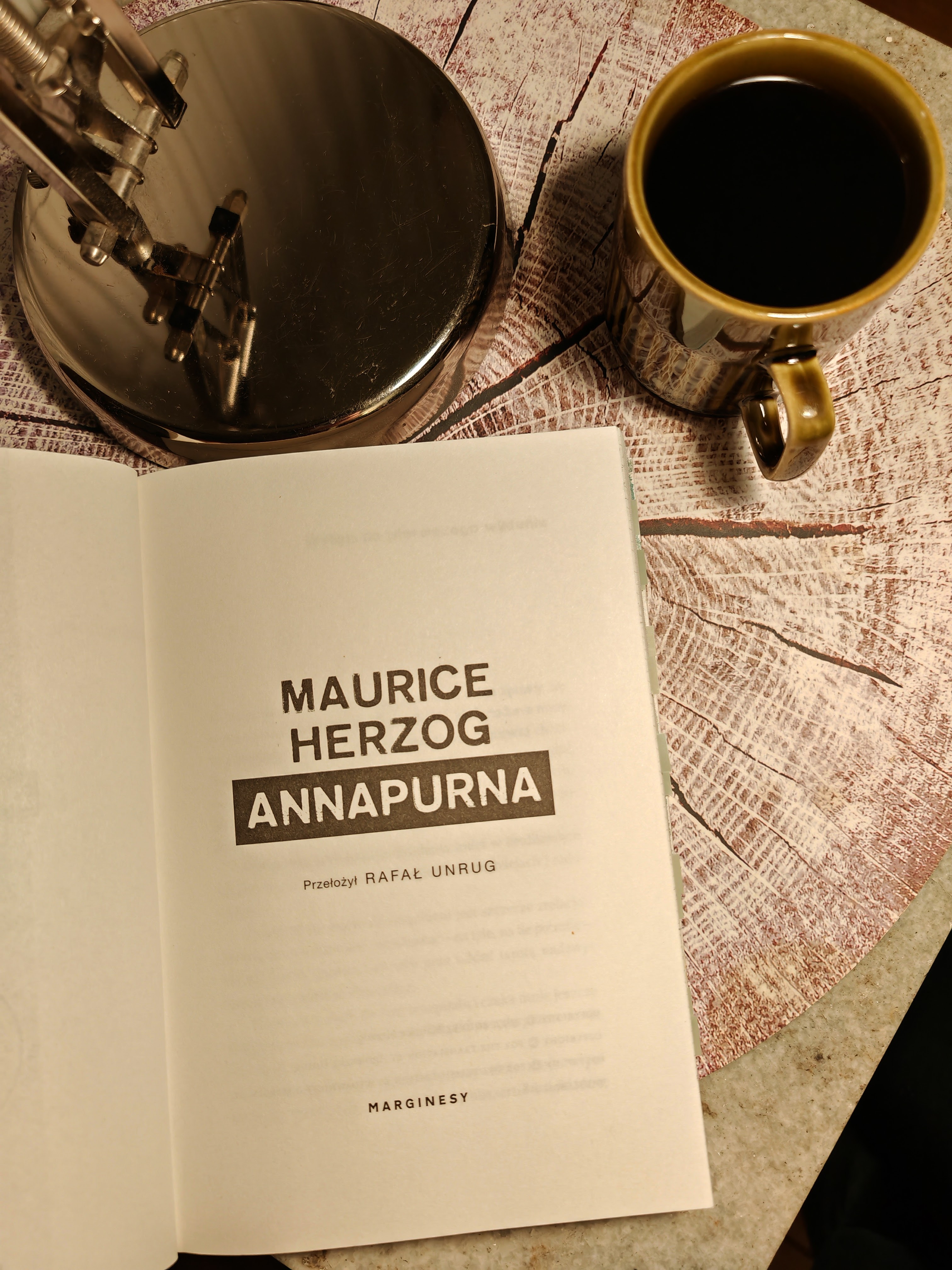
Maurice Herzog, Annapurna (Annapurna. Premier 8000)

Nie mam zamiaru gnić w dolinie

Piękno dobrej literatury polega na tym, że potrafi przenosić nas w miejscu i czasie. Zwłaszcza, jeśli opowiada o przełomowych w dziejach ludzkości odkryciach, wydarzeniach czy osiągnięciach. Do tej kategorii zalicza się z pewnością relacja Maurice’a Herzoga Annapurna z pierwszego zdobycia ośmiotysięcznika 3 czerwca 1950 roku. Było to w ogóle pierwsze wejście na taką wysokość w historii, a uczestniczyli w nim autor relacji oraz Louis Lachenal. Książka wciąga od pierwszej strony, autor opowiada o swoich przygodach niezwykle barwnie, a obraz pierwszych górskich wędrówek do strefy śmierci jest wręcz niewyobrażalny. Ja przepadłam i zapomniałam się w lekturze.

Rosnący dramatyzm relacji

Wspomnienia Herzoga można podzielić na 3 części – rekonesans i podejmowanie decyzji, zdobywanie szczytu i dramatyczny powrót oraz walka o zdrowie. Trzeba pamiętać, że wyprawa jest jedną z pierwszych, mapy, które mieli do dyspozycji jej uczestnicy są niedokładne (co jest w książce starannie udokumentowane), a trasy na szczyty – najpierw rozważany Dhaulagiri i zdobytą Annapurnę – trzeba było sobie znaleźć i wypróbować. Dlatego uczestnicy krążą w te i z powrotem, zakładają aż pięć obozów i naprawdę dużo czasu spędzają powyżej 7000 m. n.p.m. Podczas zdobywania szczytu Herzog gubi rękawice, bo będzie dla niego bardzo kosztownym i bolesnym błędem. Również jego towarzysz Lachenal doznaje odmrożeń stóp i obaj panowie tracą palce. Taka jest też trzecia, najbardziej dramatyczna i przejmująca część książki – walka o bezpieczne zejście – najpierw do niższych obozów, a potem wyścig ze zbliżającym się monsunem i pogarszającym się skokowo stanem zdrowia. Wydawałoby się, że najbardziej emocjonująca część będzie dotyczyć zdobywania szczytu, ale podczas lektury niosło mnie chyba uniesienie Herzoga. Natomiast nie byłam w stanie odłożyć książki w ostatniej części, gdzie z wypiekami na twarzy czekałam, jak zakończy się ta nieprawdopodobna przygoda. W zasadzie rekonesans szczytów i wejście na Annapurnę udało się zrobić podczas jednej, trzymiesięcznej wyprawy, a szczyt zdobyć podczas pierwszego ataku, tuż przed zamknięciem okienka pogodowego. Dodatkowo, w wyprawie nikt nie zginął, chociaż walka o zdrowie uczestników trwała długo po zejściu w doliny, a dla Herzoga był to koniec wspinaczek związany z utratą palców u obu dłoni.

Są inne Annapurny w życiu ludzkim…

Relacja z tej niezwykłej podróży ukazała się już w 1951 roku i jest najpopularniejszą książką dotyczącą wspinaczki wysokogórskiej na świecie. Pierwsze zdobycie ośmiotysięcznika w historii ludzkości wywołało ogromne poruszenie na świecie, a Herzog wiedział, jak je zmonetyzować (Wikipedia podaje, że do roku 2000 sprzedało się 20 milionów egzemplarzy książki). Przyznać jednak trzeba, że zapis podróży jest zaskakująco świeży, a poznać można, że książka powstała 70 lat temu po szacunku i uznaniu, z jakimi autor opisuje swoich towarzyszy wyprawy i ich „dzielność”. Tak pięknie się już chyba o ludziach nie pisze – z takim uznaniem dla ich zasług za wkład w sukces zespołu. Ostatnie zdanie – „Są inne Annapurny w życiu ludzkim” (s. 299) stało się znanym cytatem, a jednocześnie odrobinę gorzkim może podsumowaniem podjętego wysiłku.

Pozycja obowiązkowa!

Książka jest również starannie i pięknie wydana i aż żal ściska, że klasyka polskiej literatury wysokogórskiej nie doczekała się takich wznowień. Może jednak wszystko przed nami? Jedyne, co bym zmieniła w samym wydaniu, to na rewersie okładki umieściłabym zdjęcia uczestników wyprawy wraz z krótkim opisem. Chociaż Herzog pisze o swoich towarzyszach dużo i serdecznie, to jednak chciałabym mieć ich twarze przed oczami i móc łatwo przypomnieć sobie, kto wędruje z kim. Dla mnie pozycja całkowicie porywająca i arcyciekawa, serdecznie polecam!

Moja ocena: 9/10.

Maurice Herzog, Annapurna
Wydawnictwo Marginesy, Warszawa 2018
Tłumaczenie: Rafał Unrug
Liczba stron: 302
ISBN: 978-83-65780-82-9

**********************************************************************************

I have no intention to rot in the valley

The beauty of good literature is that it can transport us in time and place. Especially if it tells about breakthrough discoveries, events or achievements in the history of mankind. Maurice Herzog's account of the first ascent of an eight-thousander on June 3, 1950, certainly falls into this category. It was the first ascent to such a height in human history, and the author of the account and Louis Lachenal participated in it. The book is captivating from the first page, the author tells about his adventures in an extremely colorful way, and the image of the first mountain hikes to the death zone is simply unimaginable. I got completely captivated by the account.

The growing drama of the relation

Herzog's memories can be divided into 3 parts - reconnaissance and decision-making, conquering the peak and the dramatic return, along with the fight for health. It must be remembered that the expedition is one of the first, the maps that its participants had at their disposal were inaccurate (which is carefully documented in the book), and the routes to the peaks – first to the considered Dhaulagiri and the finally conquered Annapurna – had to be found and tested. That is why the participants go back and forth, set up as many as five camps and spend a lot of time above 7,000 m above sea level. While conquering the peak, Herzog loses his gloves, which will become a very costly and painful mistake for him. His companion Lachenal also suffers severe frostbite on his feet and both men lose their toes. This is also the third, most dramatic and moving part of the book – the fight for a safe descent – ​​first to the lower camps, and then the race against both the approaching monsoon and the rapidly deteriorating health. It would seem that the most exciting part would concern conquering the peak, but while reading it I was probably carried away by Herzog's elation. However, I was unable to put the book down in the last part, where I was waiting with bated breath to see how this incredible adventure would end. In principle, the reconnaissance of the peaks and the ascent of Annapurna were managed during one three-month expedition, and the summit was reached during the first attack, just before the weather window closed. What is more, no one died in the expedition, although the struggle for the health of the participants lasted long after the descent into the valleys, and for Herzog it was the end of climbing associated with the loss of fingers on both hands, along all his toes.

There are other Annapurnas in human life...

The account of this extraordinary journey was published in 1951 and is the most popular book on high-altitude climbing in the world. The first conquest of an eight-thousander in the history of mankind caused a huge stir in the world, and Herzog knew how to monetize it (Wikipedia reports that 20 million copies of the book had been sold by 2000). It must be admitted, however, that the record of the journey is surprisingly fresh, and you can tell that the book was written 70 years ago by the respect and appreciation with which the author describes his companions of the expedition and their "bravery". People are probably not described so beautifully any more - with such awe for their contribution to the success of the team. The last sentence - "There are other Annapurnas in human life" (p. 299) has become a well-known quote, and at the same time a slightly bitter summary of the effort undertaken.

A must-read!

The book is also carefully and beautifully published by Publishing House Marginesy in the 2018 re-edition and it is a pity that the classic of Polish high-mountain literature has not been reissued in this way. Maybe everything is still ahead of us? The only thing I would change in this issue is to place photos of the participants of the expedition on the back of the cover, along with a short description. Although Herzog writes a lot and warmly about his companions, I would like to have their faces before my eyes and be able to easily remember who is hiking with whom. For me, this is a completely captivating and extremely interesting book, I highly recommend it!

My rating: 9/10.


Author: Maurice Herzog
Title: Annapurna
Marginesy Publishing House, Warsaw 2018
Translation: Rafał Unrug
Number of pages: 302
ISBN: 978-83-65780-82-9

niedziela, 1 grudnia 2024

Rutu Moran, Zaduszki (The Property)

O Żydach i restytucji mienia w pewnym uproszczeniu

Bardzo rzadko sięgam po komiksy. Nie moja bajka, nigdy nie nauczyłam się ich czytać, a rysunki przeszkadzają mi w wyobrażaniu sobie świata przedstawionego. Ostatnio jednak zabłąkałam się w bibliotece miejskiej do sekcji komiksowej i skusiły mnie związane z obecną porą roku tytuły. Zaczęłam od listopadowo się kojarzących Zaduszek, ale tematyka zupełnie mnie zaskoczyła.

Przedwojenna historia i jej powojenne zakończenie

Urodzona w 1966 roku Rutu Modan to izraelska pisarka i ilustratorka. Angielski tytuł wydanego w 2012 roku komiksu Zaduszki brzmi The Property i jest zdecydowanie trafniejszy, a przynajmniej nastawia czytelnika na to, czego ten powinien się spodziewać. Starsza pani Regina Segal wraz ze swoją wnuczką Miką przylatuje z Izraela do Warszawy, by odzyskać swój majątek. Okazuje się jednak, że babcia skrywa tajemnicę z przeszłości, a sama restytucja mienia nie jest głównym powodem przyjazdu. W samolocie obie panie spotykają narzeczonego Cyli, córki Reginy, Awrama Jagodnika, który – jak się wkrótce okaże – również nie znalazł się tam przypadkowo. Kiedy Mika rozgląda się po mieście w niechcianym towarzystwie Awrama, jej babcia zaczyna rozwiązywać swoje przedwojenne sprawy. Szybko okazuje się, że Awram śledzi obie kobiety, by wyjaśnić sprawę majątku, Mika poznaje przewodnika po żydowskiej Warszawie Tomka Nowaka i szybko ląduje z nim w łóżku, a Regina odnajduje swoją miłość z młodości i jednocześnie ojca jej pierworodnego syna, Romana Górskiego.

Gruby kaliber

Rutu Modan wkłada w Zaduszki ciężki tematyczny kaliber – po pierwsze, trudny i kilka lat temu niezwykle żywy temat odszkodowań wojennych i oddawania majątku prawowitym właścicielom. Po drugie, dramat drugiej wojny światowej, rozdzielonych rodzin, oraz późniejszych powojennych tego konsekwencji. Autorka nie unika poruszania tematu trudnych relacji polsko-żydowskich, istniejących stereotypów. To było dla mnie zaskoczeniem, wydawało mi się, że tematyka komiksowa jest znacznie lżejsza.

Zepsuta broń

Kilka rzeczy wydało mi się nieuzasadnionych w komiksie. Po pierwsze, miałam wątpliwości co do zażyłości babci i wnuczki. Ich relacja wydawała mi się nieco sztuczna. Dwa, warszawski prawnik ćwiczący krav-magę na Mice podczas jej pierwszej wizyty w jego biurze – kompletnie nieprawdopodobne. Mika wskakuje Tomkowi do łóżka pierwszego dnia, kiedy się poznali. Wreszcie, Regina odstępuje swoich praw majątkowych w imię dawnej miłości. Polski tytuł Zaduszki wprowadza w błąd i w sumie ma z treścią niewiele wspólnego. Nie moja bajka.

Moja ocena: 5/10.

Rutu Modan, Zaduszki
Wydawnictwo: Kultura Gniewu, Warszawa 2013
Ilustracje: Rutu Modan
Tłumaczenie: Zuzanna Solakiewicz
Liczba stron: 224
ISBN: 978-83-60915-77-6

***************************************************************************

On Jews and property restitution

I rarely reach for comics. Not my cup of tea, I never learned to read them, and the drawings get in the way of my imagining the world depicted. Recently, however, I wandered into the comics section of the city library and was tempted by titles related to the current season. I started with The Property (Polish title All Soul’s Day, which is associated with November), but the subject matter completely surprised me.

Pre-war story – how it started and how it’s going

Rutu Modan, born in 1966, is an Israeli writer and illustrator. The English title of the comic All Souls' Day published in 2012 is The Property and is definitely more accurate, or at least it sets the reader up for what they should expect. An elderly lady, Regina Segal, and her granddaughter Mika, fly from Israel to Warsaw to reclaim their property. However, it turns out that the grandmother is hiding a secret from the past, and the restitution of property itself is not the main reason for their arrival. On the plane, both women meet Awram Jagodnik, the fiancé of Cyla, Regina's daughter. As it turns out soon – he is not there by accident. While Mika looks around the city in Awram's unwanted company, her grandmother begins to solve her pre-war affairs. It quickly turns out that Awram is following both women to solve the matter of the estate, Mika meets Tomek Nowak, a guide to Jewish Warsaw, and quickly ends up in bed with him, and Regina finds the love from her youth and the father of her firstborn son, Roman Górski.

Loaded comic

Rutu Modan puts a heavy thematic caliber into The Property - firstly, the difficult and a few years ago extremely lively topic of war compensation and returning property to its rightful owners. Secondly, the drama of World War II, separated families, and the later post-war consequences of this. The author does not avoid touching on the difficult Polish-Jewish relations, existing stereotypes. This was a surprise to me, it seemed to me that the comic book subject is much lighter.

In an unsuitable gun

Several things seemed unjustified to me in the comic. First, I had doubts about the intimacy and closeness between grandmother and granddaughter. Their relationship seemed a bit artificial to me. Second, a Warsaw lawyer practicing krav maga on Mika during her first visit to his office - completely improbable. Mika jumps into Tomek's bed the first day they meet. Finally, Regina gives up her property rights in the name of her old love. The Polish title All Souls' Day is misleading and has little to do with the content. It remains not my cup of tea.

My rating: 5/10.

Author: Rutu Modan
Title: The Property
Publisher: Kultura gniewu, Warszawa 2013
Ilustrations: Rutu Modan
Translation: Zuzanna Solakiewicz
Number of pages: 224
ISBN: 978-83-60915-77-6


poniedziałek, 11 listopada 2024

Tomás González, Trudne świało (La luz difícil)

Okruchy życia

Niewiele ponad 200-stronicowa książka kolumbijskiego pisarza Tomása Gonzáleza to lektura na góra dwa wieczory. Znalazłam ją i nabyłam na wyprzedaży bibliotecznej, zachęcona gustowną okładką i opisami na niej. Nie przeżyłam rozczarowania, ale mimo wielu pięknych, aforystycznych zdań powieść nie zostanie ze mną na dłużej.

Nieznany szerzej kolumbijski pisarz

Tomás González to urodzony w Medellin w 1950 roku poeta i pisarz. Hiszpańskojęzyczna wikipedia podaje jedenaście książek, które napisał, ale w Polsce do tej pory (listopad 2024) ukazała się tylko jedna, nakładem wydawnictwa Znak, w 2018 roku, siedem lat po oryginale (2011). Na podstronie dotyczącej Trudnego światła stwierdzono, że przyniosła ona pisarzowi największe uznanie z całego dorobku (https://es.wikipedia.org/wiki/La_luz_dif%C3%ADcil).

Spowiedź dojrzałego starca

Bohaterem powieści jest 78-letni David, malarz, który w obliczu postępującej utraty wzroku stara się zdążyć spisać wspomnienia ze swojego życia. Wspomina więc swoją przeprowadzkę do Stanów Zjednoczonych, ukochaną i nieżyjącą już żonę Sarę oraz trzech synów. Jego pierworodny Jacobo uległ wypadkowi, w wyniku którego nie tylko jest sparaliżowany, ale cierpi z powodu niewyobrażalnego, potwornego bólu, który odbiera mu radość istnienia. Dlatego, kiedy wszystko zawodzi, chłopak decyduje się na eutanazję. Rodzice nie towarzyszą mu w ostatnich chwilach, a sam zabieg opóźnia się przez lekarza, który kilkukrotnie przekłada swoje przybycie. Wspomnienia Davida przekazują związane z tym oczekiwaniem napięcie i nadzieję, że może jednak zabieg się nie odbędzie i ukochany syn będzie żył. Jest to pierwsza książka, którą przeczytałam, gdzie temat eutanazji pokazany był bez zbędnego dramatyzmu, z pełnym zrozumieniem wyboru chłopaka, z dokładnym przedstawieniem towarzyszącego mu cierpienia.

Niezakłócona harmonia świata

W powieści Gonzáleza urzekło mnie również przedstawienie relacji Davida z Sarą – od początkowej gorącej namiętności po fizyczną bliskość, wsparcie, wzajemne zrozumienie. „Nie poznałem innych kobiet – ona była wszystkimi” – relacjonuje bohater na samym początku (s.13). Wraz ze śmiercią żony zawalił się jego świat, a dalsze życie jest w sumie oczekiwaniem na śmierć. Jednak David rozumie potrzebę balansu pomiędzy światłem a cieniem, radością a rozpaczą, wzajemnym dopełnianiem się sprzeczności: „Świat bez smutku, pomyślałem, byłby tak niepełny, daleki od harmonijności, brzydki jak rzeźba czy drzewo, które nie rzuca cienia” (s.169). Dojrzały mężczyzna dzieli się więc z nami swoim spojrzeniem na świat, rzuca przed czytelników okruchy swojego życia, a oni mogą ocenić, czy było ono udane.

Piękno frazy

Jak na tak krótką powieść zaznaczyłam sobie sosunkowo wiele zdań, które mi się po prostu spodobały albo mnie zaskoczyły. Już końcówka pierwszego rozdziału wali czytelnika obuchem po głowie: „[…] z powodu śmierci mojego syna Jacoba, którą zaplanowaliśmy na siódmą rano czasu Portland, dziesiątą wieczór w Nowym Jorku” (s. 10). To wzbudza natychmiastowe zaskoczenie, ciekawość, niepokój czytelnika i przykuwa go do fabuły, która uparcie wokół tej śmierci krąży. González ma dużo ciekawych spostrzeżeń: „Zawsze patrzę z podziwem na nowojorskie psy, tak wykastrowane i wyszkolone, że wydają się martwe za życia” (s.94). Niemniej jednak nie mogę się pozbyć wrażenia, że to wszystko są piękne okruchy, drobiazgi, ale całości brakuje pełni i głębi. Jakby autor tylko ślizgał się po temacie, bez wnikliwego wglądu. Jestem więc pewna, że za rok – dwa lata w ogóle nie będę tej książki pamiętać. Do szumnych zapowiedzi Boba Dylana i Márqueza bardzo stąd jeszcze daleko.

Moja ocena: 5/10

Tomás González, Trudne świało
Wydawnictwo Znak, Kraków 2018
Tłumaczenie: Marta Szafrańska-Brandt
Liczba stron: 208
ISBN: 978-83-240-5339-1

**********************************************************************************

Crumbles of Life

A little over 200 pages long book by Colombian writer Tomás González is a read for two evenings at most. I found and bought it at a library sale, encouraged by the tasteful cover and descriptions on it. I was not disappointed, but despite many beautiful, aphoristic sentences, the novel will not stay with me for long.

A Colombian writer not widely known

Tomás González is a poet and writer born in Medellin in 1950. The Spanish-language Wikipedia lists eleven books he has written, but in Poland so far (November 2024) only one has been published, by Znak Publishing House, in 2018, seven years after the original (2011). The subpage on Difficult Light states that it brought the writer the greatest recognition of his entire oeuvre (https://es.wikipedia.org/wiki/La_luz_dif%C3%ADcil).

Confessions of a Mature Man

The protagonist of the novel is 78-year-old David, a painter who, in the face of progressive vision loss, tries to write down the memories of his life in time. He recalls his move to the United States, his beloved and now deceased wife Sara, and his three sons. His firstborn, Jacobo, had an accident, as a result of which he is not only paralyzed, but also suffers from unimaginable, terrible pain that takes away his joy of existence. Therefore, when everything fails, the boy decides on euthanasia. His parents do not accompany him in his last moments, and the procedure itself is delayed by the doctor, who postpones his arrival several times. David's memories convey the tension associated with this waiting and the hope that maybe the procedure will not take place and his beloved son will live. This is the first book I have read where the subject of euthanasia was presented without unnecessary drama, with full understanding of the choice of the boy, with a precise presentation of the suffering that accompanies it.

The Undisturbed Harmony of the World

In González's novel, I was also enchanted by the presentation of David's relationship with Sara - from the initial hot passion to physical closeness, support, mutual understanding. "I didn't know other women - she was all of them" - the hero reports at the very beginning (p. 13). With the death of his wife, his world collapsed, and the rest of his life is basically waiting for death. However, David understands the need for balance between light and shadow, joy and despair, the mutual complementation of contradictions: "A world without sadness, I thought, would be so incomplete, far from harmony, ugly as a sculpture or a tree that casts no shadow" (p. 169). So the mature man shares with us his view of the world, throws before the readers fragments of his life, and they can assess whether it was successful.

The beauty of a phrase

For such a short novel, I have marked many sentences that I simply liked or was surprised by. The very end of the first chapter hits the reader over the head with a sledgehammer: "[...] because of the death of my son Jacob, which we had planned for seven in the morning Portland time, ten in the evening in New York" (p. 10). This arouses immediate surprise, curiosity, anxiety in the reader and rivet them to the plot that stubbornly revolves around this death. González has many interesting observations: "I always look with admiration at New York dogs, so castrated and trained that they seem dead while alive" (p. 94). Nevertheless, I cannot shake the impression that all these are beautiful crumbs, trifles, but the whole lacks fullness and depth. As if the author was just gliding over the subject, without any insight. So I am certain that in a year or two I will not remember this book at all. It's still a long way from here to the big announcements of Bob Dylan and Márquez on the cover.

My rating: 5/10

Author: Tomás González
Title: Difficult Light
Publishing House: Wydawnictwo Znak, Kraków 2018
Translation: Marta Szafrańska-Brandt
Number of pages: 208
ISBN: 978-83-240-5339-1

Hideo Yohohama, Sześć cztery (64 Rokuyon)

Kryminał z kręgu kultury japońskiej

Opasłych rozmiarów kryminał był moim planem na kolejny długi weekend listopadowy i udało się! Chociaż książka liczy niemal 750 stron, to czyta się w zasadzie sama. Chociaż na nasze europejskie, a zwłaszcza skandynawskie, standardy akcja jest niesamowicie rozwleczona, a jeden z najważniejszych tematów pozostaje nierozwiązany, Sześć cztery Hideo Yokohamy stanowi ciekawe wprowadzenie do japońskiego kryminału i obyczajowości. Warto się z nim zapoznać.

Dziennikarz śledczy przy piórze

Hideo Yokohama to urodzony w 1957 roku japoński powieściopisarz i dziennikarz. Powieść Sześć Cztery wygrała nagrodę dla Najlepszej Japońskiej Powieści Kryminalnej za rok 2013 (The Best Japanese Crime Fiction of the Year) i powtórzyła sukces nietłumaczonej na język polski powieści Połowiczne wyznanie (Half a Confession, Han’ochi) z 2003 roku. Powieści Yokohamy były w Japonii wielokrotnie ekranizowane. W Polsce jak na razie (listopad 2024) ukazała się tylko jedna pozycja autora, wydane w 2018 roku przez Wydawnictwo Literackie Sześć Cztery w tłumaczeniu Łukasza Małeckiego. Książka zebrała mieszane recenzje, część czytelników zarzucała jej nadmierne skupienie na części poświęconej współpracy prasy i policji, co odciąga uwagę czytelnika od toczącego się śledztwa. Wydaje mi się jednak, że mamy zupełnie inne rozumienie tematu i podejście kulturowe. Skomplikowane relacje prasy i policji w podobnym świetle ukazuje znakomity serial Tokio Vice, dostępny na platformie Max (dawne HBO).

Dwa przeplatające się watki

Kryminał Yokohamy prowadzi niezależnie dwa ciekawe wątki. Pierwszy z nich to tytułowe niezamknięte śledztwo dotyczące porwania i zamordowania siedmioletniej Shoko Amamiya. Przestępca uprowadził dziecko, zaszantażował rodziców i wyłudził od nich dwadzieścia milionów jenów, a kilka dni po przekazaniu okupu znaleziono zwłoki dziewczynki. W 1989 roku technologia nie działała jeszcze tak niezawodnie jak obecnie, a sama policja dopuściła się kilku błędów, które potem zamiotła pod dywan. Mordercy nigdy nie udało się schwytać, a śledztwu brakuje zaledwie roku do przedawnienia. Jednocześnie w policji toczy się walka o stołki pomiędzy nadaniami ze stolicy a promocją utalentowanych śledczych z lokalnej służby. Komisarz Yoshinobu Mikami został przeniesiony z działu śledczego do administracji i jest obecnie Dyrektorem Działu Prasowego. Mężczyzna opowiada za relacje z czwartą władzą i sposobem oraz zakresem przekazywanych jej informacji. Jednocześnie wraz ze swoją żoną Minako przeżywa osobisty dramat - ich córka Ayumi uciekła z domu przed trzema miesiącami i nie daje znaku życia. Dziewczyna była w głębokiej depresji, nienawidziła swojego wyglądu, odziedziczonego po ojcu, a nie po legendarnie pięknej matce. Te wątki będą się subtelnie przenikać na przestrzeni całej książki.

Współpraca policji i prasy

Sensacyjna fabuła ustępuje jednak miejsca tematom społeczno-obyczajowym. Współpraca prasy i policji wygląda zupełnie inaczej niż w Polsce, a tarcia na tej linii są dla nas czymś zupełnie niezrozumiałym i obcym. Prasa patrzy funkcjnariuszom prawa na ręce i rozlicza ich z postępów w prowadzonych śledztwach. Jednocześnie dziennikarze muszą uważać, by nie stanowić zagrożenia dla ofiar przestępstw i nie narazić ich na dodatkowe niebezpieczeństwo przez ujawnienie zbyt wielu danych. Jest to bliska współpraca, chociaż obie strony stosują różnego rodzaju ciosy i uniki. Dodatkowo relacje te pokazane są w specyfice kultury japońskiej, z dużą rolą szacunku, hierarchii i wzajemnych teatralnych gestów. Chociaż wielu czytelnikom wydawało się to nudne, dla mnie ten temat był arcyciekawy.  

Wartościowa pozycja

Żałuję, że nie wydano więcej książek Hideo Yohohamy w języku polskim. W końcu nie wszystkie kryminały muszą być od sztampy i na jedno kopyto. Sześć Cztery przyniosło i frapującą zagadkę kryminalną, i sporą wartość poznawczą innej kultury i zasad jej działania, ale również ciekawego, zmieniającego się bohatera. Mikami przechodzi wewnętrzną przemianę, dorasta do swojej administracyjnej roli, która wydawać się mogła łatwiejsza niż praca śledczych. Dostrzega też nadciągające problemy i chce im z pełną odpowiedzialnością stawić czoła. Może taki dyrektor Działu Prasowego to marzenie dziennikarza śledczego? Warto samemu się przekonać.

Moja ocena: 8/10.

Hideo Yokohama, Sześć Cztery
Wydawnictwo Literackie, Kraków 2018
Tłumaczenie z języka angielskiego: Łukasz Małecki
Liczba stron: 752
ISBN: 978-83-08-06517-4

******************************************************************************

Crime Fiction from the Japanese Culture

A massive crime novel was my plan for another long November weekend, and I’ve made it! Although the book is almost 750 pages long, it basically reads itself. Although by our European, and especially Scandinavian, standards the action is incredibly drawn-out, and one of the most important topics remains unresolved, Six Four by Hideo Yokohama is an interesting introduction to Japanese crime fiction and customs. It is worth getting to know it.

Investigative Journalist at the Pen

Hideo Yokohama is a Japanese novelist and journalist born in 1957. The novel Six Four won the Best Japanese Crime Fiction of the Year award for 2013 and repeated the success of the untranslated novel Half a Confession (Han’ochi) from 2003. Yokohama’s novels have been adapted into films many times in Japan. In Poland, so far (November 2024), only one of the author's works has been published - in 2018 Wydawnictwo Literackie released Sześć Cztery, translated from English by Łukasz Małecki. The book has received mixed reviews, with some readers accusing it of excessive focus on the part devoted to the cooperation between the press and the police, which distracts the reader from the ongoing investigation. However, it seems to me that we have a completely different understanding of the subject and cultural approach. The complicated relations between the press and the police are shown in a similar light in the excellent series Tokio Vice, available on the Max platform (formerly HBO).

Two intertwining plots

Yokohama's crime novel has two interesting plots. The first is the titular unfinished investigation into the kidnapping and murder of seven-year-old Shoko Amamiya. The criminal abducted the child, blackmailed the parents and extorted twenty million yen from them, and a few days after the ransom was handed over, the girl's body was found. In 1989, technology was not yet as reliable as it is today, and the police themselves made several mistakes that they later swept under the carpet. The murderer was never caught, and the investigation is only a year away from the statute of limitations. At the same time, there is a fight for positions in the police between assignments from the capital and the promotion of talented investigators from the local service. Comissioner Yoshinobu Mikami has been transferred from the investigation department to the administration and is currently the Director of the Press Relations Department. The man is responsible for relations with the fourth estate and the method and scope of information passed on to it. At the same time, together with his wife Minako, he is going through a personal drama - their daughter Ayumi ran away from home three months ago and has not given any sign of life. The girl was deeply depressed, hated her appearance, inherited from her father, not from her legendary beautiful mother. These threads will subtly intertwine throughout the book.

Cooperation between the police and the press

However, the sensational plot gives way to social and moral themes. The cooperation between the press and the police looks completely different than in Poland, and the friction on this line is something completely incomprehensible and alien to us. The press watches the officers of the law and holds them accountable for the progress of the investigations conducted. At the same time, journalists must be careful not to pose a threat to the victims of crimes and not expose them to additional danger by revealing too much information. This is a close cooperation, although both sides use various types of blows and evasions. Additionally, these relations are shown in the specifics of Japanese culture, with a large role of respect, hierarchy and mutual theatrical gestures. Although many readers found it boring, for me this topic was extremely interesting.

A valuable reading

I regret that more books by Hideo Yohohama have not been published in Polish. After all, not all crime stories have to be cliché and one-two punch. Six Four brought both an intriguing crime mystery and considerable cognitive value about another culture and the principles of its operation, but also an interesting, changing protagonist. Mikami undergoes an internal transformation, growing into his administrative role, which may have seemed easier than the work of investigators. He also notices the impending problems and wants to face them with full responsibility. Maybe such a director of the Press Department is an investigative journalist's dream? It's worth seeing for yourself.

My rating: 8/10.

Author: Hideo Yokohama
Title: 64 (Six Four)
Publishing House: Wydawnictwo Literackie, Kraków 2018
Translation from English: Łukasz Małecki
Number of pages: 752
ISBN: 978-83-08-06517-4

niedziela, 3 listopada 2024

Leena Lehtolainen, Na złym tropie (Väärän jäljillä)

Przegadany kryminał

Czyż może być przyjemniejszy plan na długi weekend niż koc, hektolitry herbaty z miodem i dobra książka w ręku? Może! Do tego zestawienia warto dodać ciastka na miodzie i musie jabłkowym i oto pełnia szczęścia. W tak sprzyjających okolicznościach przyrody kończyłam czytać książkę, którą zaczęłam jeszcze przed urlopem, a więc ponad miesiąc temu. Bardzo rzadko zdarza mi się odłożyć lekturę kryminału, ale spojrzenie z dystansu pozwoliło mi zrozumieć, co w tej książce przeszkadzało mi najbardziej i dlaczego uważam, że to jedna z najsłabszych pozycji Leeny Lehtolainen, fińskiej mistrzyni gatunku.

Kilkukrotna próba morderstwa wiedzie policję na manowce

Maria Kallio podstępem zostaje sprowadzona z powrotem w szeregi fińskiej policji, by stanąć na czele  trudnego śledztwa. Wszystko wskazuje na to, że dwukrotnie podjęto próbę zamachu na dziennikarkę sportową Juttę Särkikoski, przy czym trzecia próba wysyła kobietę do szpitala. To ona ujawniła aferę dopingową w fińskim sporcie i swoją publikacją pozyskała sobie wrogów na śmierć i życie. Jednak kiedy podczas spotkania dotyczącego osób niepełnosprawnych w sporcie nagle umiera Pentti Vainikainen, śledztwo nagle przyspiesza. Rozwiązanie będzie zaskakujące i… szybkie. Całe śledztwo zabrało Kallio około tygodnia.

Nadmiar szczegółów

Skąd więc spora objętość książki, a więc równe 400 stron? Otóż z faktu, że Kallio relacjonuje swoje myśli bez wyboru, bez ładu i składu. Niemal każda scena zawiera nadmiar szczegółów, które nijak nie popychają śledztwa do przodu, a bardzo rozpraszają uwagę czytelnika. Ja zaczęłam pewne fragmenty przeskakiwać, bo uznałam je za kompletnie pozbawione fabularnej wartości. Dlatego też nie miałam cierpliwości do przeczytania książki jak się czyta kryminały – w zasadzie na raz. Szkoda, bo ta przypadkowość narracyjna odciąga uwagę od ważnych, zawartych w niej tematów – dopingu w sporcie, przemocy w rodzinie czy choćby bezdzietności.

Zastanawiające tłumaczenie

Druga rzecz, która mi przeszkadzała, to tłumaczenie. W Na złym tropie pojawia się kilka słów czy zwrotów, które – mówiąc łagodnie – zaskakują. Wyfiokowana bohaterka jest „wysztafirowana” (s. 294), ktoś, kto się podlizuje, „podmaśla się” (s. 300), a policja nie ma zna żadnych „knyfów” (s. 334), a więc wtyków w jednej z instytucji bankowych. Ciekawy wybór słów, odciągający od właściwej fabuły i zwracający uwagę na warstwę leksykalną.

Można zostawić na wieczne nigdy

Podsumowując – umęczyła mnie trochę lektura kryminału. Chociaż początkowo akcja była budowana ciekawie, rozczarowanie śledczej utratą wcześniejszej, biurowej pracy i spokojnego życia rodzinnego dawało ciekawy obraz jej życia i traumy, którą przeżyła jako policjantka, wszystko rozmyło się w słowotoku autorki. Mam słabość do Lehtolainen po jej wcześniejszych powieściach, ale tą można sobie odłożyć na później.

Moja ocena: 5/10

Leena Lehtolainen, Na złym tropie
Wydawnictwo Rebis, Warszawa 2012
Tłumaczenie: Sebastian Musielak
Liczba stron: 400
ISBN: 978-83-7510-795-1

*******************************************************************************

A verbose crime novel

Can there be a nicer plan for a long weekend than a blanket, hectoliters of tea with honey and a good book in hand? Yes, there is! It's worth adding honey and applesauce cookies to this list and that's complete happiness. In such favorable circumstances, I was finishing reading a book that I had started before my vacation, so over a month ago, Derailed. It's very rare for me to put down a crime novel, but looking at it from a distance allowed me to understand what bothered me the most in this book and why I think it's one of the weakest works by Leena Lehtolainen, the Finnish master of the genre.

Several murder attempts lead police astray

Maria Kallio is tricked into returning to the ranks of the Finnish police to head a difficult investigation. Everything indicates that there were two assassination attempts on sports journalist Jutta Särkikoski, with the third attempt sending the woman to hospital. She was the one who exposed the doping scandal in Finnish sports and made enemies for life and death with her publication. However, when Pentti Vainikainen suddenly dies during a meeting on disabled people in sports, the investigation suddenly accelerates. The solution will be surprising and... fast. The entire investigation took Kallio about a week.

Unnecessary details

So where does the large volume of the book, i.e. exactly 400 pages, come from? Well, from the fact that Kallio reports her thoughts without choice, without rhyme or reason. Almost every scene contains an excess of details that do nothing to advance the investigation, and are very distracting to the reader. I started skipping certain parts because I considered them completely devoid of plot value. That is why I did not have the patience to read the book like one reads crime novels - basically in one go. It's a pity, because this randomness of the narrative distracts from the important topics included in it - doping in sports, domestic violence or even childlessness.

Puzzling translation

The second thing that bothered me was the translation. In the Polish translation of Derailed by Sebastian Musielak there are several words or phrases that - to put it mildly - are surprising. Translator went for words so rarely used in Polish language, that they sound weird or remain unknown to me. This interesting choice of words is distracting the reader from the actual plot and drawing attention to the lexical layer, unnecessarily.

A book that can be saved for later that never comes

To sum up - I was a bit tired of reading the crime novel. Although the plot was initially built in an interesting way, the investigator's disappointment with the loss of her previous office job and peaceful family existence gave an interesting picture of her life and the trauma she experienced as a policewoman, everything was blurred in the author's flow of words. I have a soft spot for Lehtolainen after her earlier novels, but this one can be saved for later.

My rating: 5/10

Author: Leena Lehtolainen
Title: Derailed
Publishing House: Wydawnictwo Rebis, Warsaw 2012
Translation: Sebastian Musielak
Number of pages: 400
ISBN: 978-83-7510-795-1