Pokazywanie postów oznaczonych etykietą Wydawnictwo Marginesy. Pokaż wszystkie posty

sobota, 14 lutego 2026

Tove Jansson, Listy (Brev från Tove Jansson)

Byłoby miło „spotkać się przy herbatce”, a jeszcze lepiej przy wódce

Styczeń z Tove Jansson niepostrzeżenie przeszedł w luty z Tove Jansson, a jeszcze dwie książki przede mną – Słoneczne miasto (dwie powieści w jednym tomie) i Kobieta, która pożyczała wspomnienia (zbiór opowiadań). Spora część ponurego, zimnego i ciemnego miesiąca została poświęcona na zapoznanie się z korespondencją fińskiej artystki, bo Listy to nie jest lektura na jeden wieczór.

Tak pięknie do mnie piszesz, chciałabym Cię przytulić

Listy do dość opasła książka, ze starannie przygotowanym wstępem i słowem od tłumaczki. Tom podzielony jest na rozdziały w zależności od tego, kto był adresatem korespondencji (z odpowiednim opisem tychże), i uporządkowany chronologicznie, czyli kiedy dana korespondencja się rozpoczęła. Mamy więc i wiadomości do rodziny od stęsknionej uczennicy ze Sztokholmu, potem listy do przyjaciół, jak choćby do Ewy Konikoff, która uciekła przed wojną do Stanów Zjednoczonych, listy do ukochanych obojga płci, do matki czy w końcu korespondencja z wydawcą. Każdy zbiór jest w trochę innym tonie, tak jak z każdym rozmawia się trochę inaczej, na inne tematy, w różnym stopniu zażyłości. Dla mnie pewne wyzwanie stanowiła jednostronność tej komunikacji – tom nie zawiera odpowiedzi, więc widać zawsze jedną stronę medalu i jedną osobę.

A ja już nie boję się tak filifionkowo katastrof

Tematyka tych listów jest różna – sprawy rodzinne i finansowe, temat II wojny światowej, który podzielił rodzinę (Faffan czyli Viktor Jansson, ojciec Tove, był zwolennikiem Hitlera, matka i córka miały odmienne poglądy i niepokoiły się powołaniem brata Tove, Per Olova, do wojska i jego niepewnym losem), utratę przyjaciół (część osób zginęła, część wyjechała), powojenną rzeczywistość, trudności z zaopatrzeniem, życie miłosne, obejmujące zarówno relacje z mężczyznami (Atos Wirtanen), jak i kobietami (Vivika Bandler, Tuulikki Pietilä), zażyłe, choć trudne relacje z matką, Signe Hammarsten Jansson, zwaną Ham. Świadectwo czasów, sytuacji historyczno-gospodarczej, ale i jednostkowej wrażliwości, wartości, preferencji.

Należy przyjmować dni jak prezenty

Chociaż wyniosłam z Listów silne poczucie przekroczenia jakiejś granicy prywatności, zaglądania w sfery całkowicie prywatne, to miałam okazję zobaczyć Tove jako osobę obdarzoną ogromnym poczuciem humoru i wrażliwości. O ilustrowanych przez siebie przygodach Alicji w krainie czarów pisała: „Bonnier chce, żeby były idylliczne, żeby pasowały do domu ludowego, ale ja coraz bardziej utwierdzam się w przekonaniu, że jedynym odpowiednim ilustratorem tego patologicznego koszmaru byłby Hieronymus Bosch” (s. 426), o niektórych odwiedzanych przez siebie wystawach sztuki: „Iskra, która sprawiła, że wybrańcy chwycili za pędzel i wykonali te boskie dzieła, w niezrozumiały sposób nie przeniosła się na widza” (s. 27). Nawet w trudnych chwilach, których przecież nie brakowało, Jansson zachowuje pogodę ducha i spokój.

Mieszkańcy tego kraju są jak te rosomaki na swoich brzozach

Dla siebie wyniosę z tej książki piękne i nostalgiczne obrazy Finlandii – od tęsknoty Finów za domem zanim jeszcze z niego wyjadą, poprzez powolną wiosnę, aż po malarski opis późnej jesieni na Klovharun, ukochanej wyspie pisarki i jej partnerki Tuulikki:

Nigdy nie widziałam wyspy takiej, jaką jest teraz, kiedy nadchodzi jesień. Nie ma tu żadnych barw pożegnalnych, one się tylko wymazują, mieszanina zwięzłej szarości i brązu, wyspa kurczy się i jakby wciąga w deszcze, a może i wieczory są dramatyczne z tymi swoimi pustoszącymi zachodami i ławicami chmur. Ciemność na takiej wyspie jest taka, jakby stała na końcu świata, a wszystkie odgłosy potężniejszą i ma się wrażenie absolutnej samotności - natura przestaje być ramą twojego istnienia, wyrzuca cię na peryferie i wspaniale dominuje. Nagle jest tylko morze i wielkie dramatyczne jesienne sklepienia. Dziwne, im krajobraz robi się mniej przyjazny, tym mniej chce mi się stąd wyjeżdżać - miasto jako schronienie wydaje mi się groźne. (s. 430)

Z tym opisem Was zostawię, tak jak z decyzją, czy sięgać do Listów. U mnie poleżały ładnych parę lat, i gdyby nie noworoczny wyjazd do Finlandii, to pewnie czekałyby dalej. Nie żałuję lektury, ale też raczej do niej nie wrócę.

Moja ocena: 7/10.

Tove Jansson, Listy
Wybór i komentarze: Boel Westin i Helen Svensson
Tłumaczenie: Justyna Czechowska
Wydawnictwo Marginesy, Warszawa 2016
Liczba stron: 464
ISBN: 978-83-65282-50-7

**********************************************************************************

It would be nice to "meet over tea," or even better, over vodka

(The subtitles are inexact quotes from the Letters from Tove)

January with Tove Jansson imperceptibly turned into February with Tove Jansson, and I still have two books to read – Sun City (two novels in one volume, published in Poland by Marginesy Publishing House), and The Woman Who Borrowed Memories (a collection of short stories). A large part of the gloomy, cold, and dark month was devoted to reading the Finnish artist's correspondence, because Letters from Tove are not a one-night stand.

You write to me so beautifully, I'd like to hug you

Letters are a rather lengthy read, with a carefully prepared introduction and a word from the translator. The volume is divided into chapters depending on the recipient of the correspondence (with a foreword who was who), and arranged chronologically, meaning when each correspondence began. So we have messages to family from a homesick student in Stockholm, then letters to friends, such as Ewa Konikoff, who fled the war to the United States, letters to loved ones of both sexes, to her mother, and finally correspondence with the publisher. Each collection has a slightly different tone, just as each conversation is slightly different, on different topics, with varying degrees of intimacy. For me, the one-sided nature of this communication posed a challenge – the volume doesn't contain answers, so you always see one side of the coin, one speaker.

And I'm no longer so Fillyjonkily afraid of disasters

The topics of these letters are varied – family and financial matters, the topic of World War II, which divided the family (Faffan, as Viktor Jansson, Tove's father was nicknamed, was a supporter of Hitler; mother and daughter had different views and were worried about Tove's brother, Per Olov, being drafted into the army and his uncertain fate), the loss of friends (some died, others left), the post-war reality, supply difficulties, love life, including relationships with both men (Atos Wirtanen) and women (Vivika Bandler, Tuulikki Pietilä), and the close, though difficult, relationship with her mother, Signe Hammarsten Jansson, known as Ham. It's a testament to the times, the historical and economic situation, but also to individual sensitivities, values, and preferences.

Days should be accepted as gifts

Although my predominant impression from Letters is a strong sense of crossing some boundary of privacy, of peering into completely private spheres, I had the opportunity to see Tove as someone with a tremendous sense of humor and sensitivity. She wrote about the Alice’s Adventures in Wonderland she illustrated: "Bonnier wants them to be idyllic, to fit into a folk home, but I am increasingly convinced that the only suitable illustrator for this pathological nightmare would be Hieronymus Bosch" (p. 426). She wrote about some of the art exhibitions she visited: "The spark that made the chosen ones pick up the brush and create these divine works incomprehensibly didn't transfer to the viewer" (p. 27). Even in difficult moments, of which there were many, Jansson remains cheerful and calm.

The people of this country are like those wolverines on their birch trees

I will take away from this book beautiful and nostalgic images of Finland – from the Finns' longing for home before they even leave, through the slow pace of spring, to the picturesque description of late autumn on Klovharun, the beloved island of the writer and her partner Tuulikka:

You’ve never seen the island as it looks now, tipping over into autumn. There are no bright colours out here to signal departure, they are simply erased, a withered tangle of greys and browns, the island shrinks and is somehow absorbed into the rain and sea and the evenings are dramatic with their desolate sunsets and banks of cloud. The darkness on an island such as this is like standing at the end of the world and all the night sounds are intensified, giving an impression of utter solitude – nature no longer frames one’s existence, but hurls it to the periphery and imposes its sovereign domination. Suddenly it’s just the sea and vast, dramatic autumn skies. Oddly enough I feel less and less inclined to leave, the less benign my surroundings grow – the security of town is more menacing. (p. 430)

I'll leave you with this description, as with the decision whether to read Letters or not. I've had them for quite a few years, and if it weren't for my New Year's trip to Finland, they'd probably still be waiting. I don't regret reading them, but I probably won't return to them either.

My rating: 7/10.

Author: Tove Jansson
Title: Listy
Selection and commentary: Boel Westin and Helen Svensson
Translation: Justyna Czechowska
Publishing House: Wydawnictwo Marginesy, Warszawa 2016
Number of pages: 464
ISBN: 978-83-65282-50-7

Existing English translation:
Author: Tove Jansson
Title: Letters from Tove
Selection and commentary: Boel Westin and Helen Svensson
Translation: Sarah Death
University of Minnesota, 2021


wtorek, 3 grudnia 2024

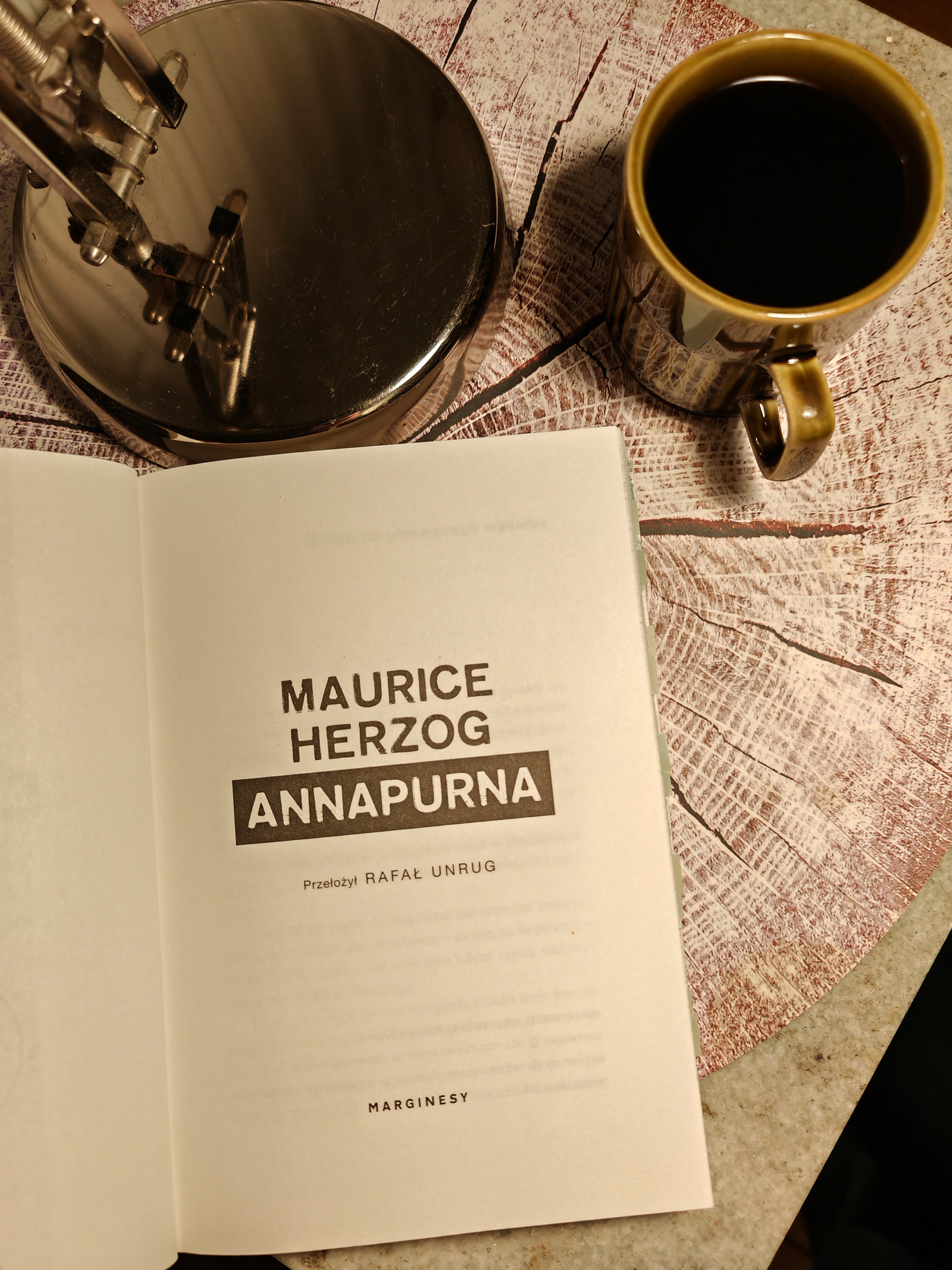
Maurice Herzog, Annapurna (Annapurna. Premier 8000)

Nie mam zamiaru gnić w dolinie

Piękno dobrej literatury polega na tym, że potrafi przenosić nas w miejscu i czasie. Zwłaszcza, jeśli opowiada o przełomowych w dziejach ludzkości odkryciach, wydarzeniach czy osiągnięciach. Do tej kategorii zalicza się z pewnością relacja Maurice’a Herzoga Annapurna z pierwszego zdobycia ośmiotysięcznika 3 czerwca 1950 roku. Było to w ogóle pierwsze wejście na taką wysokość w historii, a uczestniczyli w nim autor relacji oraz Louis Lachenal. Książka wciąga od pierwszej strony, autor opowiada o swoich przygodach niezwykle barwnie, a obraz pierwszych górskich wędrówek do strefy śmierci jest wręcz niewyobrażalny. Ja przepadłam i zapomniałam się w lekturze.

Rosnący dramatyzm relacji

Wspomnienia Herzoga można podzielić na 3 części – rekonesans i podejmowanie decyzji, zdobywanie szczytu i dramatyczny powrót oraz walka o zdrowie. Trzeba pamiętać, że wyprawa jest jedną z pierwszych, mapy, które mieli do dyspozycji jej uczestnicy są niedokładne (co jest w książce starannie udokumentowane), a trasy na szczyty – najpierw rozważany Dhaulagiri i zdobytą Annapurnę – trzeba było sobie znaleźć i wypróbować. Dlatego uczestnicy krążą w te i z powrotem, zakładają aż pięć obozów i naprawdę dużo czasu spędzają powyżej 7000 m. n.p.m. Podczas zdobywania szczytu Herzog gubi rękawice, bo będzie dla niego bardzo kosztownym i bolesnym błędem. Również jego towarzysz Lachenal doznaje odmrożeń stóp i obaj panowie tracą palce. Taka jest też trzecia, najbardziej dramatyczna i przejmująca część książki – walka o bezpieczne zejście – najpierw do niższych obozów, a potem wyścig ze zbliżającym się monsunem i pogarszającym się skokowo stanem zdrowia. Wydawałoby się, że najbardziej emocjonująca część będzie dotyczyć zdobywania szczytu, ale podczas lektury niosło mnie chyba uniesienie Herzoga. Natomiast nie byłam w stanie odłożyć książki w ostatniej części, gdzie z wypiekami na twarzy czekałam, jak zakończy się ta nieprawdopodobna przygoda. W zasadzie rekonesans szczytów i wejście na Annapurnę udało się zrobić podczas jednej, trzymiesięcznej wyprawy, a szczyt zdobyć podczas pierwszego ataku, tuż przed zamknięciem okienka pogodowego. Dodatkowo, w wyprawie nikt nie zginął, chociaż walka o zdrowie uczestników trwała długo po zejściu w doliny, a dla Herzoga był to koniec wspinaczek związany z utratą palców u obu dłoni.

Są inne Annapurny w życiu ludzkim…

Relacja z tej niezwykłej podróży ukazała się już w 1951 roku i jest najpopularniejszą książką dotyczącą wspinaczki wysokogórskiej na świecie. Pierwsze zdobycie ośmiotysięcznika w historii ludzkości wywołało ogromne poruszenie na świecie, a Herzog wiedział, jak je zmonetyzować (Wikipedia podaje, że do roku 2000 sprzedało się 20 milionów egzemplarzy książki). Przyznać jednak trzeba, że zapis podróży jest zaskakująco świeży, a poznać można, że książka powstała 70 lat temu po szacunku i uznaniu, z jakimi autor opisuje swoich towarzyszy wyprawy i ich „dzielność”. Tak pięknie się już chyba o ludziach nie pisze – z takim uznaniem dla ich zasług za wkład w sukces zespołu. Ostatnie zdanie – „Są inne Annapurny w życiu ludzkim” (s. 299) stało się znanym cytatem, a jednocześnie odrobinę gorzkim może podsumowaniem podjętego wysiłku.

Pozycja obowiązkowa!

Książka jest również starannie i pięknie wydana i aż żal ściska, że klasyka polskiej literatury wysokogórskiej nie doczekała się takich wznowień. Może jednak wszystko przed nami? Jedyne, co bym zmieniła w samym wydaniu, to na rewersie okładki umieściłabym zdjęcia uczestników wyprawy wraz z krótkim opisem. Chociaż Herzog pisze o swoich towarzyszach dużo i serdecznie, to jednak chciałabym mieć ich twarze przed oczami i móc łatwo przypomnieć sobie, kto wędruje z kim. Dla mnie pozycja całkowicie porywająca i arcyciekawa, serdecznie polecam!

Moja ocena: 9/10.

Maurice Herzog, Annapurna
Wydawnictwo Marginesy, Warszawa 2018
Tłumaczenie: Rafał Unrug
Liczba stron: 302
ISBN: 978-83-65780-82-9

**********************************************************************************

I have no intention to rot in the valley

The beauty of good literature is that it can transport us in time and place. Especially if it tells about breakthrough discoveries, events or achievements in the history of mankind. Maurice Herzog's account of the first ascent of an eight-thousander on June 3, 1950, certainly falls into this category. It was the first ascent to such a height in human history, and the author of the account and Louis Lachenal participated in it. The book is captivating from the first page, the author tells about his adventures in an extremely colorful way, and the image of the first mountain hikes to the death zone is simply unimaginable. I got completely captivated by the account.

The growing drama of the relation

Herzog's memories can be divided into 3 parts - reconnaissance and decision-making, conquering the peak and the dramatic return, along with the fight for health. It must be remembered that the expedition is one of the first, the maps that its participants had at their disposal were inaccurate (which is carefully documented in the book), and the routes to the peaks – first to the considered Dhaulagiri and the finally conquered Annapurna – had to be found and tested. That is why the participants go back and forth, set up as many as five camps and spend a lot of time above 7,000 m above sea level. While conquering the peak, Herzog loses his gloves, which will become a very costly and painful mistake for him. His companion Lachenal also suffers severe frostbite on his feet and both men lose their toes. This is also the third, most dramatic and moving part of the book – the fight for a safe descent – ​​first to the lower camps, and then the race against both the approaching monsoon and the rapidly deteriorating health. It would seem that the most exciting part would concern conquering the peak, but while reading it I was probably carried away by Herzog's elation. However, I was unable to put the book down in the last part, where I was waiting with bated breath to see how this incredible adventure would end. In principle, the reconnaissance of the peaks and the ascent of Annapurna were managed during one three-month expedition, and the summit was reached during the first attack, just before the weather window closed. What is more, no one died in the expedition, although the struggle for the health of the participants lasted long after the descent into the valleys, and for Herzog it was the end of climbing associated with the loss of fingers on both hands, along all his toes.

There are other Annapurnas in human life...

The account of this extraordinary journey was published in 1951 and is the most popular book on high-altitude climbing in the world. The first conquest of an eight-thousander in the history of mankind caused a huge stir in the world, and Herzog knew how to monetize it (Wikipedia reports that 20 million copies of the book had been sold by 2000). It must be admitted, however, that the record of the journey is surprisingly fresh, and you can tell that the book was written 70 years ago by the respect and appreciation with which the author describes his companions of the expedition and their "bravery". People are probably not described so beautifully any more - with such awe for their contribution to the success of the team. The last sentence - "There are other Annapurnas in human life" (p. 299) has become a well-known quote, and at the same time a slightly bitter summary of the effort undertaken.

A must-read!

The book is also carefully and beautifully published by Publishing House Marginesy in the 2018 re-edition and it is a pity that the classic of Polish high-mountain literature has not been reissued in this way. Maybe everything is still ahead of us? The only thing I would change in this issue is to place photos of the participants of the expedition on the back of the cover, along with a short description. Although Herzog writes a lot and warmly about his companions, I would like to have their faces before my eyes and be able to easily remember who is hiking with whom. For me, this is a completely captivating and extremely interesting book, I highly recommend it!

My rating: 9/10.


Author: Maurice Herzog
Title: Annapurna
Marginesy Publishing House, Warsaw 2018
Translation: Rafał Unrug
Number of pages: 302
ISBN: 978-83-65780-82-9

niedziela, 3 marca 2024

Lars Saabye Christensen, Moja chińska babcia (Min kinesiske farmor)

Prywatna mistyka rzeczy

Kiedy po raz pierwszy zobaczyłam książkę Larsa Saabye Christensena Moja chińska babcia, wydaną w 2023 roku przez wydawnictwo Marginesy, urzekła mnie jej matowa, szorstka w dotyku okładka i tajemnicze zdjęcie na niej. Ta niedługa powieść wydala mi się idealna na okołoświąteczny czas, a okazało się, że przynosi również ciekawe noworoczne rozliczenia.

Lars Saabye Christensen to znany i uznany pisarz i poeta norweski, wielokrotnie w Polsce publikowany, głównie przez Wydawnictwo Literackie. Muszę jednak przyznać, że ta próba biografii to pierwsza książka autora, którą przeczytałam. Wnuk usiłuje możliwie wiernie przedstawić życie swojej babci, Huldy, która w wieku 26 lat odbyła trzymiesięczny rejs z Kopenhagi do Hongkongu, do swojego świeżo poślubionego męża Jørgena Christensena, kapitana morskiej żeglugi . Mimo przytaczania różnego rodzaju dokumentacji – fragmentów gazet, wywiadów, rodzinnych listów, babcia nadal pozostaje średnio widoczna, a twórca bezradny wobec rodzinnej historii, która wymyka mu się wraz z odchodzącym ojcem.

Czas pracuje po cichu. Wszystko zarasta

Przede wszystkim, może trochę wbrew intencjom autora, powieść staje się bardziej jego refleksją o upływie czasu i niemożności dokładnego zapisu uciekającej rzeczywistości, niż faktycznym portretem odważnej, dzielnej kobiety. Zwłaszcza, że Saabye Christensen stara się nie ubarwiać rzeczywistości, a pozostawać jej możliwie wiernym:

Moje spojrzenie nie sięgało tak daleko. Zamiast tego zwracało się w głąb, ku moim własnym obrazom, które zaczynają się tam, gdzie kończy się doświadczenie, czyli ku wyobrażeniom, które nie mogą się mierzyć z oryginałem. Może nie przestudiowałem dokumentów z dostateczną starannością. Czas, który upłynął, rzucał za mocny cień. (s. 174)

Wiele informacji o babce przepadło, a wraz z nieuchronnie zbliżającą się śmiercią jego ojca kolejne wersje tej historii również znikną.

W śmierci jest całkowicie współczesny

Dla mnie Moja chińska babcia jest powieścią mocno rozliczeniową, w której autor dzieli się swoimi przemyśleniami na wiele tematów. To spojrzenie doświadczonego, mądrego człowieka, który miał czas zastanowić się nad wieloma rzeczami, nad którymi mniej refleksyjni ludzie się nie pochylają. Pisarz porusza więc temat śmierci, ale patrzy na niego wieloaspektowo – zarówno na sam intymny akt umierania, jak i jego znaczenie dla najbliższych, znajomych, przyjaciół. Patrzy na odchodzenie innych i nasze znikanie związane z ich znikaniem, na odchodzenie wspomnień, na zacieranie się znajomych miejsc i ich zamiana z domu na magazyn przedmiotów. Można powiedzieć, że kompleksowo podchodzi do tematu przemijania, a babka i ojciec są zaledwie pretekstem do podjęcia tych rozważań. Jednocześnie, książka ma w sobie reportażowe zacięcie i przytacza sporo faktów, ale to właśnie melancholijno-skupiony, spokojny ton przeważa w narracji.

Historie mężczyzn i historie kobiet istnieją równolegle

Sam tytuł może być trochę zwodniczy, a czytelnicy, oczekujący portretu babki, mogą być mocno rozczarowani. Okazuje się bowiem, że po kobietach w XX wieku zostaje mniejszy ślad, niż po ich mężach. Całkiem nieźle, że w tym przypadku materiałów nie było tak mało i nestorka rodu pojawia się choć szkicowo. Magdalena Grzebałkowska planowała opisać rodzinę Beksińskich z perspektywy Zofii Beksińskiej, ale jak sama przyznaje, żona znanego malarza pozostawała tak bardzo w cieniu, że nie było dostatecznie dużo materiałów, by tak o tym napisać. Tu Hulda jest trochę pretekstem do złożenia hołdu swojej rodzinie, swoistym nagrobkiem upamiętniającym jej istnienie i wyrywającym resztki rodzinnej historii od zapomnienia. Jak pisze autor, „[…] ich grób na cmentarzu Mariebjerg został zlikwidowany. Nie mam dokąd pójść. Dlatego usiadłem i napisałem to, chociaż już dawno przestałem pisać” (s. 202).

Po początkowym zaskoczeniu i może trochę rozczarowaniu porwał mnie spokojny, nieśpieszny bieg tej nieoczywistej biografii i widoczna walka autora z brakiem materii do przerobienia i koniecznością wplecenia szerszej historii w opowieść o jego babce, która stała się poniekąd historią jego rodu. Biorąc pod uwagę ciężką chorobę pisarza może to być sposób na piękne, literackie pożegnanie ze światem. Dla mnie będzie to historia, do której będę chciała wracać, bo myślę, że za każdym razem zaskoczy mnie czymś innym.

Moja ocena: 9/10.


Lars Saabye Christensen, Moja chińska babcia
Wydawnictwo Marginesy, Warszawa 2023
Tłumaczenie: Iwona Zimnicka
Liczba stron: 216
ISBN: 978-83-67790-58-1

*****************************************************************************

The private mysticism of things

When I first saw Lars Saabye Christensen's book My Chinese Grandmother, published in Poland in 2023 by Marginesy Publishing House, I was charmed by its matte, rough cover and the mysterious photo on it. This short novel seemed to me perfect for the Christmas period, and it turned out that it also brings interesting New Year's reflections.

Lars Saabye Christensen is a well-known and recognized Norwegian writer and poet, published many times in Poland, mainly by Wydawnictwo Literackie. However, I must admit that this attempt at a biography is the author's first book that I have read. The grandson tries to present (as faithfully as possible) the life of his grandmother, Hulda, who, at the age of 26, went on a three-month cruise from Copenhagen to Hong Kong to join her newly married husband, Jørgen Christensen, a sea captain. Despite citing various types of documentation - fragments of newspapers, interviews, family letters - the grandmother remains barely visible and the creator remains helpless in the face of the family history that escapes him along with his departing father.

Time works silently. Everything overgrows

First of all, perhaps somewhat contrary to the author's intentions, the novel becomes more of a reflection on the passage of time and the impossibility of accurately recording the escaping reality than an actual portrait of a brave woman. Especially since Saabye Christensen tries not to embellish reality, but to remain as faithful to it as possible:

My gaze didn't reach that far. Instead, it turned inwards, towards my own images that begin where experience ends, that is, towards images that cannot compare to the original. Maybe I didn't study the documents carefully enough. The time that had passed cast too much of a shadow. (p. 174)

Much information about his grandmother has been lost, and with his father's impending death, subsequent versions of the story will also disappear.

In death he is completely contemporary

For me, My Chinese Grandmother is a very insightful novel in which the author shares his thoughts on many topics. This is the view of an experienced, wise man who had time to think about many things that less reflective people do not think about. The writer raises the topic of death, but looks at it from many aspects - both the intimate act of dying itself and its importance for loved ones, acquaintances and friends. He looks at the passing of others and our disappearance related to their disappearance, the passing of memories, the fading of familiar places and their transformation from home to a warehouse of objects. It can be said that he approaches the topic of transience in a comprehensive way, and his grandmother and father are merely a pretext for these considerations. At the same time, the book has a reporting flair and quotes a lot of facts, but it is the melancholic, focused, calm tone that prevails in the narrative.

Men's stories and women's stories exist in parallel

The title itself may be a bit misleading, and readers expecting a portrait of the grandmother may be greatly disappointed. It turns out that less trace remains of women in the 20th century than of their husbands. It's quite good that in this case there was not so little material and the doyen of the family appears, although sketchily. Magdalena Grzebałkowska planned to describe the Beksiński family from the perspective of Zofia Beksińska, but, as she admits, the famous painter's wife remained so much in the shadow that there were not enough materials to take that perspective. Here, Hulda is a bit of an excuse to pay tribute to the family, a kind of tombstone commemorating its existence and saving the remnants of its history from oblivion. As the author writes, “[…] their grave at the Mariebjerg cemetery was liquidated. I have nowhere to go. So I sat down and wrote it, even though I stopped writing a long time ago” (p. 202).

After the initial surprise and maybe a bit of disappointment, I was carried away by the calm, unhurried pace of this non-obvious biography and the author's visible struggle with the lack of material to cover and the need to weave a broader story into the story of his grandmother, which, in a sense, became the history of his family. Considering the writer's serious illness, this may be a way to say a beautiful, literary farewell to the world. For me, it will be a story I will want to come back to because I think it will surprise me with something different each time.

My rating: 9/10.


Author: Lars Saabye Christensen
Title: My Chinese Grandmother
Publishing House: Marginesy, Warsaw 2023
Translation: Iwona Zimnicka
Number of pages: 216
ISBN: 978-83-67790-58-1

niedziela, 5 listopada 2023

Ernest Hemingway, Pożegnanie z bronią (Farewell to Arms)

Miłość na froncie I wojny światowej

Wydana w 1929 roku książka amerykańskiego noblisty Ernesta Hemingwaya Pożegnanie z bronią to w dużej mierze autobiograficzne rozliczenie pisarza ze swoją służbą podczas I wojny światowej. Akcja zaczyna się na gwałtownie załamującym się włoskim froncie w 1917 roku. Początkowo oszczędzany na tyłach porucznik Frederick Henry trafia na ciężkie walki, podczas których zostaje poważnie ranny w nogę. Wywieziony z frontu trafia do szpitala w Mediolanie, gdzie ponownie spotyka piękną brytyjską pielęgniarkę Catherine Barkely. Para wdaje się w romans, którego owocem będzie dziecko.

Charakterystyczny styl Hemingwaya

Jakoś nigdy nie byłam szczególnym fanem Hemingwaya. Przeczytałam już dwukrotnie Komu bije dzwon oraz – oczywiście – szkolną lekturę Stary człowiek i morze. Po klasyków sięgam zawsze z wygórowanymi oczekiwaniami, a tymczasem mam wrażenie, że charaktrystyczny, mocno dialogowy i oszczędny styl Noblisty mocno się zestarzał. Daje wrażenie sztuczności, nienaturalności.

Skrótowy styl autora przeszkadzał mi w zasadzie w obu główych wątkach – wątku wojennym i miłosnym. Co najmniej oszczędny opis pisarza nie uruchomił mojej wyobraźni, wojna wydawała mi się męczącym wydarzeniem tła, a nie faktyczną rzezią. Mimo wielu rozmyślań i rozmów Fredericka z kompanami z oddziału, kapelanem wojskowym, dowództwem, mimo kilku obrazów śmierci nie czułam grozy ani przejęcia. Przy relacji z ukochaną Catherine było tylko gorzej. Po pierwsze, przerażają niedzisiejsze standardy kobiet spożywających alkohol podczas ciąży, jak również przedstawienie porodu bez dostępnego współczesnego sprzętu do monitorowania stanu dziecka (to akurat ciekawy wątek kulturowo-społeczny, wybaczcie oczywistość spostrzeżenia). Ambitna i odważna pielęgniarka, działająca na obcym froncie, w relacji przedstawiona jest jak potulna dziewczynka skupiona jedynie na tym, by kosztem własnego zdrowia i komfortu zadowolić swojego mężczyznę. Żeby móc opiekować się ukochanym pracuje po nocach, w ciąży przeprawia się z dezerterem kilkadziesiąt kilometrów łodzią po jeziorze w nocy, by uratować mu życie, stara się być dla niego „dobrą dziewczynką”. Dla mnie ostał się z całej książki już chyba tylko ten aspekt realiów życia na początku XX wieku i położenia kobiet w społeczeństwie, oczekiwań na nie nakładanych, odium nieślubnego dziecka. Natomiast relacja porucznika z pielęgniarką wydawała mi się nieprawdziwa, sztuczna, infantylna.

Nie wszystkie książki starzeją się dobrze

Mimo więc pięknego, starannego wydania Wydawnictwa Marginesy w nowym tłumaczeniu Martyny Tomczak powieść Hemingway’a mnie nie zachwyciła, ani fabuła mnie nie porwała. Czytałam z brwiami unoszącymi się z niedowierzania coraz wyżej, a zakończenie wydało mi się jednocześnie na siłę ckliwe i potwornie obojętne. Może jednak reporteski styl ukrywa męską nieumiejętność mówienia o emocjach, próbę maksymalnie zobiektywizowanego opisu rzeczywistości, który pozbawiony ludzkiej natury nie jest nośnikiem emocji. Cóż, pozostało mi jeszcze parę książek Noblisty, by spróbować przekonać się do jego stylu. Zobaczymy.

Moja ocena: 5/10.


Ernest Hemingway, Pożegnanie z bronią
Wydawnictwo Marginesy, Warszawa 2023
Tłumaczenie: Martyna Tomczak
Liczba stron: 376
ISBN: 978-83-67674-23-2

***********************************************************************************

Love at the front of World War I

The book by the American Nobel Prize winner Ernest Hemingway, A Farewell to Arms, published in 1929, is largely an autobiographical account of the writer's reconciliation with his service during World War I. The action begins on the rapidly collapsing Italian front in 1917. Initially spared from the rear, Lieutenant Frederick Henry ends up in heavy fighting, during which he is seriously wounded in the leg. Taken from the front, he goes to a hospital in Milan, where he meets the beautiful British nurse Catherine Barkely again. The couple enters into an affair that will result in a child.

Characteristic style of Ernest Hemingway

Somehow I've never been a particular fan of Hemingway. I have already read For Whom the Bell Tolls twice and, of course, the school reading The Old Man and the Sea. I always reached for the classics with high expectations, but meanwhile I have the impression that the Nobel Prize winner's characteristic, dialogue-driven and economical style has become very outdated. It gives the impression of artificiality and unnaturalness.

The author's short style actually bothered me in both main plots - the war and love plot. At least the writer's sparse description did not trigger my imagination, the war seemed to me a tiring background event rather than an actual slaughter. Despite Frederick's many thoughts and conversations with his comrades from the unit, the military chaplain, the command, and despite several images of death, I did not feel any fear or concern. The relationship with his beloved Catherine was only worse. First of all, old standards of women drinking alcohol during pregnancy are terrifying, as is the presentation of childbirth without modern equipment to monitor the baby's condition (this is an interesting cultural and social thread, please forgive the obviousness of the observation). An ambitious and brave nurse, operating on a foreign front, is presented in the book as a docile girl focused only on pleasing her man at the expense of her own health and comfort. To be able to take care of her loved one, she works at night, while pregnant she travels several dozen kilometers on a boat across the lake with a deserter at night to save his life, and tries to be a "good girl" for him. For me, what has remained from the entire book is probably this aspect of the realities of life at the beginning of the 20th century and the position of women in society, the expectations imposed on them, and the odium of an illegitimate child. However, the relationship between the lieutenant and the nurse seemed untrue, artificial and infantile to me.

Not all books age well

So, despite the beautiful, accurate edition by Marginesy Publishing House in the new translation by Martyna Tomczak, Hemingway's novel did not impress me, nor did the plot captivate me. I read with my eyebrows raised higher and higher in disbelief, and the ending seemed both forcefully sentimental and terribly indifferent at the same time. However, perhaps the reportage style hides the male inability to talk about emotions, an attempt to describe reality as objectively as possible, which, deprived of human nature, is not a carrier of emotions. Well, I still have a few of the Nobel Prize winner’s books left to try and get used to his style. We’ll see.

My rating: 5/10.


Author: Ernest Hemingway
Title: A Farewell to Arms
Publishing House: Marginesy, Warsaw 2023
Translation: Martyna Tomczak
Number of pages: 376
ISBN: 978-83-67674-23-2