sobota, 5 lipca 2025

Sally Rooney, Intermezzo

Więcej życia, więcej i więcej z życia

Zdziwiłam się trochę, kiedy odebrawszy książkę z biblioteki przekonałam się, że jest w języku angielskim. Początkowo zwątpiłam w swoje możliwości, ale wraz ze zbliżającym się terminem oddania moja determinacja wzrosła i udało się. Być może właśnie ze względu na język książkę czytało mi się w zdecydowanie większym skupieniu. Może w ogóle powinnam czytać więcej po angielsku, bo to naprawdę niezła gimnastyka dla mózgu.

Relacje rodzinne pod mikroskopem

Jestem dość wiernym fanem twórczości Rooney – to trzecia książka autorki, po Normalnych ludziach i Gdzie jesteś, piękny świecie, którą przeczytałam. Pierwsza po angielsku i jestem z tego faktu bardzo zadowolona. Irlandzka pisarka specjalizuje się w historiach intymnych, w ktorych z pozoru nic wielkiego czy dramatycznego się nie dzieje, a większość wydarzeń rozgrywa się na poziomie emocji. Bohaterami Intermezzo jest dwóch braci, Peter i Ivan Koubek, których dzieli dość spora różnica wieku – starszy Peter jest prawnikiem i ma 32 lata, a młodszy Ivan jest mistrzem szachowym i jest 10 lat młodszy. Braci poznajemy krótko po śmierci ich ojca, który zmarł po długiej walce z nowotworem. Rodzice rozstali się, kiedy Ivan miał około 7 lat i chłopiec lepiej czuł się w domu ojca, gdzie nie musiał rywalizować z nowym rodzeństwem, jako że matka weszła w kolejny związek. Błyskotliwy młodzieniec znalazł swoją przestrzeń w grze w szachy, która go urzekła, i już w wieku 16 lat zdobył pierwsze mistrzostwo. Tymczasem dorosły już Peter związał się z Sylvią, miłością swojego życia, ale ich idylliczny związek przerwał ciężki wypadek dziewczyny, która od tego czasu żyje z potężnym bólem. Jej decyzją związek zostaje zakończony, Peter pogrąża się w depresji, a bracia oddalają się od siebie. Mniej więcej 10 lat po tych dramatycznych wydarzeniach Peter jest zaplątany w dwie relacje – platoniczną ze swoją dawną dziewczyną, i bardzo fizyczną ze swoją nową miłością, Naomi. Ivan poznaje podczas wieczoru szachowego na prowincji 14 lat od siebie starszą Margaret i ku zaskoczeniu obojga rodzi się z tego relacja. To ona będzie przyczyną wielkiej kłótni pomiędzy braćmi, która będzie osią wydarzeń w książce.

Wiele ważnych wątków

Bracia, choć dzieli ich spora różnica wieku, są do siebie mocno podobni, bardziej, niż im się wydaje. Momentami łączy ich szczera niechęć i rywalizacja, a jednak oglądając ich w różnych sytuacjach czytelnik widzi podobne reakcje czy podejście. Jednocześnie na tak niewinnej kanwie Rooney jest w stanie poruszyć wiele istotnych tematów – żałoby po utracie rodzica, wyzwań życia w rozbitej rodzinie czy społecznego postrzegania wieku w relacjach damsko-męskich (zarówno w przypadku znacznie starszego mężczyzny, jak i kobiety).

Proza intymna

Rooney pisze w bardzo sensoryczny, zmysłowy sposób – począwszy od zapachów, widoków, pór dnia, dobrze doprecyzowanej pogody, po bardzo dokładne opisy relacji intymnych. Książka skupia się na detalach, naładowana jest zarówno szczegółami, jak i – przede wszystkim - emocjami. Przez bohaterów przetacza się lawina uczuć, niepewości, smutku, euforii. Wszystkie emocje szczęśliwie znajdą swoje catharsis, a dzieki tak dokłademu opisowi czytelnik ma wrażenie, że bohaterowie są transparentni i cały czas możliwy jest wgląd w ich stan emocjonalny, pełna przejrzystość tego, co się dzieje w ich głowach i duszach. To daje wrażenie pewnej intymności z bohaterami, możliwości dobrego ich zrozumienia. Może to jednak nie kwestia języka, a dyskrecji prozy i jej naładowania niepozornymi wydarzeniami, które mają znaczące konsekwencje. Rooney jest mistrzynią w oddawaniu zagmatwania rzeczywistości, tony emocji przechodzących przez bohaterów. Może dlatego są nam oni tacy bliscy – ich rozterki przypominają naszą codzienność. Bardzo dobra, wartościowa książka. Irlandzka pisarka nie rozczarowuje.

Moja ocena: 9/10.


Sally Rooney, Intermezzo
Wydawnictwo Faber & Faber Limited, London 2024
Liczba stron: 442
ISBN: 978-0-571-36547-0

***********************************************************************************

More life, more and more of life

I was a bit surprised when I picked up the book from the library and found out that it was in English. At first, I doubted my abilities, but as the deadline approached, my determination grew and I have managed. Perhaps because of the language, I read the book with much greater concentration. Maybe I should read more in English, because it really is a great exercise for the brain.

Family relationships under the microscope

I am a fairly loyal fan of Rooney's work - this is the author's third book, after Normal People and Where Are You, Beautiful World, that I have read. The first in English and I am very happy about that. The Irish writer specializes in intimate stories in which nothing great or dramatic seems to happen, and most of the events unfold at the emotional level. The protagonists of Intermezzo are two brothers, Peter and Ivan Koubek, who are separated by a considerable age difference – the older Peter is a lawyer and is 32 years old, and the younger Ivan is a chess champion and is 10 years younger. We meet the brothers shortly after the death of their father, who died after a long battle with cancer. Their parents separated when Ivan was about 7 years old and the boy felt better at home with his father, where he did not have to compete with his new siblings, as his mother had entered into another relationship. The brilliant young man found his space in the game of chess, which captivated him, and at the age of 16 he won his first championship. Meanwhile, the adult Peter got involved with Sylvia, the love of his life, but their idyllic relationship was interrupted by a serious accident that the girl has been living with tremendous pain ever since. Her decision ends the relationship, Peter sinks into depression, and the brothers drift apart. About 10 years after these dramatic events, Peter is entangled in two relationships - a platonic one with his old girlfriend, and a very physical one with his new love, Naomi. During a chess evening in the province, Ivan meets Margaret, 14 years older than him, and to the surprise of both, a relationship is born from it. It is she who will be the cause of a great quarrel between the brothers, which will be the axis of the events in the book.

Many important threads

The brothers, although they are separated by a large age difference, are very similar to each other, more than they think. At times, they are united by sincere dislike and rivalry, and yet watching them in different situations, the reader sees similar reactions or approaches. At the same time, on such an innocent canvas, Rooney is able to touch on many important topics - mourning after the loss of a parent, the challenges of living in a broken family, or the social perception of age in male-female relationships (both in the case of a much older man and a woman).

Intimate prose

Rooney writes in a very sensory, sensual way - from smells, views, times of day, well-defined weather, to very precise descriptions of intimate relationships. The book focuses on details, it is loaded with both details and - above all - emotions. An avalanche of feelings, uncertainty, sadness, euphoria rolls through the characters. All emotions happily find their catharsis, and thanks to such a detailed description, the reader has the impression that the characters are transparent and it is possible to constantly look into their emotional state, full visibility of what is happening in their heads and souls. This gives the impression of a certain intimacy with the characters, the possibility of understanding them well. Maybe it is not a matter of English language, but of the discretion of the prose and its fullness of inconspicuous events that have significant consequences. Rooney is a master at conveying the confusion of reality, the tons of emotions going through the characters. Maybe that is why they characters are so close to us - their dilemmas remind us of our everyday life. A very good, valuable book. The Irish writer does not disappoint.

My rating: 9/10.


Author: Sally Rooney
Title: Intermezzo
Published by Faber & Faber Limited, London 2024
Number of pages: 442
ISBN: 978-0-571-36547-0

Don DeLillo, Libra (Libra)

Zagadka zamachu pozostaje nierozwiązana

Don DeLillo to jeden z najbardziej uznanych pisarzy amerykańskich, wymieniany jednym tchem z takimi tuzami literatury jak Cormac McCarthy czy Philip Roth. Długo zwlekałam z sięgnięciem po którąś z jego książek, aż w końcu na akcji Wrocławskiego Hospicjum dla Dzieci wpadłam na Librę. Wydana w 1988 roku w Stanach Zjednoczonych powieść traktuje o zamachu na prezydenta Kennedy’ego z 22 listopada 1963 roku. To wymagająca lektura.

Wielowarstwowa lektura

DeLillo, urodzony w Nowym Jorku w 1937 roku w rodzinie włoskich imigrantów, zasłynął takimi powieściami jak Biały szum czy Gracze. Być może one byłyby lepszym wyborem niż zaczynanie od Libry, będącej wielogłosowym i skomplikowanym obrazem zabójstwa 35 prezydenta Stanów Zjednoczonych, przy czym pisarz sugeruje, że jego śmierć była skutkiem spisku służb specjalnych, a zabójca – Lee Harvey Oswald – został w nim cynicznie wykorzystany. Ta interpretacja stanowi największe wyzwanie książki, bo w zasadzie równolegle toczą się trzy czy nawet cztery wątki – historia życia mordercy ze szczególnym naciskiem na jego przekonania polityczne, związki ze Związkiem Radzieckim, fascynacje Kubą Fidela Castro; agentów CIA niezadowolonych z zagranicznej polityki Kennedy’ego, początkowo rozważających nieudany zamach na prezydenta, a stopniowo przechodzących do bardziej bezkompromisowego planu; urywki z życia zabójcy Oswalda, Jacka Ruby’ego, właściciela klubów nocnych, czy wreszcie wtręty analityka Nicholasa Brancha, który brnie przez tomy akt komisji Warrena w poszukiwaniu prawdy. Ten wielogłos był naprawdę trudny do ogarnięcia, a wielość bohaterów stanowiła prawdziwe wyzwanie.

W matni śladów i tropów czytelnik może się pogubić

Być może to zagubienie czytelnika w wielu warstwach narracji, konieczność odnajdywania się we wciąż nowych rzeczywistościach, wersjach, podejściach, oddaje skomplikowanie i wielowątkowość samego zamachu. DeLillo nie przynosi jednoznacznych odpowiedzi, choć kreuje ciekawe i przekonujące postaci oraz własną, zaskakująco przekonującą wersję wydarzeń. Gubi czytelnika w licznych warstwach, niczym detektywa w nadmiarze dokumentów i tropów wiodących donikąd. Książka na pewno inspiruje, by szukać głębiej, sięgać do innych źródeł informacji. Co ciekawe, zaciera się również granica między prawdą a fikcją, a wiele źródeł mówi, że sam pisarz poświęcił wiele czasu na wyszukiwanie dokumentów i przedstawienie jak najbardziej przekonującej interpretacji zamachu.

Nieprzystępna lektura

Nie mogę książki jednoznacznie polecić. Czytało mi się ją naprawdę ciężko, miałam problem z rozeznaniem się w gęstwinie bohaterów, w podążaniu za akcją. Umęczyłam się, powiem szczerze. Może jestem leniwym czytelnikiem, który lubi mieć pewne rzeczy, wątki fabularne, zaserwowane w przystępniejszy, bardziej lekkostrawny sposób. Z pewnością wciągnęły mnie fragmenty o Oswaldzie, które śledziłam z dużym zainteresowaniem, budując sobie w głowie w miarę pełny, konsekwentny i ciekawy obraz odludka i idealisty. Dwa pozostałe wątki zupełnie mnie nie poruszyły i w końcu przestałam próbować za nimi nadążyć. Z ciekawości sięgnę po inne pozycje DeLillo, ale ta była… nieprzysiadalna.

Moja ocena: 4/10.


Don DeLillo, Libra
Wydawnictwo Noir Sur Blanc, Warszawa 2007
Tłumaczenie: Jan Kraśko
Liczba stron: 436
ISBN: 978-83-7392-220-4

*******************************************************************************

The Mystery of President Kennedy’s Assassination Remains Unsolved

Don DeLillo is one of the most acclaimed American writers, mentioned in the same breath as such literary aces as Cormac McCarthy and Philip Roth. I hesitated for a long time to reach for one of his books, until finally, during an action of the Wrocław’s Hospice for Children, I came across Libra. Published in the United States in 1988, the novel deals with the assassination of President Kennedy on November 22, 1963. It is a demanding read. 

Multi-layered reading 

DeLillo, born in New York in 1937 to a family of Italian immigrants, became famous for such novels as White Noise and Players. Perhaps they would have been a better choice than starting with Libra, which is a multi-voiced and complicated portrayal of the assassination of the 35th President of the United States, with the writer suggesting that his death was the result of a secret service conspiracy, and that the killer – Lee Harvey Oswald – was cynically exploited in it. This interpretation is the book's biggest challenge, because in principle three or even four threads run in parallel – the story of the murderer's life with particular emphasis on his political beliefs, ties to the Soviet Union, fascination with Fidel Castro's Cuba; CIA agents dissatisfied with Kennedy's foreign policy, initially considering an unsuccessful assassination attempt on the president, and gradually moving on to a more uncompromising plan; fragments from the life of Oswald's killer, Jack Ruby, a nightclub owner, and finally the interjections of analyst Nicholas Branch, who wades through volumes of Warren Commission files in search of the truth. This multi-voicedness was really hard to grasp, and the multitude of characters posed a real challenge. 

The reader may get lost in the maze of traces and clues 

Perhaps this loss of the reader in the many layers of the narrative, the need to find oneself in ever new realities, versions, approaches, reflects the complexity and multi-threading of the attack itself. DeLillo does not provide clear answers, although he creates interesting and convincing characters and his own, surprisingly convincing version of events. He loses the reader in the many narratives, like a detective in the excess of documents and clues leading nowhere. The book certainly inspires to search deeper, to reach for other sources of information. Interestingly, the line between truth and fiction is also blurred, and many sources say that the writer himself spent a lot of time searching for documents and presenting the most convincing interpretation of the attack. 

Inaccessible reading 

I cannot unequivocally recommend the book. It was really hard for me to read, I had trouble finding my way around the thicket of characters, following the action. I got tired, to be honest. Maybe I'm a lazy reader who likes to have certain things, plot threads, served in a more accessible, easily digestible way. I was certainly drawn in by the parts about Oswald, which I followed with great interest, building in my head a fairly complete, consistent and interesting image of a loner and idealist. The other threads did not move me at all and in the end I stopped trying to keep up with them. Out of curiosity I will reach for other DeLillo's works, but this one was... unsatisfying. 

My rating: 4/10.


Author: Don DeLillo
Title: Libra
Publishing House: Noir Sur Blanc, Warsaw 2007
Translation: Jan Kraśko
Number of pages: 436
ISBN: 978-83-7392-220-4

Emilie Pine, O tym się nie mówi (Notes to Self)

Wychodzenie ze strefy cienia

Niewielkich rozmiarów książka skusiła mnie stonowaną okładką, niewielkimi rozmiarami i obietnicą poruszających tematów. Już pierwszy esej, O niewstrzemięźliwości, przykuwa uwagę - mówi o ojcu alkoholiku, który właśnie prawdopodobnie umiera w szpitalu w Grecji. Tym pierwszym tekstem Emilie Pine zaprasza nas do swojego intymnego świata i tym samym ostrzega, że lekko nie będzie.

Zbiór sześciu trudnych tematycznie esejów

Urodzona w 1978 roku Pine to pisarka i wykładowca uniwersytecki na Trinity College w Dublinie. O tym się nie mówi, z angielskim tytułem Notes to Self, a więc Notatki do samej siebie, to zbiór sześciu esejów, z których każdy traktuje o innym temacie tabu. Jednocześnie są to tematy bliskie każdej kobiecie, traktujące o kobiecym ciele, problemach z płodnością, menstruacji, przekwitaniu, wykorzystaniu seksualnym, poczuciu samotności i surowości dla samej siebie. Książka jest więc naładowana trudnymi treściami, które stanowią w dużej mierze również część mojego doświadczenia, część doświadczenia wielu kobiet. To pozycja kameralna, ale ważna, jak często się dzieje z publikacjami Wydawnictwa Cyranka.

I tak to właśnie wygląda, kiedy kobieta przelewa swoją krew na papier

W zasadzie większość tekstów poświęcona jest trudnej kobiecości - począwszy od jednoczącego nas doświadczenia menstruacji, licznych wpadek w tamponami i podpaskami, pojawiającej się uparcie krwi, która powinna zostać ukryta. W eseju o znaczącym tytule O krwawieniu i innych zbrodniach czuć narastające wkurwienie autorki na ten wymagający element kobiecości, dla wielu z nas bolesny i trudny, a tak starannie wycofywany i chowany przez dyskurs społeczny. W drugim w tomiku tekście, O latach starań, Pine opowiada o próbach zajścia w ciążę, zakończonych poronieniem, płynącym z tego rozczarowaniem z zawodu, które sprawiło jej własne ciało, poczucia gorszości, pustki. Autorka opisuje, jak jeden z najpiękniejszych elementów życia zamienia się w matematyczne wyliczenie odpowiedniego momentu na prokreację. Na presję własnych pragnień i oczekiwań. Znajduje się też miejsce na dramatyczną relację ciąży młodszej siostry autorki, która rodzi martwą córeczkę.

Miejsce kobiet

Pine poświęca też dużo uwagi wyglądowi - kobieta ma przede wszystkim ładnie wyglądać i być miła i lubiana, empatyczna, ciepła. Inne wymogi stawia się kobietom sięgającym po władzę, a inne mężczyznom, i inne rzeczy uchodzą za dopuszczalne. "Podejście, że kobiety mają być widziane, ale nie słyszane, jest więcej niż nieznośne. Jest to sposób na danie kobietom do zrozumienia, żeby wróciły na swoje miejsce, z powrotem do milczenia", pisze autorka w eseju O tym, czego nie ma na egzaminie (s. 172). To właśnie potrzeba bycia zauważaną, lubianą, wielokrotnie zaprowadziła nastoletnią bohaterkę wspomnień na manowce, w niebezpieczne sytuacje, ale też do karania samej siebie, głodówek, krytycznego spojrzenia.

Wyzwolenie

Im dłużej czytam tę książkę, tym bardziej jestem wdzięczna autorce za nazwanie rzeczy, które wiele z nas trzyma zakopane w najgłębszych szufladkach w głowie. Ta książka przynosi swoistego rodzaju wyzwolenie, otwartość w mówieniu o tematach trudnych, próbę pogodzenia się z nimi i znormalizowania ich w normalnym dyskursie. Ta publikacja musiała wymagać od Autorki wiele odwagi, by pokazać swoim czytelnikom swoje słabości, rozterki, głębię swoich uczuć, a wśród nich rozpacz i zwątpienie, poczucie bycia gorszym. Myślę, że może to być druga w tym roku po Schyłku Andy Rottenberg książka, która w jakiś sposób zmieni moje życie i podejście do kilku tematów, a to naprawdę bardzo dużo. Wielu kobietom pomoże otworzyć oczy i głowy i nauczyć się nie tylko nazywać swoje emocje, ale również mówić o nich otwarcie. Bardzo potrzebna publikacja, i nawet jeśli nie każdy czytelnik - szczęśliwie - odnajdzie w niej swoje doświadczenia, to jednak o tym się mówi! W końcu!

Moja ocena: 9/10.


Emilie Pine, O tym się nie mówi
Wydawnictwo Cyranka, Warszawa 2020
Tłumaczenie: Joanna Figiel
Liczba stron: 192
ISBN: 978-83-952847-4-8

***********************************************************************************

Leaving the Zone of Shadow

The small book tempted me with its subdued cover, small size and the promise of moving topics. The first chapter, Grief and Responsibility - Caring for a Dying Parent, grabs attention - it talks about an alcoholic father who is probably passing away in a hospital in Greece. With this first text, Emilie Pine invites us into her intimate world and thus warns us that it will not be easy.

A collection of thematically difficult essays

Born in 1978, Pine is a writer and Associate Professor at Trinity College in Dublin. Her debut Notes to Self is a collection of six essays, each of which deals with a different taboo topic. At the same time, these are topics close to every woman, dealing with the female body, fertility problems, menstruation, menopause, sexual abuse, a sense of loneliness and being hard on oneself. The book is therefore loaded with difficult content, which is also largely part of my experience, part of the experience of many women. It is an intimate but important book, as is often the case with publications by Wydawnictwo Cyranka.

And this is exactly what it looks like when a woman spills her blood on paper

In principle, most of the texts are devoted to difficult femininity - starting with the experience of menstruation that unites us, numerous mishaps with tampons and pads, blood that should be hidden but stubbornly appearing. In the essay with the significant title Emotional Honesty - Confronting and Embracing Vulnerability, you can feel the author's growing anger at this demanding element of femininity, painful and difficult for many of us, and so carefully withdrawn and hidden by social discourse. In the second text in the volume, Invisible Barriers - The Realities of Women’s Bodies, Pine talks about her attempts to get pregnant, which ended in a miscarriage, the resulting disappointment with the profession that her own body caused her, a sense of inferiority, emptiness. The author describes how one of the most beautiful elements of life turns into a mathematical calculation of the right moment for procreation. The pressure of one's own desires and expectations. There is also a place for a dramatic account of the pregnancy of the author's younger sister, who gives birth to a stillborn daughter.

The Place of Women

Pine also devotes a lot of attention to appearance - a woman must, above all, look pretty and be nice and liked, empathetic, warm. Different requirements are placed on women reaching for power, and different ones on men, and different things are considered acceptable. "The approach that women are to be seen but not heard is more than unbearable. It is a way of making women understand that they should return to their place, back to silence," the author writes in the essay Academic Life - The Hyper-Competitive World of Academia (p. 172). It is precisely the need to be noticed, liked, that has repeatedly led the teenage heroine of the memoir astray, into dangerous situations, but also to punishing herself, starving herself, critical looking.

Liberation

The longer I read this book, the more grateful I am to the author for naming things that many of us keep buried in the deepest drawers in our heads. This book brings a kind of liberation, openness in talking about difficult topics, an attempt to come to terms with them and normalize them in open discourse. This publication must have required a lot of courage from the Author to show her weaknesses to broad audience, dilemmas, the depth of her feelings, and among them despair and doubt, the feeling of being worse. I think that this may be the second book this year after Anda Rottenberg's Decline that will in some way change my life and approach to several topics, and that is really a lot. It will help many women open their eyes and heads and learn not only to name their emotions, but also to talk about them openly. A very needed publication, and even if not every reader - fortunately - will find their experiences in it, it is still a note to oneself! Very good!

My rating: 9/10.


Author: Emilie Pine
Title: Notes to Self
Publishing House: Cyranka, Warsaw 2020
Translation: Joanna Figiel
Number of pages: 192
ISBN: 978-83-952847-4-8

czwartek, 12 czerwca 2025

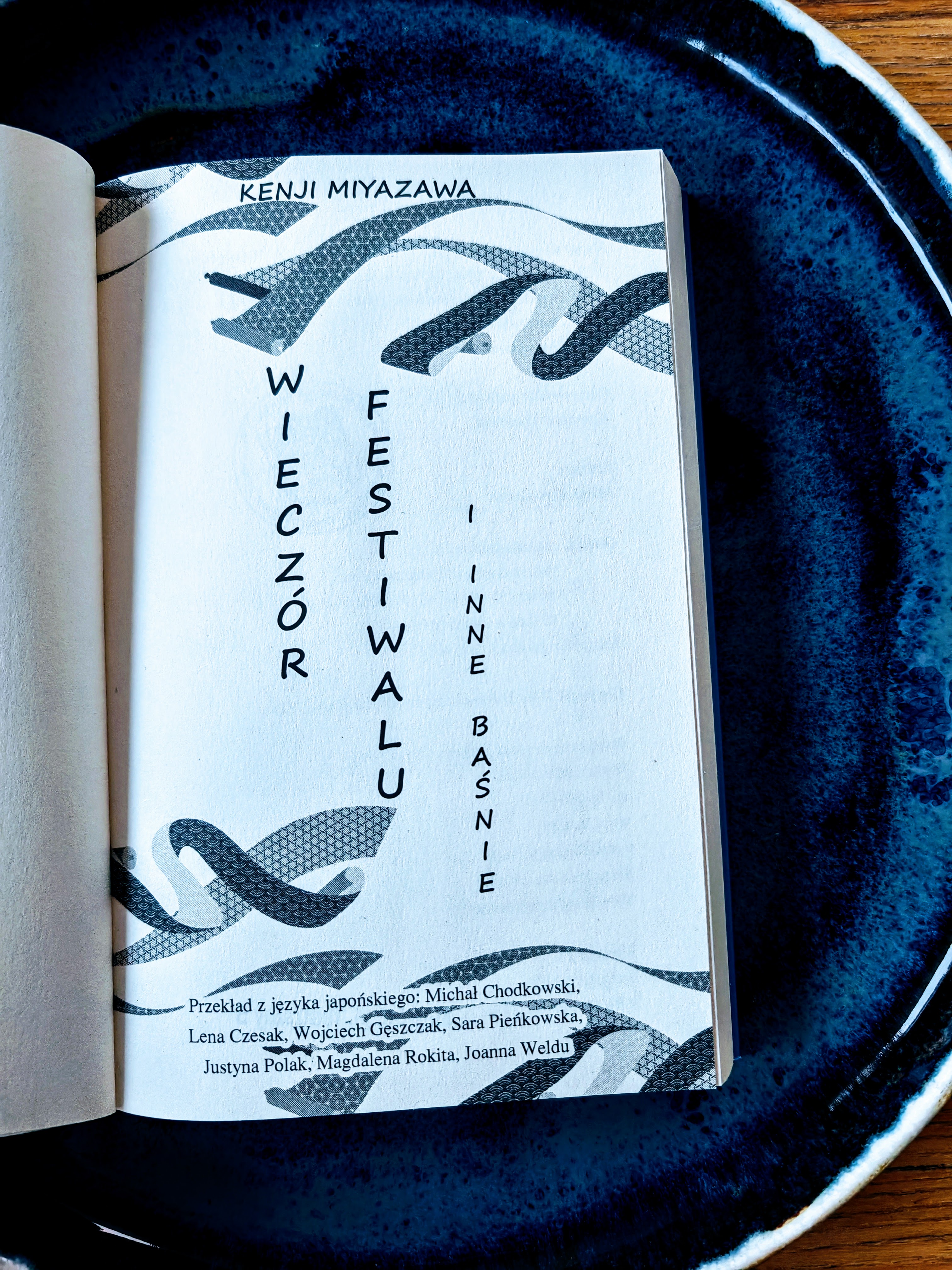
Kenji Miyazawa, Wieczór festiwalu i inne baśnie

Japońskie baśnie

Lubię sięgać na półkę nowości w lokalnych bibliotekach. I dać się zaskoczyć. Często bowiem sięgam po rzeczy, których nie znam. Tak też było ze zbiorem Kenji Miyazawy Wieczór festiwalu i inne baśnie. Skuszona niewielkim formatem i objętością spędziłam nad książką jeden wieczór. Wrażenia mieszane z przewagą słabych.

Dziewięć baśni

Na tomik składa się dziewięć baśni. Pierwsza z nich, Park Kenju, opowiada o chłopcu, który postanawia zasadzić cedrowy las. Choć początkowo lokalni mieszkańcy wioski wyśmiewają chłopca, park staje się miejscem zabaw dzieci, a piękne cedry przynoszą ochłodę w upalne dni. Długo po śmierci chłopca pamięć o nim trwa dzięki zasadzonym przez niego drzewom. W baśni Wieczór festiwalu chłopiec Ryōji ratuje z opresji człowieka gór, który nie ma jak zapłacić za zjedzone podczas fety kluski. W zamian za to istota przynosi mu sto naręczy gałęzi i osiem koszy kasztanów, co jest bardzo hojnym darem. Grupa Kairo relacjonuje historię zespole rzekotek, które pomagają lokalnej społeczności w drobnych pracach. Zwabia je i upija wheskey Ropuch, a ponieważ każda żabka wypiła ponad 300 kieliszków, ich dług wobec Ropucha jest ogromny. Brygada oddaje się więc w usługi przebiegłemu właścicielowi baru, który każe im pracować ponad miarę. Dopiero, kiedy zmienia się władca kraju, a wraz z nim wchodzi nowe prawo i Ropuch musi teraz wykonywać niewolniczą pracę, którą narzucał rzekotkom, rozumie on swoje okrucieństwo. Mysz Tse opowiada o niewdzięcznej myszy, która uważa, że wszystko się jej należy i jest bardzo opryskliwa i roszczeniowa wobec wszystkich, których poznaje na swojej drodze. Tak traci przyjaciół i sprzymierzeńców, przez co wpada w tarapaty. Otzbel i słoń mówi o właścicielu młocarni, który zwabia do siebie do pracy białego słonia i wkrótce zaczyna go wykorzystywać ponad miarę. Słoń musi wezwać swoich towarzyszy z dżungli na ratunek, a nieuczciwy włodarz ginie. Baśń O trójce uczniów niedźwiedzia jaskiniowego to historia o ślimaku, pająku i jenocie, które ukończyły nauki u niedźwiedzia i zaczęły życie na własny rachunek. Jednak ponieważ ponosi ich chciwość, każde z nich kończy źle. Siódma z kolei historia, O lisie i zielonym bóstwie, to relacja o zazdrosnym o kwitnącą wiśnię bogu, któremu nie podoba się lisek-kłamczuszek odwiedzający zbyt często ukochane drzewo i opowiadający mu kłamstwa. Bóstwo zabija lisa-samochwałę, by odkryć, że za przechwałkami rywala nic nie stało. Dopiero przedostatnia bajka, Słupy telegraficzne w księżycową noc bardzo mi się spodobała. Opowiada ona o nocnych wędrówkach słupów telegraficznych, które maszerują wzdłuż linii kolejowych i w ten sposób przemierzają świat, zapobiegając nudzie. Ta baśń ma wyczuwalny rytm kroków, śpiewane do taktu piosenki, a kanclerz elektryczności, dowodzący armią słupów, wprowadza napotkanego na nocnym spacerze chłopca w szczegóły nocnych wydarzeń. Ostatnia historia, Czwartego dnia Miesiąca Narcyzów, pokazuje zimowy powrót dziecka do domu i atak Śnieżnej Wiedźmy, której pomagają Śnieżni Chłopcy. Okrutna czarownica nakazuje przysypać dziecko śniegiem, ale kiedy odchodzi, jeden z Chłopców wraz z towarzyszącymi mu wilkami dba o nie i upewnia się, że odnajdzie je ojciec, a dziecko trafi bezpiecznie do domu.

W trosce o dobro ogółu

W sumie z całego tomiku dwie ostatnie historie podobały mi się najbardziej, reszta przejdzie u mnie bez echa i za chwilę nie będę o nich pamiętać. Miyazawa pisze w spokojny, kojący sposób, a jego bajki są poetyckie, lekko oniryczne, tchnące dobrem, sprawiedliwością, skupione na społeczności i jej dobru. Przekaz jest iście japoński – trzeba dbać o lokalną społeczność, nie wykorzystywać jednostki nadmiernie w swoim własnym interesie, a dbać o interes ogółu. Wszystkie istoty powinny sobie wzajemnie pomagać, okazywać życzliwość i wsparcie, gdyż pycha, samolubstwo, nieżyczliwość czy zgoła wykorzystywanie innych przyniosą surową karę. Co ciekawe, mimo, iż baśnie japońskiego twórcy mają już niemal sto lat, nie są skostniałe ani archaiczne. Może to kwestia świeżego tłumaczenia, a z pewnością również talentu autora – opowiadane historie nie straciły na swojej aktualności ani uroku. Jednak pozostaje to pewnego rodzaju miła zabaweczka, bajeczka, która uleci mi z głowy bardzo szybko, nie zostawiając trwalszego śladu.


Moja ocena: 6/10.


Kenji Miyazawa, Wieczór festiwalu i inne baśnie
Wydawnictwo Kirin, Bydgoszcz 2024
Tłumaczenie: Michał Chodkowski, Lena Czesak, Wojciech Gęszczak, Sara Pieńkowska, Justyna Polak, Magdalena Rokita, Joanna Weldu
Liczba stron: 198
IBN: 978-83-66627-58-1

********************************************************************************

Japanese Fairy Tales

I like reaching for the new releases in local libraries. And being surprised. I often reach for things I don't know. This was also the case with Kenji Miyazawa's collection Festival Night and Other Fairy Tales. Tempted by the small format and volume, I spent one evening reading the book. I have mixed impressions, with a predominance of weak ones.

Nine Fairy Tales

The volume consists of nine fairy tales. The first one, Kenju’s Wood, tells the story of a boy who decides to plant a cedar forest. Although the local villagers initially ridicule the boy, the park becomes a place for children to play, and the beautiful cedars bring refreshment on hot days. Long after the boy's death, his memory lives on thanks to the trees he planted. In the fairy tale Night of the Festival, the boy Ryōji saves a mountain man from oppression. The creature  had no way to pay for the dumplings he ate during the feta. In return, the man brings the boy and his family a hundred bundles of branches and eight baskets of chestnuts, which is a very generous gift. The Thirty Frogs relates the story of a group of tree frogs who help the local community with small tasks. They are lured and get drunk on Toad's whiskey, and since each frog has drunk over 300 glasses, their debt to Toad is enormous. So the gang puts themselves in the service of a cunning bar owner who makes them work above their capacities. It is only when the ruler of the country changes, and with it a new law comes into effect, and Toad now has to do the slave labor he imposed on the tree frogs, that he understands his cruelty. The Ungrateful Rat tells the story of an ungrateful rodent who thinks that everything is his and is very rude and demanding to everyone he meets on her way. This is how he loses his friends and allies, and gets into trouble. Ozbel and the Elephant (in other translations also as Obbel and the Elephant) is about a threshing machine owner who lures a white elephant to work with him and soon begins to abuse him excessively. The elephant has to call his companions from the jungle to rescue him, and the dishonest merchant is killed. The tale The Spider, the Slug, and the Raccoon is about three disciples of a Forest Bear who complete their apprenticeship and start living on their own. However, because they are carried away by greed, each of them ends badly. The seventh tale, The Earthgod and the Fox, is about a god who is jealous of a blossoming cherry tree and who does not like a liar fox who visits his beloved tree too often and tells lies. The god kills the braggart fox, only to discover that nothing was behind his rival's boasting. It was only the penultimate tale, Telegraph Poles on a Moonlit Night (translated also as March by Moonlight), that I really liked. It tells the story of the nightly journeys of telegraph poles, which march along railway lines and thus traverse the world, preventing boredom. This fairy tale has a noticeable rhythm of footsteps, songs sung to the beat, and the Chancellor of Electricity, commanding an army of poles, introduces a boy he meets on a night walk to the details of the night's events. The last story, The Fourth of the Narcissus Month, shows a child's winter return home and an attack by the Snow Witch, who is helped by the Snow Boys. The cruel witch orders the child to be covered in snow, but when she leaves, one of the Boys, accompanied by his wolves, takes care of it and makes sure that his father finds it and that the child gets home safely.

In the interest of the common good

Overall, I liked the last two stories the most from the entire volume, the rest will pass without an echo in my mind and I will not remember them in a moment. Miyazawa writes in a calm, soothing way, and his fairy tales are poetic, slightly dreamlike, breathing goodness, justice, focused on the community and its good. The message is truly Japanese - you have to take care of the local community, not exploit an individual excessively in your own interest, but take care of the interest of the whole. All beings should help each other, show kindness and support, because pride, selfishness, unkindness or simply exploiting others will bring severe punishment. Interestingly, although the fairy tales of the Japanese creator are almost a hundred years old, they are not ossified or archaic. Maybe it's a matter of a fresh translation, and certainly also the author's talent - the stories told have not lost their relevance or charm. However, it remains a kind of nice toy, a fairy tale that will fly out of my head very quickly, leaving no lasting mark.


My rating: 6/10.


Author: Kenji Miyazawa
Title: Night of the Festival and Other Fairy Tales
Publishing House: Kirin, Bydgoszcz 2024
Translation: Michał Chodkowski, Lena Czesak, Wojciech Gęszczak, Sara Pieńkowska, Justyna Polak, Magdalena Rokita, Joanna Weldu
Number of pages: 198
IBN: 978-83-66627-58-1

niedziela, 8 czerwca 2025

Wisława Szymborska, Czesław Miłosz, Pod dyskretną opieką Wielkich Mocy

Niespełniona obietnica

Wydana w 2024 roku przez Wydawnictwo Znak korespondencja dwójki Noblistów – Wisławy Szymborskiej, która ową korespondencję zainicjowała dwa razy, oraz Czesława Miłosza, to ładna literacka zabawka na jeden wieczór. Chociaż bardzo się na tę książkę cieszyłam jako na pewną ciekawostkę, to przyniosła mi ona spore rozczarowanie.

Historia pewnej przyjaźni

Trwająca w latach 1990-2004, a więc do końca życia Czesława Miłosza, korespondencja dwójki polskich poetów obejmuje w sumie 82 wymienione przesyłki, zawierające zarówno kartki pocztowe (w większości), jak i listy i dedykowane sobie wzajemnie książki. 55 przesyłek wysłała Szymborska, 27 Miłosz, który zresztą zdecydował się odpowiedzieć swojej koleżance po piórze dopiero po 3 wyklejance jej autorstwa. Listów wymienili między sobą naprawdę niewiele, choć wydawca zaznacza, że korespondencja nie jest kompletna. W tomiku jest ich zaledwie pięć, w tym jeden naprawdę – jak na Szymborską – długi. Od niego zresztą zbiór bierze swój tytuł. Chociaż książka wydana jest bardzo starannie, zeskanowane materiały poprzedza wstęp Piotra Wichy, a zamyka posłowie i nota edytorska Emila Pasierskiego, to kończąc czytać tomik zastanawiałam się, co dała mi ta lekka i barwna lektura?

Odcinanie kuponów

Nie mam wrażenia, żebym dowiedziała się czegokolwiek przełomowego. Na pewno dostrzegam ogromny podziw i pewną nieśmiałość Szymborskiej wobec Miłosza, i pewien pełen ciepła upór w podtrzymywaniu tej korespondencji. Wydaje się, że Szymborska przełamała lody i w pewnym momencie Miłosz nawet wyszukiwał dla niej co absurdalniejsze kartki w Stanach Zjednoczonych, wysyłając z literackim pozdrowieniem. Oboje na pewno darzyli się dużym szacunkiem i sympatią, ale to poetka wydawała się być bardziej zaangażowaną w tę ciekawą literacką relację. Dla mnie jest to bardziej zbiór ciekawostek, pokazujący znany już z innych tomików talent Szymborskiej do pełnych absurdu i poczucia humoru wyklejanek, który jednak nie wpuszcza czytelnika dużo dalej, w głąb tej znajomości. Mam niestety przykre wrażenie, że to trochę odcinanie kuponów od sławy nobliwych poetów, na zasadzie wszystko z metką Szymborska i Miłosz dobrze się sprzeda. Książka, pięknie wydana, tania nie jest (cena okładowa 64.99PLN). Wiele osób pewnie ją zakupi, wierząc w jej wartość i kryjącą się w niej obietnicę, która przy bliższym wglądzie okazuje się niespełniona.

Moja ocena: 6/10


Wisława Szymborska, Czesław Miłosz, Pod dyskretną opieką Wielkich Mocy
Wydawnictwo Znak, Kraków 2024
Liczba stron: 264
ISBN: 978-83-8367-156-7

********************************************************************************

Unfulfilled Promise

Published in 2024 by Wydawnictwo Znak, the correspondence of two Nobel Prize winners – Wisława Szymborska, who initiated this correspondence twice, and Czesław Miłosz, is a nice literary gem for one evening. Although I was very excited about this book as a curiosity, it proved to be a disappointment for me.

The Story of a Friendship

The correspondence of the two Polish poets, which lasted from 1990 to 2004, i.e. until the end of Czesław Miłosz's life, includes a total of 82 exchanged parcels, containing both postcards (mostly) as well as letters and books dedicated to each other. Szymborska sent 55 parcels, Miłosz 27, and he decided to reply to his colleague after the third collage she authored. They exchanged very few letters, although the publisher notes that the correspondence might not be complete. There are only five of them in the volume, including one that is really long – as for Szymborska. The collection takes its title from it. Although the book is very carefully edited, the scanned materials are preceded by an introduction by Piotr Wicha (renowned Polish author, recently deceased), and closed by an afterword and editorial note by Emil Pasierski, when I finished reading the volume I wondered what this light and colourful reading had given me?

Collecting Dividends

I don't have an impression that I learned anything groundbreaking. I certainly notice Szymborska's great admiration and a certain shyness towards Miłosz, and a certain warm persistence in maintaining this correspondence. It seems that Szymborska broke the ice and at one point Miłosz even searched for the more absurd cards for her in the United States, sending them with literary greetings. They both certainly had great respect and sympathy for each other, but it was Szymborska who seemed to be more involved in this interesting literary relationship. For me, it is more of a collection of curiosities, showing Szymborska's talent for absurd and humorous collages, already known from other volumes, but it does not let the reader much deeper into this acquaintance. Unfortunately, I have the unpleasant impression that this is a bit of cashing in on the fame of the Nobel-winning poets, on the principle that anything with the Szymborska and Miłosz label will sell well. The book, beautifully published, is not cheap (cover price PLN 64.99). Many people will probably buy it, believing in its value and the promise hidden in it, which, on closer inspection, turns out to be unfulfilled.

My rating: 6/10


Authors: Wisława Szymborska, Czesław Miłosz
Title: Under the Discreet Care of Greater Forces (book not translated to English as of June’25)
Wydawnictwo Znak, Kraków 2024
Number of pages: 264
ISBN: 978-83-8367-156-7

sobota, 7 czerwca 2025

Pyun Hye-Young, Dół

Koreański majstersztyk

Znowu półka nowości w lokalnej bibliotece. Książka wydana w tym roku przez wydawnictwo Kwiaty Orientu. Znów niedługa, bo niecałe 200 stron. Tym razem udało się trafić na prawdziwą perełkę.

Wiele treści w niewielkiej objętości

Urodzona w 1972 roku południowo-koreańska pisarka uchodzi w swoim kraju za pewien fenomen. Jej twórczość obsypana jest wieloma nagrodami i cieszy się dużym uznaniem krytyków. W Polsce wyszły trzy powieści autorki – Dół, po raz pierwszy wydany w 2017 roku, Prawo linii (Kwiaty orientu, 2022) oraz Popiół i czerwień (Kwiaty orientu, 2016). Dół opowiada historię Ogiego, który budzi się w szpitalu kilka miesięcy po ciężkim wypadku samochodowym, w którym zginęła jego żona. Mężczyzna ma mocno pokiereszowaną twarz, jest sparaliżowany od pasa w dół i może ruszać tylko jedną ręką, nie w pełnym zakresie. Mówienie sprawia mu dużą trudność. Chociaż lekarze dają mu nadzieję na stopniowy powrót do zdrowia, stan Ogiego nie poprawia się po wyjściu do domu. Jest to związane z sytuacją rodzinną. Dawny wykładowca akademicki nie ma rodziców, jego żona zginęła w wypadku i nie ma dzieci. Opiekuje się nim niedawno owdowiała, ogarnięta rozpaczą po utracie córki teściowa. Początkowo mieszka z nim wynajęta opiekunka, która jednak nie przykłada się do pracy i zaczyna podkradać rzeczy pracodawcy. Gdy zjawia się jej syn i zaczyna pomieszkiwać w domu Ogiego, wypijać jego whisky i krzyczeć na niego, teściowa wyrzuca opiekunkę z pracy i sama przeprowadza się do zięcia. Wtedy też stan chorego zaczyna się pogarszać – zaniedbana zostaje regularna rehabilitacja, mężczyzna nie dostaje regularnie posiłków, często zostaje sam w domu z przepełnionym pojemnikiem na mocz. Teściowa dba o upokorzenie Ogiego, jakby brała odwet za śmierć i raczej nieszczęśliwe życie córki, i poświęca się z pasją pracom w ogrodzie, tak jak to robiło jej dziecko. To się nie może dobrze skończyć.

Uwięziony we własnym ciele

Powieść zrobiła na mnie duże wrażenie. Stan Ogiego oddany jest sprawnie, robi klaustrofobiczne wrażenie uwięzienia we własnym ciele, a potem również we własnym domu. Zmienia się również optyka przedstawienia postaci – początkowo widzmy kalekę, któremu współczujemy i życzymy mu szybkiego powrotu do zdrowia. Ta gehenna nie może się przecież długo ciągnąć. Jednak z czasem poznajemy Ogiego coraz lepiej, dowiadujemy się, że zdradzał żonę, że nie okazywał jej dostatecznie dużo uwagi. Poprzez skrupulatne notatki żony wszystkie te fakty poznaje również jej matka, która ma więc nieco inny stosunek do swojego zięcia.

Brutalna fizyczność

Hye-Young potrafi naprawdę znakomicie opisać pogarszający się stan fizyczny bohatera, ciało, które nie ma już własnej woli. Ponieważ Ogi ma trudności w mówieniu, a jedyna sprawna ręka jest słaba, więc nawet pisanie idzie mu jak po grudzie, mężczyzna nie za bardzo może komunikować się z otoczeniem i zostaje mu świat wewnętrzny. Fizyczność, konieczność polegania na kimś innym jeśli chodzi o potrzeby jego ciała, oczyszczanie go z kropli moczu i kału, wymiana cewnika – Ogiemu prawie nic nie zostało z fizyczności. Nawet twarz była tak pokiereszowana w wypadku, że nie przypomina już on samego siebie. Teraz jest skazany na lekko spoconą, starszawą opiekunkę, która opiera się o jego ciało i je myje i masuje, i zaskoczeniem stwierdza, że wywołuje w nim ono lekki dreszcz podniecenia, choć kiedyś odwróciłby się od niego z obrzydzeniem. Ponieważ Ogi traci dostęp do rehabilitacji wraz ze zwolnieniem opiekunki, pojawia się zanik mięśni i odleżyny, a potem gorączka i wyniszczenie organizmu na skutek nieprzyjmowania jedzenia. To poruszający obraz, zwłaszcza że czytelnik ma – tak jak główny bohater – poczucie beznadziei. Pomoc nie ma skąd nadejść.

Warto sięgać po cięższy kaliber

Chociaż temat jest ponury i ciężki, to uważam, że książka jest naprawdę dobra. Hye-Young porusza wiele tematów, od kalectwa i opieki nad osobami niesamodzielnymi, poprzez trudne relacje i rozpad małżeństwa, po zemstę, poczucie zdania na kogoś, okrucieństwo. To bardzo dobre studium trudnej, klaustrofobicznej sytuacji, wciągające i duszące. Mi się podobało. Ta książka znacznie różni się od innych, które czytałam w tym roku, i ta inność ją wyróżnia. Bardzo polecam.

Moja ocena: 9/10.


Pyun Hye-Young, Dół
Wydawnictwo Kwiaty Orientu, Warszawa 2025
Tłumaczenie: Marzena Stefańska-Adams
Liczba stron: 190
ISBN: 978-83-66658-45-5

**********************************************************************************

Korean masterpiece

Again, a new release in the local library. A book published this year by the Publishing House Kwiaty Orientu. Again, a short one, less than 200 pages. This time, I managed to find a real gem.

Difficult topic in few pages

The South Korean writer, born in 1972, is considered a phenomenon in her country. Her work has won many awards and is highly praised by critics. Three of the author's novels have been published in Poland – The Hole, first published in 2017, The Law of Lines (Publishing House Kwiaty Orientu, 2022) and City of Ash and Red (Publishing House Kwiaty Orientu, 2016). The Hole tells the story of Ogi, who wakes up in the hospital a few months after a serious car accident in which his wife had died. The man has a badly scarred face, is paralyzed from the waist down, and can only move one hand, not to the full extent. Speaking is very difficult for him. Although doctors give him hope for a gradual recovery, Ogi's condition does not improve after he goes home. This is related to his family situation. The former university lecturer has no parents, wife is now dead and he has no children. He is cared for by his mother-in-law, who has recently been widowed and is overcome with despair after losing her daughter. At first, a hired carer lives with him, but she does not put in the work and starts stealing her employer's belongings. When her son shows up and starts living at Ogi's house, drinking his whiskey and shouting at him, the mother-in-law throws the carer out of work and moves in with her son-in-law. This is when the patient's condition begins to deteriorate - regular rehabilitation is neglected, the man does not receive regular meals, he is often left alone at home with an overflowing urine container. The mother-in-law makes sure Ogi's humiliation is complete, as if she was taking revenge for her daughter's death and rather unhappy life, and devotes herself passionately to gardening, just like her child did. This cannot end well.

Trapped in His Own Body

The novel made a big impression on me. Ogi's condition is skillfully conveyed, creating a claustrophobic impression of being trapped in his own body, and then also in his own home. The perspective of the character's presentation also changes - at first we see a cripple, whom we sympathize with and wish him a speedy recovery. His ordeal cannot drag on for long. However, over time we get to know Ogi better and better, we learn that he cheated on his wife, that he did not show her enough attention. Through his wife's meticulous notes, her mother also learns all these facts, who therefore has a much more  negative attitude towards her son-in-law.

Brutal physicality

Hye-Young is really able to describe the protagonist's deteriorating physical condition, a body that no longer has a will of its own. Because Ogi has difficulty speaking, and his only functional hand is weak, even writing is a struggle, the man cannot really communicate with his surroundings and is left with his inner world. The physicality, the necessity of relying on someone else for his bodily needs, cleaning him of drops of urine and feces, replacing his catheter – Ogi has almost nothing left of his physicality. Even his face was so badly scarred in the accident that he no longer resembles himself. Now he is relegated to a slightly sweaty, elderly carer who leans against his body and washes and massages it, and he is surprised to find that it gives him a slight shiver of excitement, although once he would have turned away from it in disgust. Because Ogi loses access to rehabilitation when his carer is fired, muscle atrophy and bedsores appear, and then fever and wasting away as a result of not eating. It is a moving image, especially since the reader has – like the main character – a sense of hopelessness. Help is nowhere to be found.

It’s worth reaching out for heavier topics

Although the subject is grim and difficult, I think the book is really good. Hye-Young covers a wide range of topics, from disability and caring for dependents, through difficult relationships and the breakdown of a marriage, to revenge, a sense of dependence on someone, cruelty. This is a very good study of a difficult, claustrophobic situation, absorbing and suffocating. I liked it. This book is very different from the others I've read this year, and this difference sets it apart. I highly recommend it. 

My rating: 9/10.


Author: Pyun Hye-Young
Title: The Hole
Publishing House: Kwiaty Orientu, Warsaw 2025
Translation: Marzena Stefańska-Adams
Number of pages: 190
ISBN: 978-83-66658-45-5