Pokazywanie postów oznaczonych etykietą literatura duńska. Pokaż wszystkie posty

piątek, 25 września 2026

Tove Dietlevsen, Pokój Vilhelma (Vilhelms værelse)

Ostatnia powieść Tove Ditlevsen

Znam i lubię twórczość Tove Ditlevsen, więc z pewną ciekawością sięgnęłam po wydany w tym roku Pokój Vilhelma. To ostatnia książka duńskiej pisarki, która rok po jej wydaniu zmarła śmiercią samobójczą. Myślę, że ta powieść to swoiste pożegnanie, a może nawet ostrzeżenie przed tym, co miało nadejść. Chociaż na początku książkę czytało mi się bardzo ciężko, to zakończenie wbiło mnie w fotel.

Alter ego pisarki w centrum wydarzeń

Główną bohaterką powieści jest Lise, poetka, której twórczość cieszy się dużą popularnością. Kobieta ma ukochanego syna, Toma, który właśnie dorasta i zaczyna się spotykać ze swoją pierwszą dziewczyną, duże mieszkanie, z którego ma się wkrótce wyprowadzić, ma również niezapłacone podatki, bo jak wiele ludzi pióra zupełnie nie ogarnia spraw finansowych. Po dwudziestu latach opuścił ją mąż, Vilhelm, który odszedł do kolejnej już z rzędu kochanki. To rozstanie wprawia jednak pewną sekwencję wydarzeń w ruch, a bierność większości postaci nie zapobiegnie nadchodzącej tragedii. Wiele wydarzeń z książki ma odbicie w życiu autorki, a Lise jest jej alter ego.

Nieudane małżeństwo

Lise i Vilhelm nie byli bardzo zgodnym małżeństwem, Vilhelm wiecznie poprawiał Lise, a ona starała się dopasować do jego oczekiwań pod kątem ubioru, dbania o siebie, prowadzenia domu czy wreszcie pisarstwa. Mężczyzna uważał, że to dzięki niemu i podsuwanym przez niego lekturom jego żona tak rozkwitła literacko. Tymczasem Lise zaczęła wieść niezależną egzystencję – ku oburzeniu męża wyjechała na zaproszenie do Związku Radzieckiego, znalazła pierwszego kochanka, zaczęła pisać do gazet. Kiedy jednak Vilhelm się wyprowadził, a jego miejsca nie zapełnił Kurt, lokator od sąsiadku z góry, który nosił ubrania męża Lisy i starał się go naśladować, pisarka zaczęła myśleć o śmierci i podjęła pewne poważne decyzje.

Mężczyźni, którzy zawodzą

Mężczyźni przedstawieni w książce stanowią przykry widok. Począwszy od wspomnianego Kurta, który jest biernym pionkiem, najpierw w rękach podstarzałej sąsiadki, która z nim sypia, a potem wpycha go w ramiona Lise, a potem w domu pisarki i jej syna. Chowa się w swoim pokoju, rzadko wychodzi, trwoni majątek ludzi, u których mieszka, nie ma stałego zajęcia. Pewnego dnia po prostu wraca do swojego starego pokoju na górze. Vilhelm z kolei jest skupiony głównie na sobie i na swojej karierze (jest redaktorem naczelnym jednej z gazet), ma liczne kochanki, jest alkoholikiem, który ledwo się trzyma na nogach, a kiedy dowiaduje się, że żona przypuszczalnie zrobi sobie jakąś krzywdę, nie podejmuje żadnej reakcji, nie szuka jej, nie usiłuje jej pomóc. Wraca do biura, składa broń. Syn Lise i Vilhelma jest z kolei rozpuszczonym jedynakiem, zajętym swoim kotem, a potem – na szczęście – swoim budzącym się życiem i młodością. On także nie ma na tyle uwagi, żeby pomóc matce i zapobiec tragedii.

Zakochana w śmierci

Początkowo czytałam książkę z pewną odrazą, relacje i przestrzenie wydawały mi się duszne, brudne, odrażające, przykre. Lise jest oderwana od rzeczywistości, unosząca ponad nią, krucha, choć aktywna. Mężczyźni przebywają albo w swoich dusznych, zadymionych, ciemnych gabinetach, albo w mrocznych spelunkach – knajpach, pełnych alkoholu i kobiet. Potem jednak Ditlevsen ujęła mnie swoją wrażliwością, otwartością emocji, a w końcu – postrzeganiem śmierci, która daje wolność. To książka trudna, ciężka, nieprędka w lekturze, wymagająca, ale z każdą stroną coraz bardziej warta, by wytrwać do końca. Polecam. Zapowiada się bardzo ciekawa nowa seria wydawnicza.

Moja ocena: 9/10.


Tove Ditlevsen, Pokój Vilhelma
Wydawnictwo Czarne, Wołowiec 2026
Tłumaczenie: Iwona Zimnicka
Liczba stron: 184
ISBN: 978-83-8396-201-6

**********************************************************************************

Tove Ditlevsen’s Final Novel

I am familiar with and enjoy Tove Ditlevsen’s work, so I picked up Vilhelm’s Room—published this year—with some curiosity. It is the Danish writer’s final book; she died by suicide a year after its publication. I view this novel as a kind of farewell, or perhaps even a warning of what was to come. Although I found the book a difficult read at first, the ending left me stunned.

The Writer’s Alter Ego at the Center of Events

The novel’s protagonist is Lise, a highly popular poet. She has a beloved son, Tom—who is coming of age and starting to date his first girlfriend—and a large apartment she is soon to vacate; she also has unpaid taxes, as, like many writers, she has absolutely no grasp of financial matters. Her husband, Vilhelm, has left her after twenty years for yet another mistress. This separation sets a chain of events in motion, and the passivity of most characters fails to avert the impending tragedy. Many events in the book mirror the author’s own life, and Lise serves as her alter ego.

A Troubled Marriage

Lise and Vilhelm did not have a harmonious marriage; Vilhelm was constantly correcting Lise, while she tried to live up to his expectations regarding her appearance, grooming, housekeeping, and even her writing. The husband believed that his wife’s literary blossoming was due to him and the reading material he provided. Meanwhile, Lise began to lead an independent life—to her husband’s outrage, she travelled to the Soviet Union upon invitation, took a lover, and began writing for newspapers. However, when Vilhelm moved out and his place was not filled by Kurt—the upstairs neighbor’s lodger, who wore Lise’s husband’s clothes and tried to imitate him—the writer began to contemplate death and made some serious decisions.

Men Who Fail

The men portrayed in the book present a sorry sight. Take the aforementioned Kurt: a passive pawn, first in the hands of an aging neighbour who sleeps with him and then pushes him into Lise’s arms, and later within the household of the writer and her son. He hides in his room, rarely ventures out, squanders the assets of the people he lives with, and has no steady job. One day, he simply returns to his old room upstairs. Vilhelm, for his part, is focused primarily on himself and his career (he is a newspaper editor-in-chief); he has numerous mistresses and is an alcoholic who can barely stay on his feet. When he learns that his wife might be about to harm herself, he does nothing—he neither searches for her nor attempts to help. He simply returns to his office and gives up. Lise and Vilhelm’s son, in turn, is a spoiled only child preoccupied with his cat and later—fortunately—with his own awakening youth and life. He, too, lacks the attentiveness needed to help his mother and avert the tragedy.

In Love with Death

At first, I read the book with a certain aversion; the relationships and settings struck me as stifling, sordid, repulsive, and unpleasant. Lise is detached from reality—floating above it—fragile yet active. The men spend their time either in their stuffy, smoke-filled, dark studies or in gloomy dives—taverns awash in alcohol and women. Yet, Ditlevsen eventually won me over with her sensitivity, emotional openness, and—ultimately—her perception of death as a source of freedom. It is a difficult, heavy, and demanding book—not a quick read—but with every page, it proves increasingly worth the effort of seeing it through to the end. I recommend it. It promises to be a fascinating new publishing series.

My rating: 9/10.


Author: Tove Ditlevsen
Title: Vilhelm’s Room
Publishing House: Wydawnictwo Czarne, Wołowiec 2026
Translation: Iwona Zimnicka
Page count: 184
ISBN: 978-83-8396-201-6

niedziela, 3 marca 2024

Lars Saabye Christensen, Moja chińska babcia (Min kinesiske farmor)

Prywatna mistyka rzeczy

Kiedy po raz pierwszy zobaczyłam książkę Larsa Saabye Christensena Moja chińska babcia, wydaną w 2023 roku przez wydawnictwo Marginesy, urzekła mnie jej matowa, szorstka w dotyku okładka i tajemnicze zdjęcie na niej. Ta niedługa powieść wydala mi się idealna na okołoświąteczny czas, a okazało się, że przynosi również ciekawe noworoczne rozliczenia.

Lars Saabye Christensen to znany i uznany pisarz i poeta norweski, wielokrotnie w Polsce publikowany, głównie przez Wydawnictwo Literackie. Muszę jednak przyznać, że ta próba biografii to pierwsza książka autora, którą przeczytałam. Wnuk usiłuje możliwie wiernie przedstawić życie swojej babci, Huldy, która w wieku 26 lat odbyła trzymiesięczny rejs z Kopenhagi do Hongkongu, do swojego świeżo poślubionego męża Jørgena Christensena, kapitana morskiej żeglugi . Mimo przytaczania różnego rodzaju dokumentacji – fragmentów gazet, wywiadów, rodzinnych listów, babcia nadal pozostaje średnio widoczna, a twórca bezradny wobec rodzinnej historii, która wymyka mu się wraz z odchodzącym ojcem.

Czas pracuje po cichu. Wszystko zarasta

Przede wszystkim, może trochę wbrew intencjom autora, powieść staje się bardziej jego refleksją o upływie czasu i niemożności dokładnego zapisu uciekającej rzeczywistości, niż faktycznym portretem odważnej, dzielnej kobiety. Zwłaszcza, że Saabye Christensen stara się nie ubarwiać rzeczywistości, a pozostawać jej możliwie wiernym:

Moje spojrzenie nie sięgało tak daleko. Zamiast tego zwracało się w głąb, ku moim własnym obrazom, które zaczynają się tam, gdzie kończy się doświadczenie, czyli ku wyobrażeniom, które nie mogą się mierzyć z oryginałem. Może nie przestudiowałem dokumentów z dostateczną starannością. Czas, który upłynął, rzucał za mocny cień. (s. 174)

Wiele informacji o babce przepadło, a wraz z nieuchronnie zbliżającą się śmiercią jego ojca kolejne wersje tej historii również znikną.

W śmierci jest całkowicie współczesny

Dla mnie Moja chińska babcia jest powieścią mocno rozliczeniową, w której autor dzieli się swoimi przemyśleniami na wiele tematów. To spojrzenie doświadczonego, mądrego człowieka, który miał czas zastanowić się nad wieloma rzeczami, nad którymi mniej refleksyjni ludzie się nie pochylają. Pisarz porusza więc temat śmierci, ale patrzy na niego wieloaspektowo – zarówno na sam intymny akt umierania, jak i jego znaczenie dla najbliższych, znajomych, przyjaciół. Patrzy na odchodzenie innych i nasze znikanie związane z ich znikaniem, na odchodzenie wspomnień, na zacieranie się znajomych miejsc i ich zamiana z domu na magazyn przedmiotów. Można powiedzieć, że kompleksowo podchodzi do tematu przemijania, a babka i ojciec są zaledwie pretekstem do podjęcia tych rozważań. Jednocześnie, książka ma w sobie reportażowe zacięcie i przytacza sporo faktów, ale to właśnie melancholijno-skupiony, spokojny ton przeważa w narracji.

Historie mężczyzn i historie kobiet istnieją równolegle

Sam tytuł może być trochę zwodniczy, a czytelnicy, oczekujący portretu babki, mogą być mocno rozczarowani. Okazuje się bowiem, że po kobietach w XX wieku zostaje mniejszy ślad, niż po ich mężach. Całkiem nieźle, że w tym przypadku materiałów nie było tak mało i nestorka rodu pojawia się choć szkicowo. Magdalena Grzebałkowska planowała opisać rodzinę Beksińskich z perspektywy Zofii Beksińskiej, ale jak sama przyznaje, żona znanego malarza pozostawała tak bardzo w cieniu, że nie było dostatecznie dużo materiałów, by tak o tym napisać. Tu Hulda jest trochę pretekstem do złożenia hołdu swojej rodzinie, swoistym nagrobkiem upamiętniającym jej istnienie i wyrywającym resztki rodzinnej historii od zapomnienia. Jak pisze autor, „[…] ich grób na cmentarzu Mariebjerg został zlikwidowany. Nie mam dokąd pójść. Dlatego usiadłem i napisałem to, chociaż już dawno przestałem pisać” (s. 202).

Po początkowym zaskoczeniu i może trochę rozczarowaniu porwał mnie spokojny, nieśpieszny bieg tej nieoczywistej biografii i widoczna walka autora z brakiem materii do przerobienia i koniecznością wplecenia szerszej historii w opowieść o jego babce, która stała się poniekąd historią jego rodu. Biorąc pod uwagę ciężką chorobę pisarza może to być sposób na piękne, literackie pożegnanie ze światem. Dla mnie będzie to historia, do której będę chciała wracać, bo myślę, że za każdym razem zaskoczy mnie czymś innym.

Moja ocena: 9/10.


Lars Saabye Christensen, Moja chińska babcia
Wydawnictwo Marginesy, Warszawa 2023
Tłumaczenie: Iwona Zimnicka
Liczba stron: 216
ISBN: 978-83-67790-58-1

*****************************************************************************

The private mysticism of things

When I first saw Lars Saabye Christensen's book My Chinese Grandmother, published in Poland in 2023 by Marginesy Publishing House, I was charmed by its matte, rough cover and the mysterious photo on it. This short novel seemed to me perfect for the Christmas period, and it turned out that it also brings interesting New Year's reflections.

Lars Saabye Christensen is a well-known and recognized Norwegian writer and poet, published many times in Poland, mainly by Wydawnictwo Literackie. However, I must admit that this attempt at a biography is the author's first book that I have read. The grandson tries to present (as faithfully as possible) the life of his grandmother, Hulda, who, at the age of 26, went on a three-month cruise from Copenhagen to Hong Kong to join her newly married husband, Jørgen Christensen, a sea captain. Despite citing various types of documentation - fragments of newspapers, interviews, family letters - the grandmother remains barely visible and the creator remains helpless in the face of the family history that escapes him along with his departing father.

Time works silently. Everything overgrows

First of all, perhaps somewhat contrary to the author's intentions, the novel becomes more of a reflection on the passage of time and the impossibility of accurately recording the escaping reality than an actual portrait of a brave woman. Especially since Saabye Christensen tries not to embellish reality, but to remain as faithful to it as possible:

My gaze didn't reach that far. Instead, it turned inwards, towards my own images that begin where experience ends, that is, towards images that cannot compare to the original. Maybe I didn't study the documents carefully enough. The time that had passed cast too much of a shadow. (p. 174)

Much information about his grandmother has been lost, and with his father's impending death, subsequent versions of the story will also disappear.

In death he is completely contemporary

For me, My Chinese Grandmother is a very insightful novel in which the author shares his thoughts on many topics. This is the view of an experienced, wise man who had time to think about many things that less reflective people do not think about. The writer raises the topic of death, but looks at it from many aspects - both the intimate act of dying itself and its importance for loved ones, acquaintances and friends. He looks at the passing of others and our disappearance related to their disappearance, the passing of memories, the fading of familiar places and their transformation from home to a warehouse of objects. It can be said that he approaches the topic of transience in a comprehensive way, and his grandmother and father are merely a pretext for these considerations. At the same time, the book has a reporting flair and quotes a lot of facts, but it is the melancholic, focused, calm tone that prevails in the narrative.

Men's stories and women's stories exist in parallel

The title itself may be a bit misleading, and readers expecting a portrait of the grandmother may be greatly disappointed. It turns out that less trace remains of women in the 20th century than of their husbands. It's quite good that in this case there was not so little material and the doyen of the family appears, although sketchily. Magdalena Grzebałkowska planned to describe the Beksiński family from the perspective of Zofia Beksińska, but, as she admits, the famous painter's wife remained so much in the shadow that there were not enough materials to take that perspective. Here, Hulda is a bit of an excuse to pay tribute to the family, a kind of tombstone commemorating its existence and saving the remnants of its history from oblivion. As the author writes, “[…] their grave at the Mariebjerg cemetery was liquidated. I have nowhere to go. So I sat down and wrote it, even though I stopped writing a long time ago” (p. 202).

After the initial surprise and maybe a bit of disappointment, I was carried away by the calm, unhurried pace of this non-obvious biography and the author's visible struggle with the lack of material to cover and the need to weave a broader story into the story of his grandmother, which, in a sense, became the history of his family. Considering the writer's serious illness, this may be a way to say a beautiful, literary farewell to the world. For me, it will be a story I will want to come back to because I think it will surprise me with something different each time.

My rating: 9/10.


Author: Lars Saabye Christensen
Title: My Chinese Grandmother
Publishing House: Marginesy, Warsaw 2023
Translation: Iwona Zimnicka
Number of pages: 216
ISBN: 978-83-67790-58-1

sobota, 26 sierpnia 2023

Tove Ditlevsen, Moja żona nie tańczy (Samlede noveller)

 Proza intymna

Są książki, które się oszczędza przy czytaniu. Albo inaczej – książki, których nie da się czytać w dużych dawkach. Które trzeba smakować. Takie właśnie są opowiadania Tove Ditlevsen, których zbiór Moja żona nie tańczy został wybrany do tegorocznej edycji Europejskiej Nocy Literatury.

Tove Ditlevsen

To, co zwraca uwagę w prozie Ditlevsen, to wielka melancholia jej tekstów. Do tego stopnia, że sprawdziłam życiorys duńskiej pisarki, by dowiedzieć się, że zmarła śmiercią samobójczą w 1976 roku. W swoim rodzinnym kraju ma status kultowej, w Polsce ukazały się dotychczas Trylogia kopenhaska (2021, Czarne), Ulica dzieciństwa (2021, Marpress) oraz właśnie recenzowany zbiór (2022, Czarne). Cieszę się, że dzięki odbywającemu się ostatnio we Wrocławiu wydarzeniu mogłam zapoznać się z twórczością nieznanej mi do tej pory pisarki.

Mistrzyni krótkiej formy

W krótkich opowiadaniach Ditlevsen kreśli pełne, naładowane emocjami scenki, w których mamy krótki i niesamowicie intensywny wgląd w czyjeś życie. Przegląd bohaterów jest szeroki – od dzieci rywalizujących o uwagę matki, staruszka zakłopotanego hojnym prezentem od dzieci, rozstające się pary lub pary decydujące, że jednak się nie rozstaną, matki szantażujące dorosłych synów swoimi łzami, mężów odkrywających zdradę żony i odwrotnie, kobiety niegodzące się ze swoim wiekiem, napięte relacje pomiędzy matką a córką, sklepikarzy ulicznych, załamane fryzjerki, ludzi, którzy dzielą ze sobą życie, ale jednak nie patrzą sobie w oczy podczas kolacji. Sytuacje są z pozoru proste, codzienne, a jednak najczęściej zawierają znacznie większy ładunek emocjonalny. Są kompletne, szczegółowe, intensywne, skondensowane.

Proza, którą trzeba sobie dawkować

Jedyne, co mogłabym zarzucić temu wyborowi tekstów, to pewna monotonia. Chociaż bohaterowie tak się od siebie różnią, opowiadania mają dominujący, melancholijny, smutny ton. Może właśnie dlatego tej książki nie da się czytać szybko, bo wtedy będzie całkowicie niestrawna. Trzeba ją sobie dawkować powoli i czytać z natężoną uwagą. Wtedy pokazuje całe swoje skondensowane piękno.

Moja ocena: 8/10.


Tove Ditlevsen, Moja żona nie tańczy
Wydawnictwo Czarne, Wołowiec 2022
Tłumaczenie: Iwona Zimnicka
Liczba stron: 248 
ISBN: 978-83-8191-549-6

*****************************************************************************


Intimate prose

There are books that you are reading slowly on purpose. Or in other words - books that cannot be read in large doses. Which you have to savour. These are the stories of Tove Ditlevsen, whose collection My Wife Doesn't Dance was selected for this year's European Night of Literature.

Tove Ditlevsen


What attracts attention in Ditlevsen's prose is the great melancholy of her texts. So much so that I checked the Danish writer's biography to find out that she had committed suicide in 1976. In her home country she is well known and acclaimed, in Poland only three of her 29 works have been published: The Copenhagen Trilogy (2021, Czarne Publishing House), Childhood (2021, Marpress Publishing House) and the reviewed collection (2022, Czarne Publishing House). I am glad that thanks to the recent event held in Wrocław, I was able to get acquainted with the work of a writer I have not known so far.

The master of the short forms


In short stories, Ditlevsen draws full, emotional scenes in which we have a brief and incredibly intense insight into someone's life. The range of characters is wide - from children competing for their mother's attention, an old man embarrassed by a generous and redundant gift from his children, couples separating or deciding not to part, mothers blackmailing their adult sons with their tears, husbands discovering the infidelity of their wives and vice versa, women disagreeing with their age, strained mother-daughter relationships, street shopkeepers, broken hairdressers, people who share their lives but do not look into each other's eyes at dinner. Situations are seemingly simple, everyday, and yet they usually contain a much greater emotional charge. They are complete, detailed, intense, condensed.

Prose that you have to dose


The only thing I didn’t really like in this book is a certain monotony. Although the characters are so different from each other, the stories have a dominant, melancholic, sad tone. Maybe that's why My Wife Doesn’t Dance can't be read quicklyas it would become completely indigestible. You have to dose it slowly and read it with intense attention. Then it shows all its condensed beauty.

My rating: 8/10.


Author: Tove Ditlevsen
Title: My Wife Doesn't Dance
Publishing House: Wydawnictwo Czarne, Wołowiec 2022
Translation: Iwona Zimnicka
Number of pages: 248
ISBN: 978-83-8191-549-6

sobota, 7 stycznia 2023

Aksel Sandemose, Uciekinier przecina swój ślad (En flyktning krysser sitt spor)

Myślisz, że nic o tobie nie wiem?

Rok 2023 zaczął się czytelniczo bardzo wymagająco. Od kilku miesięcy stała u mnie na półce powieść Uciekinier przecina swój ślad norweskiego pisarza duńskiego pochodzenia, Aksela Sandemose. Sięgnęłam więc po dość spore tomiszcze, i zaczęłam przeżywać zaskoczenie za zaskoczeniem. Chociaż książka wyszła w 2019 roku w wydawnictwie Czarne, powstała w latach 30-stych XX wieku, a w oryginale została opublikowana w 1933 roku. Sam pisarz urodził się w 1899 roku, a zmarł w 1965 roku. Spodziewałam się klasycznego kryminału, również po drugim akapicie książki, który głosi: „Zabiłem kiedyś człowieka. Nazywał się John Wakefield, a ja uśmierciłem go pewnej nocy siedemnaście lat temu w Misery Harbor” (s. 5). Jednak powieść nie ma nic wspólnego z kryminałem, a jest raczej zbeletryzowaną rozprawą filozoficzną o opresyjnym wpływie społeczeństwa na jednostkę i tzw. prawie Jante.

Terror prawa Jante (Janteloven)

Jante to fikcyjne miasteczko w Danii, w którym wychowywał się główny bohater powieści, Espen Arnakke. W rozległej powieści narrator opisuje różne opresyjne techniki, które mieszkańcy tej małej społeczności stosują, by zgnębić jednostkę i jej dążenie do wyrażenia swojego indywidualizmu. Pełne „dziesięć przykazań Jante” brzmi:

1. Nie sądź, że jesteś kimś.
2. Nie sądź, że nam dorównujesz.
3. Nie sądź, że jesteś mądrzejszy od nas.
4. Nie wyobrażaj sobie, że jesteś lepszy od nas.
5. Nie sądź, że wiesz więcej niż my.
6. Nie sądź, że jesteś kimś więcej niż my.
7. Nie sądź, że się do czegoś nadajesz.
8. Nie wolno ci się z nas śmiać.
9. Nie sądź, że komuś na tobie zależy.
10. Nie sądź, że możesz nas czegoś nauczyć. (s. 85)

Dekalog uzupełnia jedenaste przykazanie, które brzmi: „Nie sądź, że jest coś, czego o tobie nie wiemy.” W małej społeczności każdy wie o każdym wszystko, i może używać tej wiedzy przeciwko innym osobom w społeczności.

Prawo Jante jest jednym z najbardziej pesymistycznych zestawów zasad, jakie kiedykolwiek widziałam. Nie zakłada istnienia dobra w człowieku, jedynie mrok i chęć utrzymania się na powierzchni za wszelką cenę:

Usiłowałem umożliwić ci wejrzenie w janteizm. Ten, kto żyje pod prawem Jante, jest w swej istocie mordercą, zamordował wszystkich, rodziców, braci, siostry i wielu innych, ponieważ krwawi nienawiścią. To, że w moim przypadku zdarzyło się to w rzeczywistości, nie czyni żadnej istotnej różnicy, doprowadziło jedynie do zrozumienia mnie samego i wszystkich innych. (s. 257)

Morderca stawia się na równi z innymi, gdyż on wykonał to, o czym inni w sekrecie marzą. Kara dla winowajcy jest jednocześnie połączona z ulgą, że innym grzesznikom się upiekło:

Bo kiedy człowiek upada, inni się radują, był on bowiem jedyną świnią na świecie, a wreszcie nadszedł dzień uboju. (s. 153)

Narrator puszcza z dymem wszelkie teorie o dobru w człowieku, o moralności, dychotomicznej walce dobra ze złem:

Moralność nie ma żadnego związku z Bogiem, ma natomiast związek ze strachem i duchową obstrukcją. (s. 189)

Takich obserwacji czy stwierdzeń jest w powieści Sandemose znacznie więcej i naprawdę ciężko się z częścią z nich zgodzić.

Przemiana

Jednak w połowie książki zaczynają przeważać inne tony – zrozumienia dla swojej zbrodni i poczucia winy. Niczym Raskolnikow Espen Arnakke zaczyna zauważać, że nie jest nadczłowiekiem, „który ma decydować o życiu i śmierci innych, a ja sobie takiej roli nie życzę” (s. 281). Przemiana zachodzi powoli, lecz pod koniec narrator mówi:

Właśnie dlatego zabójstwo jest najbardziej haniebne ze wszystkich uczynków. Życie powinniśmy umieć darować nawet naszym wrogom. W zabójstwie i w pragnieniu zabójstwa obnażamy jedynie własną słabość. (s. 457)

Trudna treść w trudnej formie

Dawno nie czytałam tak pesymistycznej w swym wydźwięku, a jednocześnie tak trudnej w swej formie książki. Na powieść składa się kilkadziesiąt krótkich rozdziałów, od połowy strony po kilka stron, niepoukładanych chronologicznie, poruszających najróżniejsze wątki. Narrator opowiada zarówno o swoim wczesnym dzieciństwie, sytuacji rodzinnej, niemal niewolniczej pracy ojca w fabryce, problemach z akceptacją przez grupę, dojrzewaniu (które było jedną wielką traumą), stosunkach z kobietami. Samo morderstwo nie zostało jasno przedstawione, wiadomo jedynie, że John Wakefield znęcał się nad słabszym od siebie fizycznie chłopakiem, każąc mu marznąć na dwudziestostopniowym mrozie czy podrywając kobietę, która mu się podobała (i zdobywając ją). Zabijając Wakefielda Arnakke zemścił się na opresyjnym systemie społecznym, ale nie daje mu spokoju, czy to było właściwe zachowanie.

Uciekinier przecina swój ślad to bardzo trudna książka. Powiedziałabym, że stanowi połączenie Zbrodni i kary Dostojewskiego, surowości stylu Starego Testamentu, ma w sobie coś z tonu Alberta Camusa, w swym ekshibicjonizmie nawiązuje do niej Karl Ove Knausgård. Z punktu widzenia historii literatury to niewątpliwie ważna pozycja, która zachwyca świeżością stylu (który być może da się wyjaśnić współczesnym tłumaczeniem Iwony Zimnickiej z 2019 roku) i totalnością przedstawionej wizji. Dla mnie lektura była trudna i sądzę, że bardzo dużo z tej książki nie zrozumiałam.

Moja ocena: 6/10.


Aksel Sandemose, Uciekinier przecina swój ślad
Wydawnictwo Czarne
Wołowiec 2019
Tłumaczenie: Iwona Zimnicka
Liczba stron: 764
ISBN: 978-83-8049-888-4

*************************************************************************

You think I don't know anything about you?

The year 2023 started with a very demanding reading. For several months, the novel A Fugitive Crosses His Tracks by the Norwegian writer of Danish descent, Aksel Sandemose, has been on my shelf. So I reached for the quite large volume, and began to experience surprise after surprise. Although the book was published in 2019 by the Czarne Publishing House, it was written in the 1930s and was originally published in 1933. The writer himself was born in 1899 and died in 1965. I was expecting a classic detective story, also after the second paragraph of the book, which reads: "Once I killed a man. His name was John Wakefield and I murdered him one night seventeen years ago in Misery Harbor” (p. 5). However, the novel has nothing to do with a detective story, and is rather a fictionalized philosophical treatise on the oppressive influence of society on the individual and the so-called Law of Jante.

The terror of the Law of Jante (Janteloven)

Jante is a fictional town in Denmark where the main character of the novel, Espen Arnakke, grew up. In the vast novel, the narrator describes the various oppressive techniques that the inhabitants of this small community use to subdue the individual and his quest to express his individualism. The full "Ten Commandments of Jante" reads:

1. You're not to think you are anything special.
2. You're not to think you are as good as we are.
3. You're not to think you are smarter than we are.
4. You're not to imagine yourself better than we are.
5. You're not to think you know more than we do.
6. You're not to think you are more important than we are.
7. You're not to think you are good at anything.
8. You're not to laugh at us.
9. You're not to think anyone cares about you.
10. You're not to think you can teach us anything. (p.85)

The Decalogue completes the eleventh commandment, which says: "Think not that there is anything we do not know about you." In a small community, everyone knows everything about everyone, and can use that knowledge against others in the community.

The Law of Jante is one of the most pessimistic sets of rules I've ever seen. It does not assume the existence of good in man, only darkness and the desire to stay afloat at all costs:

I have tried to give you an insight into Jantheism. The one who lives under the law of Jante is a murderer in essence, he has murdered everyone, parents, brothers, sisters and many others, because he bleeds hatred. That it actually happened in my case doesn't make any real difference, it just led to an understanding of myself and everyone else. (p. 257)

The murderer puts himself on an equal footing with others because he has done what others secretly dream of doing. Punishment for the culprit is simultaneously coupled with relief that other sinners got away:

For when a man falls, others rejoice, for he was the only pig in the world, and the day of slaughter has come at last. (p. 153)

The narrator sets fire to all theories about the good in man, about morality, the dichotomous struggle between good and evil:

Morality has nothing to do with God, but it has to do with fear and spiritual obstruction. (p. 189)

There are many more such observations or statements in Sandemose's novel and it is really hard to agree with some of them.

Transformation

However, in the middle of the book, other tones start to prevail - understanding for one's crime and guilt. Like Raskolnikov, Espen Arnakke begins to notice that he is not a superhuman "who is supposed to decide about the life and death of others, and I do not want such a role" (p. 281). The transformation takes place slowly, but towards the end the narrator says:

That is why murder is the most heinous of all deeds. We should be able to spare life even to our enemies. In murder and in the desire to kill, we only expose our own weakness. (p. 457)

Difficult content in a difficult form

It's been a long time since I read a book so pessimistic in its overtones, and at the same time so difficult in its form. The novel consists of several dozen short chapters, from half a page to several pages, not arranged chronologically, touching on various topics. The narrator talks about his early childhood, his family situation, his father's almost slave work in the factory, problems with acceptance by the group, adolescence (which was one big trauma), and relations with women. The murder itself is not clearly presented, it is only known that John Wakefield abused a physically weaker boy, making him freeze in the 20-degree frost or picking up a woman he liked (and winning her favours). By killing Wakefield, Arnakke took revenge on an oppressive social system, but the act leaves him wondering if it was the right thing to do.

A Fugitive Crosses His Tracks is a very difficult book. I would say that it is a combination of Dostoyevsky's Crime and Punishment, the severity of the Old Testament style, it has something of the tone of Albert Camus, perhaps Karl Ove Knausgård refers to it in its exhibitionism. From the point of view of the history of literature, it is undoubtedly an important position that delights with the freshness of the style (which may be explained by the contemporary translation of Iwona Zimnicka from 2019) and the totality of the presented vision. It was difficult for me to read and I think there are vast passages I didn’t understand in this book.

My rating: 6/10.


Author: Aksel Sandemose
Title: A Fugitive Crosses His Tracks
Publishing House: wydawnictwo Czarne, Wołowiec 2019
Translation: Iwona Zimnicka
Number of pages: 764
ISBN: 978-83-8049-888-4

czwartek, 22 lipca 2021

Jussi Adler-Olsen, Kartoteka 64 (Journal 64)

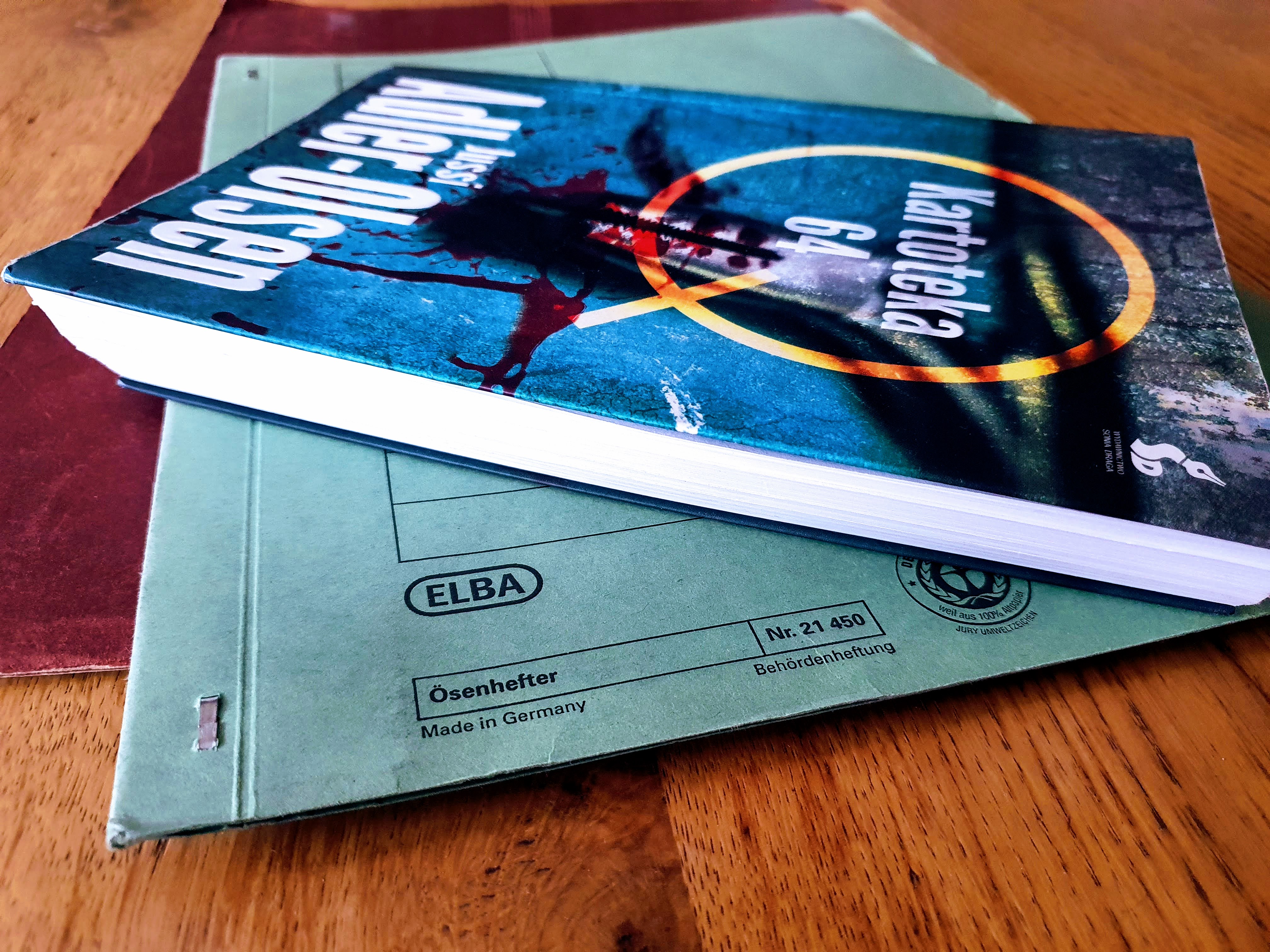
Jussi Adler-Olsen uchodzi za znakomitego pisarza kryminałów, a za wydawanie jego powieści wzięło się wydawnictwo Sonia Draga. Kartoteka 64 to moje pierwsze spotkanie z pisarzem, choć nie jestem przekonana, czy do końca udane.

Sprawiedliwości stanie się zadość

Akcja toczy się dwutorowo. Departament Q bada stare, nierozwiązane sprawy, a jedną z nich jest historia zaginięcia kilkorga ludzi, którzy po prostu rozpłynęli się w powietrzu. Wszystkie wątki śledztwa rowadzą do Nete Hermansen, która pochodziła z niepełnej rodziny, szybko zaszła w ciążę, poddała się aborcji, a przy okazji została zgwałcona, a później również wbrew swej woli wysterylizowana. Za gwałt odpowiadał Curt Wad, lekarz i ideologiczny przywódca partii Czyste Linie, która głosiła zasady eugeniki i czystości rasowej Duńczyków. Organizacja, na czele której stał Wad, wysterilizowała wbrew woli i wiedzy setki kobiet, zwłaszcza imigrantek lub osób postrzeganych jako rozwiązłe czy opóźnione. Nete była jedną z jego ofiar, przez wiele lat była zamknięta w zakładzie dla kobiet, gdzie przeszła piekło. Miała dużo czasu, by obmyślić zemstę i przeprowadzić ją na wszystkich tych, którzy przyczynili się do jej nieszczęścia. Tylko Wad wymknął się z jej sideł (choć jak się później okazało, nie tylko on), ale to właśnie on zaprowadzi Carla Mørcka na miejsce zbrodni sprzed ponad 20 lat. Zbrodniarze, ofiary i inspektor spotkają się przy jednym stole...

Inspektor gamoń

Carl Mørck robi trochę wrażenie gamonia z wieczną biegunką, za którego robotę odwala jego zespół. Fakt, że zbiry Curta Wada nie mogą go dopaść, mimo wielu prób, wydaje mi się trudny do uwierzenia. Również spotkanie przy stole po latach, gdy wszyscy złoczyńcy giną, jest jakby zbyt wygodne... Być może zarówno Agata Christie, jak i mój ulubieniec Jørn Lier Horst przyzwyczaili mnie do wiarygodnej, wnikliwej postaci prowadzącego detektywa, któremu chce się zaufać i daje się prowadzić. Osoby kompetentnej, godnej zaufania – specjalisty w swoim fachu. Mørck jest trochę nieudacznikiem, poszkodowanym przez życie i mało skupionym na swoich zadaniach. Ciekawszy jest jego śledczy Assad, który kryje jakąś mroczną tajemnicę związaną z jego przeszłością. Jemu bym zaufała, komisarzowi prowadzącemu śledztwo już nie.

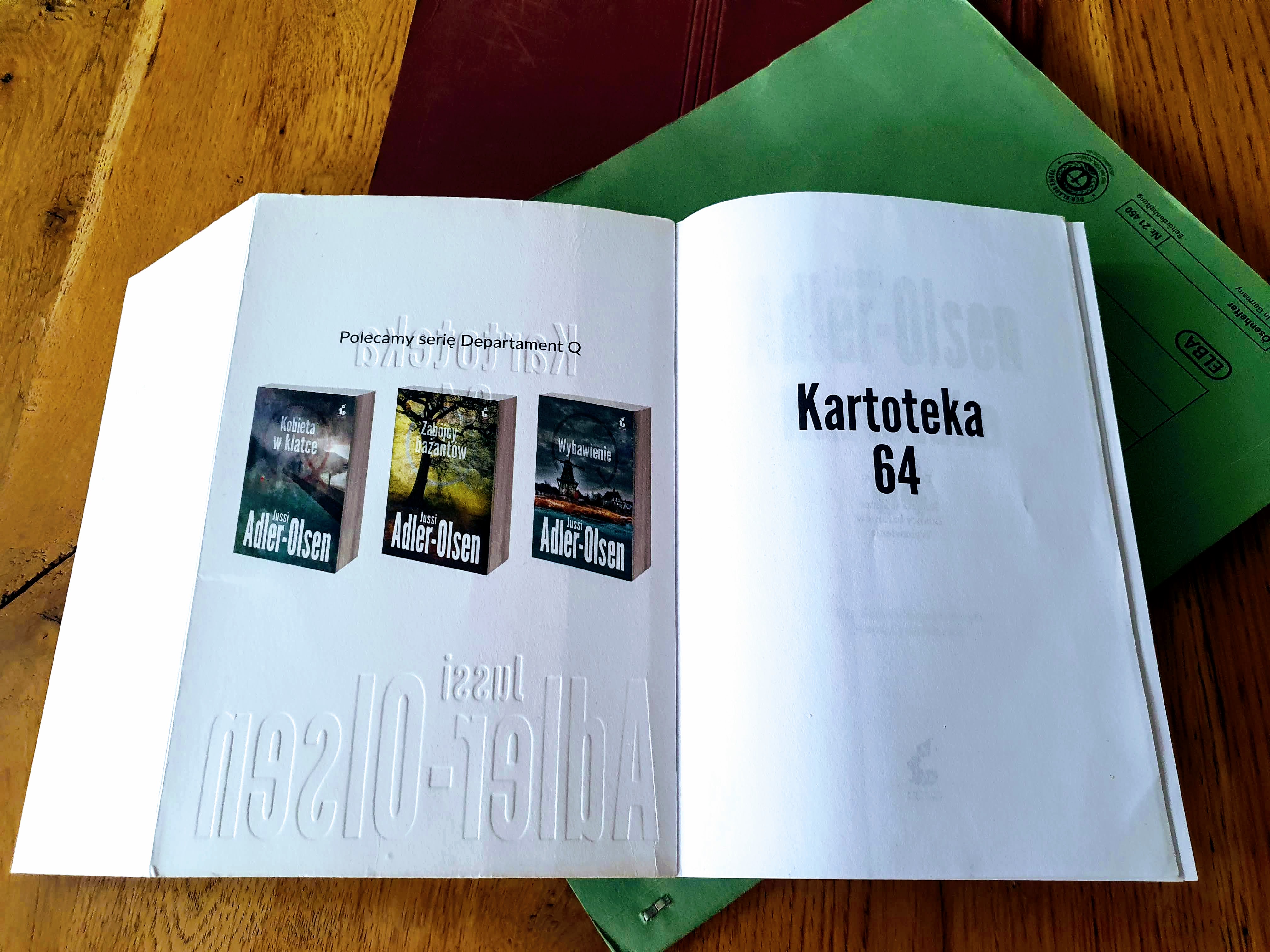
Wrażenia po lekturze? Średnie. Mimo ważnego i szokującego tematu eugeniki i obnażania go w krajach zachodnich, książka szła w stronę taniej sensacji dla mnie. Brakowało ciepła głównych postaci - zarówno komisarz, jak i jego ekipa, byli tylko zarysowani, a nie nakreśleni w całości. Nie czuję się zachęcona do sięgania do kolejnych powieści Adler-Olsena. Dodatkowo zniechęca mnie fakt, że książka o cenie okładkowej 39 PLN całkowicie mi się rozpadła – rozkleiła i wypadają z niej strony. Czytały ją w sumie może 3 osoby, raczej szanujące książki. Taka jakość wydania bardzo rozczarowuje.


Moja ocena: 4/10.


Jussi Adler-Olsen, Kartoteka 64

Wydawnictwo Sonia Draga

Katowice 2018

Tłumaczenie: Joanna Cymbrywkiewicz

Liczba stron: 436

ISBN: 978-83-8110-240-7

Gatunek: kryminał


Jussi Adler-Olsen is considered to be an excellent crime fiction writer, and the publishing house Sonia Draga has started publishing his novels. Guilt is my first meeting with the author, although I am not sure it is a successful one.

Justice will be done

The plot is conducted simultaneously in the past and in the present, with two different narrators. Department Q led by chief inspector Carl Mørck investigates old, unresolved cases (present), one of which is the story of the disappearance of several people who simply dissolved into thin air (past). All the threads of the investigation lead to Nete Hermansen, who came from an incomplete family, quickly became pregnant, had an abortion, and was raped in the process, and later also sterilized against her will. Curt Wad, the doctor and ideological leader of the Clean Lines party, which preached the principles of eugenics and the racial purity of the Danes, was responsible for the rape. The organization led by Wad has sterilized hundreds of women against their will and knowledge, especially immigrants or those perceived as promiscuous or retarded. Nete ​​was one of gynecologist’s victims, she was locked up in a women's facility for many years, where she went through hell. She had plenty of time to plan her revenge and apply it to all those who had contributed to her misfortune. Only Wad escaped from her traps (though, as it later turned out, not only him), but it is he who will lead Carl Mørck to the crime scene from over 20 years ago. Criminals, victims and the inspector will meet at the same table ...

Inspector with constant diarrhea

Carl Mørck makes an impression of incompetent investigator with constant diarrhea and his job done by his team. The fact that Curt Wad's thugs can't get him, despite their many attempts, seems hard to believe. Also meeting at the table after years, when all the villains are killed, is sort of too easy ... Perhaps both Agatha Christie and my favorite Jørn Lier Horst have accustomed me to a credible, insightful figure of a leading detective whom I want to trust and let myself be guided by. A competent, trustworthy person - a specialist in his profession. Mørck is a bit of a loser, getting his share from life and not very focused on his tasks. His investigator Assad is more interesting, as he hides a dark secret about his past. I would trust him, not the commissioner conducting the investigation.

Impressions after reading? So so. Despite the important and shocking topic of eugenics and its exposure in Western countries, the book was a cheap sensation for me. The warmth of the main characters was lacking - both the commissioner and his team were only outlined, not portrayed in their entirety. I don't feel encouraged to reach for more Adler-Olsen’s novels. In addition, I am discouraged by the fact that the book with the cover price of PLN 39 has completely fallen apart - the pages started falling off. A total of maybe 3 people read it, and those were readers respecting books. This release quality is very disappointing.


My rating: 4/10.


Author: Jussi Adler-Olsen

Title: Guilt

Publishing House: Sonia Draga

Katowice 2018

Translation: Joanna Cymbrywkiewicz

Number of pages: 436

ISBN: 978-83-8110-240-7

Genre: crime story