Pokazywanie postów oznaczonych etykietą Danish literature. Pokaż wszystkie posty

piątek, 25 września 2026

Tove Dietlevsen, Pokój Vilhelma (Vilhelms værelse)

Ostatnia powieść Tove Ditlevsen

Znam i lubię twórczość Tove Ditlevsen, więc z pewną ciekawością sięgnęłam po wydany w tym roku Pokój Vilhelma. To ostatnia książka duńskiej pisarki, która rok po jej wydaniu zmarła śmiercią samobójczą. Myślę, że ta powieść to swoiste pożegnanie, a może nawet ostrzeżenie przed tym, co miało nadejść. Chociaż na początku książkę czytało mi się bardzo ciężko, to zakończenie wbiło mnie w fotel.

Alter ego pisarki w centrum wydarzeń

Główną bohaterką powieści jest Lise, poetka, której twórczość cieszy się dużą popularnością. Kobieta ma ukochanego syna, Toma, który właśnie dorasta i zaczyna się spotykać ze swoją pierwszą dziewczyną, duże mieszkanie, z którego ma się wkrótce wyprowadzić, ma również niezapłacone podatki, bo jak wiele ludzi pióra zupełnie nie ogarnia spraw finansowych. Po dwudziestu latach opuścił ją mąż, Vilhelm, który odszedł do kolejnej już z rzędu kochanki. To rozstanie wprawia jednak pewną sekwencję wydarzeń w ruch, a bierność większości postaci nie zapobiegnie nadchodzącej tragedii. Wiele wydarzeń z książki ma odbicie w życiu autorki, a Lise jest jej alter ego.

Nieudane małżeństwo

Lise i Vilhelm nie byli bardzo zgodnym małżeństwem, Vilhelm wiecznie poprawiał Lise, a ona starała się dopasować do jego oczekiwań pod kątem ubioru, dbania o siebie, prowadzenia domu czy wreszcie pisarstwa. Mężczyzna uważał, że to dzięki niemu i podsuwanym przez niego lekturom jego żona tak rozkwitła literacko. Tymczasem Lise zaczęła wieść niezależną egzystencję – ku oburzeniu męża wyjechała na zaproszenie do Związku Radzieckiego, znalazła pierwszego kochanka, zaczęła pisać do gazet. Kiedy jednak Vilhelm się wyprowadził, a jego miejsca nie zapełnił Kurt, lokator od sąsiadku z góry, który nosił ubrania męża Lisy i starał się go naśladować, pisarka zaczęła myśleć o śmierci i podjęła pewne poważne decyzje.

Mężczyźni, którzy zawodzą

Mężczyźni przedstawieni w książce stanowią przykry widok. Począwszy od wspomnianego Kurta, który jest biernym pionkiem, najpierw w rękach podstarzałej sąsiadki, która z nim sypia, a potem wpycha go w ramiona Lise, a potem w domu pisarki i jej syna. Chowa się w swoim pokoju, rzadko wychodzi, trwoni majątek ludzi, u których mieszka, nie ma stałego zajęcia. Pewnego dnia po prostu wraca do swojego starego pokoju na górze. Vilhelm z kolei jest skupiony głównie na sobie i na swojej karierze (jest redaktorem naczelnym jednej z gazet), ma liczne kochanki, jest alkoholikiem, który ledwo się trzyma na nogach, a kiedy dowiaduje się, że żona przypuszczalnie zrobi sobie jakąś krzywdę, nie podejmuje żadnej reakcji, nie szuka jej, nie usiłuje jej pomóc. Wraca do biura, składa broń. Syn Lise i Vilhelma jest z kolei rozpuszczonym jedynakiem, zajętym swoim kotem, a potem – na szczęście – swoim budzącym się życiem i młodością. On także nie ma na tyle uwagi, żeby pomóc matce i zapobiec tragedii.

Zakochana w śmierci

Początkowo czytałam książkę z pewną odrazą, relacje i przestrzenie wydawały mi się duszne, brudne, odrażające, przykre. Lise jest oderwana od rzeczywistości, unosząca ponad nią, krucha, choć aktywna. Mężczyźni przebywają albo w swoich dusznych, zadymionych, ciemnych gabinetach, albo w mrocznych spelunkach – knajpach, pełnych alkoholu i kobiet. Potem jednak Ditlevsen ujęła mnie swoją wrażliwością, otwartością emocji, a w końcu – postrzeganiem śmierci, która daje wolność. To książka trudna, ciężka, nieprędka w lekturze, wymagająca, ale z każdą stroną coraz bardziej warta, by wytrwać do końca. Polecam. Zapowiada się bardzo ciekawa nowa seria wydawnicza.

Moja ocena: 9/10.


Tove Ditlevsen, Pokój Vilhelma
Wydawnictwo Czarne, Wołowiec 2026
Tłumaczenie: Iwona Zimnicka
Liczba stron: 184
ISBN: 978-83-8396-201-6

**********************************************************************************

Tove Ditlevsen’s Final Novel

I am familiar with and enjoy Tove Ditlevsen’s work, so I picked up Vilhelm’s Room—published this year—with some curiosity. It is the Danish writer’s final book; she died by suicide a year after its publication. I view this novel as a kind of farewell, or perhaps even a warning of what was to come. Although I found the book a difficult read at first, the ending left me stunned.

The Writer’s Alter Ego at the Center of Events

The novel’s protagonist is Lise, a highly popular poet. She has a beloved son, Tom—who is coming of age and starting to date his first girlfriend—and a large apartment she is soon to vacate; she also has unpaid taxes, as, like many writers, she has absolutely no grasp of financial matters. Her husband, Vilhelm, has left her after twenty years for yet another mistress. This separation sets a chain of events in motion, and the passivity of most characters fails to avert the impending tragedy. Many events in the book mirror the author’s own life, and Lise serves as her alter ego.

A Troubled Marriage

Lise and Vilhelm did not have a harmonious marriage; Vilhelm was constantly correcting Lise, while she tried to live up to his expectations regarding her appearance, grooming, housekeeping, and even her writing. The husband believed that his wife’s literary blossoming was due to him and the reading material he provided. Meanwhile, Lise began to lead an independent life—to her husband’s outrage, she travelled to the Soviet Union upon invitation, took a lover, and began writing for newspapers. However, when Vilhelm moved out and his place was not filled by Kurt—the upstairs neighbor’s lodger, who wore Lise’s husband’s clothes and tried to imitate him—the writer began to contemplate death and made some serious decisions.

Men Who Fail

The men portrayed in the book present a sorry sight. Take the aforementioned Kurt: a passive pawn, first in the hands of an aging neighbour who sleeps with him and then pushes him into Lise’s arms, and later within the household of the writer and her son. He hides in his room, rarely ventures out, squanders the assets of the people he lives with, and has no steady job. One day, he simply returns to his old room upstairs. Vilhelm, for his part, is focused primarily on himself and his career (he is a newspaper editor-in-chief); he has numerous mistresses and is an alcoholic who can barely stay on his feet. When he learns that his wife might be about to harm herself, he does nothing—he neither searches for her nor attempts to help. He simply returns to his office and gives up. Lise and Vilhelm’s son, in turn, is a spoiled only child preoccupied with his cat and later—fortunately—with his own awakening youth and life. He, too, lacks the attentiveness needed to help his mother and avert the tragedy.

In Love with Death

At first, I read the book with a certain aversion; the relationships and settings struck me as stifling, sordid, repulsive, and unpleasant. Lise is detached from reality—floating above it—fragile yet active. The men spend their time either in their stuffy, smoke-filled, dark studies or in gloomy dives—taverns awash in alcohol and women. Yet, Ditlevsen eventually won me over with her sensitivity, emotional openness, and—ultimately—her perception of death as a source of freedom. It is a difficult, heavy, and demanding book—not a quick read—but with every page, it proves increasingly worth the effort of seeing it through to the end. I recommend it. It promises to be a fascinating new publishing series.

My rating: 9/10.


Author: Tove Ditlevsen
Title: Vilhelm’s Room
Publishing House: Wydawnictwo Czarne, Wołowiec 2026
Translation: Iwona Zimnicka
Page count: 184
ISBN: 978-83-8396-201-6

sobota, 26 sierpnia 2023

Tove Ditlevsen, Moja żona nie tańczy (Samlede noveller)

 Proza intymna

Są książki, które się oszczędza przy czytaniu. Albo inaczej – książki, których nie da się czytać w dużych dawkach. Które trzeba smakować. Takie właśnie są opowiadania Tove Ditlevsen, których zbiór Moja żona nie tańczy został wybrany do tegorocznej edycji Europejskiej Nocy Literatury.

Tove Ditlevsen

To, co zwraca uwagę w prozie Ditlevsen, to wielka melancholia jej tekstów. Do tego stopnia, że sprawdziłam życiorys duńskiej pisarki, by dowiedzieć się, że zmarła śmiercią samobójczą w 1976 roku. W swoim rodzinnym kraju ma status kultowej, w Polsce ukazały się dotychczas Trylogia kopenhaska (2021, Czarne), Ulica dzieciństwa (2021, Marpress) oraz właśnie recenzowany zbiór (2022, Czarne). Cieszę się, że dzięki odbywającemu się ostatnio we Wrocławiu wydarzeniu mogłam zapoznać się z twórczością nieznanej mi do tej pory pisarki.

Mistrzyni krótkiej formy

W krótkich opowiadaniach Ditlevsen kreśli pełne, naładowane emocjami scenki, w których mamy krótki i niesamowicie intensywny wgląd w czyjeś życie. Przegląd bohaterów jest szeroki – od dzieci rywalizujących o uwagę matki, staruszka zakłopotanego hojnym prezentem od dzieci, rozstające się pary lub pary decydujące, że jednak się nie rozstaną, matki szantażujące dorosłych synów swoimi łzami, mężów odkrywających zdradę żony i odwrotnie, kobiety niegodzące się ze swoim wiekiem, napięte relacje pomiędzy matką a córką, sklepikarzy ulicznych, załamane fryzjerki, ludzi, którzy dzielą ze sobą życie, ale jednak nie patrzą sobie w oczy podczas kolacji. Sytuacje są z pozoru proste, codzienne, a jednak najczęściej zawierają znacznie większy ładunek emocjonalny. Są kompletne, szczegółowe, intensywne, skondensowane.

Proza, którą trzeba sobie dawkować

Jedyne, co mogłabym zarzucić temu wyborowi tekstów, to pewna monotonia. Chociaż bohaterowie tak się od siebie różnią, opowiadania mają dominujący, melancholijny, smutny ton. Może właśnie dlatego tej książki nie da się czytać szybko, bo wtedy będzie całkowicie niestrawna. Trzeba ją sobie dawkować powoli i czytać z natężoną uwagą. Wtedy pokazuje całe swoje skondensowane piękno.

Moja ocena: 8/10.


Tove Ditlevsen, Moja żona nie tańczy
Wydawnictwo Czarne, Wołowiec 2022
Tłumaczenie: Iwona Zimnicka
Liczba stron: 248 
ISBN: 978-83-8191-549-6

*****************************************************************************


Intimate prose

There are books that you are reading slowly on purpose. Or in other words - books that cannot be read in large doses. Which you have to savour. These are the stories of Tove Ditlevsen, whose collection My Wife Doesn't Dance was selected for this year's European Night of Literature.

Tove Ditlevsen


What attracts attention in Ditlevsen's prose is the great melancholy of her texts. So much so that I checked the Danish writer's biography to find out that she had committed suicide in 1976. In her home country she is well known and acclaimed, in Poland only three of her 29 works have been published: The Copenhagen Trilogy (2021, Czarne Publishing House), Childhood (2021, Marpress Publishing House) and the reviewed collection (2022, Czarne Publishing House). I am glad that thanks to the recent event held in Wrocław, I was able to get acquainted with the work of a writer I have not known so far.

The master of the short forms


In short stories, Ditlevsen draws full, emotional scenes in which we have a brief and incredibly intense insight into someone's life. The range of characters is wide - from children competing for their mother's attention, an old man embarrassed by a generous and redundant gift from his children, couples separating or deciding not to part, mothers blackmailing their adult sons with their tears, husbands discovering the infidelity of their wives and vice versa, women disagreeing with their age, strained mother-daughter relationships, street shopkeepers, broken hairdressers, people who share their lives but do not look into each other's eyes at dinner. Situations are seemingly simple, everyday, and yet they usually contain a much greater emotional charge. They are complete, detailed, intense, condensed.

Prose that you have to dose


The only thing I didn’t really like in this book is a certain monotony. Although the characters are so different from each other, the stories have a dominant, melancholic, sad tone. Maybe that's why My Wife Doesn’t Dance can't be read quicklyas it would become completely indigestible. You have to dose it slowly and read it with intense attention. Then it shows all its condensed beauty.

My rating: 8/10.


Author: Tove Ditlevsen
Title: My Wife Doesn't Dance
Publishing House: Wydawnictwo Czarne, Wołowiec 2022
Translation: Iwona Zimnicka
Number of pages: 248
ISBN: 978-83-8191-549-6

czwartek, 22 lipca 2021

Jussi Adler-Olsen, Kartoteka 64 (Journal 64)

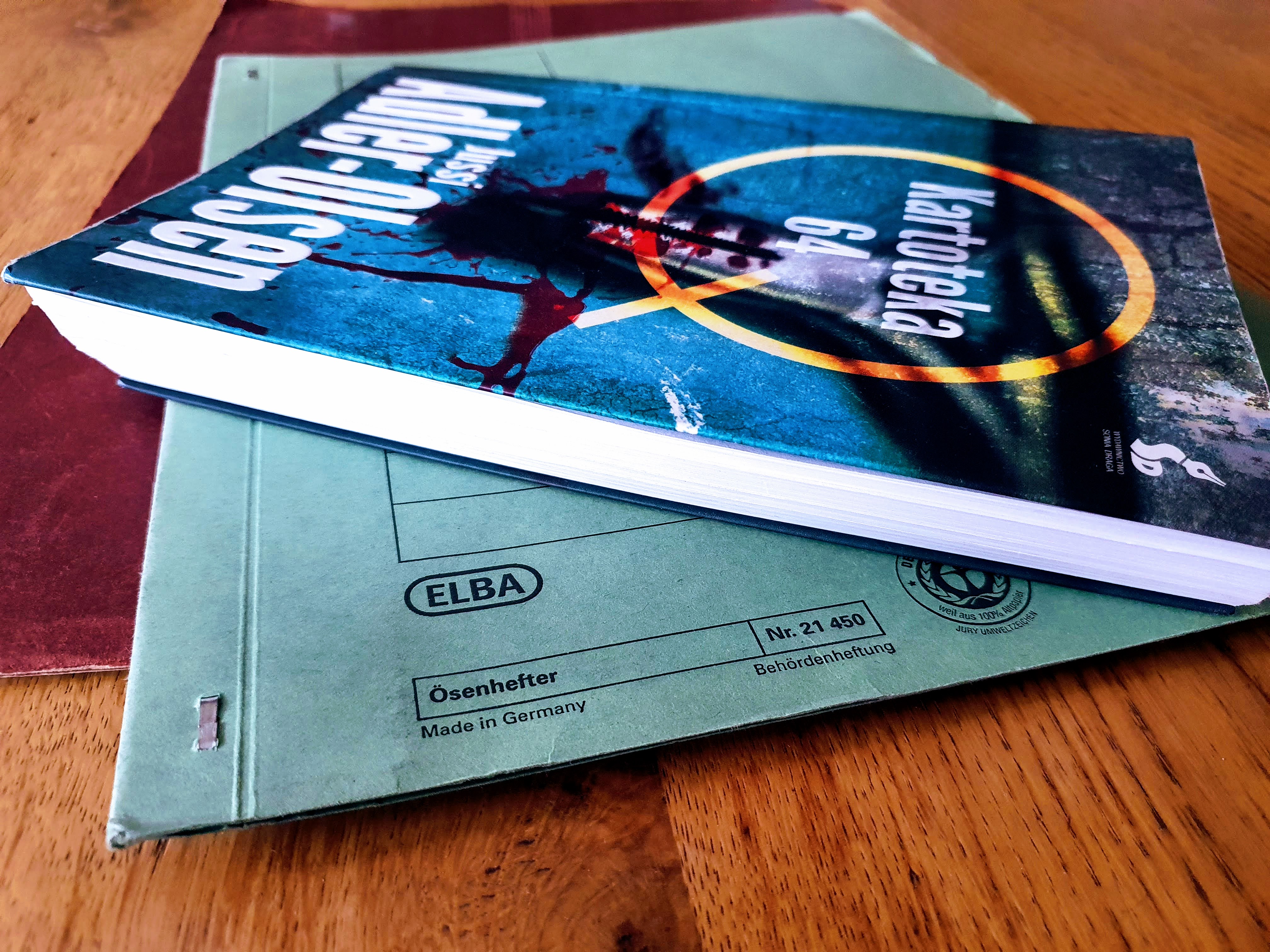
Jussi Adler-Olsen uchodzi za znakomitego pisarza kryminałów, a za wydawanie jego powieści wzięło się wydawnictwo Sonia Draga. Kartoteka 64 to moje pierwsze spotkanie z pisarzem, choć nie jestem przekonana, czy do końca udane.

Sprawiedliwości stanie się zadość

Akcja toczy się dwutorowo. Departament Q bada stare, nierozwiązane sprawy, a jedną z nich jest historia zaginięcia kilkorga ludzi, którzy po prostu rozpłynęli się w powietrzu. Wszystkie wątki śledztwa rowadzą do Nete Hermansen, która pochodziła z niepełnej rodziny, szybko zaszła w ciążę, poddała się aborcji, a przy okazji została zgwałcona, a później również wbrew swej woli wysterylizowana. Za gwałt odpowiadał Curt Wad, lekarz i ideologiczny przywódca partii Czyste Linie, która głosiła zasady eugeniki i czystości rasowej Duńczyków. Organizacja, na czele której stał Wad, wysterilizowała wbrew woli i wiedzy setki kobiet, zwłaszcza imigrantek lub osób postrzeganych jako rozwiązłe czy opóźnione. Nete była jedną z jego ofiar, przez wiele lat była zamknięta w zakładzie dla kobiet, gdzie przeszła piekło. Miała dużo czasu, by obmyślić zemstę i przeprowadzić ją na wszystkich tych, którzy przyczynili się do jej nieszczęścia. Tylko Wad wymknął się z jej sideł (choć jak się później okazało, nie tylko on), ale to właśnie on zaprowadzi Carla Mørcka na miejsce zbrodni sprzed ponad 20 lat. Zbrodniarze, ofiary i inspektor spotkają się przy jednym stole...

Inspektor gamoń

Carl Mørck robi trochę wrażenie gamonia z wieczną biegunką, za którego robotę odwala jego zespół. Fakt, że zbiry Curta Wada nie mogą go dopaść, mimo wielu prób, wydaje mi się trudny do uwierzenia. Również spotkanie przy stole po latach, gdy wszyscy złoczyńcy giną, jest jakby zbyt wygodne... Być może zarówno Agata Christie, jak i mój ulubieniec Jørn Lier Horst przyzwyczaili mnie do wiarygodnej, wnikliwej postaci prowadzącego detektywa, któremu chce się zaufać i daje się prowadzić. Osoby kompetentnej, godnej zaufania – specjalisty w swoim fachu. Mørck jest trochę nieudacznikiem, poszkodowanym przez życie i mało skupionym na swoich zadaniach. Ciekawszy jest jego śledczy Assad, który kryje jakąś mroczną tajemnicę związaną z jego przeszłością. Jemu bym zaufała, komisarzowi prowadzącemu śledztwo już nie.

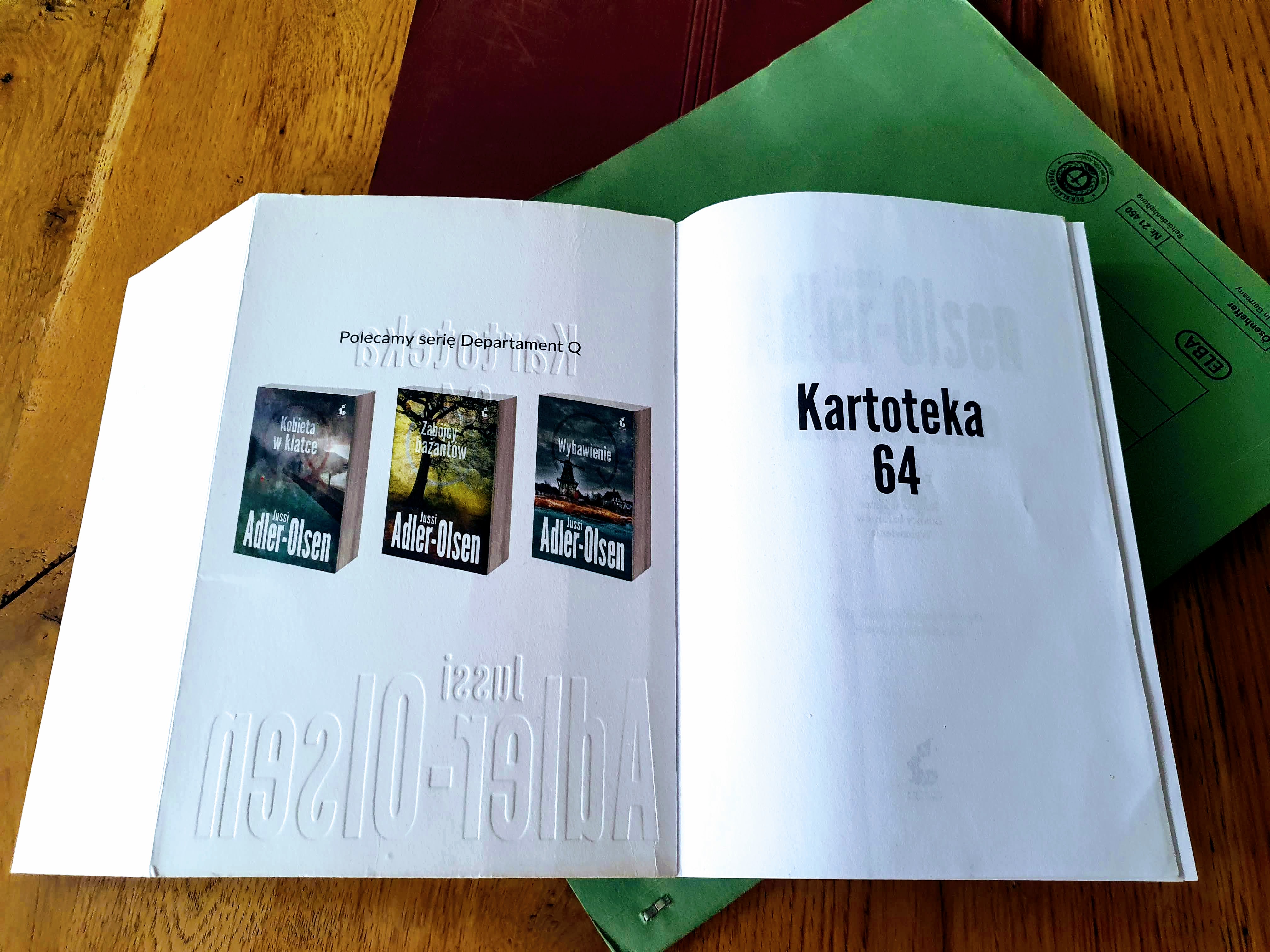
Wrażenia po lekturze? Średnie. Mimo ważnego i szokującego tematu eugeniki i obnażania go w krajach zachodnich, książka szła w stronę taniej sensacji dla mnie. Brakowało ciepła głównych postaci - zarówno komisarz, jak i jego ekipa, byli tylko zarysowani, a nie nakreśleni w całości. Nie czuję się zachęcona do sięgania do kolejnych powieści Adler-Olsena. Dodatkowo zniechęca mnie fakt, że książka o cenie okładkowej 39 PLN całkowicie mi się rozpadła – rozkleiła i wypadają z niej strony. Czytały ją w sumie może 3 osoby, raczej szanujące książki. Taka jakość wydania bardzo rozczarowuje.


Moja ocena: 4/10.


Jussi Adler-Olsen, Kartoteka 64

Wydawnictwo Sonia Draga

Katowice 2018

Tłumaczenie: Joanna Cymbrywkiewicz

Liczba stron: 436

ISBN: 978-83-8110-240-7

Gatunek: kryminał


Jussi Adler-Olsen is considered to be an excellent crime fiction writer, and the publishing house Sonia Draga has started publishing his novels. Guilt is my first meeting with the author, although I am not sure it is a successful one.

Justice will be done

The plot is conducted simultaneously in the past and in the present, with two different narrators. Department Q led by chief inspector Carl Mørck investigates old, unresolved cases (present), one of which is the story of the disappearance of several people who simply dissolved into thin air (past). All the threads of the investigation lead to Nete Hermansen, who came from an incomplete family, quickly became pregnant, had an abortion, and was raped in the process, and later also sterilized against her will. Curt Wad, the doctor and ideological leader of the Clean Lines party, which preached the principles of eugenics and the racial purity of the Danes, was responsible for the rape. The organization led by Wad has sterilized hundreds of women against their will and knowledge, especially immigrants or those perceived as promiscuous or retarded. Nete ​​was one of gynecologist’s victims, she was locked up in a women's facility for many years, where she went through hell. She had plenty of time to plan her revenge and apply it to all those who had contributed to her misfortune. Only Wad escaped from her traps (though, as it later turned out, not only him), but it is he who will lead Carl Mørck to the crime scene from over 20 years ago. Criminals, victims and the inspector will meet at the same table ...

Inspector with constant diarrhea

Carl Mørck makes an impression of incompetent investigator with constant diarrhea and his job done by his team. The fact that Curt Wad's thugs can't get him, despite their many attempts, seems hard to believe. Also meeting at the table after years, when all the villains are killed, is sort of too easy ... Perhaps both Agatha Christie and my favorite Jørn Lier Horst have accustomed me to a credible, insightful figure of a leading detective whom I want to trust and let myself be guided by. A competent, trustworthy person - a specialist in his profession. Mørck is a bit of a loser, getting his share from life and not very focused on his tasks. His investigator Assad is more interesting, as he hides a dark secret about his past. I would trust him, not the commissioner conducting the investigation.

Impressions after reading? So so. Despite the important and shocking topic of eugenics and its exposure in Western countries, the book was a cheap sensation for me. The warmth of the main characters was lacking - both the commissioner and his team were only outlined, not portrayed in their entirety. I don't feel encouraged to reach for more Adler-Olsen’s novels. In addition, I am discouraged by the fact that the book with the cover price of PLN 39 has completely fallen apart - the pages started falling off. A total of maybe 3 people read it, and those were readers respecting books. This release quality is very disappointing.


My rating: 4/10.


Author: Jussi Adler-Olsen

Title: Guilt

Publishing House: Sonia Draga

Katowice 2018

Translation: Joanna Cymbrywkiewicz

Number of pages: 436

ISBN: 978-83-8110-240-7

Genre: crime story