Pokazywanie postów oznaczonych etykietą Russian literature. Pokaż wszystkie posty

poniedziałek, 29 lipca 2024

Fiodor Dostojewski, Wieczny mąż (Вечный муж)

Niełatwa lektura

Zaczęłam ten rok od lektury krótkiej, ale zdecydowanie niełatwej – Wiecznego męża Fiodora Dostojewskiego. Jak wiadomo, rosyjski prozaik imał się tematów o stosownej ciężkości, i w tym względzie powieść nie zawodzi – mamy tu temat zdrady i zemsty, demony alkoholizmu, śmierć. Być może dlatego do recenzji zasiadam dopiero teraz, pełna determinacji.

Zarys fabuły

Aleksy Iwanowicz Wielczaninow, lat 38, hipochondryk, utknął w lipcu w Petersburgu, załatwiając swoje ziemiańskie sprawy. Nie daje mu spokoju mężczyzna, którego wciąż spotyka na ulicach miasta, który okazuje się być jego dawnym znajomym, Pawłem Pawłowiczem Trusockim. W końcu Trusocki składa w środku nocy wizytę Wielczaninowowi, który w ten sposób dowiaduje się o śmierci żony dawnego przyjaciela, Natalii Wasiliewny. Kobieta dziewięć lat wcześniej była jego kochanką, a on był nią tak zauroczony, że proponował jej zerwanie z mężem i wspólne życie, jednak ona odmówiła, a potem nakłoniła go do wyjazdu. Jednak wraz z przybyciem zdradzanego męża Wielczaninow dowiaduje się, że został ojcem, i poznaje swoją córkę, Lizę. Widząc stan dziecka, proponuje wywiezienie go do zaprzyjaźnionej rodziny Pogorelcewów, gdzie w pięknym majątku wychowuje się siódemka ich dzieci. Jednak dziewczynka tak bardzo przeżywa rozłąkę z ojcem, że zaczyna ciężko chorować i umiera, a Wielczaninow jest świadkiem śmierci dziewczynki. Trusocki nie uczestniczył w pogrzebie dziewczynki, ale wszystko wskazuje na to, że miał pełną świadomość, że nie była ona jego biologicznym dzieckiem. Musiała być to dla niego bolesna rana, bo cieszył się  narodzin maleństwa i nazywał je błogosławieństwem.

Wyrównanie rachunków

Panów łączy jeszcze jeden epizod – Trusocki prosi Wielczaninowa, żeby pojechał z nim do jego nowej narzeczonej, Nadieżdy Fiedosiejewnej, ale okazuje się, że dziewczyna nie odwzajemnia uczucia dojrzałego mężczyzny, którego w rodzinie nikt zdaje się nie lubić. Za to Wielczaninow zostaje bardzo przychylnie przyjęty, o co Trusocki ma pretensje. Po wyjeździe z majątku Wielczaninow zaniemógł, a jego towarzysz się nim opiekuje, a w nocy usiłuje go zabić, co wyrównuje rachunki między mężczyznami. Chociaż wydaje się, że sprawa między nimi jest załatwiona, podczas przypadkowego spotkania lata później Trusocki nie podaje ręki Wielczninowi, za Lisę właśnie.

Wiwisekcja upokorzenia

Dostojewski lubi robić wiwisekcję duszy – Wielczaninow wciąż zastanawia się, czy jego przyjaciel sprzed lat wie o zdradzie i jakie będą jej konsekwencje.  Trusocki zaś walczy z własnym tchórzostwem i wykorzystuje przypadek do zemsty. Relacje między mężczyznami nie są i nigdy nie będą równe, bo zdradzany mąż nie był w stanie pogodzić się z faktem, że ukochana i wyczekiwana córka tak naprawdę nie była jego. Z drugiej strony, Wielczaninow patrzy na jego upadek z pewną pogardą:

Jego zdaniem, przeznaczenie takich mężów polega na tym, aby być, jeśli można się tak wyrazić, „wiecznymi mężami” albo lepiej, być w życiu tylko mężami, i więcej niczym. „Taki człowiek rodzi się i rozwija jedynie po to, ażeby się ożenić, a ożeniwszy się – natychmiast musi stać się tylko dodatkiem do swojej żony […]” s. 37

Trusocki, który cenił Wielczanina jako mężczyznę pełnego ogłady i nie podejrzewał, że przyjaciel przyprawia mu rogi, słuchał go, podziwiał, zapamiętywał jego słowa. Dopiero dowody kolejnych zdrad żony i znaleziony list do kochanka otworzyły mu oczy i skalę jego upokorzenia.

Duszna perełka

Powieść Dostojewskiego wymaga czasu do przetrawienia i zrozumienia (jak widać). Nie jest to lektura łatwa i mimo swoich niewielkich rozmiarów (155 stron) potrzebuje czasu. Atmosfera powieści jest duszna, przytłaczająca, wiele wydarzeń dzieje się w nocy, a bohaterowie często są pod wpływem alkoholu. Co ciekawe, utwór tłumaczył Julian Tuwim, a copyright należy do Fundacji im. Juliana Tuwima i Ireny Tuwim. Jeśli chodzi o styl, książka nie jest szczególnie przystępna w odbiorze i dopiero niemal jej ponowna lektura pomogła mi zrozumieć ją trochę lepiej. Zdecydowanie warto, choć trzeba nastawić się na przygnębiające doznania i prawdziwy wgląd w udręczoną duszę zdradzanego „wiecznego męża”.

Moja ocena: 8/10.


Fiodor Dostojewski, Wieczny mąż
Wydawnictwo MG, Kraków 2018
Tłumczenie: Julian Tuwim
Liczba stron: 160
ISBN: 978-83-7779-504-0

**********************************************************************************

Not an easy read

I started this year with a short but definitely not an easy read – The Eternal Husband by Fyodor Dostoyevsky. As we know, the Russian prose writer tackled topics of appropriate gravity, and in this respect the novel does not disappoint – here we have the theme of betrayal and revenge, the demons of alcoholism, death of a child. Maybe that is why I am only sitting down to review it now, full of determination.

Plot outline

Aleksy Ivanovich Velchaninov, 38, a hypochondriac, is stuck in St. Petersburg in July, dealing with his legal affairs. He is haunted by a man he keeps meeting on the streets of the city, who turns out to be his old acquaintance, Pavel Pavlovich Trusotsky. Finally, Trusotsky pays a visit to Velchaninov in the middle of the night, and in this way the latter learns of the death of his friend's wife, Natalia Vasilievna. The woman had been his lover nine years earlier, and he was so infatuated with her that he even proposed that she break up with her husband and lives with him, but she refused, and then persuaded him to leave. However, with the arrival of the betrayed husband, Velczaninov also learns that he has become a father and meets his daughter, Liza. Seeing the child's condition, he suggests taking her to a friendly Pogorelcew family, where their seven children are raised on a beautiful estate. However, the girl takes the separation from her father so hard that she becomes seriously ill and dies, and Velczaninov witnesses her death. Trusocki did not attend the girl's funeral, but everything indicates that he was fully aware that she was not his biological child. It must have been a painful wound for him, because he was happy about the birth of the little one and called it a blessing.

Settling the score

The gentlemen are connected by another episode – Trusotsky asks Velchaninov to go with him to his new fiancée, Nadezhda Fedoseyevna, but it turns out that the girl does not reciprocate the feelings of the mature man, whom no one in the family seems to like. In return, Velchaninov is very well received, which Trusotsky is angry about. After leaving the estate, Velchaninov falls ill, and his companion takes care of him, and at night tries to kill him, which settles the score between the men. Although it seems that the matter between them is forgotten, during a chance meeting years later, Trusotsky does not shake Velchaninov's hand, because of Lisa.

Vivisection of humiliation

Dostoyevsky likes to perform vivisection of the soul – Velchaninov still wonders whether his friend from years ago knows about the betrayal and what the consequences will be. Trusotsky, on the other hand, struggles with his own cowardice and uses chance to take revenge. Relations between men are not and will never be equal, because the betrayed husband was unable to come to terms with the fact that his beloved and long-awaited daughter was not really his. On the other hand, Velchaninov looks at his downfall with some contempt:

In his opinion, the essence of such husbands consisted in being, so to speak, “eternal husbands” or, to put it more precisely, to be in life only husbands and nothing more. “Such a man is born and develops solely in order to get married, and having gotten married, to immediately turn into an appendage to his wife,” […] p. 37

Trusotsky, who valued Velchaninov as a man of refinement and did not suspect that his friend was cuckolding him, listened to him, admired him, and remembered his words. Only the evidence of his wife's subsequent betrayals and the found letter to his lover opened his eyes and the scale of his humiliation.

Tiny and stuffy masterpiece

Dostoyevsky's novel requires time to digest and understand (as you can see). It is not an easy read and despite its small size (155 pages) it requires time. The atmosphere of the novel is stifling, oppressive, many events take place at night, and the characters are often under the influence of alcohol. Interestingly, the work was translated by Julian Tuwim, and the copyright belongs to the Julian Tuwim and Irena Tuwim Foundation. In terms of style, the book is not particularly accessible and only after almost re-reading have I understood it a little better. It is definitely worth it, although you have to be prepared for depressing experiences and a true insight into the tormented soul of the betrayed "eternal husband".

My rating: 8/10.

Author: Fyodor Dostoyevsky
Title: The Eternal Husband
Publishing House: MG, Kraków 2018
Translation: Julian Tuwim
Number of pages: 160
ISBN: 978-83-7779-504-0


niedziela, 9 kwietnia 2023

Lew Tołstoj, Wojna i pokój (Война и мир)

Klasyka też potrafi się brzydko starzeć

Blisko trzy tygodnie zabrało mi przebrnięcie przez 1600-stronicowe dzieło Lwa Tołstoja Wojna i pokój. Monumentalna powieść powstawała w latach 1863-69 i opisuje losy kilku rodzin rosyjskich podczas wojen napoleońskich, opisanych z dużą dokładnością. Planowałam zaznajomienie się z tym utworem już od dawna, a do realizacji zamiaru skłonilo mnie piękne wydanie Świata Książki z 2018 roku w tłumaczeniu Andrzeja Stawara.

Jakim cudem przeczytałam powieść historyczną Tołstoja – nie wiem. Chyba cały czas łudziłam się, że fabuła mnie wciągnie, a bohaterowie nabiorą cech indywidualnych. Fragmenty dotyczące inwazji Napoleona na Rosję, a potem odwrotu, były dla mnie zbyt szczegółowe i rozwlekłe, przebiegi bitew, ruchy armii – po prostu nużące. Wciągające były połączone ze sobą losy arystokratycznych rodzin – Rostowów (ojciec hrabia Ilia, matka hrabina Natasza, oraz trójka ich dzieci – Mikołaj, Natasza i Pietia), Bołkońskich (ojciec książę Mikołaj, córka Maria, syn Andrzej i jego synek Mikołaj), Kuraginów (książę Wasilij i księżna Anna, synowie Hipolit i Anatol, córka Helena) oraz Bezuchowów (hrabia Kirył, jego nieślubny syn Piotr). Sporo miejsca zajmuje Napoleon Bonaparte oraz cesarz rosyjski Aleksander I Pawłowicz. Jednak przebrnięcie przez warstwy historyczne do tematów rodzinnych powodowały duże opóźnienia w czytaniu, bo fragmenty dotyczące wojen mają niesamowitą moc usypiającą.

Tak wielu ich, a jakby nikogo nie było

Dość trudno połapać się w bohaterach powieści, zwłaszcza, że sporo osób nosi to samo imię, albo imiona pojawiają się w wersji francuskiej, lub w zrobnieniach. Dlatego w rozeznaniu się, kto jest kim, polecam artykuł na Wikipedii poświęcony powieści Tołstoja. Co prawda są w nim spojlery (kto ginie, kto się z kim zwiąże), ale znacząco pomaga zorientować się, o kim własnie pisze rosyjski twórca. O ile Anna Karenina, opublikowana w 1878 roku, a więc 9 lat po Wojnie i pokoju, zachwyca dokładnym przedstawieniem Anny, jej męża Aleksieja i kochanka Aleksego Wrońskiego, przemiany, które zaszły w nieszczęśliwej bohaterce, jej walkę i upadek, wcześniejsze dzieło nie ma tak dopracowanych charakterów. Część bohaterów pojawia się wyłącznie epizodycznie, np. Kuraginowie. Z dzisiejszej perspektywy część wydarzeń jest po prostu nieprawdopodobna (szalone rozkochanie Nataszy w Anatolu Kuraginie i jej hańbiąca próba ucieczki, zawieranie związków małżeńskich po trzech spotkaniach i wymienieniu zaledwie kilku zdań), a część bohaterów jest potraktowana naprawdę po macoszemu – choćby Helena, pierwsza żona Piotra Bezuchowa, w pierwszej części stanowiąca naprawdę istotną postać, w czwartym tomie umiera, a czytelnik niemal przypadkiem dowiaduje się o jej zgonie, bez żadnych szczegółów.

Dodatkowo zaskakuje bezmyślność i styl życia przedsawionej wyższej sfery. Przepuszczanie majątków, sprzedawanie ich, by bawić się na balach i prowadzić wystawny styl życia – zaskakuje i irytuje. Hrabia Ilia Rostow marnotrawi swój ogromny majątek, pozostawiając rodzinę w ubóstwie. Dopiero drugie pokolenie, Maria, Natasza, Piotr i Mikołaj, będą w stanie nauczyć się, jak oszczędnie gospodarować i pomnażać majątek.

Przedstawienie kobiet

Bezbrzeżnie irytowało mnie przedstawienie postaci kobiecych. Są one zazwyczaj wyzute z własnej woli, zdane na otaczających je mężczyzn lub rodzinę, pozbawione w dużej mierze innych zainteresowań niż zdobycie męża i założenie rodziny. Kiedy Nataszy Rostow w końcu się to udaje, Tołstoj pisze o niej tak: „W twarzy jej nie było, jak dawniej, tego nieustannie płonącego ognia ożywienia, stanowiącego jej urok. Teraz często widoczne były tylko twarz i ciało, a duszy nie można się było dopatrzyć. Widać było tylko silną, piękną i płodną samicę” (t. II, s. 657). Jak ocenia Nataszę sama matka: „wszystkie porywy Nataszy wypływały tylko z potrzeby posiadania rodziny, posiadania męża” (t. II, s. 658). Chociaż małżeństwa przedstawione w książce są zazwyczaj zgodne, to zastanawia fakt, że w jedynym małżeństwie, które nie ma dzieci – u Bezuchowów, Helena, która nie chciała zostać matką, a co gorsza - chciała rozwodu, by móc wyjść ponownie za mąż, umiera. Również przedstawienie hrabiny Rostow po śmierci jej męża i jednego z synów zasmuca – jej życie traci sens, a wszyscy traktują ją jak balast, przy którym trzeba uważać co się mówi, i przyjmować jej zwyczajowe złe humory i popłakiwania. Hrabina jest całkowicie zbędna, a rodzina opiekuje się nią trochę z obowiązku. Kobieta żyje przeszłością i nie wydaje angażować w obecną sytuację swojej familii. Dodatkowo Sonia, przygarnięta przez Rostowów i wychowywana jak najukochańsza córka, początkowo zaręczona z najstarszym synem Mikołajem, nie wychodzi za mąż i nie zakłada własnej rodziny, tkwiąc przy swoich dobroczyńcach. W rozmowach Marii i Nataszy określana jest mianem „kwiatu bezpłodnego”. „Niekiedy mi jej żal, a niekiedy myślę, że ona nie odczuwa tego tak, jak my byśmy odczuwały,” mówi o niej Natasza (t. II, s. 651), i nie można oprzeć się wrażeniu, że jest w tym nutka niechęci i wyższości.

Przemiany bohaterów

Ciężar fabuły spoczywa w durzej mierze na mężczyznach, i to oni przechodzą w powieści największe, najbardziej znaczące przemiany. Piotr Bezuchow zamienia się z bezmyślego bawidamka szukającego poklasku w towarzystwie w przykładnego męża i ojca, a w przemianie tej pomaga mu spotkany w niewoli żołnierz rosyjski Platon Karatajew. Pierre dzięki niemu odkrywa na powrót sens i umiłowanie życia, a Karatajew, jest dla niego „niedoścignionym, krągłym i wiecznym ucieleśnieniem ducha prostoty i prawdy” (t. II, s. 445). Co ciekawe jednak, Bezuchow odwraca się od swojego mentora podczas jenieckiej wędrówki, i żołnierz zostaje zastrzelony przez żołnierzy francuskich jako niezdatny do dalszej drogi. To właśnie Pierre Bezuchow, z początku nieznaczący nieślubny syn, uznany potem przez swojego ojca i dziedziczący po nim ogromną fortunę, jest głównym bohaterem książek.

Powieść zawiera również piękną scenę śmierci, kiedy to w wyniku odniesionej na polu bitwy poważnej rany po długiej i wycieńczającej walce o życie umiera hrabia Andrzej Bołkoński. Dojrzały mężczyzna odchodzi pogodzony ze swoim losem i dawną narzeczoną, Nataszą, ale przede wszystkim w przekonaniu, że połączy się z Bogiem i jego trudna i bezsensowna ziemska tułaczka w końcu się kończy, a śmierć jest dla niego przebudzeniem do nowego życia.

Nuda z przebłyskami fabularnego geniuszu

Powiedziałabym, że powieść Tołstoja jest bardzo nierówna. Są momenty, kiedy zwrot fabuły mocno zaskakuje (np. fałszywe okazują się plotki o śmierci księcia Andrzeja w wyniku pierwszej rany), a losy rodzin naprawdę mocno angażują czytelnika. Jednak wielu dobrych chwytów fabularnych, starannego opisu pochodu obu armii i stoczonych bitew, powieść była nużąca, bohaterów zbyt wielu, a różnice między nimi stosunkowo małe. Nie żałuję, że przeczytałam powieść, ale z pewnością nie będę do niej wracać ani nie chciałabym mieć jej na swojej półce. Klasyka naprawdę potrafi brzydko się zestarzeć.

Muszę też zwrócić na uwagę na kwestię wydania. Dwa pierwsze tomy, połączone w jeden, czytałam opublikowane przez Świat Książki w 2018 roku. Powieść ma nieco większy format, ale jest wydrukowana na lekkim papierze, dobrze się otwiera, a dzięki dość dużym literom dobrze się czyta. Wydanie PIWu z 1979 roku jest jednak poręczniejsze (tak czytałam tomy III i IV, połączone w jeden). Oba wydania mają poważny mankament – ilość francuskiego tekstu, tłumaczonego w przypisach. Wiadomo, że język francuski był ówczesnym językiem arystokracji i wyższych sfer, jednak konieczność ciągłego skakania, nierzadko co linijkę, był naprawdę sporym wyzwaniem.

Moja ocena: 6/10


Lew Tołstoj, Wojna i pokój

Tom I i II, Wydawnictwo Świat Książki, Warszawa 2018
Tłumaczenie: Andrzej Stawar
Liczba stron: 812
ISBN: 978-83-8116-165-7

Tom III i IV, Państwowy Instytut Wydawniczy, Warszawa 1979
Tłumaczenie: Andrzej Stawar
Liczba stron: 784
ISBN: 978-83-06-00009-9

*********************************************************************

Classics can get old too

It took me nearly three weeks to get through Leo Tolstoy's 1,600-page work War and Peace. The monumental novel was written in the years 1863-69 and describes the fate of several Russian families during the Napoleonic Wars, depicted with great accuracy. I had been planning to familiarize myself with this work for a long time, and the beautiful edition of Świat Książki from 2018, translated by Andrzej Stawar, prompted me to implement my intention.

How I read Tolstoy's historical novel remains a mystery to me. I guess all the time I was deluding myself that the plot would draw me in and the characters would gain individual features. The parts about Napoleon's invasion of Russia and then his retreat were too detailed and long-winded for me, the sequences of the battles, the movements of the armies - just tedious. The intertwined fates of aristocratic families were captivating – the Rostovs (father Count Ilya, mother Countess Natalya, and their three children – Nikolai, Natásha and Petya), the Bolkonskys (father Prince Nikolai, daughter Maria, son Andrei and his son Nikolai), the Kuragins (father Prince Vasily and Princess Anna, sons Ippolit and Anatole, daughter Elena) and the Bezukhovs (Count Kirill, his illegitimate son Pyotr). Much space is occupied by Napoleon Bonaparte and the Russian Emperor Alexander I Pavlovich. However, going through the historical layers to family topics caused long delays in reading, because fragments about wars have an amazing power to put you to sleep.

So many of them, and as if there were none

It is quite difficult to follow the characters in the novel, especially since many of them have the same first name, or the names appear in the French version or in diminutives. Therefore, in discerning who is who, I recommend the Wikipedia article on Tolstoy's novel. It is true that there are spoilers in it (who dies, who gets involved with whom), but it significantly helps to find out who the Russian artist is writing about. While Anna Karenina, published in 1878, 9 years after War and Peace, impresses with its accurate depiction of Anna, her husband Alexei and lover Alexei Vronsky, the transformations that took place in the unhappy heroine, her struggle and fall, the earlier work is not so refined characters. Some of the characters appear only episodically, e.g. the Kuragins. From today's perspective, some of the events are simply unbelievable (Natasha's crazy love for Anatol Kuragin and her shameful attempt to escape, marriages arranged after two or three random meetings), and some of the characters are treated really neglectfully - for example, Helena, Pierre Bezukhov’s first wife, a really important character in the first part, dies in the fourth volume, and the reader learns about her death almost by accident, without any details.

In addition, the thoughtlessness and lifestyle of the upper class depicted is surprising. Spending their fortunes, selling them to enjoy balls and lead a lavish lifestyle - surprises and irritates. Count Ilya Rostov wastes his vast fortune, leaving his family in poverty. Only the second generation, Maria, Natásha, Pyotr and Nikolai, will be able to learn how to manage economically and multiply their wealth.

A representation of women

The portrayal of female characters annoyed me to no end. They are usually devoid of will, reliant on the men around them or the family, largely devoid of interests other than getting a husband and starting a family. When Natalya Rostov finally succeeds, Tolstoy writes about her: "In her face there was none of the ever-glowing animation that had formerly burned there and constituted its charm. Now her face and body were often all that one saw, and her soul was not visible at all. All that struck the eye was a strong, handsome, and fertile woman” (vol. II, p. 657). As Natásha's mother herself assesses: "all Natásha’s outbursts had been due to her need of children and a husband " (vol. II, p. 658). Although the marriages depicted in the book are usually compatible, it is puzzling that in the only marriage with no children - the Bezukhov family, Elena, who did not want to become a mother, and what was worse - wanted a divorce so that she could remarry, dies. The depiction of Countess Rostov after the death of her husband and one of her sons is also sad - her life loses its meaning, and everyone treats her like ballast, where you have to be careful what you say and accept her usual bad moods and crying. The Countess is completely redundant, and the family takes care of her somewhat out of duty. The woman lives in the past and does not seem to involve her family in the present situation. In addition, Sonya, orphaned cousin taken in by the Rostovs and brought up as the most beloved daughter, initially engaged to their eldest son Nicolai, does not marry and does not start her own family, sticking to her benefactors. In conversations between Maria and Natásha, she is referred to as a "sterile flower". "Sometimes I am sorry for her, and sometimes I think she doesn’t feel it as you or I would," Natasha says of her (vol. II, p. 651), and one cannot help but feel that there is a note of resentment and superiority in this.

Transformations of heroes

The burden of the plot rests largely on men, and it is they who undergo the greatest, most significant changes in the novel. Pyotr Bezukhov changes from a thoughtless play-lady looking for applause in company into an exemplary husband and father, and in this transformation he is helped by a Russian soldier he met in captivity, Platon Karataev. Thanks to him, Pierre rediscovers the meaning and love of life, and Karataev is for him "an unsurpassed, round and eternal embodiment of the spirit of simplicity and truth" (vol. II, p. 445). Interestingly, however, Bezukhov turns his back on his mentor during a journey, and his companion is shot by the French soldiers as unfit for further travel. It is Pierre Bezukhov, at first an insignificant illegitimate son, later recognized by his father and inheriting a huge fortune from him, who is the main character of the books.

The novel also contains a beautiful death scene, when as a result of a serious wound sustained on the battlefield, after a long and exhausting fight for life, Count Andrei Bolkonsky dies. The mature man leaves reconciled with his fate and his former fiancée, Natásha, but above all with the conviction that he will reunite with God and that his difficult and senseless wandering on earth will finally end, and death is an awakening to a new life for him.

Boredom with flashes of plot genius

I would say that Tolstoy's novel is very uneven. There are moments when the twist of the plot is very surprising (e.g. rumors about the death of Prince Andrei as a result of the first wound turn out to be false), and the fate of the families really engages the reader. However, despite many good plot tricks, a careful description of the march of both armies and the battles fought, the novel was tedious, the heroes were too many, and the differences between them were relatively small. I don't regret having read the novel, but I certainly won't be returning to it, nor would I want to have it on my shelf. Classics can really age badly.

I also have to pay attention to the issue of release. I read the first two volumes, combined into one, published by Świat Książki in 2018. The novel has a slightly larger format, but it is printed on light paper, opens well, and thanks to the rather large letters, it is easy to read. However, the 1979 edition of PIW is more handy (this is how I read volumes III and IV, combined into one). Both editions have a serious shortcoming - the amount of French text translated in footnotes. It is known that French was the language of the aristocracy and high society at that time, but the necessity of constantly jumping, often every line, was a really big challenge.

My rating: 6/10


Author: Leo Tolstoy
Title: War and Peace
 
Volumes I and II, Publishing House: Świat Książki, Warsaw 2018
Translation: Andrzej Stawar
Number of pages: 812
ISBN: 978-83-8116-165-7

Volume III and IV, Publishing House: Państwowy Instytut Wydawniczy, Warsaw 1979
Translation: Andrzej Stawar
Number of pages: 784
ISBN: 978-83-06-00009-9

niedziela, 21 sierpnia 2022

Lew Tołstoj, Anna Karenina (Анна Каренина)

Wszystkie szczęśliwe rodziny są do siebie podobne, każda nieszczęśliwa rodzina jest nieszczęśliwa na swój sposób

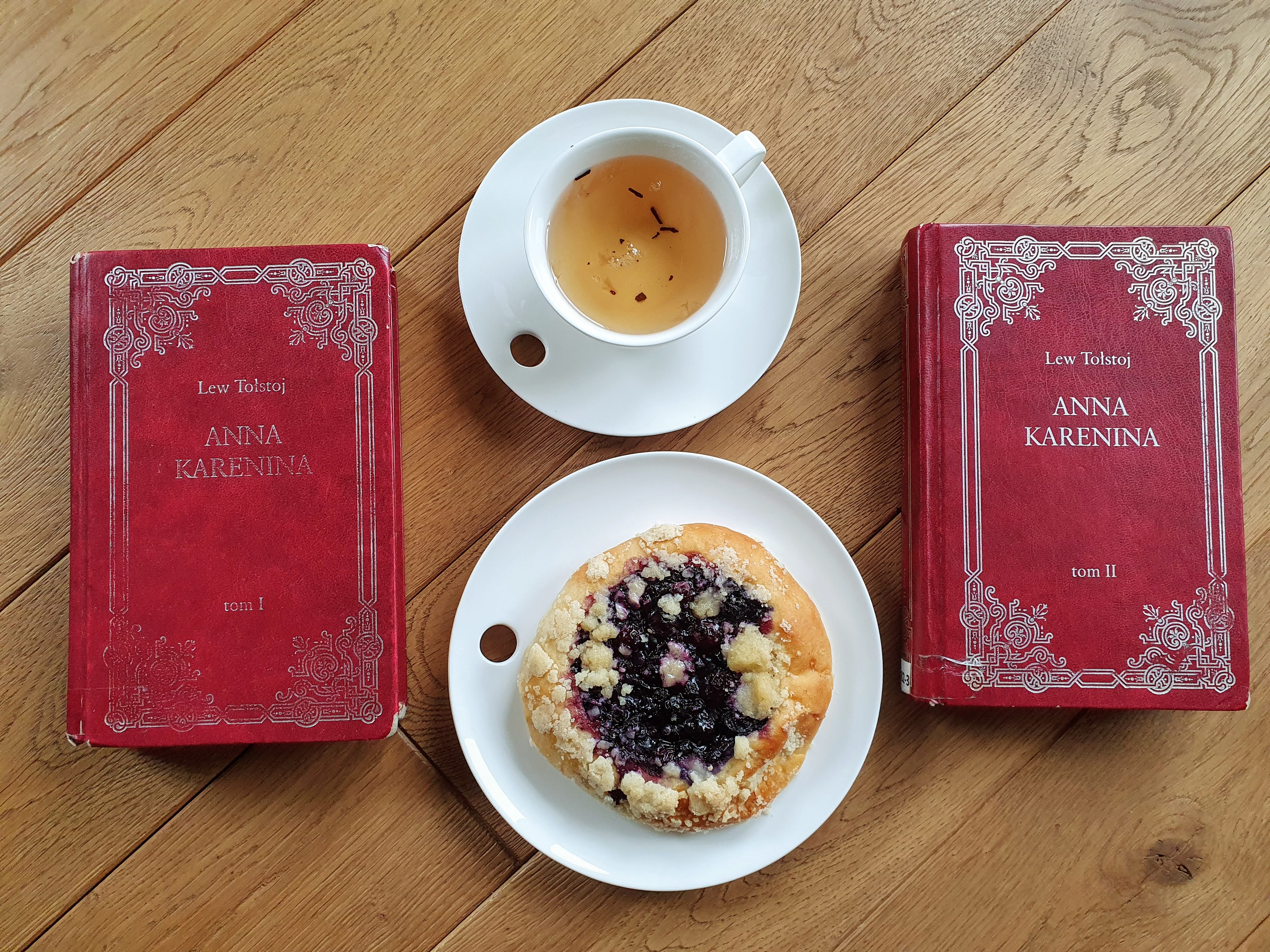
Po wielu latach przerwy wróciłam do Anny Kareniny, przez wzmiankę o romansie tytułowej bohaterki z Wrońskim w książce Sally Rooney Gdzie jesteś, piękny świecie. Byłam ciekawa tego powrotu, w znakomitej większości czytam obecnie prozę współczesną, dobrze jest więc wrócić raz na jakiś czas do absolutnej klasyki i zobaczyć, dzięki jakim technikom i zabiegom się tą klasyką stała.

Dwutomowe, opasłe dzieło rosyjskiego pisarza Lwa Tołstoja powstawało w latach 1873-78, a publikowane było po raz pierwszy w periodyku Kurier Rosyjski w latach 1875-77. Po raz pierwszy wyszło w formie książkowej w 1878 roku. Anna Karenina podzielona jest na 8 części, a jej losy opisane na przeszło tysiącu stron (w zależności od wydania, oczywiście). Ponieważ od pewnego czasu posiłkuję się biblioteką, rozbawił mnie fakt, że zdecydowanie mniej osób dociera do drugiego tomu – pierwszy był zdecydowanie bardziej sfatygowany. Nieszczęśnicy, nie wiedzą, co tracą!

Bohaterowie

Nie dziwota, że na tak wielu stronicach znalazła się cała plejada bohaterów:

  • ·       Tytułowa Anna Arkadiewna Karenina – żona Aleksego Aleksandrowicza Karenina, z którym ma ośmioletniego synka Sieriożę; znacznie młodsza od swojego męża, ma ognisty temperament i jest piękną kobietą o ciemnych oczach i ciemnych włosach; ma znakomite wyczucie smaku i swojej urody i wie, jak oczarowywać swoich rozmówców. Do czasu poznania Aleksego Wrońskiego jej temperament pozostaje w ukryciu, ale wraz z nawiązanym romansem kobieta budzi się do życia i podejmuje ryzykowną decyzję odejścia od męża, przez co zostaje potępiona przez opinię publiczną;
  • ·       Aleksiej Aleksandrowicz Karenin – starszy już urzędnik w jednym z państwowych urzędów w Petersburgu, chłodny, powściągliwy mężczyzna o skłonnościach do filozofowania; surowy dla swojego syna i żony. Kiedy dowiaduje się o romansie Anny, początkowo zgadza się na udzielenie rozwodu, jednak z czasem stwierdza, że może to mieć zły wpływ na jego reputację, i odmawia żonie zarówno rozwodu, jak i widzenia się z ukochanym synkiem;
  • ·       Hrabia Aleksiej Kiryłłowicz Wroński – młody oficer z zamożnego domu, dusza towarzystwa i utalentowany człowiek o dużej liczbie pasji – maluje, jeździ konno, gra w karty, zna się na architekturze, działa dobroczynnie. Początkowo adoruje młodą Kitty Szczerbacką, ale kiedy poznaje Annę, traci dla niej głowę i wiąże się z nią wbrew woli swojej matki. Ojciec dziecka Anny, Annie. Po śmierci kochanki wyjeżdża na wojnę do Serbii;
  • ·       Konstanty Dmytricz Lewin – ponad trzydziestoletni mężczyzna zarządzający sporym majątkiem na wsi, myśliciel, filozof. Zakochany w Kitty, dopiero przy drugich oświadczynach zostaje przyjęty;
  • ·       Katerina „Kitty” Aleksandrowna Szczerbacka – najmłodsza z trzech sióstr, ulubienica ojca; bryluje na salonach i początkowo oddaje serce Wrońskiemu, by doświadczyć odrzucenia i upokorzenia. Po wyjeździe do Sanatorium, „do wód”, gdzie przeszła etap zafascynowania idei poświęcenia się innym kosztem siebie, powraca do Rosji, by przyjąć oświadczyny Lewina. Po ślubie szczęśliwie zostaje matką syna Dymitra;
  • ·       Książę Stiepan „Stiwa” Arkadjewicz Obłoński – brat Anny, lekkoduch, bawidamek, rozrzutnik; wielokrotnie zdradza żonę i trwoni jej majątek; powszechnie lubiany bywalec kasyn i teatrów, karierowicz i urzędnik w Moskwie;
  • ·       Daria „Dolly” Aleksandrowna Obłońska, z domu Szczerbacka – 34-letnia żona Stiwy, starsza siostra Kitty, matka siedmiorga dzieci, z których pięcioro przeżyło, na rodzeniu dzieci straciła urodę, a co za tym idzie, zainteresowanie męża; przy odkryciu pierwszej zdrady pragnie porzucić niewiernego małżonka, który dostarcza jej tylko kłopotów, lecz namówiona przez Annę wybacza mu. Jej sytuacja pogarsza się ze strony na stronę ze względu na rozrzutność Obłońskiego.

Wszystkie te postaci zarysowane są dość drobiazgowo, przechodzą w książce przemianę, a czytelnik z zainteresowaniem może śledzić ich różnorodne losy. Bohaterowie są niepowtarzalni, każdy ma swój charakter i unikatowy głos i sposób myślenia, zwraca uwagę na różne aspekty sytuacji.

Przemyślana kompozycja

Zdecydowanie uwagę zwraca staranna i przemyślana kompozycja. Akcja zaczyna się, gdy rodzina Obłońskich pogrążona jest w głębokim kryzysie – Stiwa zdradził swoją żonę z guwernantką ich dzieci, a Dolly nie chce mu przebaczyć i nie odzywa się do niego. Dlatego wiarołomny małżonek ściąga na pomoc swoją siostrę, Annę Kareninę. Dzięki jej mediacjom małżeństwo godzi się, ale ta sytuacja jest niejako zapowiedzią późniejszych problemów Anny. Podobnie, kiedy Karenina po raz pierwszy widzi Wrońskiego, na dworcu, pod kołami pociągu ginie stróż kolejowy. Nie bez przyczyny Tołstoj umieszcza taką scenę w swoim dziele.

Tematyka

Powieść porusza całe spektrum tematów, choć oczywiście relacja Kareniny z Wrońskim jest osią powieści. Mamy tu jednak również obraz carskiej Rosji, postęp technologiczny związany z koleją czy oświetleniem, dokładny obraz stosunków społecznych i różnych warstw ludności. Lewin obraca się w środowisku chłopskim, które nieustannie analizuje wraz ze swoją w nim rolą, Obłoński, również posiadający wiejski majątek, tylko na wsi bywa i bryluje na salonach. Stosunki społeczne w wyższej klasie są bardzo sztywne, przedstawiciele arystokracji zwracają bardzo dużo uwagi na konwenanse i bywanie w starannie dobranych miejscach w odpowiednim towarzystwie – jest to wyznacznik ich statusu. Jakiekolwiek uchybienie tym normom może doprowadzić to wyrzucenia z towarzystwa, tak jak to się stało z Anną. Kiedy jej sytuacja stała się powszechnie znana, pani Karenin przestała być zapraszana na jakiekolwiek wydarzenia towarzyskie, a prywatne jej podejmowanie mogło oznaczać ryzyko narażenia się na niesławę i obmowę. Anna stała się trędowata w społeczeństwie, w którym niegdyś kwitła. Podobne traktowanie nie spotyka jej kochanka, hrabiego Aleksego Wrońskiego, który może nadal bywać na salonach i być podejmowany w każdym domu. Zresztą młody oficer jest tego całkowicie świadomy:

Wiedział  doskonale, że w oczach kuzynki i całej socjety śmieszność mu nie groziła. Wiedział aż nadto dobrze, że w ich oczach rola niefortunnego wielbiciela panny na wydaniu i w ogóle kobiety wolnej może wydawać się śmieszna, natomiast rola mężczyzny, który za wszelką cenę stara się skłonić do cudzołóstwa kobietę zamężną, ta rola ma w sobie jakieś imponujące piękno i nigdy nie może być przedmiotem drwin. (t. I, s. 161)

Kobiety miały inne prawa, niż ich partnerzy, a w przypadku zdrady ocena ich zachowania była diametralnie inna. Anna jest w oczach społeczeństwa kobietą upadłą, Wroński jest podziwianym zdobywcą.

Drobiazgowość obserwacji i wrażliwość pisarza

Tołstoj jest wnikliwym obserwatorem, który najdrobniejsze niemal spostrzeżenia przelewa na papier. Przygląda się bacznie swoim bohaterom, doskonale oddaje ich stan ducha. Obserwowanie rozwijającej się sytuacji Anny, od jej walki z uwodzącym ją młodym mężczyzną, przez poddanie mu się i pójście za głosem serca, poprzez utratę syna i związaną z tym rozpacz, aż po szaleństwo zazdrości o bywającego w świecie Wrońskiego – ta przemiana ukazana jest mistrzowsko. Mnie zachwycił zwłaszcza jeden detal, a mianowicie kiedy to Dolly zauważa zmianę w zachowaniu Anny:

(…) i nagle w tej chwili przyszło jej nie wiadomo czemu na myśl przymrużanie przez Annę oczu, dziwne nowe jej przyzwyczajenie… I przypomniała sobie, że Anna przymrużała oczy właśnie wówczas, gdy chodziło o intymne strony życia. „Tak jakby przymykała oczy na własne życie, by go całego nie widzieć” – pomyślała Dolly. (t. II, s. 237)

Niezwykle poruszająca jest również scena śmierci Anny, kiedy doprowadzona na skraj rozpaczy kobieta rzuca się pod pociąg:

„Gdzie ja jestem? Co ja robię? Po co?” Chciała się podnieść, uskoczyć w bok; lecz coś olbrzymiego, nieubłaganego pchnęło ją w głowę i powlokło za plecy. „Boże, przebacz mi wszystko!” – wyrzekła czując, że opór byłby daremny. Mały chłopina, mrucząc coś pod nosem, obrabiał jakieś żelastwo. I świeca, przy blasku której czytała księgę pełną niepokoju, fałszu, niedoli i zła, wybuchła jaskrawszym niż kiedykolwiek światłem, oświeciła przed nią wszystko, co dotąd leżało w cieniu, zaskwierczała i poczęła się zmierzchać, aż na wieki zgasła. (t. II, s. 410)

Tragiczna śmierć kochanki, a jednocześnie matki jego córki Anny, sprawiła, że Wroński odciął się od swojego poprzedniego życia i wraz z opłaconą przez siebie kompanią wyjechał na front wojny serbskiej.

Drugie przedstawione w książce małżeństwo, Obłońscy, również zmierza ku katastrofie. Stiwa, zajęty jedyne dogadzaniem sobie w myśl zasady carpe diem, przepuszcza majątek żony i zadłuża się po uszy. Dolly jednak, wraz z piątką ich dzieci, nie ma siły odejść od męża. Można się tylko domyślać, jakim dramatem skończy się ta sytuacja.

Jedyną parą, która odnosi sukces i ma przed sobą w miarę jasną przyszłość, są Kitty i Lewin. Mimo, że Kitty początkowo była zakochana we Wrońskim i odrzuciła pierwsze oświadczyny Lewina, a po odkryciu fascynacji Wrońskiego Anną przeszła prawdziwe załamanie nerwowe, młoda dziewczyna pozbierała się i oddała rękę Lewinowi. Bardzo podobało mi się, jak Tołstoj pokazał trudne początki małżeństwa dwojga ludzi, którzy oprócz darzenia się romantycznym uczuciem w zasadzie w ogóle się nie znają i z początku z trudem się docierają. Oddaleni od pokus wystawnego życia mieszkają w majątku Lewina na wsi, skupieni na ciężkiej pracy, zapobiegliwi. Co prawda Lewina gnębią jego wewnętrzne demony - poszukiwanie sensu życia, które w końcu młody mężczyzna odnajduje w życiu dla dobra innych, to jednak małżeństwo jest zgodne i szczęśliwe. Tak też można odczytać przesłanie książki, zgodne zresztą z prywatnym życiem pisarza. Tołstoj wierzył w siłę edukacji, działał na rzecz chłopstwa w swoim rodzinnym majątku Jasna Polana, chciał oddać chłopstwu swój majątek.

Cieszę się, że wróciłam do książki, którą przeczytałam jeszcze w liceum, a którą obecnie pamiętałam jedynie w ogólnym zarysie. Dzieło rosyjskiego pisarza zasłużenie zajmuje miejsce w kanonie światowej literatury, a wrażliwość i wiedza jej autora sprawiają, że jest to pozycja naprawdę wyjątkowa. Niektóre fragmenty książki, nadmiernie filozofujące czy skupione na przedstawieniu wielu różnych racji są dzisiaj dość nużące, ale psychologiczna głębi wielu bohaterów może do dziś stanowić wzór dobrych powieści psychologicznych. To jakby literacki inny poziom.


Moja ocena: 9/10


Lew Tołstoj, Anna Karenina
Wydawnictwo Akant, Warszawa 2003
Tłumaczenie: Kazimiera Iłłakowiczówna
Liczba stron: 542 (t.I) + 472 (t. II) = 1014
ISBN: 83-89136-68-6 (t. I), 83-89136-69-4 (t. II)


******************************************************************************

Happy families are all alike; every unhappy family is unhappy in its own way

After many years I returned to Anna Karenina, because of the mention of the title character's love affair with Wroński in Sally Rooney's book Beautiful World, Where Are You. I was curious about this return, vast majority of what I read now is contemporary prose, so it is good to come back to the absolute classics from time to time and see what techniques and treatments have guaranteed its position in the literary canon.

The two-volume, voluptuous work of the Russian writer Leo Tolstoy was written in 1873-78, and was first published in The Russian Messenger periodical in 1875-77. It was first published in the book form in 1878. Anna Karenina is divided into 8 parts, and her fate is described on over a thousand pages (depending on the edition, of course). Since I have been using the library for some time, I was amused by the fact that far fewer people reach the second volume - the first was definitely more shabby. Unfortunates, they don't know what they are missing!

Characters

It's no wonder that so many pages have a whole galaxy of heroes:

• The title Anna Arkadyevna Karenina - wife of Alexey Alexandrovich Karenin, with whom she has an eight-year-old son, Sergei; much younger than her husband, she has a fiery temper and is a beautiful woman with dark eyes and dark hair; she has an excellent sense of taste and beauty and knows how to charm her interlocutors. Until she gets to know Alexei Vronsky, her temper remains hidden, but with the ensuing romance, the woman comes to life and makes a risky decision to leave her husband, which is condemned by public opinion;

• Alexei Alexandrovich Karenin - a senior official in one of the state offices in St. Petersburg, a cool, reserved man with a tendency to philosophize; harsh on his son and wife. When he learns about Anna's affair, he initially agrees to grant her with a divorce, but over time decides that it may be bad for his reputation, and refuses his wife both a divorce and seeing her beloved son;

• Count Alexei Kirillovich Vronsky - a young officer from a wealthy home, the soul of the party and a talented man with a large number of passions – he paints, rides horses, plays cards, knows architecture, and does charity. At first he adores the young Kitty Shcherbatskaya, but when he meets Anna, he loses his head for her and binds with her against the will of his mother. The father of Anna's child, Annie. After the death of his lover, he goes to Serbia for war;

• Konstantin Dmitrievich  Levin - over thirty-year-old man who manages a large estate in the countryside, thinker, philosopher. In love with Kitty, only at the second proposal is he accepted;

• Ekaterina "Kitty" Alexandrovna Shcherbatskaya - the youngest of three sisters, her father's favorite; she shines in salons and initially gives her heart to Vronsky to experience rejection and humiliation. After leaving for the German spa, "to the waters", where she was fascinated by the idea of ​​sacrificing herself at the expense of others, she returns to Russia to accept Levin's proposal. After the wedding, she happily becomes a mother to her son Dmitri;

• Prince Stepan "Stiva" Arkadyevich Oblonsky - Anna's brother, playboy, sould of the party; he repeatedly cheats on his wife and squanders her fortune; well-liked visitor of casinos and theaters, works as a civil servant in Moscow;

• Darya "Dolly" Alexandrovna Oblonskaya, née Shcherbatskaya - 34-year-old wife of Stiva, older sister of Kitty, mother of seven children, five of whom survived, lost her beauty by having so many kids, and thus her husband's interest as well; upon discovering the first betrayal she wants to abandon her unfaithful spouse, who only gives her troubles, but, persuaded by Anna, forgives him. Her situation is deteriorating from page to page due to Oblonsky's extravagance.

All these characters are described in detail, they undergo changes in the book, and the reader can follow their various fates with interest. The heroes are unique, each has his own character and specific voice and way of thinking, paying attention to various aspects of the situation.

Well-thought composition

The careful and thoughtful composition definitely attracts attention. The action begins when the Oblonsky family is plunged into a deep crisis - Stiva cheated on his wife with their children's governess, and Dolly refuses to forgive him and does not speak to him. That is why the unfaithful spouse brings his sister Anna Karenina to help. Thanks to her mediation, the marriage is reconciled, but this situation is, in a way, an announcement of Anna's later problems. Similarly, when Karenina sees Vronsky for the first time, at the station, a railway worker is killed under the wheels of the train. It is not without reason that Tolstoy includes such a scene in his work.

Topics

The novel touches on a whole spectrum of topics, although of course Karenina's relationship with Vronsky is the axis of the novel. However, we also have a picture of tsarist Russia, technological progress related to railways and lighting, an accurate picture of social relations and different sections of the population. Levin revolves around the peasant milieu, which he constantly analyzes along with his role in it, Oblonsky, who also owns a rural estate, is only a visitor in the countryside. Social relations in the upper class are very rigid, representatives of the aristocracy pay a lot of attention to conventions and appear in carefully selected places in the exactly proper company - this is a determinant of their status. Any failure to meet these standards can lead to expulsion from society, as happened with Anna. As her situation became widely known, Ms. Karenin was no longer invited to any social events, and seeing her privately could risk exposing oneself to dishonor and slander. Anna became a leper in a society where she once thrived. A similar treatment does not happen to her lover, Count Alexei Vronsky, who can still visit salons and be taken up in every home. Anyway, the young officer is fully aware of this:

He knew perfectly well that in the eyes of his cousin and all the fun he was not threatened with ridicule. He knew all too well that in their eyes the role of an unfortunate admirer of a bride and a free woman in general may seem ridiculous, while the role of a man who tries to persuade a married woman to commit adultery at all costs, this role has some impressive beauty and never it cannot be mocked. (vol. I, p. 161)

Women had different rights than their partners, and in the case of an affair, the assessment of their behavior was completely different. Anna is a fallen woman in the eyes of society, Vronsky an admired conqueror.

Detailed descriptions and sensitive eye of the writer

Tolstoy is a keen observer who puts the smallest observations on paper. He looks closely at his heroes, and perfectly reflects their state of mind. Observing the unfolding situation of Anna, from her fight from a young man who seduces her, through surrender to him and following her heart, through the loss of her son and the despair that comes with it, to the madness of jealousy about Vronsky, who is now shining in the society - this transformation is shown masterfully. One detail in particular amazed me, namely when Dolly notices a change in Anna's behavior:

(...) and suddenly, at that moment, it came to her, that for some reason, Anna is squinting her eyes, her strange new habit ... And she remembered that Anna had squinted her eyes just when it was about the intimate parts of life. As if she closed her eyes to her own life so she wouldn't see it all, Dolly thought. (Vol. II, p. 237)

The scene of Anna's death, when brought to the brink of despair, is also extremely moving – she throws herself under the train:

"Where am I? What I am doing? What for?" She wanted to get up, jump to the side; but something huge, inexorable thrust her over the head and dragged her by the back. "God, forgive me for everything!" She said, feeling that resistance would be futile. The little boy was working some iron, muttering something under his breath. And the candle, in the light of which she read a book full of anxiety, falsehood, misery and evil, burst out into a brighter than ever light, illuminated before her everything that had been in the shadow, squeaked and began to dusk until it faded out forever. (vol. II, p. 410)

The tragic death of his lover, and at the same time the mother of his daughter Anna, meant that Vronsky cut himself off from his previous life and, together with the company he paid for, went to the front of the Serbian war. I don’t think anybody else cares for her death.

The second marriage presented in the book, the Oblonskys, is also heading for a catastrophe. Stiva, busy only with indulging himself according to the carpe diem principle, squanders his wife's fortune and gets into debt to his ears. Dolly, however, burdened with their five children doesn’t have the strength to leave her husband. One can only guess with what drama this situation will cause.

The only successful couple with a reasonably bright future are Kitty and Lewin. Although Kitty was initially in love with Vronsky and rejected Levin's first proposal, and after discovering young officer's fascination with Anna, had a real nervous breakdown, the young girl picked herself up and gave Levin her hand. I really liked how Tolstoy showed the difficult beginnings of a marriage of two people who, apart from having a romantic infatuation, do not really know each other at all and at first find it difficult to live with each other. Far from the temptations of lavish life, they live on the Levin’s estate in the countryside, focused on hard work and thrifty. It is true that Levin is tormented by his inner demons - a search for the meaning of life, which the young man finally finds in life for the benefit of others, the marriage is consensual and happy. This is also how the book's message can be read, in line with the writer's private life. Tolstoy believed in the power of education, he acted for the peasantry in his family estate Yasnaya Polyana, he wanted to give his property to the peasantry.

I am glad that I returned to the book that I read while still in high school, and which I remembered only vaguely. The work of the Russian writer deservedly occupies a place in the canon of world literature, and the sensitivity and knowledge of its author make it a truly unique book. Some fragments of it, overly philosophical or focused on presenting too many different reasons, are quite tedious today, but the psychological depth of many characters can still be a model of good psychological novels. It is like a different literary level.


My rating: 9/10


Author: Leo Tolstoy
Title: Anna Karenina
Publishing House: Akant, Warsaw 2003
Translation: Kazimiera Iłłakowiczówna
Number of pages: 542 (vol. I) + 472 (vol. II) = 1014