Pokazywanie postów oznaczonych etykietą homosexuality. Pokaż wszystkie posty

niedziela, 5 października 2025

Rebecca Makkai, Nie ma przed czym uciekać (The Borrower)

Książki mogą uratować

Sięgnęłam po powieść Rebekki Maccai z kilku względów. Po pierwsze, znam jej obsypane nagrodami Wierzyliśmy jak nikt, i zawsze z ciekawością sięgam po kolejną książkę autorki czy autora (chociaż to jest akurat debiut z 2011 roku). Po drugie, temat wydał mi się bardzo atrakcyjny dla takiego pożeracza książek jak ja – bibliotekarka ucieka z dzieckiem, więc będzie dużo o książkach i czytaniu. No i po trzecie – książka jest pięknie wydana, okładka jest w punkt, z pastelowym labiryntem książek. Mimo, że wypożyczyłam równe dziesięć książek przy ostatniej wizycie w bibliotece, po tą sięgnęłam jako trzecią i uporałam się z nią w trzy dni. Ale niestety, myślę, że nie było warto.

Dwójka uciekinierów i ich podróż po Stanach

Lucy Hull jest dwudziestosześcioletnią bibliotekarką. Podejmuje pracę w lokalnej filii w dziale dziecięcym w miasteczku Hannibal. Jej stałym czytelnikiem jest dziesięcioletni Ian Drake, który dosłownie połyka podsuwane mu lektury. Okazuje się jednak, że jego czytelnicze wybory są ściśle kontrolowane przez anorektyczną matkę. Kobieta chce, żeby chłopiec czytał głównie literaturę chrześcijańską, by kształtować jego morale. Matka i najbliższe środowisko podejrzewają, że Ian może mieć skłonności homoseksualne (powtarzam, dziesięciolatek). Chłopiec należy również do grupy pastora Boba, która ma na celu sprowadzenie zagubionej młodzieży na właściwą ścieżkę (była to zresztą droga rzeczonego pastora). Lucy, przychodząc rano do pracy, odkrywa, że Ian spędził noc w bibliotece i absolutnie nie chce wracać do domu. W związku z czym… para wyrusza na ponadtygodniową przejażdżkę po Stanach Zjednoczonych. Wydaje się, że chłopca nie szuka policja, ani jego rodzice. Całej prawdy domyśla się jedynie przenikliwy ojciec Lucy, Rosjanin Jurik Hulkinow, który w kluczowym momencie wyciąga do córki pomocną dłoń rosyjskiej mafii.

Co powinienem przeczytać?

Przekaz książki jest ważny i piękny – książki potrafią ocalić życie, przynieść nadzieję w momentach rozpaczy, udzielić niezbędnych wskazówek w momentach zwątpienia. To dlatego Lucy na pożegnanie przekazuje Ianowi listę lektur na kolejne lata – dy dać mu wsparcie, którego od rodziny raczej nie dostanie. Zwłaszcza, kiedy chłopiec będzie chciał zdefiniować swoją seksualność i zrozumieć siebie. Lista lektur była drugą wartością książki – nieco sentymentalna podróż przez lektury dzieciństwa (dla Amerykanów), a dla mnie przez studia, ze względu na wybraną specjalizację. Nieoczywiste to miejsce do szukania inspiracji na lektury dla dzieci i nastolatków, ale jeśli ktoś się uprze, to znajdzie tu Lois Lowry (Dawca), Salmana Rushdiego (Harun i morze opowieści), Edith Nesbit (Pięcioro dzieci i coś), Elen Raskin (The Westing Game), Madeleine L’Engle (Pułapka czasu), Roalda Dahla (Matylda, BFG, Danny mistrz świata), J. K. Rowling (wiadomo co), Williama Pène du Bois (The 21 Baloons), L. Franka Bauma (cykl o krainie Oz), Philipa Pullmana (Złoty kompas), Williama Goldinga (Władca much), Wilsona Rawlesa (Tam gdzie rośnie czerwona paproć) i znacznie więcej (zwłaszcza w Nocie od tłumacza). Ale na tym pozytywy się kończą.

Niewiarygodna fabuła

Znika dziesięciolatek. I nikt go nie szuka. W Stanach Zjednoczonych. Nikogo nie zastanawia, że kobieta podróżująca z dzieckiem bierze dwa osobne pokoje w hotelach. No nie wierzę w to. Wydaje mi się również, że Lucy wzięła Iana ze sobą w podróż, żeby pomóc mu odnaleźć siebie, porozmawiać o jego doświadczeniach z kościoła, wesprzeć. Tymczasem jej nieudolne próby nie przynoszą efektu i nie dowiaduje się o chłopcu wiele więcej, niż wiedziała na początku. Mało tego – jej zdroworozsądkowe zdziwienie dywagacjami innych o seksualności chłopca (przecież on ma dopiero dziesięć lat) znikaja, a Lucy trochę traci rozum.

[…] większość chrześcijan nie wiesza takich transparentów. Większość uważa, że ludzie powinni być szczęśliwi tacy, jacy są. Ci tutaj są nienawistni. Jak naziści. Naziści nie lubili gejów i posyłali och do obozów koncentracyjnych razem z Żydami. (s. 245)

Mimo wszystko, zestawienie nawet skrajnie prawicowych chrześcijan z nazistami wydaje mi się mocno przesadzone.

Wątki poboczne ważniejsze niż wątek główny?

Podróż przynosi benefit jedynie Lucy, która odkrywa prawdę o swoim ojcu, uciekinierze z ZSRR, i ciężarze, jaki ten musi na co dzień nosić. Może mężczyźnie będzie łatwiej, kiedy ktoś zna prawdę. Niestety, postaci poboczne nie są dobrze rozwinięte – ani przyjaciel Rocky, który teoretycznie podkochuje się w młodej bibliotekarce, nie zdradza jej, jak to się stało, że jeździ na wózku inwalidzkim, ani pianista Glenn, pretendujący do roli chłopaka Lucy, nie jest pogłębiony. Dziewczyna wydaje się bardzo samotna. Czy dlatego zabiera ze sobą chłopca, chociaż powinna go od razu odwieźć do domu?

Wypożyczenie

Zaskakuje wybór tytułu. Angielski oryginał brzmi The Borrower, co dałby się zrozumieć albo jako wypożyczający (z biblioteki), ale też cała wycieczka Lucy i chłopca była swojego rodzaju pożyczką – chłopiec musi przecież zostać bezpiecznie zwrócony do rodziny. Nie ma przed czym uciekać, trzeba się zmierzyć ze swoimi problemami, stawić im czoła. Szkoda, bo tytuł często wyznacza linię interpretacyjną utworu, a tutaj sugeruje pewną banalizację poruszanych tematów, które przecież błahe nie są – budowanie tożsamości u nastolatka, czy rozliczenie z przeszłością u ojca Lucy. Wypożyczenie może lepiej wpisywałoby się w lekko żartobliwy, absurdalny ton powieści. Podsumowując, dla mnie trochę strata czasu.

Moja ocena: 5/10.


Rebecca Makkai, Nie ma przed czym uciekać
Wydawnictwo Poznańskie, Poznań 2025
Tłumaczenie: Rafał Lisowski
Liczba stron: 368
ISBN: 978-83-68370-21-8

*********************************************************************************

I do still believe that books can save you

I picked up Rebecca Maccai's novel for several reasons. First, I'm familiar with her award-winning We Believed Like Nobody, and I'm always curious about another book by the same author (even though this is a debut from 2011). Second, the subject matter seemed very appealing to a bookworm like me – a librarian runs away with a child, so there will be a lot about books and reading. And third, the book is beautifully published, the cover is spot on, with a pastel maze of books. Although I checked out exactly ten books on my last visit to the library, this one was my third and I finished it in three days. But unfortunately, I don't think it was worth it.

Two Runaways and Their Journey Across the States

Lucy Hull is a twenty-six-year-old librarian. She takes a job at the local branch in the children's section in the town of Hannibal. Her regular reader is ten-year-old Ian Drake, who literally devours the books he's given. However, it turns out his reading choices are strictly controlled by his anorexic mother. She wants the boy to read mainly Christian literature to shape his morals. His mother and his closest circle suspect Ian may have homosexual tendencies (I repeat, a ten-year-old). The boy also belongs to Pastor Bob's group, which aims to guide lost youth back to the right path (which, incidentally, was the pastor's own path). Lucy, arriving at work one morning, discovers that Ian has spent the night in the library and absolutely refuses to return home. Consequently, the couple embarks on a week-long road trip across the United States. It seems neither the police nor his parents are looking for the boy. Only Lucy's astute father, Yuri Hulkinov, a Russian, suspects the truth, and at a crucial moment, he offers his daughter a helping hand from the Russian mafia.

What Should I Read?

The book's message is important and beautiful – books can save lives, bring hope in moments of despair, and offer essential guidance in moments of doubt. That's why, as a parting gift, Lucy gives Ian a reading list for the coming years – to give him the support he's unlikely to receive from his family, especially as he seeks to define his sexuality and understand himself. The reading list was the book's second value – a somewhat sentimental journey through childhood reading (for Americans), and for me, through my academic years due to the chosen field of study. It's not an obvious place to look for inspiration for children's and teen books, but if you're determined, you'll find Lois Lowry (The Giver), Salman Rushdie (Haroun and the Sea of ​​Stories), Edith Nesbit (Five Children and Something), Elen Raskin (The Westing Game), Madeleine L'Engle (A Wrinkle in Time), Roald Dahl (Matilda, The BFG, Danny the Champion of the World), J. K. Rowling (You know what), William Pène du Bois (The 21 Balloons), L. Frank Baum (the Oz series), Philip Pullman (The Golden Compass), William Golding (Lord of the Flies), Wilson Rawles (Where the Red Fern Grows), and much more (especially in the Translator's Note). But that's where the positives end.

Unbelievable Plot

A ten-year-old boy disappears. And no one is looking for him. In the United States. No one wonders that a woman traveling with a child would take two separate hotel rooms. I don't believe it. I also think Lucy took Ian with her on the trip to help him find himself, to talk about his experiences at church, to offer support. Meanwhile, her clumsy attempts are ineffective, and she doesn't learn much more about the boy than she initially knew. Moreover, her common-sense surprise at others' speculations about the boy's sexuality (after all, he's only ten years old) vanishes, and Lucy loses her mind a bit.

[…] most Christians don't hang up banners like that. Most believe people should be happy just the way they are. These people here are hateful. Like the Nazis. The Nazis didn't like gays and sent them to concentration camps along with the Jews. (p. 245)

Well, that escalated quickly.

Are side plots more important than the main plot?

The journey benefits only Lucy, who discovers the truth about her father, a refugee from the USSR, and the burden he must carry every day. Perhaps it will be easier for the man if his daughter also knows the truth. Unfortunately, the secondary characters are not well developed – nor Lisa’s parents, neither friend Rocky, who theoretically has a crush on the young librarian, ever reveals to her how he ended up using a wheelchair, nor pianist Glenn, Lucy's aspiring boyfriend, is given any depth. The girl seems very lonely. Is that why she takes the boy with her, even though she should have taken him home immediately?

The Borrower

The choice of title is surprising. The Polish title is "There’s Nothing to Run From," which suggests you have to face your problems, confront them. It's a shame, because the title often defines the interpretation of the work, and here it suggests a certain trivialization of the topics discussed, which are, after all, not trivial – building an identity for a teenager, or Lucy's father coming to terms with the past. Staying closer to the original title would perhaps have fit better with the novel's slightly humorous, absurd tone. To sum up, for me it was a bit of a waste of time. I wouldn’t borrow it from the library for a second time. 

My rating: 5/10.


Author: Rebecca Makkai
Title: The Borrower
Publishing House: Wydawnictwo Poznańskie, Poznań 2025
Translation: Rafał Lisowski
Number of pages: 368
ISBN: 978-83-68370-21-8

niedziela, 23 kwietnia 2023

André Anciman, Tamte dni, tamte noce (Call Me by Your Name)

Miejsca ułudne

Nazwisko André Ancimana rzuciło mi się w oczy na tylnej okładce Opowiadań Katherine Mansfield. Pisarz przyznawał, że czyta opowiadanie Rozkosz rokrocznie w lutym, a ja zachodziłam w głowę, kto to taki i czemu jego słowa zachęcają do zapoznania się  z twórczością pisarki. Film z 2017 roku widziałam i mnie zachwycił, przyszedł więc czas na książkę.

Cor cordium, serce serc

Tamte dni, tamte noce opowiada historię 17-letniego Elio, który spędza wakacje z rodzicami w ich rodzinnej willi w B. we Włoszech. Ojciec jest amerykańskim wykładowcą, matka rodowitą Włoszką, więc Elio zna kilka języków i jest obywatelem świata. Letnie wakacje to czas leniwego wypoczynku, wzmożonej lektury, zagłębiania się w muzykę, ciszy zapadającej podczas popołudniowej drzemki w największy upał. Rokrocznie do willi profesora przyjeżdża też jeden absolwent uczelni, by móc kontynuować swoje badania naukowe pod okiem doświadczonego mentora. Tamtego lata jest to Oliver, 24-latek, który pracuje nad książką o Heraklicie. Między młodymi mężczyznami szybko buduje się napięcie – ze strony nastolatka wyglądające początkowo na czyste pożądanie i chęć spróbowania czegoś nowego. Elio dopiero odkrywa swoją seksualność, choć trzeba przyznać, że robi to bardzo intensywnie.

Znaleźliśmy gwiazdy, ty i ja. Można je dostać tylko raz.

Siłą tej książki są dwa elementy – oddziałujące na zmysły opisanie upalnego włoskiego lata, skwaru nie do zniesienia, dojrzewających słodkich owoców, rajskiego charakteru letniej rezydencji. Drugą mocną stroną jest pokazanie nastoletnich rozterek i emocji, momentami rozdmuchanych, przekombinowanych, przedramatyzowanych. Anciman potrafił jednak pokazać, że to, co przytrafiło się Elio i Oliverowi, było autentyczne, prawdziwe i mocne. Do tego stopnia, że Oliver spotykając swojego kochanka po latach mówi mu, że czuje się, jakby prowadził równoległe życie, nie do końca prawdziwe. Ojciec Elio, który widział i wiedział, co się dzieje między gościem a jego synem, potrafił docenić intensywność i autentyczność tej relacji, i doradzał latorośli: „Większość rodziców na moim miejscu liczyłaby na to, że wszystko rozejdzie się po kościach albo modliłaby się, żeby ich syn szybko stanął na nogi. Ale ja nie jestem takim rodzicem. Jeśli jest ból, pielęgnuj go, a jeśli jest płomień, nie zdmuchuj go, nie obchodź się z nim brutalnie. Ból rozstania potrafi być straszny, a patrzenie, jak druga strona zapomina, jeszcze go pogłębia. Chcąc jak najszybciej zapomnieć, wyrywamy z siebie mnóstwo uczuć i każdej następnej osobie mamy mniej do zaoferowania, a w wieku trzydziestu lat jesteśmy bankrutami” (s. 296-297). Jest to chyba najmądrzejsza rzecz, którą Elio mógł usłyszeć, choć mocno zaskakująca i budząca pytania o nieznane doświadczenia jego ojca, wątek niepodejmowany w książce.

Ktokolwiek powiedział, że dusza i ciało spotykają się ze sobą w szyszynce, był idiotą

Nużyć może zbyt kwiecisty czy wydumany styl, chociaż mnie on szczególnie nie raził. W końcu historię opowiada rozemocjonowany nastolatek, mimo że inteligentny i błyskotliwy, to jednak bardzo młody. To uzasadnia dla mnie momentami zbyt rozwlekły czy rozedrgany styl. Podobne zarzuty mogą padać przy scenie z brzoskwinią, czy w toalecie – Anciman nie unika scen niesmacznych czy odstręczających, które widocznie są dla niego częścią młodzieńczej fascynacji drugą osobą czy swoim dojrzewaniem. Nie są one najważniejsze w książce, choć zostają w pamięci.

Skończył się nam zapas cudów na ostatnią chwilę

Dla mnie Tamte dni, tamte noce to piękne przedstawienie miłości mężczyzny do mężczyzny, uczucia, które wydarzyło się za szybko i nie miało szans w pełni rozkwitnąć. Przez to powieść nasuwa skojarzenia z opowiadaniem Anne Proulx Brokeback Mountain, zwłaszcza ostatnia, czwarta część zatytułowana „Miejsca ułudne”. W obu przypadkach filmowe ekranizacje są równie dobre, jeśli nie lepsze niż pierwowzory. Książkę Ancimana mogę polecić z czystym sumieniem.

Moja ocena: 7/10


André Anciman, Tamte dni, tamte noce
Wydawnictwo Poradnia K Sp. Z o.o.
Tłumaczenie: Tomasz Bieroń
Liczba stron: 332
ISBN: 978-83-63960-96-4

********************************************************************************

Deceptive places

André Anciman's name caught my eye on the back cover of Short Stories by Katherine Mansfield. The writer admitted that he reads the story Pleasure every year in February, and I wondered who he was and why his words recommend the works of a British novelist. I saw the movie from 2017 and it delighted me, so the time for the book came.

Cor cordium, the heart of hearts

Call Me by Your Name tells the story of 17-year-old Elio, who spends his holidays with his parents in their family villa in B., Italy. The father is an American lecturer, the mother is a native Italian, so Elio speaks several languages and is a citizen of the world. Summer holidays are a time of lazy rest, hectic reading, delving into music, peaceful naps during the heat of the afternoon. Every year, one graduate of the university comes to the professor's villa to continue his scientific research under the supervision of an experienced mentor. That summer, it is Oliver, a 24-year-old who is working on a book about Heraclitus. Tension quickly builds up between the young men - on the teenager's part at first it looks like a pure lust and a desire to try something new. Elio is just discovering his sexuality, although I have to say that he does it very intensively.

We found the stars, you and me. You can only get them once.

The strength of this book lies in two elements - the sensual description of the sweltering Italian summer, the unbearable heat, ripening sweet fruits, the heavenly nature of a summer residence. The other advantage is showing teenage dilemmas and emotions, sometimes blown up, overcomplicated, overdramatized. Anciman was able to show that what happened to Elio and Oliver was genuine, real and powerful. So much so that Oliver, meeting his lover after many years, tells him that he feels as if he was leading a parallel life, not entirely real. Elio's father, who saw and knew what was going on between the visitor and his son, was able to appreciate the intensity and genuineness of this relationship, and he advised to Elio: "Most parents in my position would hope that everything goes to pieces or pray that their son quickly got to his feet. But I'm not that kind of parent. If there is pain, cherish it, and if there is a flame, do not blow it out, do not be brutal with it. The pain of parting can be terrible, and watching the other person forget makes it even worse. Wanting to forget as quickly as possible, we tear out a lot of feelings and have less to offer each next person, and at the age of thirty we are bankrupt” (pp. 296-297). This is probably the smartest thing Elio could have heard, although it is very surprising and raises questions about his father's unknown experiences, a topic not taken up in the book.

Whoever said that soul and body meet in the pineal gland was an idiot

A too flowery or fanciful style can be seen as a weak point of the book, although I did not perceive it as such. After all, the story is told by an emotional teenager, intelligent and brilliant, but still very young. This justifies for me a sometimes too long-winded or quivering style. Similar accusations can be made about the scene with the peach or in the toilet - Anciman does not avoid distasteful or repulsive scenes, which are apparently part of fascination with youth or adolescence. They are not the most important ones in the book, although they are difficult to forget.

We've run out of the last-minute miracle supplies

For me, Call Me by Your Name is a beautiful representation of a man's love for a man, a feeling that happened too quickly and had no chance to fully blossom. As a result, the novel brings associations with Anne Proulx's story Brokeback Mountain, especially the last, fourth part entitled "Deceitful Places". In both cases, the film adaptations are as good - if not better than - the originals. I can wholeheartedly recommend Anciman's book.

My rating: 7/10


Author: André Anciman
Title: Call Me by Your Name
Publishing House: Poradnia K Sp. z o. o.
Translation: Tomasz Bieroń
Number of pages: 332
ISBN: 978-83-63960-96-4


niedziela, 14 listopada 2021

Rebecca Makkai, Wierzyliśmy jak nikt (The Great Believers)

Dlaczego nie dołączyłam do grona fanów Rebekki Maccai

Po przeczytaniu tej książki zrozumiałam, dlaczego na okładce rekomendację napisał Ignacy Karpowicz. Wierzyliśmy jak nikt to zakrojona na szeroką skalę saga opisująca epidemię AIDS w Chicago w latach 80-tych, jak i ataki terrorystyczne w Paryżu w 2015 roku. Powieść jest wielowątkowa, a dodatkowo chronologia wciąż skacze w przód i w tył, więc nie jest to łatwa lektura.

Deszcz nagród

Magazyn Książki ogłosił w grudniu 2020 roku powieść Rebekki Maccai najlepszą książką całego 2020 roku. Juliusz Kurkiewicz zwraca uwagę na aktualność tematyki powieści (w końcu żyjemy w czasach zarazy), warsztat pisarski oraz epicki rozmach powieści, co w oczach krytyka oznacza jednocześnie, że czyta się ją znakomicie. W Stanach Zjednoczonych książka została wyróżniona Andrew Carnegie Medal (Excellence in Fiction) za rok 2019 i była w finale nagrody National Book Award w kategorii proza za 2018 rok. Znalazła się również w finale Nagrody Pulitzera za rok 2019 i wygrała kilka pomniejszych nagród w 2019 roku ( LA Times Book Prize, ALA Stonewall Award, Chicago Review of Books Award). To trzecia, po The Borrower i The Hundred-Year House, powieść pisarki.

Zarys tematyki

Fabuła toczy się w zasadzie trzytorowo. Po pierwsze, mamy Yale’a, pracownika uniwersyteckiej galerii sztuki w Chicago, który jest w związku z Charliem. W połowie lat osiemdziesiątych pętla strachu zacieśnia się, znajomi i przyjaciele pary zaczynają umierać, panuje lęk przed wykonywaniem testu na HIV. Z powodu AIDS umiera przyjaciel pary, Nick, brat Fiony. Młodsza od niego siostra, po odcięciu się rodziców od wyrodnego syna, starała się pomagać bratu. Przywoziła mu jedzenie, ubrania, a potem czuwała przy umierającym. Jej poświęcenie dla środowiska chicagowskich homoseksualistów odbija się potem na jej relacjach z rodziną – rozwodzi się z mężem i traci kontakt ze swoją córką, Claire. Trzecią bohaterką, pozostającą nieco w tle, jest wiekowa już Nora, która zgłasza się do fundacji uniwersytetu, gdzie pracuje Yale, by dokonać donacji swojej kolekcji obrazów. Okazuje się, że kolekcja jest sporo warta, ale  Yale’a kosztuje jego pracę. Nora dzieli się z młodymi akademikami wspomnieniami z młodości, atmosferą Paryża sprzed I wojny światowej i swoimi burzliwymi romansami z największymi malarzami XX wieku.

Wierzyliśmy jak nikt czy nie uwierzyliśmy w nic?

Do brzegu! Zauważyłam, że książka wywołuje dość skrajne reakcje – przeważnie zachwyt (patrz Książki). Mnie pokonała – nie mogłam się z początku połapać w bohaterach i chronologii, wszyscy zlewali mi się w jedną całość, nie wiedziałam, gdzie akurat jestem. Wątek epidemii, atmosfera panująca wtedy w Chicago, przerażenie społeczności gejowskiej – przedstawione zostały bardzo realistycznie i przekonująco. W sumie to samo w sobie mogłoby być osobną książką. Wątek Fiony, jej poświęcenia i zarzucenia siebie dla innych, jej nieudana relacja z córką – są dla mnie niezrozumiałe. Temat zamachów terrorystycznych w Paryżu w 2015 roku został potraktowany trochę po macoszemu, podobnie jak Paryż z lat 1910-1920. Sądzę, że autorka chciała poruszyć za dużo wątków, a przez to straciła na swoich postaciach.

Jestem na nie

Mam wrażenie, że z książkami jest tak, że albo się wchodzi do środka i zaczyna przeżywać, utożsamiać z bohaterami albo przynajmniej empatycznie im towarzyszyć, albo zostaje się na zewnątrz i z umiarkowanym zainteresowaniem śledzi przebieg fabuły. Ja zostałam na zewnątrz. Trochę się wynudziłam i czytałam książkę rekordowe dla mnie trzy tygodnie, z zaparciem godnym... Fiony. Nie potrafiłam zrozumieć niektórych działań bohaterów, braku ostrożności przy grożącym im i znanym już zagrożeniu, dążeniu matki do zrujnowania relacji z córką (jeśli da się jeszcze bardziej). Odkładałam książkę ze sporym rozczarowaniem.


Moja ocena: 5/10


Rebecca Makkai, Wierzyliśmy jak nikt
Wydanictwo Poznańskie, Poznań 2020
Tłumaczenie: Sebastian Musielak
Liczba stron: 622
ISBN: 978-83-66517-58-5
Gatunek: powieść obyczajowa

********************************************************************************* 

Why didn't I join the group of Rebecca Makkai's fans

After reading this book, I understood why Ignacy Karpowicz wrote the recommendation on the cover. The Great Believers is an epic saga describing the AIDS epidemic in Chicago in the 1980s and the terrorist attacks in Paris in 2015. The novel is multifaceted and, in addition, the chronology keeps jumping back and forth, so it's not an easy read.

Showered with awards

In December 2020, the Magazine Książki announced Rebecca Makkai's novel to be the best book of the entire 2020. Juliusz Kurkiewicz draws attention to the timeliness of the subject of the novel (after all, we live in the time of the plague), the writing technique and the epic momentum of the novel, which in the eyes of the critic mean translate to easily readable. In the United States, the book was awarded the Andrew Carnegie Medal (for Excellence in Fiction) for 2019 and was a finalist of the National Book Award in the 2018 for Fiction. It also made it to the 2019 Pulitzer Prize Final and won several minor prizes in 2019 (LA Times Book Prize, ALA Stonewall Award, Chicago Review of Books Award). This is the writer's third novel, after The Borrower and The Hundred-Year House.

Outline of the subject

The plot follows three paths. First, we have Yale, an employee of the University of Chicago Art Gallery, who is in a relationship with Charlie. In the mid-1980s, the fear loop tightens, friends and acquaintances of the couple begin to die, fear of taking an HIV test reigns. The couple's friend Nick, Fiona's brother, dies of AIDS. His younger sister, after her parents cut off from their degenerate son, tried to help her brother. She brought him food and clothes, and then watched over the dying man. Her dedication to the Chicago gay community affects her relationship with her family - she divorces her husband and loses contact with her daughter Claire. Fiona will bring is to Paris of 2015, where she is looking for her lost child. The third heroine, remaining somewhat in the background, is the aged Nora, who makes a significant donation of works of art to the foundation of the university where Yale works. The collection turns out to be worth a lot, but costs Yale his work. Nora shares with young academics her memories of her youth, the atmosphere of Paris from before World War I and her stormy romances with the greatest painters of the 20th century.

We believed like no one or we believed nothing?

Back on track! I noticed that the book evokes quite extreme reactions - mostly delight (see Książki Magazine). But it beat me - at first I couldn't grasp the characters and the chronology, they all blended into one mass, I didn't know where I was. The theme of the epidemic, the atmosphere in Chicago at that time, the fear of the gay community - was presented very realistically and convincingly. All in all, this could be a separate book in itself. Fiona's theme, her sacrifice and self-abandonment for others, her unsuccessful relationship with her daughter - are incomprehensible to me. The topic of the terrorist attacks in Paris in 2015 was treated a bit neglectfully, as was the case of Paris in 1910-1920. I think the author wanted to touch on too many threads, and thus lost touch with her characters.

I am against

I have the impression that with books you either go inside and start to experience, identify with the characters, or at least accompany them empathetically, or you stay outside and follow the plot with moderate interest. I stayed outside. I got a little bored and read the book for lengthy three weeks, with stubborness worthy of ... Fiona. I couldn't understand some of the protagonists' actions, the lack of caution in the face of the lethal disease that threatened them but was also already known, the mother's desire to ruin the relationship with her daughter even further. I put the book aside with considerable disappointment.

My rating: 5/10


Author: Rebecca Makkai
Title: The Great Believers
Publishing House: Wydawnictwo Poznańskie, Poznań 2020
Translation: Sebastian Musielak
Number of pages: 622
ISBN: 978-83-66517-58-5
Genre: novel of manners

wtorek, 4 maja 2021

Sarah Waters, Złodziejka (Fingersmith)

Zachwycona książką Pod osłoną nocy rozpoczęłam polowanie na najgłośniejszą i ocenianą najlepiej Złodziejkę. To była mija pierwsza książka w tym roku, która w naturalny sposób pchnęła mnie potem ku twórczości Dickensa, ale muszę przyznać, że przeżyłam spore rozczarowanie.


Wydumana fabuła (same spojlery!)

Susan Smith jest wychowanką pani Sucksby i jej ulubienicą. Starsza już kobieta rozpieszcza dziewczynę i zawsze traktuje ją wyjątkowo. Pewniego dnia w ich londyńskim, ciemnym i wąskim domu zjawia się Dżentelmen, oferując Sue ciekawą pozycję – ma zostać pokojówką panny Lilly, której służąca właśnie odeszła, i jednocześnie pomóc Dżentelmenowi w uwiedzeniu naiwnej panny i zdobyciu majątku. Dziewczyna zgadza się, przechodzi krótkie szkolenie i wyjeżdża do Briar, by pomagać w niecnych planach znajomego.

Panna Maud Lilly jest wyjątkową osobą. Mieszka ze swym starszym wujem w ogromnej posiadłości, wychowuje się w zasadzie bez żadnego towarzystwa. Jej wuj namiętnie gromadzi książki o tematyce seksualnej, ma ich całą kolekcję. Zjeżdżają się do niego znajomi, a jego młoda wychowanica czyta im na głos wszystkie sprośności.  Sue nie wie, że spisek ma drugie dno, a panna Lilly pragnie się również za wszelką cenę wyrwać z przeklętego dla niej domu. Udaje naiwną i niedoświadczoną, więc Sue, której wydaje się, że uwodzi swoją panią, sama jest przez nią oszukiwana. Maud i pan Rivers, Dżentelmen, wraz z wierną służącą, uciekają z Briar i biorą potajemny ślub. Młoda żona popada w otępienie, przestaje jeść, marnieje w oczach. Oddaje swoje suknie swojej służącej. Wreszcie młody małżonek postanawia oddać swoją żonę do szpitala, ale gdy powóz zajeżdża pod przybytek, to Susan zostaje przedstawiona jako Maud, i porzucona w zamkniętym spitalu.

Nie jest to jednak ostatni szokujący zwrot akcji. Maud trafia do domu pani Sucksby, a starsza kobieta opiekuje się nią z taką samą troską, jaką okazywała Susan. Tymczasem dawna pokojówka, teraz uwięziona w szpitalu dla obłąkanych, przeżywa tam istne piekło. Jednak jej złodziejskie wykształcenie sprawia, że udaje jej się uciec z pomocą Charlesa, chłopca z majątku w Briar, zakochanego w Richardzie Rivers. Para dociera do Burroughs i wynajmuje pokój naprzeciwko domu „rodzinnego” Sue. W końcu obie dziewczyny spotykają się ponownie, ale przebieg tego spotkania będzie dramatyczny. Być może z ręki Maud,a być może z ręki pani Sucksby ginie Richard, a za jego morderstwo sądzona jest starsza kobieta, która bierze na siebie całą winę. Okazuje się też, że to Susan nosi nazwisko Lilly i jest córką arystokratycznego rodu, a Maud jest córką złodziejki i morderczyni, która została powieszona. Każda z dziewcząt dowiaduje się tego w osobnym czasie. Po dramatycznych wydarzeniach obie wracają do Briar, by zaopiekować się opuszczonym dworem.

Mroczna wiktoriańska Anglia

Powieść ma bardzo ciężki, niemal duszący klimat. Przesycona jest różnymi zapachami i najczęściej nie są one przyjemne – niemyte ciała, zepsute jedzenie, brak kanalizacji. Pomieszczenia są duszne i ciemne, zazwyczaj niewietrzone, okna małe i wiecznie zamknięte. Dwór w Briar jest ogromny i zimny, pełen kurzu i pustych pokojów. Ulice pokrywa błoto i brud. Waters jest doktorem literatury i zajmuje się powieścią wiktoriańską, więc klimat tamtych czasów udało jej się oddać bezbłędnie.

Natomiast o ile fabuła Pod osłoną nocy wydała mi się doskonale przemyślana, wiarygodna, w pewien sposób subtelna, tutaj tąpnięcia fabularne i gwałtowne zwroty akcji bardzo mnie zniechęcały. Pierwszy szok miał miejsce, gdy to Sue trafiła do szpitala dla wariatów zamiast Maud, a miało to miejsce po zaledwie 150 stronach. Książka funduje potem jeszcze dwa takie zwroty, ale w pewien sposób przestaje być wiarygodna. Główne bohaterki same zaczynają tracić poczucie własnej tożsamości, a co za tym idzie – czytelnik również przestaje im wierzyć.

Literatura erotyczna

Ciekawym zabiegiem jest umieszczenie literatury erotycznej niemal w samym centrum powieści. Pan Lilly, wuj Maud, ze znawstwem zbiera książki o tematyce erotycznej i szykuje ich wielki spis. Samolubny i okrutny starzec zmusza swoją siostrzenicę do pomagania mu w pracy oraz wykorzystuje dziewczynkę do czytania bezeceństw na swoich spotkaniach z innymi starszymi dżentelmenami. Panowie prawie dosłownie ślinią się na widok niedojrzałej jeszcze nastolatki i znajdują perwersyjną przyjemność w słuchaniu jej niemal dziecięcego głosu ze spokojnem czytającego zadane jej teksty. Maud nienawidzi biblioteki wuja i przed ucieczką z jego domu niszczy wybrane tomiki. Wie, że jej zniknięcie będzie dla jej opiekuna bez znaczenia, ale zniszczenie pieczołowicie chronionych wolumenów dotknie go do żywego.

Maud udało się uciec z domu pani Sucksby na jeden dzień – szukała schronienia u jednego ze znajomych jej wuja, z zapamiętanego adresu. Mężczyzna w obawie o swoją reputację odmawia jej pomocy, pokazując przy okazji, że cały czas miał świadomość, jak ohydny był uprawiany przez starca proceder, w którym miło i wygodnie mu było uczestniczyć. Wszyscy napotkani mężczyźni myślą tylko, jakby Maud wykorzystać – obcy mężczyzna z dorożki oferujący pomoc, Dżentelmen, znajomi wuja. Pomaga jej tylko homoseksualista Charles, zraniony do żywego okazanym mu przez Riversa uczuciem.

Postaci kobiece w centrum

Podobało mi się to, że to postaci kobiece mają pełną kontrolę nad powieścią. Najpierw Susan, a potem Maud mają mozliwość opowiedzieć wydarzenia ze swojej perspektywy. Pomiędzy panią a jej służącą wywiązuje się erotyczna relacja. Sue opowiada o niej prosto, większość pozostawiając w cieniu, natomiast dobrze wykształcona przez wuja Maud bez problemu znajduje odpowiednie słowa do opisania, co między nimi zaszło. Mimo, że kobiety wzajemnie się oszukują, zaczyna je łączyć uczucie gorące i prawdziwe. Ten wątek też jest nie do końca wiarygodny – każda z nich sprzedała i zdradziła drugą. Każda z nich mogła przerwać toczący się spektakl, ale w imię własnych interesów żadna tego nie zrobiła. Jak można po czymś takim zaufać drugiej osobie?

Powieść Waters jest napisana z dużym znawstwem epoki i jej realiów. W zasadzie naturalnym wyborem po tej lekturze było sięgnięcie do twórczości Dickensa, którą proza pisarki bardzo przypomina klimatem. Niemniej jednak przyjemność z książki psuły dwa aspekty – mało dla mnie wiarygodna i zbyt zagmatwana fabuła, oraz ponura, smutna, nieszczęśliwa atmosfera w książce. Dla mnie po Pod osłoną nocy, którą uważam za majstersztyk, to spore rozczarowanie.


Moja ocena: 5/10.


Sarah Waters, Złodziejka

Prószyński i spółka

Warszawa 2007

Tłumaczenie: Magdalena Gawlik-Małkowska

Liczba stron: 464

ISBN: 978-83-7469-461-2

Gatunek: powieść obyczajowa


Delighted by The Night Watch, I started a hunt for the loudest and best rated book by Waters, namely Fingersmith. It was the first book of this year and it naturally pushed me towards the work of Dickens, but I must admit that I was quite disappointed.

A fanciful plot (only spoilers!)

Susan Smith is Mrs. Sucksby's fosterling and her favorite. An older woman pampers the girl and always treats her very tenderly. One day, a Gentleman appears in their dark and narrow London house, offering Sue an interesting position - to become Miss Lilly's maid as the former employee has just left her position. However, Sue would have an additional task - to help Gentleman to seduce a naive maid and obtain her fortune. The girl agrees, undergoes a brief training and leaves for Briar to help with her friend's evil plans.

Miss Maud Lilly is a specific person. She lives with her elderly uncle in a huge estate, she is brought up basically without any company. Her uncle passionately collects books on sex and has already collected some rare copies. His friends come to him, and his young protégé reads all the dirty passages to them. Unbeknownst to Sue, the conspiracy has a bottom line, and Miss Lilly also wants to get out of the hated house at all costs. She pretends to be naive and inexperienced, so Sue, who seems to be cheating to her mistress, is also deceived. Maud Lilly and Mr. Rivers, the Gentleman, along with the lady’s faithful maidservant, escape from Briar and get married in secret. The young wife becomes dull, stops eating, becomes thin and in bas shape. She even gives her dresses to her maid. Finally, the young husband decides to put his wife in the hospital, but when the carriage pulls up to the place, Susan is introduced as Maud and abandoned in this locked asylum.

However, this is not the last shocking twist. Maud goes to Mrs. Sucksby's house, and the old woman looks after her with the same care that she showed to Susan. Meanwhile, a former maid, now imprisoned in the hospital for mentally ill, goes through some really shocking experience. However, her background in thievery enables her to escape with the help of Charles, a boy from the Briar estate who is in love with Richard Rivers. The couple reaches Burroughs and rent a room across from Sue's "family" home. In the end, the two girls meet again, but the course of this meeting will be dramatic. Richard Rivers, Gentleman, is murdered and it remains unclear whether it was Maud or Mrs. Sucksby that has committed the crime. The elderly woman is tried for this murder and takes all the blame. It also turns out that Susan is actually the daughter of an aristocratic family, the Lillys and Maud is the daughter of a thief and murderer who had been hanged. Each of the girls learns this at a separate time. After the dramatic events, the two return to Briar to look after the abandoned mansion.

Dark Victorian England

The novel has a very heavy, almost suffocating atmosphere. It is saturated with various smells and most often they are not pleasant - unwashed bodies, rotten food, no sewage system. The rooms are stuffy and dark, usually not ventilated, the windows are small and always closed. The mansion at Briar is huge and cold, full of dust and empty rooms. The streets are covered with mud and dirt. Waters has a PhD in Literature and specializes in the Victorian novel, so she managed to convey the atmosphere of that time flawlessly.

On the other hand, while the plot of The Night Watch seemed to me well thought out, credible, in a way subtle, here the bumps and sudden twists in the plot discouraged me a lot. The first shock was when Sue ended up in a mental asylum instead of Maud, in just 150 pages. The book then funds two more of such turning points, but in some way it ceases to be credible. The main characters begin to lose sense of their identity, and thus - the reader also stops to believe them.

Erotic literature

An interesting solution is to place erotic literature almost in the center of the novel. Mr. Lilly, Maud’s uncle, expertly collects books on erotic topics and compiles a large inventory of them. A selfish and cruel old man forces his niece to help him with his work and uses the little girl to read profanity at his meetings with other elderly gentlemen. Gentlemen almost literally drool at the sight of a still immature teenager and find perverse pleasure in listening to her almost childlike voice calmly reading the texts assigned to her. Maud hates her uncle's library and destroys selected volumes before escaping from his house. She knows that her disappearance will be meaningless to her guardian, but the destruction of the carefully protected volumes will touch him alive.

Maud also managed to escape from Mrs. Sucksby's house (but just for one day) - she sought refuge with one of her uncle's friends, from a remembered address. The man, fearing for his reputation, refused to help her, showing that all the time he had been aware of how hideous the old man's practices were, but he felt ok abusing the teenage girl when it suited him. All the men Maud meets think only of how can they can advantage of her - a stranger from a carriage offering help, Richard Rivers, his uncle's friends. Only homosexual Charles helps her, but also hoping to gain access to Gentleman.

The female figures in the center

I liked the fact that the female characters are speaking in the first person. First Susan and then Maud have the opportunity to recount the events from their perspective. An erotic relationship develops between the lady and her maid. Sue recalls the event in simple words, leaving most of details in the shadows, while well-educated in this matters Maud easily finds the right words to describe what happened between them. Even though women deceive each other, they begin to feel infatuated and drawn to each other. This thread is also not entirely credible – they both sold and betrayed the other. Each of them could interrupt the spectacle in progress, but in the name of their own interests, none of them did. How can one trust another person after something like this?

Waters' novel is written with great knowledge of the era and its realities. In fact, the natural choice after this reading was to refer to the work of Dickens, as Waters’ prose closely resembles the atmosphere. Nevertheless, the pleasure of the book was spoiled by two aspects - for me the story is not credible and too confusing, and has too gloomy, sad and bitter atmosphere. For me, after The Night Watch, which I consider a masterpiece, it is quite a disappointment.


My rating: 5/10.


Author: Sarah Waters

Title: Fingersmith

Publishing House: Prószyński i spółka

Warsaw 2007

Translation: Magdalena Gawlik-Małkowska

Number of pages: 464

ISBN: 978-83-7469-461-2

Genre: novel     

niedziela, 8 listopada 2020

Sarah Waters, Pod osłoną nocy (The Night Watch)

Z tą książką wiąże się zabawna historia. Kupiłam ją zupełnie przypadkiem – ktoś na OLXie sprzedawał pakiet 18 książek i wśród nich był Mefisto Banvile’a. Kupiłam więc cały pakiet tylko dla tej jednej książki, a resztę uznałam za bonus. Sądząc po okładce i mało zachęcającym opisie z tyłu, odłożyłam książkę Waters do oddania. Na szczęście, zanim to zrobiłam, pokazałam zdjęcie wszystkich książek z zestawu mojemu przyjacielowi, specjaliście od literatury angielskiej, a on ze zdziwieniem zauważył, że Sarah Waters to znakomita autorka i zdecydowanie nie powinnam się tej pozycji pozbywać. Miał całkowitą rację!

Ciekawa konstrukcja, niezwykły temat

Akcja powieści zaczyna się  1947 roku, w powojennej Anglii. Trzydziestosiedmioletnia Kay Langrish mieszka w wynajętym pokoju w domu pana Leonarda. Podczas wojny pracowała jako sanitariuszka w karetce i wraz z zespołem jeździła do wezwań z różnych dzielnic bombardowanego Londynu. Jak odkrywa jeden z ostatnich rozdziałów książki, właśnie podczas takiego wezwania poznała Helen Giniver, którą musiała wyciągnąć spod ruin zawalonego budynku, i wkrótce dziewczyny zostały kochankami.

Helen to druga ważna postać powieści. Podczas wojny pracowała w jednym z ministerstw i załatwiała różne formalności. Kay była w niej zakochana po uszy i sprawiała najdroższe prezenty, ale Helen poznała Julię, która pomaga swojemu ojcu, architektowi, ocenić wojenne straty i stan budynków. Helen odeszła zatem od Kay do Julii, wspiera ją w pisarskiej karierze i z niezdrową zazdrością obserwuje fascynację Julii inną kobietą.  

Helen prowadzi nas również do kolejnej kluczowej postaci w powieści, Vivien Pearce. Po wojnie Vivien pracuje z Helen w agencji kojarzącej ze sobą ludzi. W czasie wojny Viv miała okazję spotkać Kay, kochankę Helen, w okolicznościach, o których pewnie wolałaby zapomnieć – w wyniku wadliwie przeprowadzonej aborcji dziewczyna dostaje krwotoku, a w wezwanym ambulansie jest właśnie Kay. Sanitariuszka nie zdradza sekretu cierpiącej dziewczyny, dzięki czemu oszczędza jej nieprzyjemniego policyjnego śledztwa.

Brat Helen, Duncan, to ostatnia ważna postać w powieści. Przed wojną blisko związany z przyjacielem Alecem, nie chce iść do wojska i planuje popełnić samobójstwo. Za unikanie poboru trafia do więzienia, a po wojnie pracuje w fabryce świec. Mieszka z panem Mundym, emerytowanym już strażnikiem więziennym, który miewa swoje wymagania. W fabryce przypadkiem spotyka kolegę w więzienia, z którym odnawia relacje.

Bohaterowie połączeni są ze sobą pajęczą nicią fabuły, dyskretną, nienachalną, jednak nieubłaganie się zacieśniającą. Przyjrzyjmy się zatem fabule.

Ciekawa konstrukcja, niezwykły temat

Co ciekawe, historia przedstawiona w książce rozpoczyna sie w 1947 roku, tuż po wojnie. Bohaterowie liżą powojenne rany, dochodzą do siebie po traumie bombardowań, usiłują nadać życiu w czasie pokoju nowy sens. Stosunkowo najgorzej odnajduje się w nowej rzeczywistości Kay, która pracowała jako sanitariuszka w karetce. Jej doświadczenia z wojennej zawieruchy są najbardziej traumatyczne – widziała naprawdę makabryczne obrazy, często zbierała rozczłonkowane ciała po wybuchu bomby, towarzyszyła ludziom w drodze na drugą stronę. 

Fabularnie to Duncan najdłużej trzyma swój sekret dla siebie – trafił do więzienia przez unikanie służby wojskowej, w tle jest historia z jego przyjacielem Alecem i panem Mundym, ale szczegóły poznajemy w zasadzie na całym końcu, cofając się aż do roku 1941. Tak dzieje się z każdym z bohaterów – poznajem ich po wojnie i cofamy się do lat zawieruchy wojennej.

Dickensowski realizm

Sarah Waters jest znana ze swojego starannego rozeznania tematu i zapoznawania się z setkami materiałów źródłowych (starannie wylistowanych na końcu książki) zanim zabierze się do pisania. Dla mnie temat był frapujący – o bombardowaniach Londynu i przebiegu bitwy powietrznej o Anglię uczyłam się na lekcjach historii, ale zawsze ciekawiej to zobaczyć w literarurze, w życiu bohaterów. Czas wojenny i powojenny oddany jest tu niezwykle realnie, ciekawie, wiarygodnie.

Co ciekawe – odłożyłam tą książkę i poczułam niemal od razu wielką nostalgię. Czuję się wytrącona z mojej rzeczywistości, niespokojna, mam zdecydowany niedosyt prozy Waters. Fabuła zbudowana jest w niewymuszony i swobodny sposób, a losy bohaterów precyzyjnie się ze soba wiążą. Odkrywanie ich to jak wędrówka w labiryncie, gdzie nigdy nie wiadomo, co będzie czekało za zakrętem.

Zdecydowanie sięgnę po kolejne książki Waters!


Moja ocena: 9/10.


Sarah Waters, Pod osłoną nocy

Wydawnictwo Prószyński i Spółka

Warszawa 2006

Tłumaczenie: Magdalena Gawlik-Małkowska

Liczba stron: 368

ISBN: 978-83-7469-453-7

____________________________________________________________________________

Sarah Waters, The Night Watch

There is a funny story associated with this book. I bought it completely by accident - someone on OLX was selling a package of 18 books, including Mephisto by John Banville. So I bought the whole package solely for this one book and treated the rest as a bonus. Judging by the cover and the uninviting description on the back, I put the book aside to hand over. Fortunately, before I did, I showed a picture of all the books in the set to my friend, an English literature specialist, and he convinced me that Sarah Waters is an excellent author, and I definitely shouldn't give this book away. He was absolutely right!

Interesting structure, unusual topic

The story begins in 1947 in the post-war England. Kay Langrish, 37, lives in a rented room in Mr. Leonard's house. During the war, she worked as an ambulance nurse and traveled with the team to summons from various districts of bombarded London. As one of the last chapters of the book reveals, it was during this period that she met Helen Giniver, whom she had to pull from under the ruins of the collapsed building, and soon the girls became lovers.

Helen is the second major character in the novel. During the war, she worked in one of the ministries and took care of various formalities. Kay was completely in love with her, gave her the most expensive gifts, but Helen met Julia, helping her father, an architect, assess the war losses and the condition of the buildings. So Helen has departed from Kay to Julia, supported her in her writing career, and now observes Julia's fascination with another woman with unhealthy jealousy.

Helen also guides us to the next key character in the novel, Vivien Pearce. After the war, Vivien works with Helen in an agency that connects people. During the war, Viv had the opportunity to meet Kay, Helen's lover, in circumstances she probably would have liked to forget - a faulty abortion gives her a haemorrhage and Kay arrives in the ambulance to the rescue. The paramedic does not reveal the secret of the suffering girl, and Vivien doesn’t have to undergo an unpleasant police investigation.

Helen's brother Duncan is the last important character in the novel. Before the war, he is closely related to his friend Alec, does not want to go to the army and plans to commit suicide. He is imprisoned for avoiding conscription and works in a candle factory after the war. He lives with Mr. Mundy, a retired prison warden who has his “needs”. In the factory, he meets a friend from the prison with whom he renews his relationship.

The characters are connected with each other by a spider's thread of the plot, discreet, unobtrusive, but inexorably tightening. So let's take a look at the plot.

Interesting structure, unusual topic

Interestingly, the story presented in the book begins in 1947, right after the war. The heroes lick post-war wounds, recover from the trauma of bombing, try to give life in a time of peace a new meaning. Kay, who worked as a nurse in an ambulance, finds herself relatively worst in the new reality. Her experiences of the turmoil of the war are the most traumatic - she saw truly macabre images, often collected dismembered bodies after a bomb blast, and accompanied people on their way to the other side.

In the terms of the plot it is Duncan who keeps his secret for the longest - he was imprisoned for avoiding the military service, there is also a background story of his friendship with Alec and later on relationship with Mr. Mundy, and we learn the details basically all the way back to 1941. This is what happens with each of the heroes – we get to know them after the war and we go back to the years of the turmoil of war.

Dickensian realism

Sarah Waters is known for her careful research on the subject and reading hundreds of reference materials (carefully listed at the end of the book) before writing. For me, the topic was fascinating - I learned about the bombing of London and the course of the air battle for England in history lessons, but it is always more interesting to see it in the literature, in the lives of the heroes. The war and post-war times are shown here in an extremely real, interesting and reliable way.

Interestingly, I put this book down and felt a great nostalgia almost immediately. I feel thrown out of my reality, restless, definitely hungry for Waters' prose. The plot is built in an unforced and free manner, and the fates of the characters are precisely related to each other. Discovering them is like walking in a maze where you never know what will be waiting around the corner.

I will definitely read more Waters books!


My grade: 9/10.


Author: Sarah Waters

Title: The Night Watch

Publishing House Prószyński i Spółka

Warsaw 2006

Translation: Magdalena Gawlik-Małkowska

Number of pages: 368

ISBN: 978-83-7469-453-7


sobota, 7 marca 2020

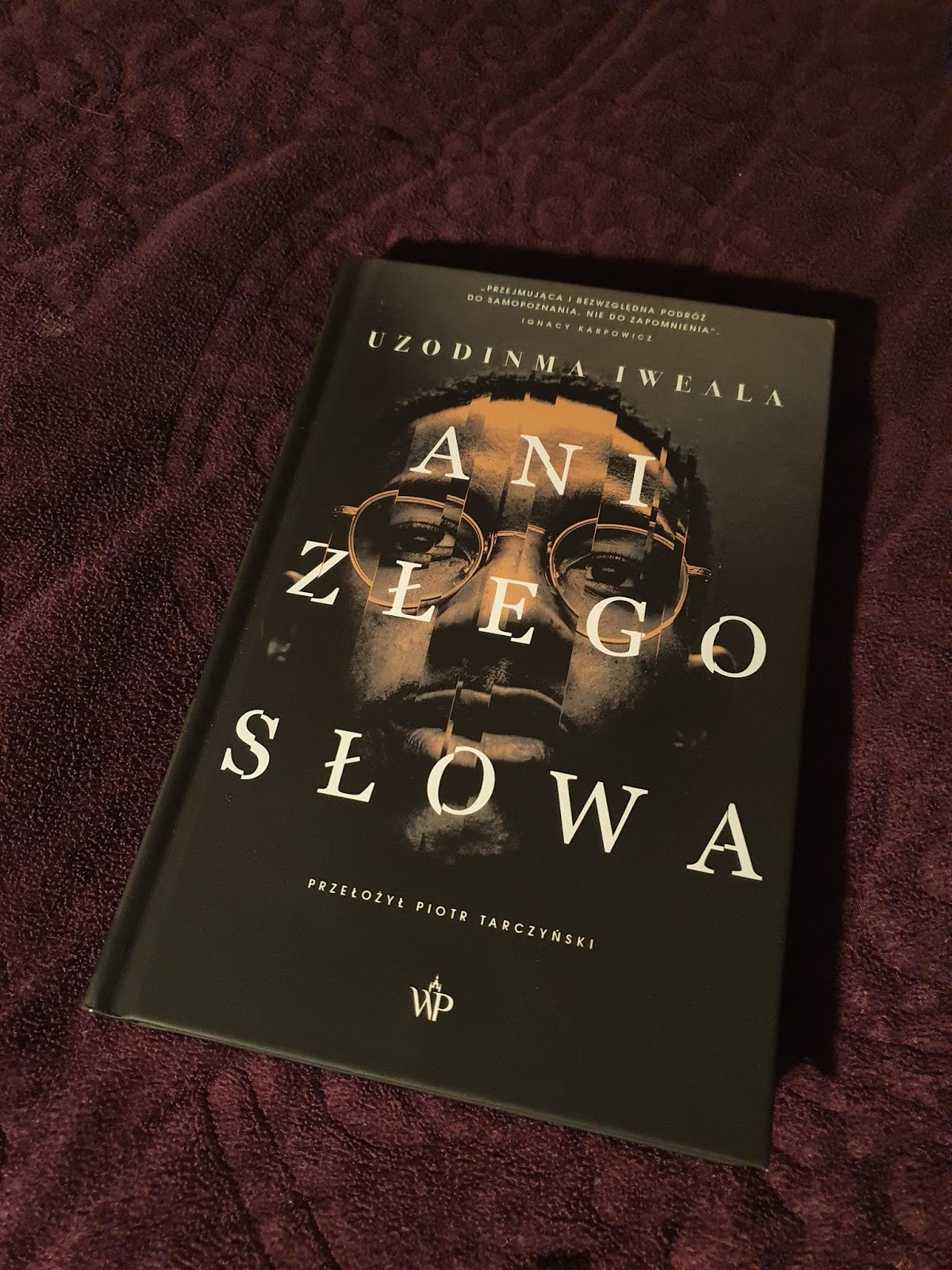
Uzodinma Iweala, Ani złego słowa (Speak No Evil)

Druga książka Uzodinmy Iweali to opowieść o 18-letnim Niru, który właśnie kończy szkołę i ma niedługo zacząć studia na Harwardzie. To czas przełomowy, kończy się jeden etap, a za chwilę ma rozpocząć drugi. Niru zaczyna poznawać samego siebie, ale ta wiedza, którą niechętnie i ostrożnie zaczyna dzielić się z najbliższymi, powoduje brak akceptacji i narastające kłopoty, które wiodą do tragicznego finału.

Wysokie zagęszczenie trudnych tematów na stronie

Niru to postać skomplikowana, która musi mierzyć się z kilkoma trudnymi tematami na co dzień. Po pierwsze, jego rodzice są imigrantami z Nigerii, którzy mieszkają i pracują w Stanach Zjednoczonych, w Waszyngtonie. Jego ojciec nadal odnosi się do Nigerii jako do domu, natomiast Niru nie czuje się tam dobrze. Dla niego dom jest w Ameryce, gdzie na co dzień mieszka, uczy się, odnosi sukcesy sportowe, gdzie ma przyjaciół. Niru zdecydowanie stoi pomiędzy dwoma nacjami - czuje się dobrze tam, gdzie się wychował, ale lubi kulturę i kuchnię nigeryjską, jest bardzo mocno związany ze swoją rodziną, a w domu przyjaciółki Meredith jest mu za zimno. Ojciec Niru przykłada dużą wagę do prezencji - mieszka w prestiżowej dzielnicy, z której cała rodzina musi sporo dojeżdżać do szkół i pracy, ma reprezentacyjny dom i świadczące o wysokim statusie społecznym samochody i garnitury. Jednak Niru cały czas czuje się czarnym w społeczności białych, naznaczonym przez swój kolor skóry. Mamy więc kwestie rasy, przynależności do klasy społecznej i narodowości.
Po drugie, Niru jest młodszym dzieckiem, i cały czas stara się dorównać starszemu o 6 lat OJ. Starszy brat studiuje medycynę, doskonale odnajduje się w Nigerii i ojciec uwielbia się nim chwalić. Niru cały czas czuje, jakby musiał zasłużyć na miłość surowego ojca, i jakby zajmował drugie miejsce w jego sercu. Temat trudnych relacji rodzinnych odhaczony.
Po trzecie, końcówka szkoły przynosi Niru odkrycie dotyczące własnej seksualności. Kiedy jego zakochana w nim przyjaciółka całuje go i chce uprawiać z nim seks, chłopak po raz pierwszy mówi na głos, że chyba jest gejem. To coming out również przed samym sobą - nazywa to, co do tej pory z wielką ostrożnością obserwował. Meredith instaluje mu zatem na komórce apki Tindera i Grindr, a chłopak zaczyna wymieniać wiadomości z poznanymi w sieci mężczyznami. Jednak jednak ojciec znajduje zostawiony w domu telefon i w ten sposób dowiaduje się o orientacji seksualnej swojego syna. Dla niego to bezsprzecznie zboczenie, zgubny wpływ rozwiązłej kultury amerykańskiej i skaza na honorze. Natychmiast wywozi syna do Nigerii na spotkane z miejscowym pastorem, gdzie odbywa się rozmowa i modlitwa przypominająca egzorcyzmy, mająca wygnać złego ducha z chłopaka. Po powrocie do Stanów chłopak co tydzień spotyka się z lokalnym pastorem, i stara się "znormalnieć". Po intensywnej imprezie z uczniami ze swojej szkoły, całkowicie pijany usiłuje wrócić do domu, ale po drodze łapią go wymioty. Pomaga mu Damien, prowadząc na zaplecze sklepu, gdzie pozwala mu się umyć i daje czyste ubrania. Niru wraca do swojego wybawcy i tak zaczyna się ich intensywna, erotyczna relacja. Niru jednak cały czas nie może się pogodzić ze swoją seksualnością i wydaje mu się, że coraz głębiej zanurza się w grzech.
Punkt kulminacyjny łączy te wszystkie wątki - Niru po awanturze se swoim ojcem ucieka do Meredith, wychodzi z nią na miasto i usiłuje skontaktować z Damienem, z którym rozstał się w dość nieprzyjemnych okolicznościach. Do Meredith natychmiast dosiada się w knajpie jakiś mężczyzna, a kiedy Niru chce wyjść z lokalu, ona woli zostać. Niru wychodzi więc sam, ale Meredith po chwili dogania go i uderza w plecy. Niru rzuca się na nią i tą scenę widzi przypadkowy patrol policji. Odczytując zachowanie chłopaka jako próbę gwałtu policjant otwiera ogień i chłopak ginie. Kilka żyć zostaje złamanych w tej jednej chwili - ani ojciec Niru, ani zakochana w przyjacielu Meredith nie potrafią się już potem pozbierać.

Ciekawa forma powieści

Książka jest podzielona na dwie części - Niru z dziewięcioma rozdziałami stanowi mniej więcej dwie trzecie powieści, i Meredith z pięcioma rozdziałami, kiedy pierwszoosobowa narracja dziewczyny relacjonuje wydarzenia po śmierci jej najlepszego przyjaciela. W obu częściach dialogi nie są wyodrębnione w tradycyjny sposób z tekstu, a stanowią monolityczny blok. Poza tym, mimo swoich 270 stron, książka jest wydana rozstrzelonym drukiem, a każdy nowy rozdział zaczyna się od nowej strony. Faktyczna powieść startuje dopiero na stronie 11. W takich warunkach przeczytanie całości zabrało mi mniej niż 24 godziny.

Podsumowanie

Mimo błyskawicznej lektury nie wciągnęłam się. Był to bardziej książkowy statement niż realistyczna powieść, a kryształowo czysta postać Niru, dobrego ucznia, oddanego syna, utalentowanego sportowca - wydawała mi się mało wiarygodna. Chłopak musiał pomieścić w sobie tyle tematów, że zabrakło w nim miejsca na niego samego. Poprzednia, debiutancka powieść Iweali, Bestie znikąd, zrobiła na mnie podobne wrażenie, ale chyba mimo wszystko była lepsza.

Moja ocena: 5/10.


Uzodinma Iweala, Ani złego słowa
Wydawnictwo Poznańskie
Poznań 2018
Tłumaczenie: Piotr Tarczyński
Liczba stron: 272
ISBN: 978-83-66381-97-1

_____________________________________________________________________________

Uzodinma Iweala's second book is a story of 18-year-old Niru, who is just finishing high school and after vacation will study at Harvard. This is a breakthrough time, one stage ends and the next begins. Niru also starts to discover himself, but this knowledge, which he reluctantly and carefully shares with his loved ones, causes lack of acceptance and growing trouble that lead to the tragic finale.

High density of difficult topics per page

Niru is a complicated character who has to deal with several difficult subjects on a daily basis. First, his parents are immigrants from Nigeria who live and work in the United States, in Washington D.C. His father still refers to Nigeria as home, while Niru doesn't feel good there. For him, the home is in the U.S., where he lives, learns and does sport with some success every day, where he has friends. Niru definitely stands between two nations - he feels good where he grew up, but he likes Nigerian culture and cuisine, is very close with his family, and feels cold at the house of his friend Meredith. Niru's father pays a lot of attention to appearances - he lives in a prestigious district, which makes commuting to work and school more painful for all, has a representative home, posh cars and expensive suits demonstrating high social status. However, Niru still feels black in the white community, marked by his skin color. So we have issues of race, social class membership and nationality.

Secondly, Niru is the younger child, and he is constantly trying to match 6-years-older OJ. The older brother is studying medicine, he functions perfectly well in Nigeria and his father loves to boast about him. Niru still feels as if he has to deserve the love of his strict father, and as if he has taken a second place in his heart. The topic of difficult family relations checked.

Thirdly, the end of school brings Niru the discovery of his own sexuality. When his friend who is in love with him kisses him and wants to have sex with him, the boy says for the first time that he is probably gay. This is coming out also for himself - he names what he has only been carefully observing so far. Meredith installs him Tinder and Grindr on his mobile, and the boy begins to exchange messages with men met on the net. However, the father finds the phone left at home and in this way he learns about his son's sexual orientation. For him it is undoubtedly a perversion, a devastating influence of the promiscuous American culture and a flaw on the family's honor. He immediately takes his son to Nigeria to meet with a local pastor, where a conversation and a prayer dangerously resembling an exorcism take place to banish the evil spirit from the boy. After returning to the States, the boy meets the local pastor every week and tries to "make himself normal". After an intense partying with schoolmates, completely drunk, he tries to go home, but starts to vomit on the street. A random man, Damien, helps him, leading to the back of the store, where he lets him wash and gives him some clean clothes. Niru returns to his savior and so begins their intense, erotic relationship. Niru, however, still cannot reconcile with his sexuality which seem to him to sink him in sin.

The climax connects all those threads - Niru, after a row with his father, escapes to Meredith, goes out with her and tries to contact Damien, with whom he parted in unpleasant circumstances. A man immediately joins Meredith in the pub, and when Niru wants to leave, she prefers to stay. Niru goes out alone, but Meredith catches up with him and hits him in the back. Niru lunges at her and this scene is seen by an accidental police patrol. By reading the boy's behavior as an attempted rape, the policeman opens fire and the boy dies. Several lives are broken at this very moment - neither Niru's father nor Meredith, who is in love with his friend, can ever recover from it.

An interesting form of the novel

The book is divided into two parts - Niru with nine chapters accounts for about two-thirds of the novel, and Meredith with five chapters, when the first-person narrative of the girl reports events after the death of her best friend. In both parts, the dialogues are not traditionally separated from the main body of the text, but constitute a monolithic block. In addition, despite its 270 pages, the book is published in a densely spaced print, and each new chapter begins on a new page. The actual novel starts only on page 11. Under such conditions, it took me less than 24 hours to read the whole story.

Summary

Despite reading quickly, I didn't get caught up in it. It was more of a book statement than a realistic novel, and the crystal-clear character of Niru, a good student, a devoted son, a talented athlete - seemed unreliable to me. The boy had to contain so many topics that he lacked space for himself. Iweala's previous debut novel, Beasts of No Nation, made a similar impression on me, but I think it was still better.


My rating: 5/10.


Author: Uzodinma Iweala
Title: Speak No Evil
Publishing House: Wydawnictwo Poznańskie
Poznań 2018
Translated by: Piotr Tarczyński
Number of pages: 272
ISBN: 978-83-66381-97-1