Pokazywanie postów oznaczonych etykietą childhood. Pokaż wszystkie posty

niedziela, 29 września 2024

Lars Saabye Christensen, Odpływ (Sluk)

Bieg się już odbył

Po powieść Larsa Saabye Christensena sięgnęłam w gorączkowym przygotowaniu na przyjazd pisarza do Polski, który jest zaplanowany jako jedna z atrakcji tegorocznego Festiwalu Conrada w Krakowie. Tytuł spotkania, które prowadzić będzie Michał Sowiński, brzmi Po odpływie, więc wstyd byłoby nie sięgnąć po tytułową książkę. Niecałe 500 stron zabrało mi dwa dni, ale materiału na przemyślenia jest znacznie więcej.

Tryptyk o przemijaniu

Wydana w 2014 roku przez Wydawnictwo Literackie powieść, tłumaczona na język polski przez Iwonę Zimnicką, jest podzielona na trzy główne części – Epilog II, Pośrednik oraz Epilog (wióry i pył). W pierwszej części poznajemy nastolatka, Fundera, który spędza wakacje z matką na jednej z norweskich wysp, latem 1969 roku, niedługo przed lądowaniem człowieka na księżycu. Chłopak zawiera na wyspie przyjaźnie, przeżywa pierwszą miłość i usilnie pracuje nad wierszem, którego nigdy nie skończy. W części drugiej bohaterem jest Frank Farnelli, zatrudniony przez miasto Karmack jako pośrednik, który przekazuje mieszkańcom złe wieści. Za jego kadencji dochodzi do swoistej eskalacji przemocy, a samemu Frankowi przyjdzie za to zapłacić najwyższą cenę. W Epilogu wracamy do Fundera, który jest już po pięćdziesiątce, opuścił ośrodek terapeutyczny w Maryland i bez celu jeździ po Stanach. Zestawienie pierwszej i ostatniej części przynosi bardzo smutny obraz życia, które odpływa, w którym zakres możliwości się zawęża, a coraz więcej szans pozostaje niewykorzystanych.

Odpływ stanowi ciekawą lekturę. Pierwsza część była wciągająca i urzekająca w sposób znany trochę z powieści Cudowne dzieci Roya Jacobsena, może trochę z Mojej walki Knausgarda, czy choćby Beatlesów samego Christiansena. To melancholijny powrót do świata dzieciństwa, jego lekkości i świetlistości, świata wielu możliwości i ścieżek. Nie brakuje w nim dramatyzmu i młodzieńczej głupoty, braku odpowiedzialności i zagubienia, ale jest też przekonanie o własnej mocy sprawczej i rozpościerających się możliwościach. Nowe drzwi się otwierają i świat zmienia się z dnia na dzień. Część druga, o pośredniku, nieszczególnie mi się podobała. Dominuje tu temat przemijania, rozpadu, upadku. Masteczko Karmack podupada, przejeżdżający przez nie pociąg przestaje zatrzymywać się na lokalnej stacji, co przynosi upadek kolejnych biznesów i odpływ ludności. Mieszkańców czeka już tylko śmierć, a wiadomość o niej przynosi Frank Farnelli, mało subtelny samotny mężczyzna, mieszkający z matką i z oddaniem zajmujący się swoją ponad dwudziestoletnią złotą rybką. Jak się okaże, ma on mroczną przeszłość. Ścieżki Franka i Fundera przetną się, dość dosłownie, w części ostatniej. Tu okazuje się, że Fundera łączy więcej z mrocznym i zagubionym Frankiem, niż z samym sobą z młodości. Aż chciałoby się zapytać – ale jak to? To by było na tyle?

Mnogość wątków

W Odpływie pojawia się wiele wątków, które są dość popularne w literaturze skandynawskiej. Mamy – pojawiający się choćby w pierwszym tomie Mojej walki Knausgårda - alkoholizm (ojciec kolegi z wyspy, Iwera Malta, nie wylewa za kołnierz), mamy znane z twórczości Roya Jacobsena rozliczenia z czasów drugiej wojny światowej (matka Iwera rodzi upośledzonego umysłowo syna ze związku z nazistą), pojawia się trud powojennej odbudowy kraju (ojciec Fundera nie spędza z nimi wakacji, bo jako architekt musi projektować dalsze budynki). Ważnymi postaciami są matki Fundera i Farnelliego oraz ich samotność (pierwsza poświęciła obiecującą karierę muzyczną na rzecz męża i syna, druga uważa, że jej nieludzki syn bardziej kocha swoją rybkę od niej). Powieść jest też mocno autoteliczna, Christansen odwołuje się do własnej powieści Beatlesi i stawianych jej zarzutów, nie wspominając już o niemocy twórczej, dotykającej zarówno młodego, jak i dorosłego Fundera. Wielokrotnie pojawia się temat niepełnosprawności (chłopak ma krzywą stopę, która zapewnia mu przezwisko Chaplin, jest też upośledzony brat Ivera, Henry). Wreszcie -  mamy lustra, w których Funder nie chce się przeglądać (również lustro wody wyciąganej w wiadrze ze studni) i trudność z samoidentyfikacją. Literackim przewodnikiem jest Moby Dick Hermana Melwille’a, który pojawia się konsekwentnie na przestrzeni całego Odpływu, a walka kapitana Ahaba z białym wielorybem jest analizowana z każdej strony, chociaż nikt z bohaterów tej książki do końca nie przeczytał. Mam wrażenie, że jeszcze wiele istotnych elementów mi umyka, wiele nawiązań do twórczości innych autorów.

Bieg się odbył. Co jest pomiędzy? To, z czego nigdy nic nie wyszło.

Dla mnie Odpływ jest przede wszystkim książką rozliczeniową, o przemijaniu. Funder, którego poznaliśmy w pierwszej części, wydaje się mieć niewiele wspólnego z zagubionym mężczyzną z części drugiej. „W moim wieku „dalej” oznacza „z powrotem”, zauważa w pewnym miejscu (s. 229). Nagle przyszłość się kończy i bohater zostaje z tym, co udało mu się osiągnąć i przeżyć pomiędzy dwoma epilogami. Gorzka, ale dająca do myślenia lektura. Z chęcią do niej sięgnę ponownie.

Moja ocena: 8/10.


Lars Saabye Christensen, Odpływ
Wydawnictwo Literackie, Kraków 2014
Tłumaczenie: Iwona Zimnicka
Liczba stron: 464
ISBN: 978-83-08-05395-9

********************************************************************************

The run has already taken place

I reached for Lars Saabye Christensen's novel in feverish preparations for the writer's visit in Poland, which is planned as one of the attractions of this year's Conrad Festival in Krakow. The title of the meeting, which will be led by Michał Sowiński, is After the low tide, so it would be a shame not to reach for the title book. It took me two days to read less than 500 pages, but the material for reflection is vast.

A triptych about transience

Published in 2014 by Wydawnictwo Literackie, translated into Polish by Iwona Zimnicka, the novel is divided into three main parts - Epilogue II, The Intermediary and Epilogue (woodchips and dust). In the first part, we meet a teenager, Funder, who spends his vacation with his mother on one of the Norwegian islands, in the summer of 1969, shortly before man landed on the moon. The boy makes friends on the island, experiences his first love, and works hard on a poem that he will never finish. In the second part, the protagonist is Frank Farnelli, employed by the city of Karmack as an intermediary who delivers bad news to the residents. During his term, violence escalates, and Frank himself will pay the ultimate price for it. In the Epilogue, we return to Funder, who is already in his fifties, has left a treatment center in Maryland, and is aimlessly wandering around the States. The juxtaposition of the first and last parts brings a very sad picture of a life that is ebbing away, in which the range of possibilities is narrowing, and more and more chances remain unused. The Low Tide is an interesting read. The first part was engaging and captivating in a way known from Roy Jacobsen's novels Wonder Children, maybe a little from Knausgård's My Struggle, or even Christiansen's own Beatles. It is a melancholic return to the world of childhood, its lightness and brightness, the world of many possibilities and paths. There is no shortage of drama and youthful stupidity, lack of responsibility and confusion, but there is also a conviction of one's own agency and expanding possibilities. New doors open and the world changes from day to day. Part two, about the intermediary, did not particularly appeal to me. The theme of transience and Decay dominate here. The town of Karmack is in decline, the train passing through it no longer stops at the local station, which brings the collapse of more businesses and the outflow of people. Only death awaits the inhabitants, and the news of it is brought by Frank Farnelli, an unsubtle lonely man, living with his mother and devotedly taking care of his over twenty-year-old goldfish. As it turns out, he has a dark past. Frank and Funder's paths will cross, quite literally, in the last part. Here it turns out that Funder has more in common with the dark and confused Frank than with his younger self. One might ask - but how did this happen? That would be it?

A multitude of themes

In The Low Tide there are many themes that are quite popular in Scandinavian literature. We have – appearing, for example, in the first volume of Knausgård's My Struggle – alcoholism (the father of a friend from the island, Iwer Malt’s, is often drunk), we have the settlements from the times of World War II known from the works of Roy Jacobsen (Iwer's mother gives birth to a mentally disabled son from a relationship with a Nazi), there is the hardship of the post-war reconstruction of the country (Funder's father does not spend holidays with them, because as an architect he has to design more buildings). Important characters are the mothers of Funder and Farnelli and their loneliness (the first sacrificed a promising musical career for the sake of her husband and son, the second believes that her inhuman son loves his fish more than her). The novel is also strongly autotelic, Christansen refers to his own novel Beatles and the accusations made against it, not to mention the creative impotence that affects both the young and adult Funder. The subject of disability appears repeatedly (the boy has a crooked foot, which earns him the nickname Chaplin, and Iver's disabled brother, Henry, is also there). Finally, we have mirrors in which Funder does not want to look at himself (including the mirror of water drawn in a bucket from a well) and difficulty with self-identification. The literary guide is Herman Melville's Moby Dick, which appears consistently throughout The Low Tide, and Captain Ahab's fight with the white whale is analyzed from every angle, although none of the characters have read the book to the end. I have the impression that many important elements are still escaping me, many references to the works of other authors.

The race took place. What is in between? That which never worked out.

For me, The Low Tide is above all a book of reckoning, about transience. Funder, whom we met in the first part, seems to have little in common with the lost man from the second part. "At my age, 'further' means 'back'," he notes at one point (p. 229). Suddenly, the future ends and the hero is left with what he managed to achieve and experience between the two epilogues. A bitter but thought-provoking read. I will gladly reach for it again.

 My rating: 8/10.


Author: Lars Saabye Christensen
Title: The Low Tide (Original title: Sluk, not translated to English)
Publishing House: Wydawnictwo Literackie, Kraków 2014
Translation: Iwona Zimnicka
Number of pages: 464
ISBN: 978-83-08-05395-9

niedziela, 2 października 2022

Karl Ove Knausgård, Moja walka Powieść Księga trzecia (Min kamp. Tredje bok. Roman)

Mroki dzieciństwa

Ponieważ drugi tom zafascynował mnie kompletnie i w ogóle nie mogłam się skupić na niczym innym, naturalnym wydalo mi się sięgnięcie po trzeci tom, kuszący piękną zieloną okładką. Również i tym razem nie zawiodłam się, a powieść przeczytałam w równiutki tydzień.

Cisza narasta, cisza, która trwa do końca życia

W Księdze trzeciej Knausgård cofa się do czasów swojego dzieciństwa, i robi to naprawdę z ogromną szczerością i otwartością. Wręcz z ekshibicjonizmem, ale do tego już chyba zdążyłam się przyzwyczaić. Znów ważnym tematem jest relacja z ojcem, który znęca się nad swoimi synami i z przesadną surowością karze ich za wszystkie przewinienia. Wykręcone ucho jest konsekwencją zgubienia skarpetki na basenie czy zbyt późny powrót do domu, a zjedzenie dwóch jabłek w ciągu dnia skutkuje koniecznością jedzenia ich aż do mdłości jako kara za łakomstwo. Pisarz tak oddał zachowanie przemocowego rodzica, że wraz z nim przeżywałam na przemian nienawiść i strach, podszyte lekkim niedowierzaniem. Szczególnie bolesny jest moment, kiedy dorosły Karl Ove obserwuje swoje dzieci i wie, że się go nie boją, co było jego największą ambicją. Natomiast zastanawia się również nad rolą swojej matki. Jej obecność ich ocaliła, a z drugiej strony to ona, pozostając długo przy swoim mężu, skazała swoje dzieci na koszmar przemocy w dzieciństwie.

Pozostaje pytanie, czy nie ona była odpowiedzialna za to, że przez tyle lat byliśmy narażeni na jego obecność, na obecność człowieka, wobec którego odczuwalismy fundamentalny strach, zawsze, o każdej porze. Pozostaje pytanie, czy to wystarczy, by zrównoważyć mrok. (s. 317)

Dla mnie to najważniejszy, mocno rozliczeniowy, choć niepociągnięty dalej moment trzeciego tomu.

Za dzieciaka tak właśnie było

Kolejnym tematem trzeciego tomu autobiografii jest dzieciństwo ze wszystkimi jego cieniami i blaskami. Pierwsze miłości i chodzenie ze sobą, całowianie się na czas, wyprawy po skarby na wysypisko śmieci, dziecięce fascynacje książkami, muzyką, sportem, aż wreszcie dziewczynami. A potem już tylko dziewczynami. Trudne czasy szkolne, z małoletnią zaciekłością i niezrozumieniem, próbą naśladowania literatury i bycia szlachetnym, prześladowaniami w szkole. Karl Ove opisuje się w taki sposób, że czytelnik błyskawicznie rozumie, dlaczego ojciec miał go za miękkiego mazgaja, a w szkole przylgnęło do niego przezwisko „femi”. Pisarz nie jest dla swojego dziecięcego ego łagodny, bezwzględni opisuje własne słabości, skłonność do płaczu, Książka przenosi niczym wehikuł czasu we własne dzieciństwo, a w niejednym zachowaniu dziecka można odnaleźć reminiscencje z własnych czasów wczesnej młodości.

Dla mnie kolejny bardzo mocny tom autorstwa Knausgårda, tym razem nie za długi i znakomicie napisany. Szczerze polecam.


Moja ocena: 7.5/10


Karl Ove Knausgård, Moja walka Powieść Księga Trzecia
Wydawnictwo Literackie, Kraków 2015
Tłumaczenie: Iwona Zimnicka
Liczba stron: 544
ISBN: 978-83-08-06038-4


***************************************************************************
The darkness of childhood

As the second volume fascinated me completely and I could not focus on anything else at all, it seemed natural to me to reach for the third volume, tempting with a beautiful green cover. Also this time I was not disappointed and I read the lengthy novel within a week.

The silence grows, the silence that lasts until the end of life

In Book Three, Knausgård goes back to his childhood, and he does it with great honesty and openness. One could also call it exhibitionism, as in the previous volumes. Again, an important topic is the relationship with the father who abuses his sons and punishes them with excessive severity even for minor offenses. A twisted ear is a consequence of losing a sock at the pool or coming home too late, and eating two apples a day results in having to eat them up to the point of nausea as a punishment for greed. The writer depicted the behavior of the abusive parent in such a way that with him I experienced alternating hatred and fear, lined with slight disbelief. Particularly painful is the moment when the adult Karl Ove watches his children and knows that they are not afraid of him, which was his greatest ambition. However, she also reflects on the role of his mother. On one hand, her soothing presence saved them, and on the other hand, it was she who, staying with her abusive husband for a long time, condemned her children to the nightmare of childhood violence.

The question is whether she was not responsible for the fact that for so many years we were exposed to his presence, to the presence of a man, towards whom we felt a fundamental fear, always, at any time. The question is whether this is enough to balance the gloom.     (p. 317)

For me, this is the most important moment of the third volume, heavily loaded, though not developed further.

This is how childhood looked like

Another theme of the third volume of the autobiography is childhood with all its shades, both of joy and grief. First loves and dating, kissing for the length of it, trips to collect treasures in the garbage dump, children's fascination with books, music, sports, and finally girls. And then only girls. Difficult school times, with juvenile ferocity and incomprehension, an attempt to imitate literature and being noble, bullying at school. Karl Ove describes himself in such a way that the reader immediately understands why his father thought him a soft whiny kid and why he was nicknamed "femi" at school. The writer is not gentle with his childhood ego, he ruthlessly describes his own weaknesses, the tendency to cry. The book takes him like a time machine into his own childhood, and in many of the child's behaviors one can find reminiscences from their own times of early youth.

For me, another very strong volume by Knausgård, this time not too long and well written. I sincerely recommend.


My rating: 7.5 / 10


Author: Karl Ove Knausgård
Title: Boyhood Island: My Struggle Book 3
Wydawnictwo Literackie, Krakow 2015
Translation: Iwona Zimnicka
Number of pages: 544
ISBN: 978-83-08-06038-4

poniedziałek, 9 sierpnia 2021

Auđur Ava Ólafsdóttir, Blizna (Ör)

Człowiek z torbą na narzędzia

Od pewniego czasu z ciekawością obesrwuję serię dzieł pisarzy skandynawskich, wydawaną przez Wydawnictwo Poznańskie. Kusiły mnie piękne kolorowe okładki z graficznymi motywami, ale lekko odstraszały ponure opisy z tyłu książek. Smutne, przygnębiające jak Skandynawia jesienią. Nieźle się zdziwiłam, gdy sięgnęłam po książkę Ólafsdóttir Blizna. To fenomenalna lektura, która raz zaczęta, nie wypuści czytelnika ze swoich stronic.

Co innego można zastrzelić w maju poza samym sobą?

Główny bohater ma 49 lat i nazywa się Jonas Ebeneser. Jonas właśnie rozwodzi się ze swoją żoną, Gudrun, a ona przyznaje mu, że córka, którą całe życie uważał za swoją, jest tak naprawdę owocem spotkania z innym mężczyzną. Jonas postanawia więc popełnić samobójstwo, bo uważa, że nie ma już wpływu na swoje życie i jego obecność nic nie zmieni. Żal mu jednak sąsiada i córki, którzy mogliby znaleźć jego ciało, wyjeżdża więc do kraju (niewymienionego z nazwy), w którym dopiero co zakończyła się wojna, i tam postanawia ze sobą skończyć. W swoją ostatnią podróż zabiera jedną koszulę, sweter i walizkę z narzędziami. To właśnie ta walizka oraz talent Jonasa do majsterkowania wkrótce mają diametralnie zmienić jego życie.

Najkrótsza droga do domu starców wiedzie przez cmentarz

Ważnych tematów porusza w swojej powieści Ólafsdóttir co niemiara. Po pierwsze jest kwestia tożsamości – Jonas czytając swoje pamiętniki nie rozpoznaje siebie w swoich notatkach, nie pamięta kochanek ani ich ciał, nie rozpoznaje osoby, która kilkadziesiąt lat wcześniej spisywała swoje myśli. Jakby poznawał kogoś obcego.

Moje nieszczęście jest w najlepszym wypadku idiotyczne w obliczu tych ruin i kurzu

Drugi temat to świat powojenny – Ólafsdóttir pokazuje zniszczone walkami miasto, gdzie wiele budynków i zabytków zniknęło, gdzie ludzie przestali sobie ufać (może dlatego myślałam cały czas o Serbach i Bośniakach), gdzie nie wiadomo było, kto zabijał, i kogo zabijał. Kobiety doświadczały gwałtów, nie wiadomo, czyje są rodzące się dzieci. To świat chaosu, ale ludzie dzielnie starają się nadać mu nową strukturę. Do tego wszystkiego do kraju zjeżdżają obcokrajowcy, by rabować cenne dobra kultury, pozyskiwać tanio nowe działki, rozpoczynać nowe inwestycje w zniszczonym terenie. Ludzie są nieufni, a społeczeństwo w większości stanowią kobiety, bo mężczyźni zginęli. W zetknięciu z traumą wojny zniechęcenie do życia i depresja, z którą mierzy się Jonas, nagle bledną i tracą na ważności. Ólafsdóttir pokazuje dramaty wojenne sugestywnie, ale delikatnie i nienachalnie.

Może to oklepany motyw, ale pisarka pokazuje również głębie krzywd wojennych poprzez postać dziecka. Synek dziewczyny opiekującej się hotelem ma uszkodzony słuch, a na rysowanych kredkami obrazkach pokazuje na przemian krew i zgliszcza (czerwnień i czerń). Dopiero, gdy skończą mu się te kolory, po symbolicznym wylaniu zgrozy na papier, dziecko zaczyna tworzyć pogodniejsze wizje. Świat powoli się odradza.

Gdybym akurat znajdował się w Pieśni nad Pieśniami i przeczytał fragment twoje piersi jak grona winne, pewnie byłbym wciąż żonaty

Siłą książki jest jej język – cięty, czarny humor sprawia, że czytelnik wciąż szuka nowych bon motów Jonasa i docenia trafność jego obserwacji. Dzięki temu wielka wrażliwość i nieśmiałość bohatera nie jest ckliwa, a w uroczy sposób zdystansowana i błyskotliwa. Dodatkowo książka ma budowę szkatułkową, jest starannie zaplanowana i nie ma w niej zbędnych scen i słów. Nienazwanie kraju, do którego udaje się w samobójczych celach główny bohater, dodaje jej uniwersalności i pewnie nada pewną ponadczasowość.


Moja ocena: 9/10

Nie mogłam się oderwać. Książka nie jest długa (niestety, byłabym wdzięczna choć za kilka stron więcej), ale jej klimat, atmosfera napięcia i niepewność co do dalszych losów głównego bohatera nie pozwalają odłożyć jej ani na chwilę. Jednocześnie, Jonas postrzega świat z czarnym poczuciem humoru i czytelnik nie raz uśmiecha się pod nosem, zaskoczony trafnością jego obserwacji. Zapowiada się, że będę musiała się mocniej zaprzyjaźnić z Wydawnictwem Poznańskim.


Auđur Ava Ólafsdóttir, Blizna
Wydawnictwo Poznańskie
Poznań 2020
Tłumaczenie: Jacek Godek
Liczba stron: 214
ISBN: 978-83-66553-47-7
Gatunek: powieść obyczajowa

* * * * * * * * * * * * * * * * * * * * * * * * * * * * * * * * * * * * * * * * * * * * * * * 

Man with tool bag

For some time now I have been observing with curiosity a series of works by Scandinavian writers published by the Poznańskie Publishing House. I was tempted by beautiful colorful covers with graphic motifs, but a bit put off by the gloomy descriptions on the back cover. Sad and depressing like Scandinavia in late autumn. I was quite surprised when I reached for the book Hotel Silence by Ólafsdóttir. This is a phenomenal reading that, once started, will not let the reader out of its pages.

What else can you shoot in May other than yourself?

The main character is 49 years old Jonas Ebeneser. He is just divorcing his wife, Gudrun, and she admits to him that the daughter he considered as his biological child is actually the fruit of a meeting with another man. Jonas decides to commit a suicide as he believes that he no longer has any influence on his life and that his presence will not change anything. He feels sorry for his neighbor and daughter who might find his body, so he leaves for a country (not mentioned by name), where the war has just ended, and decides to end his life there. On his final journey, he takes one shirt, a sweater and a toolbox. It is this toolcase and Jonas' DIY talent that will soon change his life.

The shortest way to the retirement home is through the cemetery

In her novel Ólafsdóttir covers many important topics. First, there is the question of identity - when reading his diaries, Jonas doesn’t recognize himself in his own notes, he doesn’t remember the lovers or their bodies, he doesn’t recognize the person who wrote down those thoughts several decades earlier. As if he was meeting a stranger.

My misfortune is idiotic at best in the face of these ruins and dust

The second topic is the post-war world - Ólafsdóttir shows a city destroyed by fights, where many buildings and monuments have disappeared, where people no longer trust each other (maybe that's why I was thinking about Serbs and Bosnians all the time), where it was not known who was killing and who has clean hands. Women have experienced rape, it is not known whose babies are now born. It is a world of chaos, but people are bravely trying to give it a new structure. In addition, foreigners come to the country to plunder valuable cultural goods, acquire new plots of land cheaply, and start new investments in a dilapidated area. People are wary and the majority of society is women because men have been killed. When faced with the trauma of war, the discouragement and depression faced by Jonas suddenly seems pale and loses its importance. Ólafsdóttir shows war dramas evocatively, but at the same time delicately and unobtrusively.

Perhaps this is a well-worn motif, but the writer also shows the depths of war grievances through the figure of a child. The son of the girl who looks after the hotel has hearing impairment, and in the pictures drawn with crayons he shows alternately blood and ashes (red and black). Only when he runs out of these colors, after symbolically pouring horror on paper, the child begins to create more cheerful visions. The world is slowly recovering.

If I happened to be in the Song of Songs and read a fragment of your breasts like grapes, I would probably still be married

The strength of the book is its language - sharp, dark humor makes the reader constantly look for new Jonas’s thoughts and appreciate the accuracy of his observations. Thanks to this, the hero's great sensitivity and shyness is not cloying, but in a charming way distanced and brilliant. In addition, the book has a box structure, it is carefully planned and there are no unnecessary scenes or words in it. Not naming the country to which the main character goes for suicide adds to its universality and probably gives it a certain timelessness.

My rating: 9/10

I couldn't tear myself away. The book is not long (unfortunately, I would be grateful for at least a few more pages), but the atmosphere of tension and uncertainty as to the fate of the main character doesn’t allow for putting it down even for a moment. At the same time, Jonas perceives the world with a black sense of humor and the reader smiles to themselves many times, surprised by the accuracy of Jonas’s observations. It seems that I will have to make closer friends with the Poznańskie Publishing House.


Author: Auđur Ava Ólafsdóttir
Title: Hotel Silence
Publishing House: Wydawnictwo Poznańskie
Poznań 2020
Translation: Jacek Godek
Number of pages: 214
ISBN: 978-83-66553-47-7
Genre: novel

środa, 13 maja 2020

Ian McEwan, Marzyciel (The Daydreamer)


Mam takie podłe wrażenie, że już kiedyś czytałam tę książkę, i nic z niej nie zapamiętałam. Wrażenie przeradza się w pewność po drugiej lekturze, gdy dwa dni później siadam do recenzji... i nic nie pamiętam.


Marzyciel to wydana w przedziwnym formacie druga książka McEwana dla dzieci. Bohaterem jest dziesięcioletni Peter Fortune, który ma zwyczaj śnić na jawie. Dzięki swojej wyobraźni chłopiec oswaja i tłumaczy sobie otaczający go świat, stara się zrozumieć rzeczywistość, staje się wrażliwszy na innych. W opowiadaniu Lalki bawi się zabawkami młodszej siostry Kate i uczy dbałości o nie. W opowiadaniu Kot zamienia się ciałami ze starym domowym kotem Williamem i zdobywa mu uznanie okolicznych dachowców. Peter stosuje Krem znikający z kuchennej szuflady z rupieciami, by "zniknąć" całą swoją rodzinę. W opowiadaniu Włamywacz starsza sąsiadka staje się przebiegłym przestępcą z zimną krwią okradającym swoje sąsiedztwo, podczas gdy w rzeczywistości prawdziwy złoczyńca rabuje dom ze śpiącym

chłopcem. Peter dzięki swojej wyobraźni zaczyna rozumieć świat niemowląt, a na samym końcu tomiku jedenastoletni już Peter powoli zaczyna rozumieć świat dorosłych i przeżywa pierwsze młodzieńcze zauroczenie kuzynką Gwendoline.

Duża czcionka i liczne artystyczne zdjęcia sprawiają, że 230-stronicową książkę czyta się w jeden wieczór. Tematyka jest lekka, świat wyobraźni chłopca ciekawy i zagmatwany, a opowiadania biją ciepłem i rodzinną atmosferą. McEwanowi udało się wykreować ciepły, magiczny świat dzieciństwa, z troskliwymi, lecz w dużej mierze nieobecnymi rodzicami, rezolutną siostrą Kate, wakacjami w rodzinnym gronie. Brzmi super, ale wiem, że za kolejnych kilka dni nie zostanie mi z tej książki nic kompletnie, i za kilka lat znów "odkryję" ją na swojej półce.


Moja ocena: 4/10

Ian McEwan, Marzyciel
Wydawnictwo Znak
Kraków 2009
Tłumaczenie: Katarzyna Janusik
Liczba stron: 230
ISBN: 978-83-240-1188-9 ________________________________________

I have a feeling that I've read this book before and don't remembered a single thing. The feeling turns into confidence after the second reading, when two days later I sit down to prepare a review ... and I don't remember anything.

The Daydreamer is McEwan's second children's book, published in the strangest of formats. The hero is ten-year-old Peter Fortune, who has the habit of daydreaming. Thanks to Doll he plays with his sister Kate's toys and learns how to care for them. In the story Cat, he swaps bodies with the old The Disappearance ointment from the kitchen junk drawer to 'disappear' his entire family. In The Burglar story, an elderly neighbor becomes a cunning criminal in a cold blood stealing from his neighborhood, while in reality a real villain robs a home with the sleeping boy. Peter, thanks to his imagination, begins to understand the world of babies, and at the very end of the volume already eleven-year-old Peter slowly begins to understand the world of adults and experiences the first youthful infatuation with cousin Gwendoline. So this is also a transition novel with the hero making a mileage step in his development.
domestic cat William and wins him respect of the neighbouring alley cats. Peter uses


In his imagination, the boy tames and explains the world around him, tries to understand reality, becomes more sensitive to others. The large font and numerous artistic photos mean that the 230-page book is a one-evening read. The subject is light, the boy's world of imagination is interesting and confusing, and the stories radiate with warmth and family atmosphere. McEwan managed to create a cozy, magical world of childhood, with caring, but also somehow absent parents, the resolute sister Kate, holidays with the family. Sounds great, but I know that in the next few days I will completely forget the contents of this book, and in a few years I will "discover" it on my shelf again.


My rating: 4/10


Author: Ian McEwan
Title: The Daydreamer
Publishing House: Znak
Kraków 2009
Translation: Katarzyna Janusik
Number of pages: 230
ISBN: 978-83-240-1188-9

wtorek, 12 maja 2020

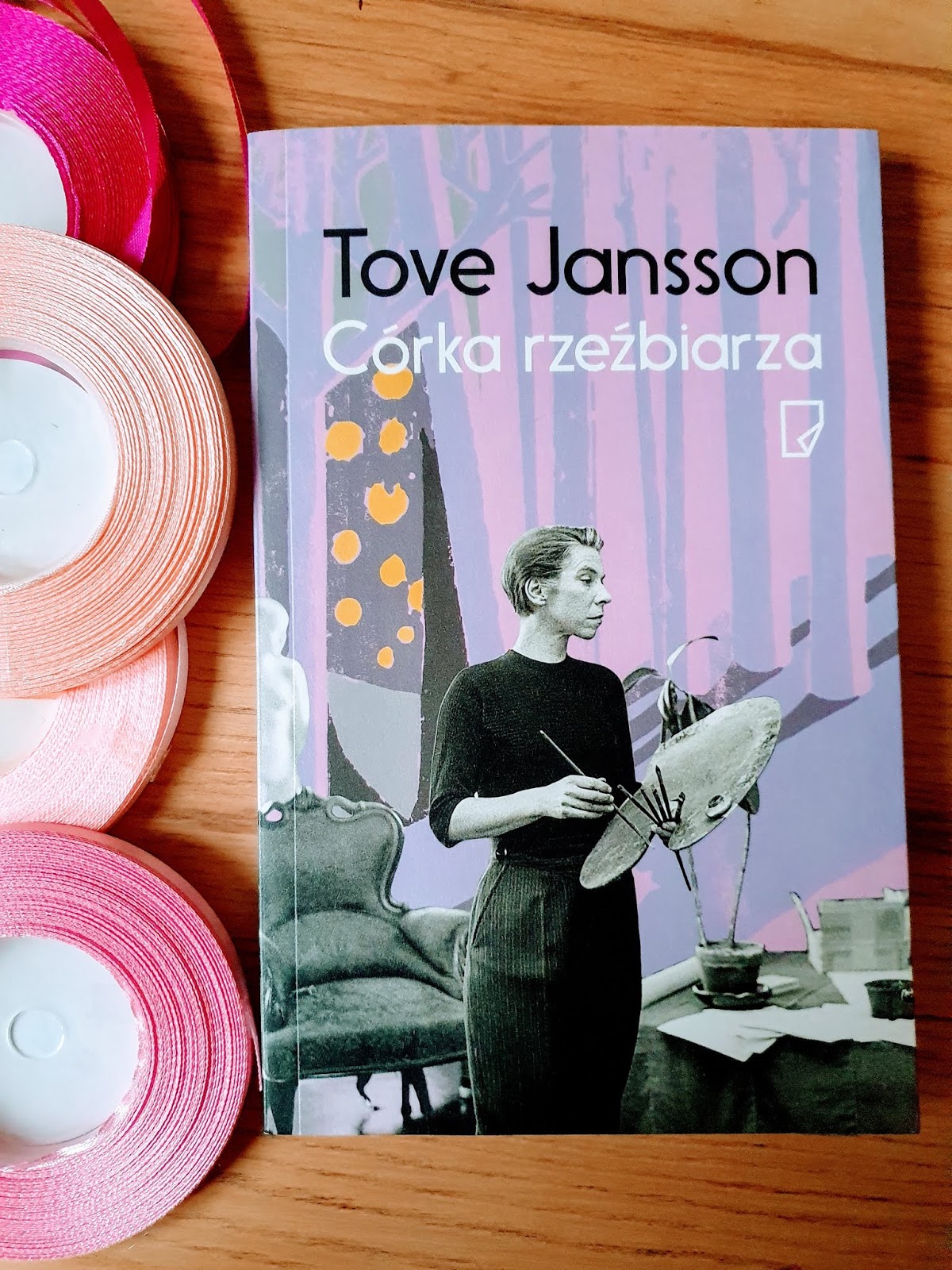
Tove Jansson, Córka rzeźbiarza (Bildhuggarens dotter)

Niewielkich rozmiarów książeczka, zaledwie 160 stron, a jednak przyjemność zanurzenia się w autentycznych wspomnieniach z dzieciństwa nie ma sobie równych.

Powrót do dzieciństwa
Dziewiętnaście opowiadań z dzieciństwa to nie lada przysmak dla wielbicieli twórczości „mamy Muminków”. Opowiadania te powstały w 1959 roku, rok po śmierci ojca artystki. Jednak Córka rzeźbiarza nie ma nic wspólnego z sagą o białych stworzonkach, a jest sentymentalno-magicznym powrotem Jansson do czasów dzieciństwa. Przyznam szczerze, że tak udanego opisu lat młodzieńczych już dawno nie widziałam – zachowana jest dziecięca logika (a więc często jej brak), roi się od potworów myszkujących w ciemnych szafach pod postacią tiulowych spódnic, szalonych ciotek murujących schody, szalejących sztormów, dziecięcych zabaw. Dom staje się magiczną jaskinią przysypaną śniegiem, gdzie można zapaść w sen zimowy przy cieple trzaskającego kominka. Dziecięcymi oczami możemy podglądać rodziców przy pracy - ojca podczas tworzenia rzeźb, i matkę wykonującą ilustracje do książek. Świat, którego już nie ma - odrealnioną krainę z dziecięcych wspomnień, pełną zapachów, wrażeń, kolorów. Tej książce brakuje jedynie magicznych ilustracji autorki – wtedy byłaby już zupełnie idealna.


Bohaterką opowiadań jest córka rzeźbiarza, jedynaczka, często zazdrosna o swoich rodziców (stąd chuchająca różyczką na klatkę ukochanej małpki Tatusia, Poppolino), ale potrafiąca też myśleć o innych i pozwalać im fruwać (w snach, oczywiście, z typowo dziecięcą logiką – „zrobiłam tak, żeby każdy mógł fruwać”. Ale jak dokładnie – nie wiadomo. Zresztą – czy to istotne?). Dziecko, które jest uważnym obserwatorem codzienności:

Wszyscy mężczyźni ucztują i są kolegami, którzy się nigdy nie opuszczą w niebezpieczeństwie. Kolega może ci powiedzieć okropne rzeczy, ale na drugi dzień już o nich nie pamiętasz. Kolega nie przebacza, a tylko zapomina - kobieta wszystko przebacza, ale nigdy nie zapomina. Tak to jest. Dlatego kobiety nie mogą ucztować. Otrzymywanie przebaczenia jest bardzo nieprzyjemne.                                                                                                                                                                   s.31
Boże Narodzenie

Absolutnym mistrzostwem jest ostatnie opowiadanie z tomu, Boże Narodzenie. Czytałam je już dwa razy, a będę chciała przeczytać jeszcze kilka. Ma cały urok świąt, ich ciepło, poczucie bezpieczeństwa, siłę rytuału. Dosłownie pachnie igliwiem i świątecznymi potrawami, szeleści pakowanymi prezentami.

Jako że niedawno czytałam Uczciwą oszustkę, która była znakomita, a teraz ten wybór opowiadań, niedługo zabieram się za Mamę Muminków Boel Westin i ostrzę ząbki na kolejne książki Tove Jansson, wydawane przepięknie przez wydawnictwo Marginesy.


Moja ocena: 9/10.


Tove Jansson, Córka rzeźbiarza
Wydawnictwo Marginesy
Warszawa 2016
Tłumaczenie: Teresa Chłapowska
Liczba stron: 160
ISBN: 9788365282279

________________________________________________________________________________________

Such a  small book, only 160 pages, and yet the pleasure of immersing oneself in authentic childhood memories is second to none.


Back to childhood


Nineteen childhood stories are a real delicacy for fans of the work of 'the Moomin Mum'. These stories were created in 1959, a year after the artist's father's death. However, Sculptor's daughter has nothing to do with the white creatures saga, and is Jansson's sentimental and magical return to childhood. I honestly admit that I have not seen such a successful description of youth for a long time - children's logic is preserved (or - often - the lack of it), teeming with monsters creeping in dark wardrobes as tulle skirts, crazy aunts doing the masonry on the stairs, raging storms, children's games. The house becomes a magical cave covered with snow, where you can fall into winter sleep with the warmth of the crackling fireplace. With child's eyes, we can peek at parents at work - father creating sculptures, and mother making illustrations for books. A world that no longer exists - an unreal land of childhood memories, full of smells, sensations and colors. This book lacks only the magical illustrations of the author - then it would be completely perfect.


The heroine of the stories is the sculptor's daughter, an only child, often jealous of her parents (hence puffing rubella wirus on Daddy's beloved monkey, Poppolino), but also able to think about others and let them fly (in dreams, of course, with typical logic of a child - 'I did something so that everyone could fly.' But how exactly - remains unknown. Anyway - is it important?). A child who is an attentive observer of everyday life:


All men feast and are friends who will never leave themselves in danger. A colleague can tell you terrible things, but the next day you do not remember them. A colleague does not forgive, just forgets - a woman forgives everything, but never forgets. That's how it is. That's why women can't feast. Receiving forgiveness is very unpleasant.                                                                           p.31


Christmas


The absolute mastery is the last story from the volume, Christmas. I have read it twice and I want to read it a few more times. It has all the charm of Christmas, its warmth, a sense of security, the strength of the ritual. It literally smells of Christmas tree needles and Christmas dishes, and is rustling with packed presents.


Since I recently read The True Deceiver, which was excellent, and now this selection of stories, I will soon sit down to Moomins' Mother by Boel Westin and sharpen my teeth for the next books of Tove Jansson, published beautifully by the Marginesy Publishing House.


My rating: 9/10.


Author: Tove Jansson

Title: Sculptor's Daughter
Publishing House: Marginesy 
Warsaw 2016
Translation: Teresa Chłapowska
Number of pages: 160
ISBN: 9788365282279