sobota, 10 listopada 2018

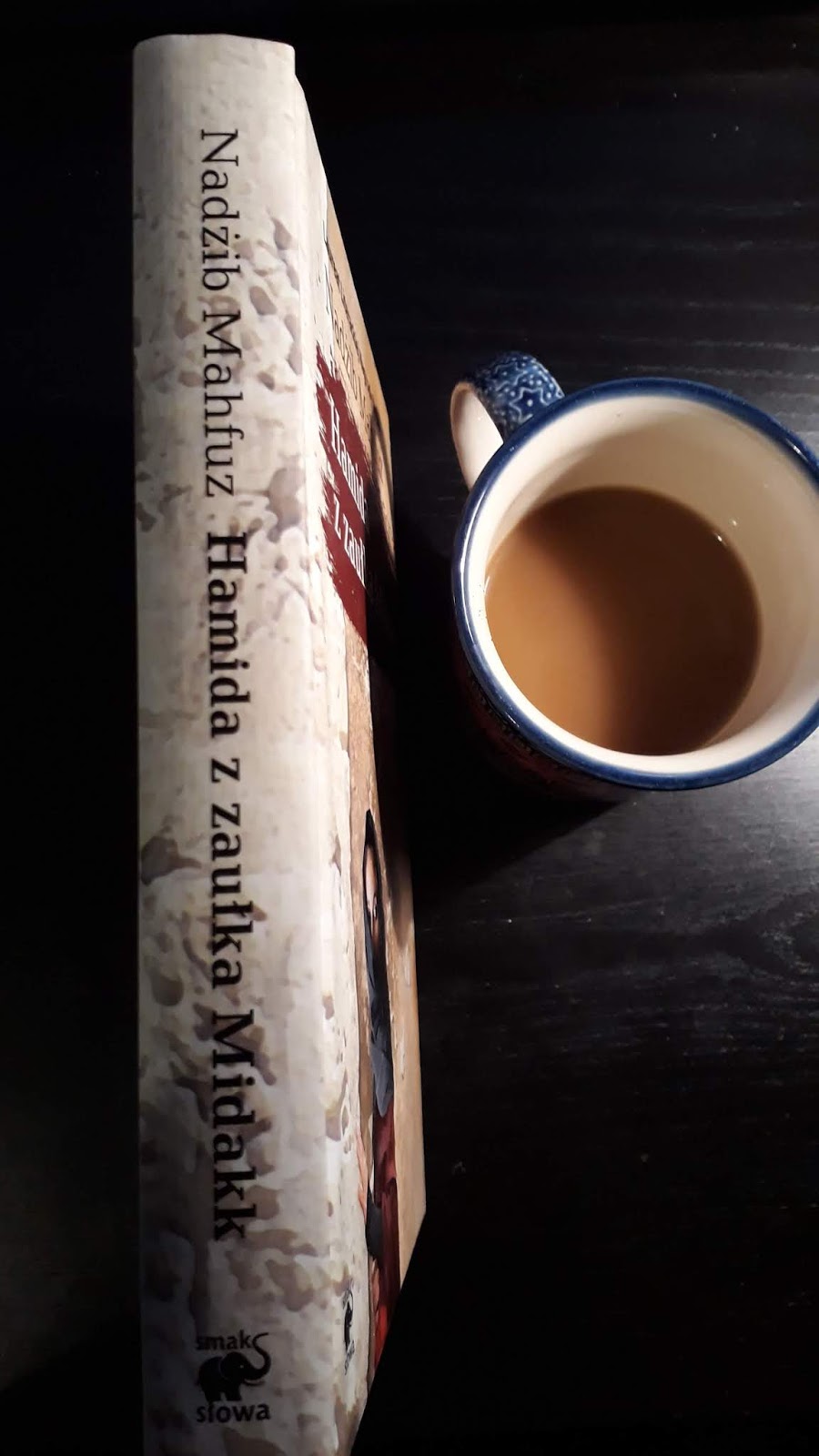
Nadżib Mahfuz, Hamida z zaułka Midakk (Zukak al-Midakk)

"Hamida z zaułka Midakk"... Dopiero wpisując tytuł i zerkając na tytuł oryginalny zrozumiałam, jak bardzo zostałam oszukana. W oryginale jest po prostu "Zaułek Midakk", co znacznie rozszerza perspektywę i sprawia, że czytelnik nie skupia się tylko na jednej postaci, a zwraca uwagę na wszystkich mieszkańców tytułowego miejsca.
Jest bowiem na kogo zwracać uwagę, czego się nie spodziewałam po nie tak bardzo długiej (niecałe 300 stron) książce. Jest więc niefortunnie tytułowa Hamida, dziewczyna próżna i marząca o wyrwaniu się z ciasnoty zaułka i przypisanego jej losu ubogiej i pracowitej przyszłej żony i matki. Hamida pragnie eksponować swoją urodę i żyć w luksusie.
Matka Hamidy, Umm Hamida, to lokalna swatka, wynajmująca skromne mieszkanie u właścicielki kamienicy, Sanijji Affifi. Ona także pragnie, by jej - przybrana wprawdzie - córka znalazła szczęście i bacznie szuka właściwego kandydata. Takim okazuje się Abbas al-Helu, lokalny fryzjer, który pragnąc zdobyć więcej pieniędzy i zapewnić Hamidzie lepszy byt, rzuca swój zawód i ukochany zaułek i zgłasza się do wojska, gdzie może znacznie więcej zarobić. Hamida przyjmuje jego oświadczyny.

Przyjacielem Abbasa jest Husajn Kirsza, który sam do rzeczonej armii się zaciągnął i żyje po królewsku. Kiedy jednak jego dobra passa się odwraca i zostaje zwolniony, wraca do rodzinnego domu z żoną i jej bratem, ale bez żadnych oszczędności. To, co zastaje na miejscu będzie dla niego zaskoczeniem. Jego ojciec, Al-Husajn Kirsza, ojciec pięciu córek i jednego syna znowu poddaje się swojej naturze i zaczyna sypiać z mężczyznami. Jego żona i matka Husajna robi mężowi publiczną awanturę i wyrzuca jego kochanka z kawiarni męża.
Kolejną ciekawą postacią jest śmierdzący biedak Zajta, który wynajmuje maleńkie pomieszczenie u Dżajty i jej męża piekarza (którego notabene żona leje za każde najmniejsze przewinienie, a wieczorem godzą się w łóżku, co Zajta skwapliwie podgląda). Ta niepokojąca kreatura, która od wielu lat nie uświadczyła kąpieli, specjalizuje się w produkcji żebraków - okalecza ludzi z sadystyczną satysfakcją, a potem idzie na obchód swojej dzielnicy i zbiera od swoich "pacjentów" należne mu myto. Zajta dorabia także kradzieżą złotych sztucznych szczęk wraz z doktorem Buszi, ale ten proceder zostanie ukrócony, gdy obaj zostaną złapani na gorącym uczynku. Ileż osób dowiedziawszy się o tym zacznie nagle gwałtownie i z przerażeniem pluć...
Jest także w końcu As-Sajjid Salim Ulwan, zamożny kupiec, którym a trzech synów i żaden nie chce przejąć i poprowadzić rodzinnego interesu. As-Sajjid jest jurnym mężczyzną około 50-tki i zauważa, że jego żona już go nie zaspokaja (po potrawie farik, którą zjada codziennie na obiad, jego libido budzi się w nocy). Z tego względu bogacz wygląda młodszej, świeżej żony, a jego wybór pada na Hamidę. Mimo złożonej Abbasowi przysięgi matka obiecuje rękę córki As-Sajjidowi, ale plany te krzyżuje ciężka choroba kupca.
Ostatnią postacią wartą wzmianki jest As-Sajjid Radwan, doświadczony przez życie mężczyzna, który stracił wszystkie swoje dzieci i to umocniło go w głębokiej wierze. On jest kręgosłupem moralnym zaułka i stara się pomagać jego mieszkańcom wyjść na prostą, chociaż nie zawsze mu się to udaje.
Zadżib Mahfuz często nazywany jest egipskim Balzakiem, i po lekturze tej książki trudno mi się z tym określeniem nie zgodzić. Pisarz uchwycił moment przemiany w Egipcie, kiedy obecność wojsk brytyjskich oznaczała nowe możliwości, ale również ingerencję w tradycyjną obyczajowość i społeczeństwo. Hamida zazdrości swoim żydowskim koleżankom możliwości podjęcia pracy i decydowania o samej sobie, kiedy ona nie ma jeszcze takich możliwości. To sprawia, że ucieka z domu z kochankiem (Faradżem Ibrahimem) i powrót do bezpiecznego świata dzieciństwa nie jest już możliwy.
Książkę czyta się bardzo dobrze i zaskakująco szybko, chociaż dla mnie naprawdę dużą przeszkodą były podobne do siebie imiona. Musiałam zacząć robić notatki, by nie pogubić się w gąszczu Husajnów i As-Sajjidów (niczym w "Stu latach samotności" Marqueza). Mało tego, po skończonej lekturze atmosfera książki mi towarzyszyła i długo nie byłam w stanie sięgnąć po nic innego. Polecam.

Nadżib Mahfuz, Hamida z zaułka Midakk
Wydawnicto Smak słowa
Sopot 2010
Tłumaczka: Jolanta Kozłowska
ISBN: 978-83-62122-08-0

_________________________________________________________________________

Hamida from the Midaq Alley ... Only by typing the title and looking at the original one, I understood how deceived I have been. The original title is simply Midaq Alley, which expands the perspective and makes the reader not focus on only one character, but draws attention to all the inhabitants of the title place.

For there is someone to pay attention to, which I did not expect from a book that was not too long (less than 300 pages). Hence, there is Hamida, a girl who is vain and dreaming about breaking out of the narrowness of the alley and the imputed fate of the poor and hardworking future wife and mother. Hamida wants to show off her beauty and live in luxury.

Hamida's mother, Umm Hamida, is a local matchmaker who rents a modest apartment from the owner of the house, Sanijja Affifi. She also wants her adopted daughter to be lucky and is looking for the right candidate. That's why Abbas al-Helu, a local hairdresser, turns out to want to get more money and provide Hamida with a better life, so he resigns from his profession and beloved alley and goes to the army, where he can earn much more. Hamida accepts his proposal.

The friend of Abbas is Hussein Kirsza, who himself enlisted in the British army and lives in luxury. But when his good streak is reversed and he is released, he returns to his family home with his wife and her brother, but without any savings. What he finds on the spot will surprise him. His father, Al-Husain Kirsza, father of five daughters and one son, again succumbs to his nature and begins to sleep with men. His wife and Hussein's mother makes a public scene and throws her husband's lover out of his cafe.

Another interesting character is the stinking beggar Zajas, who rents a tiny room from Jajta and her husband, a baker (whose wife is notoriously beating him for every minor offense, and in the evening they find agreement in bed, which Zajta is eagerly and secretly observing). This disturbing creature, who has not experienced bathing for many years, specializes in the production of beggars - he mutilates people with a sadistic satisfaction, and then walks around his district and collects the toll from his "patients". Zajta also earns on the theft of golden dentures commited with Dr. Busza on the freshly deceased inhabitantsof Kairo on the local cemetery, but this practice will be curtailed when they are both caught red handed. Many people when they find out about it suddenly start spitting with terror ...

Finally, As-Sajjid Salim Ulwan, a wealthy merchant, father of three sons of which none wants to take over a family business. As-Sajjid is a valiant man of about 50 and notes that his wife does not satisfy him anymore (after eating a meal faric, which he has every day for dinner, his libido wakes up at night). For this reason, the rich man looks for a younger, fresh wife, and Hamida becomes his choice. In spite of the oath to Abbas, the mother promises Hamida's hand to As-Sayyid, but the plans are ruined by his serious illness, that leaves him weak and bitter.

The last figure worth mentioning is As-Sajjid Radwan, a man who has been severely experienced by life, having lost all his children which has strengthened his deep faith. He is the moral backbone of the alley and tries to help its inhabitants to get on the straight path, although he does not always succeed.

Zaguib Mahfouz is often called the Egyptian Balzac, and after reading this book I find it difficult to disagree. The writer captured the moment of transition in Egypt, when the presence of British troops means new possibilities, but also interferes with the traditional customs and society. Hamida envies her Jewish colleagues the opportunity to take up a job and decide for themselves when she does not have such opportunities. It makes her run away from home with her lover (Faraj Ibrahim) and makes the return to the safe world of childhood no longer possible.

The book reads very well and surprisingly quickly, although for me the really big obstacle were similar names. I had to start taking notes as not to get lost in the thicket of the Husseins and As-Sayyids (like in Marquez's One Hundred Years of Solitude). What's more, after reading it, the atmosphere of the book accompanied me and for a long time I could not reach for anything else. I strongly recommend this book.


Author: Naguib Mahfouz
Title: Midaq Alley
Publishing House Smak słowa
Sopot 2010
Translated by: Jolanta Kozłowska
ISBN: 978-83-62122-08-0

niedziela, 4 listopada 2018

Ali Smith, Hotel Świat (Hotel World)

Piękna i wzruszająca historia. Książka ma niby tylko 200 stron, wydawałoby się – lektura na jeden wieczór – nic z tego. 6 rozdziałów, każdy z innym narratorem, a w zasadzie narratorką. Przeplatające się historie sześciu kobiet połączone motywem śmierci. W Hotelu Grand ma miejsce tragiczny wypadek – młoda dziewczyna wciska się do towarowej winy, by ją wyczyścić, a pod wpływem jej ciężaru urywa się lina i winda roztrzaskuje się z hukiem na dole – wraz z zawartością. Każdy z rozdziałów przemawia innym głosem, a jego historia jest tak kompletna, że nie ma się ochoty czytać dalej, tylko odkłada się książkę w zamyśleniu i „trawi” właśnie przyjęty rozdział.
Ciekawe i zastanawiające są ich tytuły:
czas przeszły
Dziwnie czyta się narrację włożoną w usta nieżyjącego już bohatera. Młoda Sara Wilby miała 19 lat i była obiecującą pływaczką. Straciła życie w wyniku głupiego wypadku, a teraz relacjonuje życie „po drugiej stronie”. Spotyka się ze swoim gnijącym ciałem i wdaje się z nim w dialog. Opowiada o swoim życiu, o szczegółach, ale nie ma w tym smutku. Opis jest tak urzekający, że człowiek czuje się jakoś lepiej ze swoją śmiertelnością. Spokojniej. Bardziej pogodzony. Że jednak jeszcze jest jakaś chwila po śmierci na pożegnanie, odwiedzenie rodzinnych stron, obserwację. Że jest jeszcze coś po.
czas teraźniejszy miniony
Bohaterką tego rozdziału jest Ina, żebrząca niedaleko wejścia do hotelu Grand. Siedząc na chodniku i prosząc przechodniów o drobne, rozrywana kaszlem snuje historię swojego życia. Wieczór będzie miał dla niej niezwykłe zakończenie, bo recepcjonistka z hotelu zaprosi ją do jednego z pustych pokojów jako gościa, by pomóc Inie przetrwać noc.
czas przyszły warunkowy
Ana, recepcjonistka z hotelu, która oferowała żebraczce nocleg. Teraz znajduje się w szpitali i męczy nad wypełnieniem formularza medycznego, a jednocześnie przysypiając nad nim, wspomina czasy swojej pracy w hotelu Global. Rozdział przypomina wypełnianie takiego właśnie formularza - część sformułowań jest doprecyzowana, rozpisywana dokładnie. Poruszony jest też wątek trudnych relacji matki i córki, ale cały rozdział zamyka scena matki, Deirde, czuwającej przy łóżku śpiącej córki i słowa: "Ach, miłość."
czas perfekt
Penny to samotna kobieta pracująca w reklamie i podróżująca po różnych hotelach, by potem zrecenzować je dla jednego z czasopism. Podczas swojego pobytu w hotelu Globe spotyka młodszą siostrę Sary Wilby, Clare, i pomaga jej dobrać się do szybu winy, a potem zostawia płaczącą nastolatkę i rusza z Iną, by przejść się po wieczornym mieście i zaglądać ludziom do domów, jak to robi żebraczka.
czas przyszły miniony
Relacja Claire Wilby, która opisuje, jak zmienił się jej świat po zniknięciu starszej siostry, jak reaguje jej otoczenie, jak radzą sobie z tym dramatem jej rodzice. To właśnie z jej relacji poznajemy Sarę lepiej, wiemy, czym się interesowała, widzimy drobne gesty wobec siostry, mamy szansę zajrzeć w ich intymną relację. Mimo braku interpunkcji i związanej z tym trudności w przyswajaniu treści ten rozdział jest w pewien sposób najbardziej poruszający i bezpośredni.
czas teraźniejszy
Sara na kilka tygodni przed swoją śmiercią zaniosła zegarek do naprawy i poznała tam młodą dziewczynę, w której momentalnie się zadurzyła. Dziewczyna pracująca u zegarmistrza zauważyła, że Sara wystaje pod sklepem, ale nie czuła się jeszcze gotowa na żadną relację. Kiedy zegarek wrócił z naprawy, założyła go sobie na nadgarstek i teraz - już w pełnej gotowości - oczekuje powrotu właścicielki, by jej go oddać.

Podsumowując - piękna, mądra, ciekawie napisana książka. Autorka łączy historie kobiet znacznie większą ilością szczegółów, niż byłam tu w stanie przytoczyć, jakby tkała misterną pajęczą nić. Każda z bohaterek mówi innym językiem i jest niepowtarzalna. Kompletna.

To druga książka Ali Smith po "How to Be Both?" po którą sięgnęłam, i na pewno nie ostatnia. Uważam, że to nazwisko zaczyna stanowić gwarancję naprawdę dobrej lektury.

Ali Smith, Hotel Świat
Warszawskie Wydawnictwo Literacki MUZA SA
Warszawa 2007
Tłumaczka: Agnieszka Lakatos
ISBN: 978-83-7495-002-2

_________________________________________________________________________

A beautiful and touching story. The book has only about 200 pages,so it would seem -  a reading for one evening - nothing like that. Six chapters, each with a different narrator. Intertwining stories of six women combined with the motive of death. There is a tragic accident at the Grand Hotel - a young girl squeezes into the goods lift to clean it, and under her weight the rope breaks off and the elevator shatters with a crash downstairs - along with the contents. Each of the chapters has a different voice, and its history is so complete that one does not want to read any further, but rather puts down the book thoughtfully and "digests" the intaken chapter. One has to mention that the chapters' titles are both interesting and puzzling:

the past tense

It is strange to read the narration put in the mouth of the dead hero. Young Sara Wilby was 19 years old and was a promising swimmer. She lost her life as a result of a stupid accident and now reports the life on the other side. He meets her rotting body and gets into dialogue with it. She talks about her life, its details, but there is no sadness in it. The description is so captivating that one feels better with our mortality. Calmer. More reconciled. That there is still time after death to say goodbye, to visit family, to observe. Death is not abrupt, even given its nature in this particular case. There is something after.

present past tense

The main character of this chapter is Ina, begging near the entrance to the Grand Hotel. Sitting on the sidewalk and asking passers-by for change, cough-ridden, he spins the story of her life. The evening will have an extraordinary ending for her, because the hotel receptionist will invite her to one of the empty rooms as a guest to help Ina survive the cold night.

future conditional tense

Ana, a receptionist from a hotel that offered the beggar the accommodation. Now she is in hospital and is tired of completing the medical form. She dozes off over it, and dreams the times of her work at the Global Hotel. The chapter resembles the medical form - part of the wording is clarified, explained, defined. Also the topic of the difficult relationship of mother and daughter is touched, but the whole chapter is closed by the scene of the mother, Deirde, who is watching over her sleeping daughter's bed and the words: "Ah, love."

perfect tense

Penny is a lonely woman working in advertising and traveling around various hotels, and then reviewing them for one of the magazines. During her stay at the Globe Hotel, she meets younger sister of Sara Wilby, Clare, and helps her to get to the shaft of the elevator, hidden in the wall, and then leaves the crying teenager and walks with Ina to go around the evening city and see people home as the beggar does.

past future tense

Claire Wilby's account, which describes how her world has changed after the disappearance of her older sister, how her surroundings react, how her parents deal with this drama. It is from her relation that we get to know Sara better, we know what she was interested in, we see small gestures towards her sister, we have a chance to look into their intimate relationship. Despite the lack of punctuation and thus the difficulty in assimilating content, this chapter is in some way the most moving and direct.

present tense

Sara, a few weeks before her death, took the watch for repair and met a young girl there, in which she was immediately infatuated. The girl working at the watchmaker noticed that Sarah was sticking out of the shop, but she did not feel ready for any relationship yet. When the watch returned from repair, she put it on her wrist and now - in full readiness - expects the owner to return to give it back.

To sum up - a beautiful, wise, interesting book. The author combines the stories of women with much more details than I was able to cite here, as if she wove a fine spider's net. Each heroine speaks a different language and is unique. And complete at the same time.

This is Ali Smith's second book after How to Be Both? which I've reached for, and certainly not the last one. I believe that this name begins to guarantee a really good reading.


Author: Ali Smith
Title: Hotel World
Publishing House: Warszawskie Wydawnictwo Literacki MUZA SA
Warszawa 2007
Translated by: Agnieszka Lakatos
ISBN: 978-83-7495-002-2


At-Tajjib Salih, Wesele Zajna (Urs az-Zajn)

Książka wydawnictwa Smak słowa z serii Kontynenty. Seria, pięknie wydana, skusiła mnie nazwiskami, których nie znam. Skusiła - i przepadłam. Zakupy zrobiłam hurtowo, pojawiła się Anne Ragde, Dag Solstad, Nadżib Mahfuz oraz niewielka książeczka At-Tajjiba Saliha, "Wesele Zajna".
Dla mnie literatura arabska to ziemia nieznana, nigdy mnie jakoś szczególnie do niej nie ciągnęło, chociaż to pewnie kwestia braku wiedzy i medialnej jej nieobecności. Jest to pierwsza książka sudańskiego autora, którą przeczytałam. No właśnie, ale czy sudańskiego? Salih urodził się w Sudanie, studiował w Chartumie, ale żył, pracował i pisał w Londynie i Katarze. W "Weselu Zajna" wraca do świata swojego dzieciństwa, do niewielkiej wioski i lokalnej społeczności, którą opisuje z ogromną wrażliwością i jednocześnie niezwykle zwięźle. W kilku początkowych dialogach mieszkańcy przekazują sobie informację o planowanym weselu Zajna, a autor przemyca nam jednocześnie ich sytuację, wzajemne zależności i animozje.

Zajn jest brzydki. Chudy, z zapadniętą klatką piersiową, z dwoma zębami (komplet zębów odzyskuje po powrocie ze szpitala). Ale promieniuje z niego jakieś pogodne światło i w każdym domu witany jest z radością. Zajn ma również bardzo dobry gust, jeśli chodzi o wybór kobiet, który zresztą ogłasza zaraz całemu światu. Wybranki Zajna są jak świeżo rozkwitłe kwiaty i wiadomo, że jeżeli którąś z dziewczyn on sobie upodobał, w przeciągu dwóch miesięcy wyjdzie ona bardzo dobrze za mąż.

Sytuacja ma się trochę inaczej z Nimą, która ma zostać żoną Zajna. To pięknie, starannie nakreślona postać dojrzałej, wyważonej dziewczyny, która w tym męskim świecie sama decyduje o swoim losie i nierzadko zaskakuje własnego ojca. Nima bacznie obserwuje Zajna, jego dobroć wobec osób niepełnosprawnych, jego przyjaźń z Al-Hunajanem, szachem (świętym mężem), jego wpływ na lokalną społeczność.

A wpływ Zajna był naprawdę niemały. Podczas jednego z wielu wesel Zajn został uderzony w głowę motyką przez Sajf ad-Dina i trafił do szpitala. Po powrocie podczas jednej z rozmów z mężczyznami z wioski Zajn dostrzegł mężczyznę, który go uderzył, i rzucił się na niego, by go udusić. A Zajn znany był ze swojej niezwykłej siły. Sytuację uratowało niespodziewane nadejście świętego męża, Al-Hunajana, który przepowiedział wiosce wiele błogosławieństw, a samemu Zajnowi - małżeństwo z najpiękniejszą dziewczyną we wsi. Faktycznie, na wioskę spadają błogosławieństwa - ziemia rodzi jak nigdy, mieszkańcy dostają pozwolenie na uprawę bawełny, niedaleko stacjonuje wojsko, a na dostawach dla nich bogacą się mieszkańcy. Nawraca się wioskowy syn marnotrawny, Sajf ad-Din.
A Nima, najpiękniejsza dziewczyna we wsi, faktycznie wychodzi za Zaina.

Scena wesela zwala z nóg. Niemal czuje się rytm pieśni weselnych, duchotę sali, radość gości. Wszystko wiruje przed oczami czytelnika, a dalsze losy młodej pary pozostają zagadką.

Co stanowi o sile tej książki? Prosta, nieprzegadana narracja i umiejętność kreowania sugestywnych, barwnych scen za pomocą niewielu słów. Wielu bohaterów tworzących zgraną, rozumiejącą się społeczność, która działa i pracuje jak jeden organizm. Dobrze nakreśleni bohaterowie.
Polecam. To krótkie, ale intensywne doświadczenie, które pozostawia czytelnika z przyjemnym ciepłem na sercu.


At-Tajjib Salih, Wesele Zajna
Wydawnictwo Smak słowa
Sopot 2010
Tłumaczka: Jolanta Kozłowska
ISBN: 978-83-62122-09-7

_______________________________________________________________________

The book by the Publishing House Smak słowa from the series The Continents. The series, beautifully published, had tempted me with names that I do not know. It tempted me - and I got carried away. I bought nearly all that I could get, books by Anne Ragde, Dag Solstad, Nadjib Mahfuz and a small book by At-Tajjiba Salih, The Wedding of Zein.

For me, the Arabic literature is an unknown land, I have never been particularly attracted to it, although it is probably a matter of lack of knowledge and its media absence. This is the first book of the Sudanese author I read. Well, but is he Sudanese? Salih was born in Sudan, studied in Khartoum, but lived, worked and wrote in London and Qatar. In The Wedding of Zein he returns to the world of his childhood, to a small village and a local community, which he describes with great sensitivity and at the same time very succinctly. In a few initial dialogues, the inhabitants inform each other about the planned wedding party of Zein, and the author smuggles in their situation, mutual dependencies and animosities.

Zein is ugly. Skinny, with sunken chest, with two teeth (the set of teeth is back after returning from the hospital). But some bright light radiates from him and he is greeted in every house with joy. Zein also has a very good taste when it comes to the selection of women he loves and which he immediately announces to the whole world. Zeins's chosen girls are like freshly blossomed flowers and it is known that if he likes a girl, she will get married very well in two months, but of course - not to him.

The situation is somewhat different with Nima, who is to become the wife of Zein. It is a beautiful, carefully outlined figure of a mature, well-balanced girl who in her masculine world decides her own fate and often surprises her own father. Nima closely observes Zein, his goodness towards the disabled, his friendship with Al-Hunajan, a holy man, and his influence on the local community.

And Zein's influence is really considerable. During one of the many weddings, Zein was hit with a hoe in the head by Sajf ad-Din and went to the hospital. After returning during one of the conversations with the men from the village, Zein spotted the man who had hit him and threw himself at him to strangle him. And Zei was known for his extraordinary strength. The situation was saved by the unexpected arrival of the holy husband, Al-Hunajan, who foretold many blessings to the village, and to Zein himself - a marriage with the most beautiful girl in the village. In fact, blessings are falling on the village - the land brings fruit as never before, the inhabitants are allowed to grow cotton, the army is stationed nearby, and the inhabitants are getting rich on supplies for them. The village prodigal son, Sajf ad-Din, is converted. And Nima, the most beautiful girl in the village, actually marries Zain.

The scene of the wedding knocks the reader off his feets. One can almost feels the rhythm of the wedding songs, the spirit in the house, the joy of the guests. Everything revolves in front of the reader's eyes, but further fate of the young couple remains a mystery.

What determines the strength of this book? Simple, uncomplicated, straightforward narration and the ability to create suggestive, colorful scenes with the usage of very few words. Many heroes create a harmonious, understanding community that works as one body. The characters are well-drawn.

I would recommend. It's a short but intense experience that leaves the reader with a pleasant warmth at heart.


Author: At-Tajjib Salih
Title: The Wedding of Zein
Publishing House: Smak słowa
Sopot 2010
Translated by: Jolanta Kozłowska
ISBN: 978-83-62122-09-7

Izabela Szolc, Siostry

Wydawnictwo Smak słowa, które tak zachwyciło mnie publikacjami z serii kontynenty, nieustannie rozczarowuje mnie serią z przyprawami. Niedawno przeczytałam króciutką powieść Izabeli Szolc "Siostry", niecałe 120 stron. Mimo tak niewielkiej zawartości czytało mi się książkę męcząco i długo.

Siostry bliźniaczki, Anna Konstancja i Józefina Maria Jabłońskie mieszkają ze swoimi rodzicami, matką Pauliną Walerią, Kreolką, ojcem Janem Zygmuntem, oraz bratem Teodorem Florianem, w dworku w Jabłonnym Sadzie. Akcja toczy się na przełomie 30 lat, od 1802 do 1832 roku, ale zaczyna niechronologicznie, kiedy dziewczęta są już dorosłe, ich ojciec dostaje udaru na dorocznym przyjęciu, a wkrótce potem umiera matka. Podczas zawieruchy powstania listopadowego jedna z nich, Józefina Maria, zachodzi w ciążę z Jerzym, narzeczonym siostry. 

Zaletą książki na pewno jest to, że przybliża mało znany epizod tłumienia lokalnego powstania kreolskiego przez polskie legiony na wyspie Santo Domingo. Szolc pochwyciła najważniejsze wątki - tresurę psów do rozszarpywania lokalnych "buntowników", potworną żółtą febrę, która wybijała legionistów szybciej niż tocząca się wojna, wyrżnięcie batalionu składającego się z 400 bezbronnych czarnoskórych przez Polaków. W tej dusznej atmosferze rozwija się również wątek miłosny pomiędzy młodym podpułkownikiem, a lokalną pięknością, Paulette. Mężczyzna zabiera ciężarną już kobietę ze sobą do domu.

Atmosfera w książce jest ciężka, przytłaczająca - dużo tu choroby, śmierci, opisów cierpienia. Ponieważ w dużej mierze narracja opiera się na relacjach sióstr i ich historii, dużo jest także poczucia bycia zamkniętym w klatce i oczekiwania na odmianę losu. Język jest niczym z pamiętników z tego okresu, które zresztą autorka obficie cytuje - kwiecisty i zbyt długi. Dla mnie była to lektura męcząca i w pewien sposób przekombinowana. Jest duszno, akcja się wlecze, książkę trzeba odkładać. Być może autorce udało się uchwycić atmosferę tamtych czasów oraz pokazać dramat legionów na Santo Domingo, ale chyba właśnie akuratność tego spojrzenia mnie odrzuca. Dodam jeszcze, że miałam wrażenie, że autorka przeczytała wiele pamiętników z tamtego okresu i na ich podstawie napisała swoją powieść, ale efekt jest wtórny i męczący. Niestety, druga już powieść z serii z przyprawami, która mnie nie przekonała.

Izabela Szolc, Siostry
Wydawnicto Smak słowa
Sopot 2012
ISBN 978-83-62-122-33-2

_________________________________________________________________________

The publishing house Smak słowa, which has delighted me with its publications from The Continents series, constantly disappoints me with the second one, The Series with Spices. Recently I read a short novel by Izabela Szolc The Sisters, less than 120 pages long. Despite such a small content, the read has been long and exhausting.

The twins sisters, Anna Konstancja and Józefina Maria Jabłońskie live with their parents, mother Paulina Valeria, a Creole, father Jan Zygmunt, and brother Teodor Florian, in a manor house in Jabłonny Sad. The action takes place within the span of 30 years, from 1802 to 1832, but begins in a non-chronological way, when the girls are already grown up, their father gets a stroke at the annual party, and soon afterwards the mother dies. During the storm of the November Uprising, one of them, Józefina Maria, gets pregnant with Jerzy, her sister's fiancé.

The advantage of the book is certainly that it introduces a little known episode of suppressing the local Creole uprising by Polish legions on the island of Santo Domingo. Szolc captured the most important topics - dogs' training to tear up local "rebels", terrible yellow fever, which knocked out legionaries faster than the war underway, the battalion of 400 defenseless blacks murdered out by Poles. In this stifling atmosphere a love affair develops between the young lieutenant colonel and the local beauty, Paulette. The man takes the pregnant woman home with him.

The atmosphere in the book is hard, overwhelming - there is a lot of sickness, death and descriptions of suffering. Because the narration is largely based on the relations of the sisters and their history, there is also a lot of stifling feeling of being locked in a cage and waiting for a change of fate. Language is taken from the diaries of this period, which, moreover, the author quotes abundantly - floral and too long. For me, it was a tiring reading and in some way transfused. It is stuffy, the action drags, the book has to be put off. Perhaps the author managed to capture the atmosphere of those times and show the drama of the legions at Santo Domingo, but it might be that the accuracy of this book is off-putting. I will add that I had the impression that the author read many memoirs from that period and based on them wrote her novel, but the effect is secondary and tiring. Unfortunately, the second novel from The series with spices that did not convince me.


Author: Izabela Szolc
Title: The Sisters
Publishing House: Smak słowa
Sopot 2012
ISBN 978-83-62-122-33-2

niedziela, 28 października 2018

Santiago Roncagiolo, Czerwony kwiecień (Abril rojo)

Wieloletnie czytelnicze doświadczenie nauczyło mnie, że niektóre wydawnictwa, a dokładniej - niektóre serie wydawnicze - bardzo rzadko zawodzą mój książkowy gust. Mam więc swoje ulubione linie, które - kiedy tylko mogę - z wielką chęcią i bez większego zastanowienia kupuję. Jest wśród nich seria literatury skandynawskiej gdańskiego wydawnictwa Słowo/obraz/terytoria, jest stosunkowo nowa dla mnie seria Kontynenty sopockiego wydawnictwa Smak słowa, i jest w końcu kamień milowy mojego czytelnictwa - seria proza krakowskiego wydawnictwa Znak. Od czasów liceum polskie premiery tej serii były dla mnie lekturą obowiązkową, często pożyczaną od znajomych czy nauczycieli. Natomiast literatura światowa tej serii była dla mnie na drugim planie i dopiero teraz ją odkrywam. Moja kolekcja ma wiele braków, ale nie zdarzyło mi się natknąć się na książkę, która by mnie rozczarowała. Tak też jest z "Czerwonym kwietniem" Santiago Roncagiolo.

Początek jest nieprzyjemny - to zeznania Justino Mayta Carazo, który w stodole w słomie natknął się na zwęglone zwłoki, spisane przez głównego bohatera powieści, Félixa Chacaltana Saldívara, pomocnika prokuratora rejonowego. Chacaltana to służbista, przeniesiony z Limy do Ayacucho na własne życzenie. Trzyma w domu pusty pokój swojej matki, która od dawna nie żyje, a on rozmawia z nią jak dawniej. Dzięki sprawnemu, acz mocno naciąganemu wyjaśnieniu makabrycznej zbrodni, Chacaltana zostaje komisarzem wyborczym w niewielkim miasteczku Yavarmayo.

Niezwykły jest zapis niedbałości państwa i jego głębokiej obojętności na ludzkie nieszczęście. Zwęglone zwłoki pierwszego trupa trzymane są na porodówce, bo na innych oddziałach nie ma na to miejsca. Lodówka w krematorium nie działa od ciągłych przerw w dostawie prądu. "Pomocnik prokuratora zamierzał mu powiedzieć, że trupia woń roznosi się już po całym oddziale położniczym, ale uznał, że lepiej siedzieć cicho. To nie jego problem" (s. 198). Autobusy mają horrendalne opóźnienia: "Nocą autobus wyjechał z ledwie piętnastominutowym opóźnieniem. Kolejna oznaka, że Ayacucho mocnym krokiem idzie ku przyszłości" (s. 76). Nieprawidłowości w wyborach jest tak wiele, że powinny one zostać unieważnione. Przewodniczący lokalnej komisji wyborczej w Yavarmayo mówi prokuratorowi tak:
Félix, oseim lat temu, jakbym wyszedł na ulice, to by mnie zabili. Teraz nie. Terroryście zabili moją matkę, mojego brata, i zabrali moją siostrę, którą potem zatłukli żołdacy. Od kiedy rządzi nasz prezydent, nie zabito ani mnie, ani nikogo z mojej rodziny. Chcesz, żebym głosował na kogoś innego? Nie rozumiem. Dlaczego?" (s. 97).

Najgorsze jest to, że relacja prokuratora jest relacją na serio, bez krztyny ironii czy sarkazmu, bez żadnego dystansu. Félix jest człowiekiem fanatycznie wręcz oddanym swojej pracy. Odkrywa coraz więcej poszlak łączących brutalne zbrodnie zarówno z dawnymi wierzeniami Inków, jak i z działalnością Świetlistego Szlaku, komunistycznej komórki działającej w Peru. Morderstwa są wyjątkowo brutalne i wyjątkowo dokładnie opisane.

Są też fragmenty budzące autentyczne przerażenie. Fragmenty zapisywane fonetycznie, bez poszanowania ortografii i interpunkcji. W ogóle Roncagiolo jest mistrzem w operowaniu strachem. Scena podczas Niedzieli Palmowej, gdy tłum idzie w procesji, przy wysokim zagrożeniu zamachem terrorystycznym - ciarki chodzą po plecach, a uwaga jest wytężona. Fabuła jest mistrzowsko ułożona i mamy wrażenie, że pętla się zacieśnia, a im bliżej końca powieści, tym szybciej biegną wydarzenia, niczym u Marqueza. Zakończenie jest co najmniej zaskakujące.

Przeglądając tą książkę jeszcze raz do przygotowania recenzji, całkowicie w nią zapadłam i utknęłam w mrocznym klimacie, dusznej atmosferze, krępującej wszystko biurokracji. Powierzchownie to bardzo dobry kryminał, w głębi - przerażająca relacja z dyktatorsko zarządzanego kraju, gdzie panują łapówkarstwo, niedbałość i obojętność. Wciągająca lektura.


Santiago Roncagiolo. Czerwony kwiecień
Wydawnictwo Znak
Kraków 2008
Tłumacz: Tomasz Pindel
ISBN: 978-83-240-0983-1

________________________________________________________________________

Many years of reading experience has taught me that some publishing houses, more precisely - some publishing series - very rarely disappoint my book taste. So I have my favorite lines, to which - whenever I can - I am looking forward with great pleasure and without much thought. Among them is a series of Scandinavian literature from the publishing house Słowo/obraz/terytoria, a relatively new series Kontynenty by the Sopot publishing house Smak słowa, and, ultimately, a milestone in my readership - the series Prose from the Publishing House Znak. From the time of high school, Polish premieres of this series were an obligatory reading for me, often borrowed from friends or teachers. In turn, the world literature of this series stayed in the background, and only now do I discover it. My collection has many shortcomings, but I have not come across a book that would disappoint me. This is also the case with Santiago Roncagiolo's Red April.

The beginning is unpleasant - it is the testimony of Justino Mayta Carazo, who has found a charred corpse in the barn in the straw, and the testimony has been written down by the main protagonist of the novel, Félix Chacaltana Saldívar, an assistant to district attorney. Chacaltana is a civil servant, transferred from Lima to Ayacucho at his own request. He keeps the empty room of his long-dead mother in the house and he keeps talking to her as if she was still there. Thanks to an efficient, yet heavily stretched explanation of the macabre crime, Chacaltana becomes electoral commissar in the small town of Yavarmayo, which later turns out to be another move of the corrupted government.

The record of the carelessness of the state and its deep indifference to human misfortune is extraordinary. The charred corpse of the first victim is kept on the delivery ward, because there is no room for it in other departments. The fridge in the crematorium does not work due to continuous power outages. "The prosecutor's assistant intended to tell him that the corpse smell was spreading all over the maternity ward, but he decided that it was better to sit quietly, it was not his problem" (p. 198). Buses have horrendous delays: "At night, the bus left with a mere fifteen-minute delay, another sign that Ayacucho is moving towards the future with a strong step" (p. 76). Irregularities in the election are so many that they should be annulled. The chairman of the local electoral commission in Yavarmayo tells the prosecutor:
Félix, eight years ago, if I went out on the street, they would have killed me. Not now. Terrorists killed my mother, my brother, and took my sister, who was later beaten to death by soldiers. Since our president has ruled, neither me nor any of my family have been killed. Do you want me to vote for someone else? I do not understand. Why? (p. 97).

The worst thing is that the prosecutor's report is completely serious, with no irony or sarcasm, and without any distance. Félix is ​​a man fanatically devoted to his work. He discovers more and more clues linking violent crimes with both the ancient Inca beliefs and the activities of the Shining Path, a communist party operating in Peru. Murders are both extremely brutal and extremely accurately described.

There are also fragments that rise an authentic terror. Fragments written phonetically, without respecting spelling and punctuation. In general, Roncagiolo is the master in operating fear. The scene during Palm Sunday, when the crowd goes in a procession, with a high threat of a terrorist attack - the reader has shivers and the attention is strenuous. The plot is masterfully arranged and we have the impression that the loop tightens, and the closer to the end of the novel, the faster events run, like in Marquez's prose. The ending is surprising.

Browsing this book once more for the preparation of the review, I completely fell into it and got stuck in the dark and stuffy atmosphere, all-embracing bureaucracy. In the top layer, it's a very good crime book, but in the in-depth reading it proves to be a terrifying report from a dictatorial run country where bribery, carelessness and indifference prevail. Addictive reading.


Author: Santiago Roncagiolo
Title: Red April
Publishing House: Znak
Kraków 2008
Translated by: Tomasz Pindel
ISBN: 978-83-240-0983-1

piątek, 26 października 2018

Hisham Matar, Anatomia zniknięcia (Anatomy of a Disappearance)

Od tej książki zaczęła się moja przygoda z wydawnictwem Smak słowa. Jak to już u mnie bywa, zadecydował przypadek - wśród masowych zakupów na allegro spodobała mi się okładka, klik - książka wylądowała w koszyku, a potem na biurku. Otworzyłam ją w piątkowy wieczór i została ze mną do 4 rano, co nie zdarza mi się często, a w zasadzie - nie zdarza mi się wcale. Cóż jest więc w tej niewielkiej powieści (165 stron) takiego, co urzeka i nie pozwala jej odłożyć?


Nostalgia.

14-letni Naim, siedząc ze swoją macochą Muną w szwajcarskiej kawiarni dowiaduje się, że jego ojciec Kamal Pasza zniknął. Matka zmarła, gdy był jeszcze dzieckiem. Jako dorastający nastolatek wraca myślami do swojego dzieciństwa i stara się zrozumieć wspomnienia, które ma, i dotrzeć do tego, kim naprawdę był jego ojciec, czym się zajmował, jaka była jego rola w dziejach Egiptu.

Detal.

Matar skupia się na szczegółach, rysując sceny z bardzo zmysłową dokładnością. Dzięki temu czytelnik czuje się, jakby był w samym centrum wydarzeń. Ja czułam zapach podgrzewanego mleka, widziałam parę unoszącą się nad kubkiem, niemal czułam smak soku pomarańczowego.


Napięcie.

Kiedy ojciec poznaje Munę, swoją drugą żonę, ona ma 26 lat, on 41, a Naim 12. Pomiędzy dorastającym chłopcem a młodą towarzyszką ojca błyskawicznie rodzi się napięcie. Któregoś dnia ojciec przyłapuje swoją młodą żonę tylko w ręczniku, a jego syn rozczesuje jej włosy. W efekcie chłopiec zostaje odesłany do szkoły z internatem w Anglii. Każde ich kolejne spotkanie jest przesycone pożądaniem ze strony Naima.

Tajemnica.

Ojciec Naima został porwany z mieszkania jego kochanki Beatrice Benameur, o której istnieniu ani syn, ani jego młoda żona nie mieli pojęcia. Tajemnica nie zostaje wyjaśniona, a ojciec nie wraca, ale syn spotyka się z kochanką ojca i ma okazję wysłuchać relacji naocznego świadka z błyskawicznego nocnego porwania. Ale nie jest to jedyna mroczna tajemnica w tej powieści.

Ta książka jest po prostu piękna. Nic dziwnego, że została uznana za najlepszą książkę 2011 roku przez Chicago Tribune, The Independent, The Guardian, The Telegraph i jeszcze kilka innych gazet. Dramatyczna historia Egiptu stanowi dyskretne tło dla wydarzeń w książce, a na pierwszy plan wysuwa się relacja ojca i syna. Powieść rozciąga się na dziesięć lat, ale mamy też retrospekcje i świat Naima jest nam ukazywany zgrabnie, kawałek po kawałku. Dlatego właśnie nie chce się jej odkładać i można łapczywie czytać ja do czwartej nad ranem.


Hisham Matar, Anatomia zniknięcia
Wydawnictwo Smak słowa
Sopot 2012
Tłumaczka: Ewa Penksyk-Kluczkowska
ISBN: 978-83-62122-27-1


___________________________________________________________________________

My adventure with the publishing house Smak słowa had begun with this book. As it happens with me, it was a pure accident - among mass purchases on allegro I saw a cover that I liked, click - the book landed in the basket, and then on my desk. I opened it on Friday evening and it has stayed with me until 4 am, which does not happen to me often, and in principle - it does not happen to me at all. So what is there in this relatively short novel (165 pages) that captivates attention and does not allow  to put it down?

Nostalgia.

A 14-year-old boy Naim is sitting with his stepmother, Muna at a Swiss cafe, when he learns that his father Kamal Pasha has been abducted. His mother had died when he was still a child. As an adolescent, he turns his thoughts to his childhood and tries to understand the memories he has and to find out who his father really was, what he did, and what his role in the history of Egypt was.

Detail.

Matar focuses on the details, drawing scenes with very sensual accuracy. Thanks to this, the reader feels like he is in the very center of events. I felt the smell of heated milk, I saw the steam hovering above the mug, I almost felt the taste of an orange juice.

Tension.

When the father meets Muna, his second wife, she is 26, he is 41, and Naim is only 12. A tension is born between the growing boy and his father's young partner. One day, the father catches his young wife only in a towel, and his son combs her hair. As a result, the boy is sent back to a boarding school in England. Each subsequent meeting is saturated with Naim's lust.

Mystery.

Naim's father was kidnapped from the apartment of his mistress Beatrice Benameur, whose existence was a secret to his son and his young wife, but not to the Swiss lawyer of the Father, Haas. The mystery is not explained, and the father does not return, but the son meets his father's lover and has the opportunity to listen to the witness's account of the rapid night's abduction. But this is not the only dark secret in this novel.

This book is simply beautiful. It is no wonder that it was recognized as the best book of 2011 by the Chicago Tribune, The Independent, The Guardian, The Telegraph and several other newspapers. The dramatic history of Egypt provides a discreet background for the events in the book, and the father and son's relationship is the main topic. The novel stretches for ten years, but we also have flashbacks and Naim's world is shown to us neatly, piece by piece. That's why one doesn't want to put it down and can read it greedily until four in the morning.

Author: Hisham Matar
Title: Anathomy of a Disappearance
Publishing House: Smak słowa
Sopot 2012
Translated by: Ewa Penksyk-Kluczkowska
ISBN: 978-83-62122-27-1

Piotr Milewski, Transsyberyjska Drogą żelazną przez Rosję i dalej

Jeszcze od czasów liceum marzyłam o wycieczce koleją transsyberyjską wgłąb Rosji. Prawie się w tym roku udało, ale jak wiadomo - prawie robi wielką różnicę. A skoro prawie, to musiałam sobie jakoś to niepowodzenie zrekompensować i tak pojawiła się książka Piotra Milewskiego "Transsyberyjska", czyli zapis z jego podróży od Warszawy, przez Petersburg, Moskwę, Jekaterynburg, Nowosybirsk, Krasnojarsk, Irkuck aż po Władywostok i dalej do Japonii.
Książka łączy w sobie przewodnik, zapis historii Rosji oraz relację z podróży w tonie lekko melancholijnym (który naznacza również inną książkę Milewskiego "Dzienniki japońskie").

Po wyjeździe z Petersburga czuć dreszczyk podniecenia, jakie zna każdy podróżnik, gdy zaczyna się jego przygoda, jak sam ją autor nazywa - "voyage principal". A przygotowany do tej podróży jest Milewski bardzo dobrze i pomiędzy rozdziałami o miastach, które odwiedza, snuje ciekawą historię powstawania Kolei Transsyberyjskiej i osób za nią odpowiedzialnych, np. Siergieja Juliewicza Wittego czy cara Aleksadra III. Czuć ogrom literatury i źródeł, do których trzeba było dotrzeć, by relacja ta była taka niewymuszona i pełna ciekawych szczegółów. Moskwę Milewski zwiedza podczas obchodów Dnia Zwycięstwa, i miasto z przygnębiającego molocha pogrążonego w strugach deszczu przez noc przemienia się w zalaną słońcem i wypełnioną ludźmi metropolię, lecz wciąż z dominującą nutą smutku.

Potem w pociągu do Jekaterynburga zaczyna się to, na co tak bardzo czekałam - spotkania z przypadkowymi współpasażerami, rozmowy z nimi przy wódce, wydarzenia, którymi przez chwilę żyje cały pociąg. W Jekaterynburgu autor znajduje nocleg u Borysa Aszurowa - towarzysza podróży - i jego dziadków. Ma okazję zobaczyć ich daczę i zapoznać się z nielekkim emeryckim życiem.
Bardzo dobrze w tej książce w miasta wpisana jest ich historia, szukanie jej śladów w ludziach i zabytkach. Opisy zwiedzanych miejsc nie są przewodnikowe, a zabarwione odbiorem zwiedzającego je człowieka, jego postrzeganiem, przygodami, anegdotami.
W Nowosybirsku pada ciekawa refleksja:
"(...) przecież nie ma chyba drugiego kraju, w którym historia tak mocno wiązałaby się z geografią,a geografia z historią. Kraju, w którym geografia mogła być tak potężnym orężem historii." (s. 159)
Znajduje to zresztą potwierdzenie w dalszej podróży, kiedy autor przemierza Syberię:

"Ktoś wcześniej tłumaczył mi, że na Syberii nie ma małych odległości. Są albo bardzo małe - szerokość podwórka, długość ścieżki od drzwi domu do studni, do chaty sąsiada, do sklepu, z jednego krańca przysiółka na drugi, albo wielkie - z Nowosybirska do Krasnojarska, z Krasnojarska do Irkucka, tysiąc, dwa, trzy tysiące kilometrów, liczone zresztą przez miejscowych nie tyle w kilometrach, ile w dniach drogi." (s. 168)

Poznaje wiele mniejszości mieszkających na dalekiej północy, między innymi Ujgurów, którzy zapraszają go na herbatę:
"Herbata jet bardzo ważna. Daje siłę, odpręża. Na herbatę zawsze musi się znaleźć czas. Przy niej jazda się nie dłuży. Temat do rozmowy zawsze się znajdzie. Ten, z którym ją pijemy, przestaje być obcy." (s. 171)
Rozmawia także z Buriatką Oksaną, która opowiada mu o swojej rodzinie i przeznaczeniu, którym jest zostanie szamanką.
Irkuck, okolice Bajkału i legenda związana z Szamańskim Kamieniem, wspomnienia innych podróżników, przygodne spotkania - wszystko nadaje książce rytm podróży koleją, niemalże słyszy się stukot kół na torach. Droga kończy się we Władywostoku.
"Najważniejsze, gdy dociera się do końca jednej drogi, to dostrzec początek następnej". (s. 294).

Kiedyś, gdy w końcu uda mi się choć częściowo zrealizować licealne marzenie, na pewno z ciekawością przeczytam książkę Milewskiego jeszcze raz. Nienachalnie przedstawiona historia budowy kolei, portrety miast i ludzi - czyta się z przyjemnością i pragnie samemu rozpocząć swoją kolejną podróż.

Piotr Milewski, Transsyberyjska
Wydawnictwo Znak
Kraków 2014
ISBN: 978-83-240-2503-9

___________________________________________________________________________

Since the time of high school, I dreamed of a trip through the Trans-Siberian railway in the depths of Russia. I have almost managed this year, but as we all know know - almost makes a big difference. And since I've almost made it, I had to somehow compensate for this failure, and so did Piotr Milewski's book Trans-Siberian has appeared, a record of his journey from Warsaw, through St. Petersburg, Moscow, Ekaterinburg, Novosibirsk, Krasnoyarsk, Irkutsk to Vladivostok and further to Japan.

The book is a combination of a guidebook, a record of the Russian history and a journey report in a slightly melancholic tone (which also marks another Milewski's book 'Japanese diaries').

After leaving St. Petersburg one can feel the thrill of an excitement that every traveler knows, when the adventure begins, as the author himself calls it - "voyage principal". And indeed, Milewski is very well prepared for this journey and in between the chapters about the cities he visits, he spins an interesting history of the formation of the Trans-Siberian Railway and people responsible for it, such as Sergey Juliewicz Witteg or Tsar Aleksander III. The reader can feel the enormity of literature and sources that the author had to read through. This gives a feeling of an unforced and interesting relation. Milewski is visiting Moscow during the celebrations of the Victory Day, and the city from a depressing moloch plunged in the pouring rain transforms itself over night into a sun-filled metropolia, but still with a dominant note of sadness.

Train's first kilometers to Yekaterinburg mark what I've been waiting for so much - meetings with random co-passengers, conversations with them over vodka, events with which the whole train lives for a moment. In Yekaterinburg, the author finds accommodation with Borys Aszurow - a traveling companion - and his grandparents. He has the opportunity to see their dacha and get acquainted with the uneasy life of Russian pensioners.


What I've liked immensely is the merge of cities histories and their reflection on the people living there and stories they have of their own. Descriptions of visited places are not like from guide books, but are colored by the reception of the visitor, his perception, adventures and anecdotes.

An interesting reflection takes place in Novosibirsk:
"(...) there is probably no other country in which history would be so closely related to geography, and geography to history, a country where geography could be such a powerful weapon of history." (p. 159)
This is confirmed by further travels, when the author crosses Siberia:
"Someone previously explained to me that there are no short distances in Siberia, but either very small - the width of the yard, the length of the path from the door of the house to the well, to the neighbor's cottage, to the store, from one end of the hamlet to the other, or enormous - from Novosibirsk to Krasnoyarsk, from Krasnoyarsk to Irkutsk, one thousand, two, three thousand kilometers, counted by locals not so much in kilometers as in days of the road. " (p. 168)

On his way the author meets many minorities living in the far north, including the Uighurs who invite him for tea:
"Tea is very important, it gives strength, relaxes, there is always time to have tea, it does not take long to drink it, the subject of conversation will always be found, the one with whom we drink it ceases to be a stranger." (p. 171)

He also talks to a Buriat Oksana, who tells him about her family and destiny, which is to become a shaman.
Irkutsk, the surroundings of Lake Baikal and the legend associated with the Shaman Stone, memories of other travelers, casual meetings - everything gives the book the rhythm of travel by rail, one can almost hear the clatter of wheels on the tracks. The road ends in Vladivostok.
"The most important thing when you reach the end of one road is to see the beginning of the next." (p. 294).

Once, when I finally manage to realize my high school dream, I will read Milewsky's book once more with curiosity. The unprecedented history of railway construction, portraits of cities and people - it reads with real pleasure and makes one wish to start the next journey already.


Author: Piotr Milewski
Title: Transsyberyjska
Publishing House Znak
Kraków 2014
ISBN: 978-83-240-2503-9